From Trail To Van
Finishing at Skógafoss felt like a chapter ending. The hike was done. Packs were lighter. Bodies were tired in the way that feels earned. There was still a lot left to see, but the walking part was over.
We had lunch with the full crew. AT friends, plus the people we’d just finished the Fimmvörðuháls with. It felt like a clean break point before everyone headed in different directions.
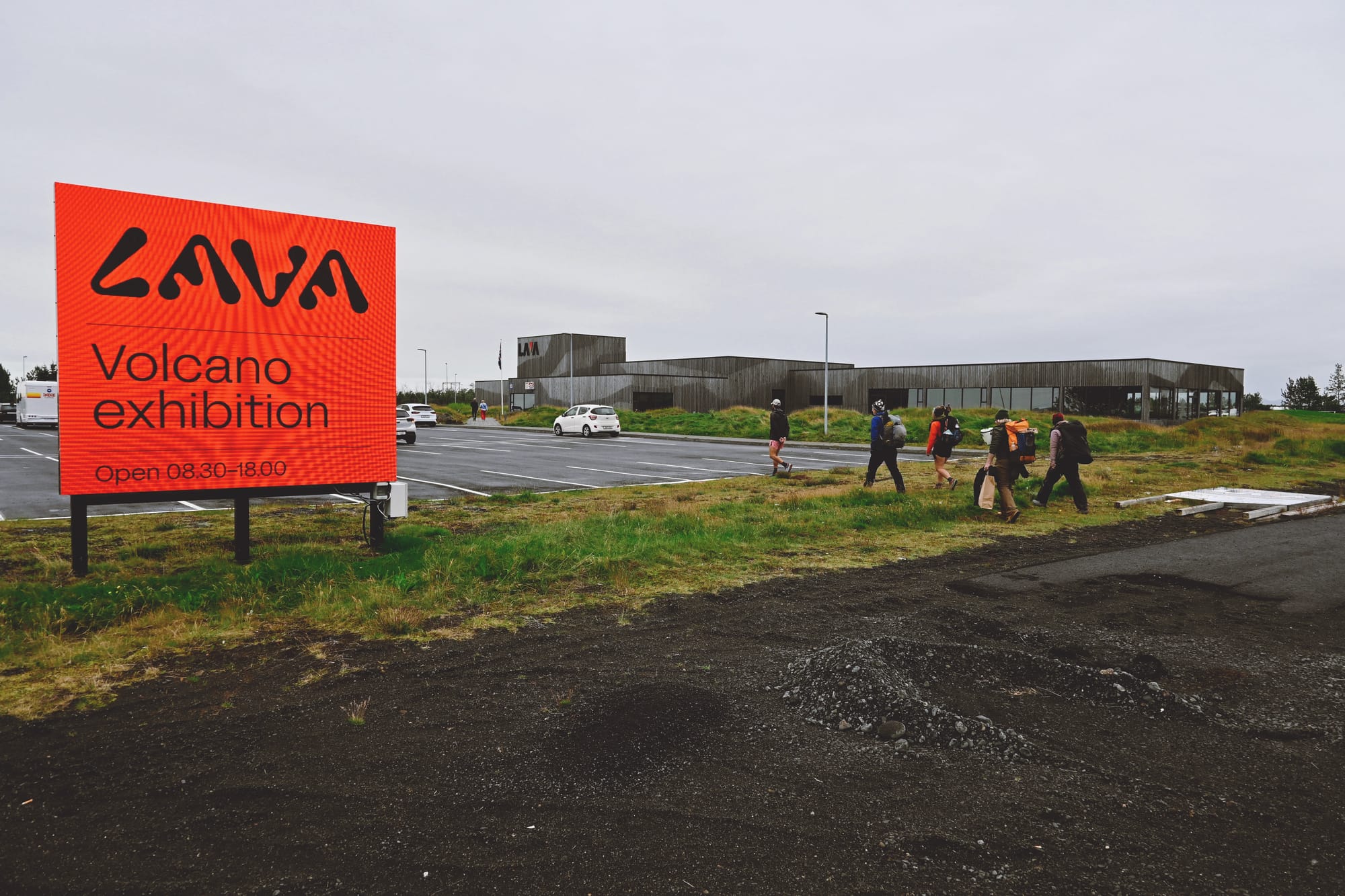
From there, we went to the Lava Centre. After days of moving through volcanic terrain on foot, it was the right place to slow down and add context to what we’d just crossed.
Why Iceland gets to look like this
The first thing that clicked was why Iceland is so geologically intense.
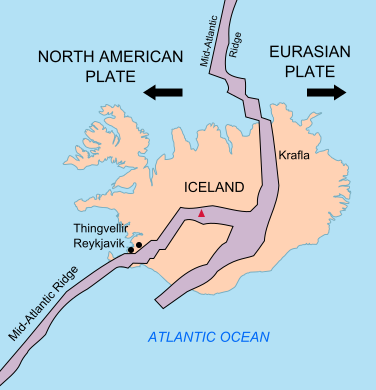
Iceland sits in a rare overlap of two systems:
- The Mid-Atlantic Ridge, where the North American and Eurasian plates are actively pulling apart
- A mantle hotspot, a deep plume of heat rising from far below the Earth’s crust
Either one of those can create volcanism. Iceland has both.
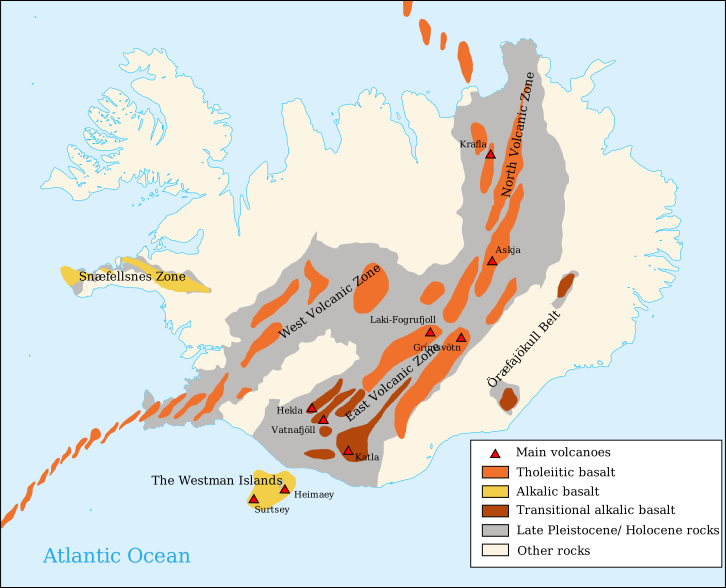
Wiki on Iceland volcanoes
As the plates separate, the crust thins. The hotspot supplies extra heat and magma from below. Together, they create a steady pathway for molten rock to reach the surface. That’s why Iceland isn’t just volcanic in bursts. It’s volcanic as a condition.
It also explains why so much of the island feels unfinished. In geologic terms, it is.
Magma, lava, and what changes when it hits air
Another thing that finally made sense was the difference between magma and lava.
Magma is molten rock below the surface. Once it erupts, it becomes lava, and that moment changes everything. Pressure drops. Gases expand. Cooling begins immediately.
What the lava turns into depends on three main things:
- How fast it cools
- How much gas it contains
- Its chemical makeup
That’s why the ground under your feet can feel completely different from one day to the next.
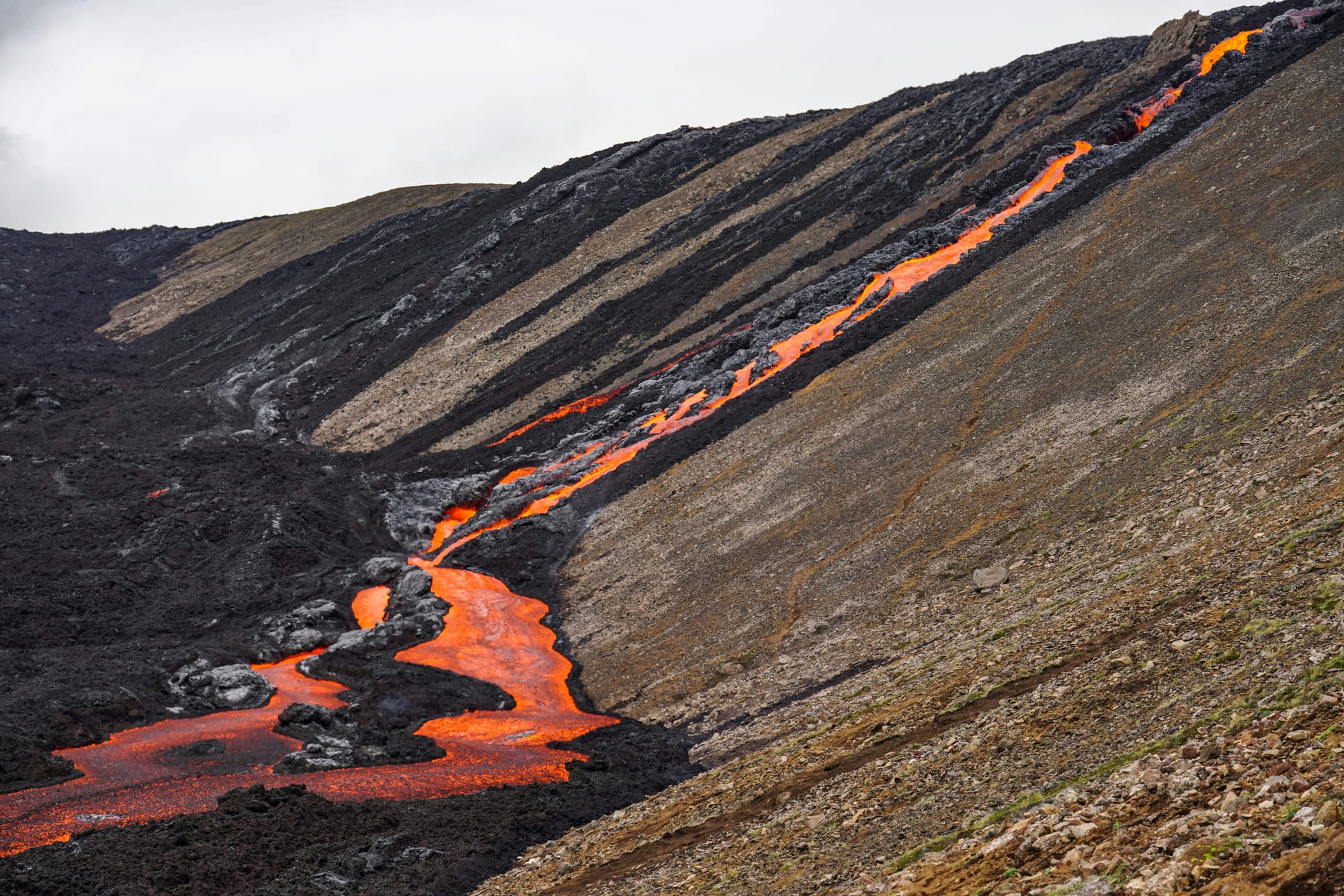
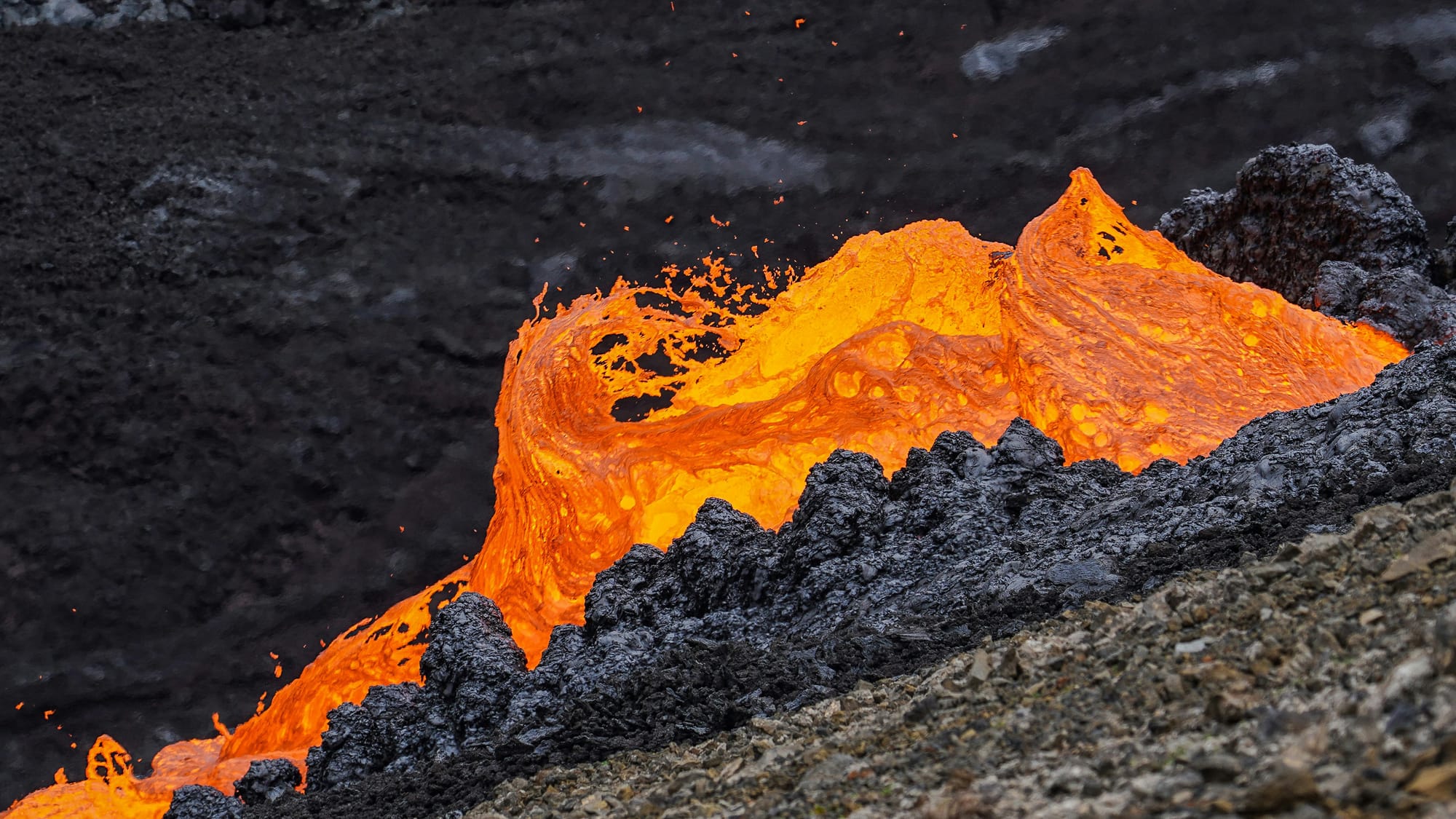
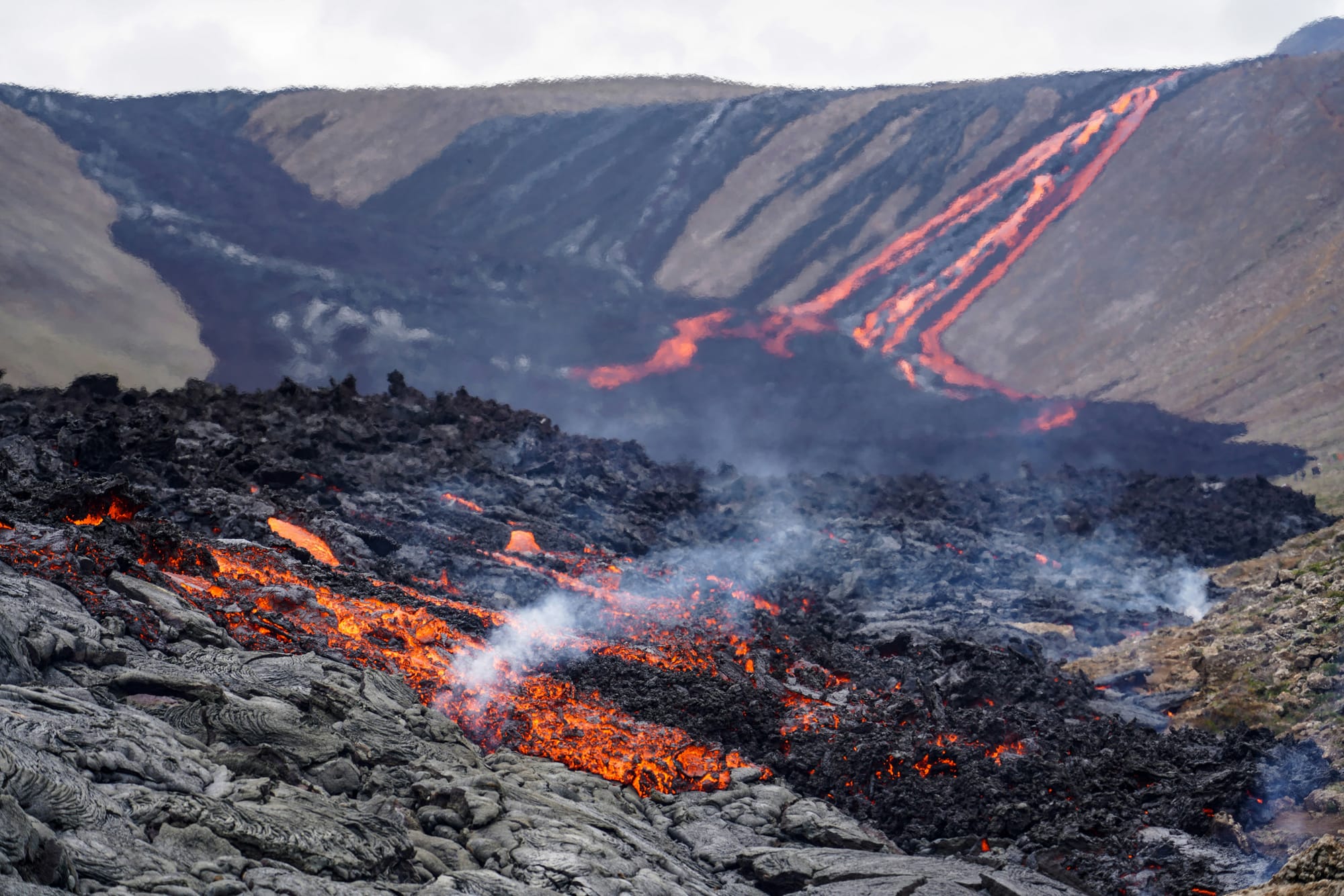
Why some lava is heavy and glassy, and some is sharp and light
Earlier on the Laugavegur, we’d walked across obsidian, which forms when lava cools extremely fast. It doesn’t have time to crystallize, so it turns into dense, smooth, glassy rock. Heavy in the hand. Solid.
On Fimmvörðuháls, the lava was the opposite. Sharp, jagged, aggressive looking. But when you picked it up, it was light. Almost airy.
That happens when lava is gas-rich. As it erupts, bubbles expand and get trapped as the rock cools, leaving it full of tiny voids. Same island. Same process. Completely different results.
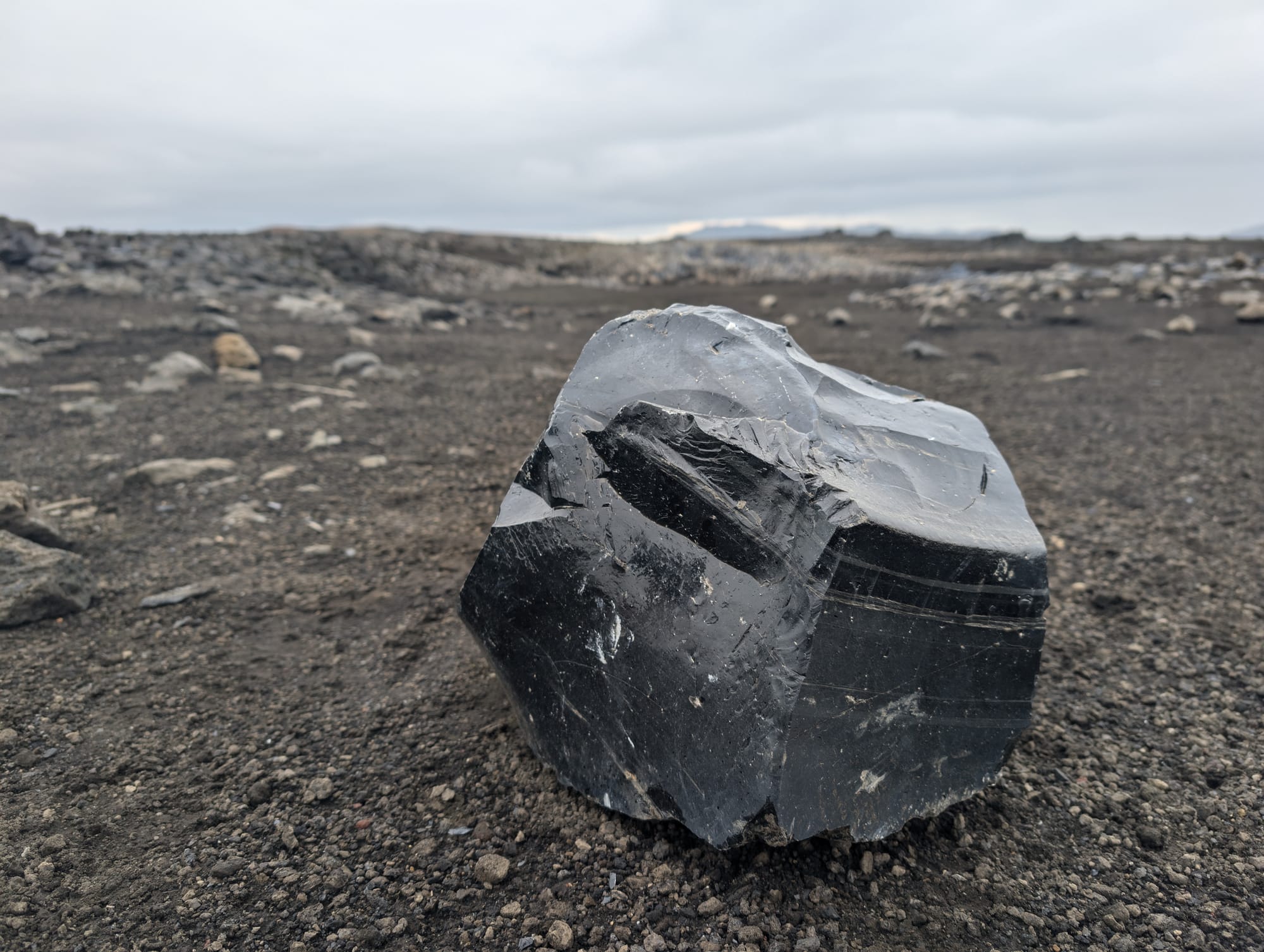
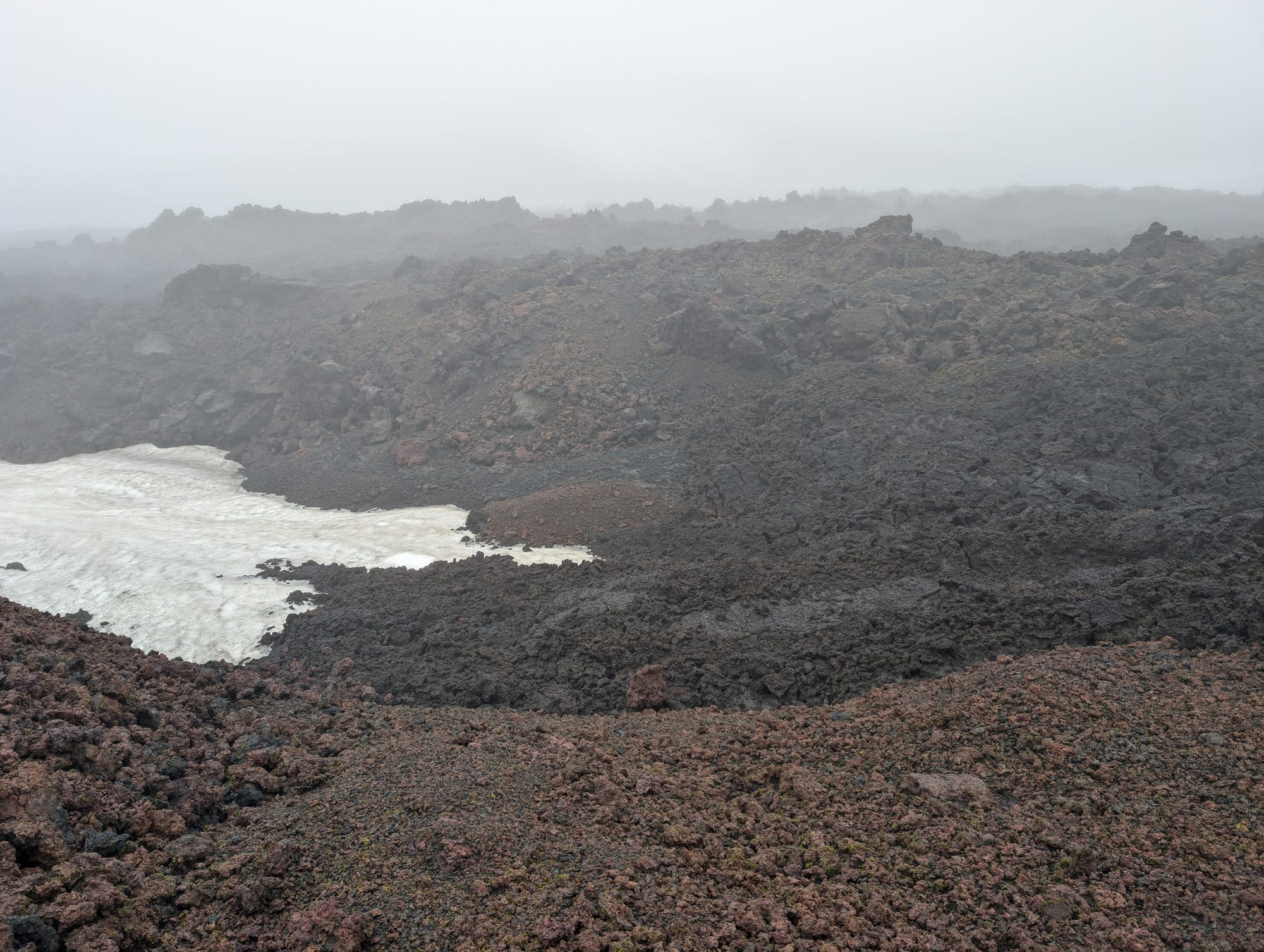
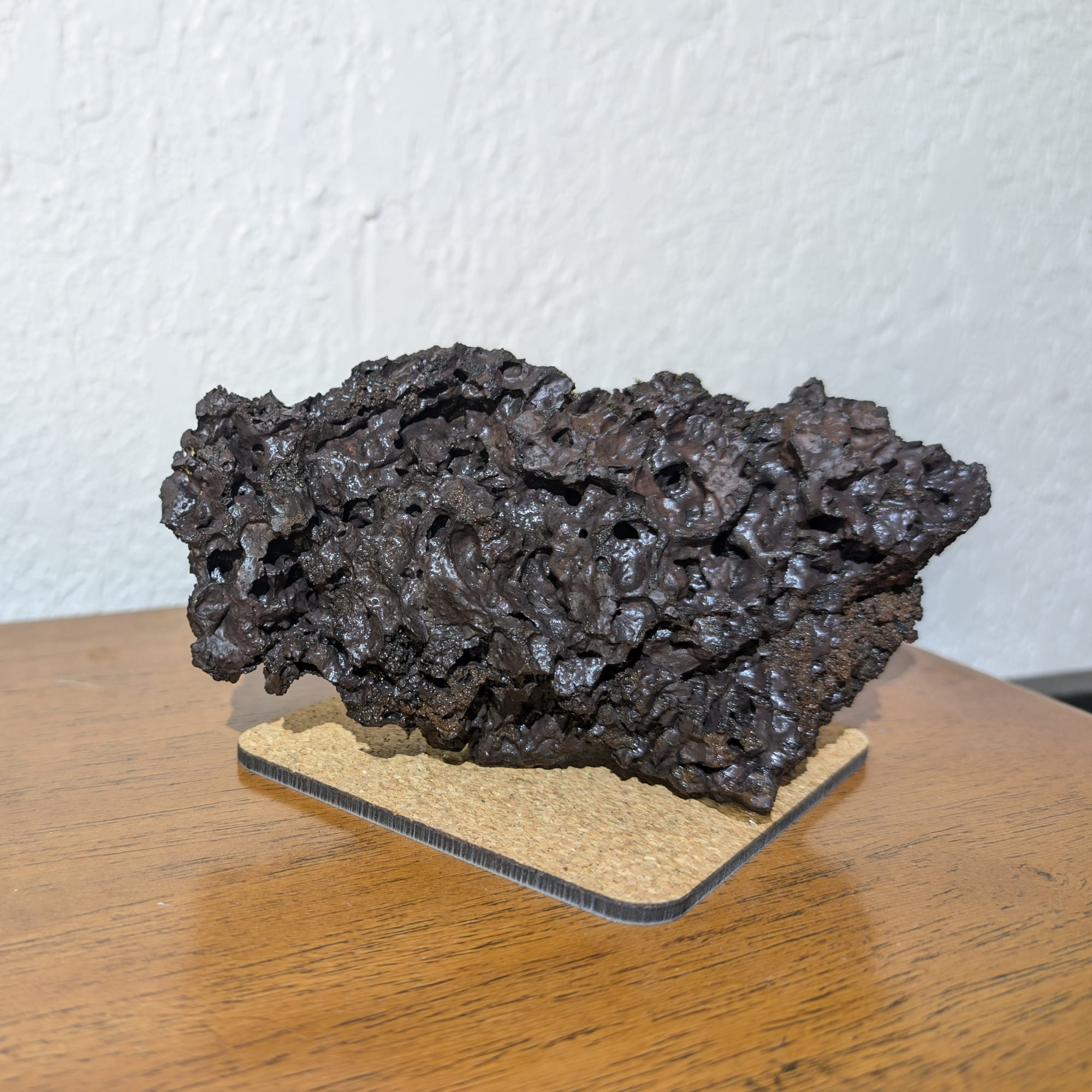
Photo by me, on a phone
It also explained why I’d been carrying a backpack full of lava rocks since the hike. Big ones. Ridiculous ones. They looked heavy, but they weren’t. After seeing how they formed, it finally made sense.
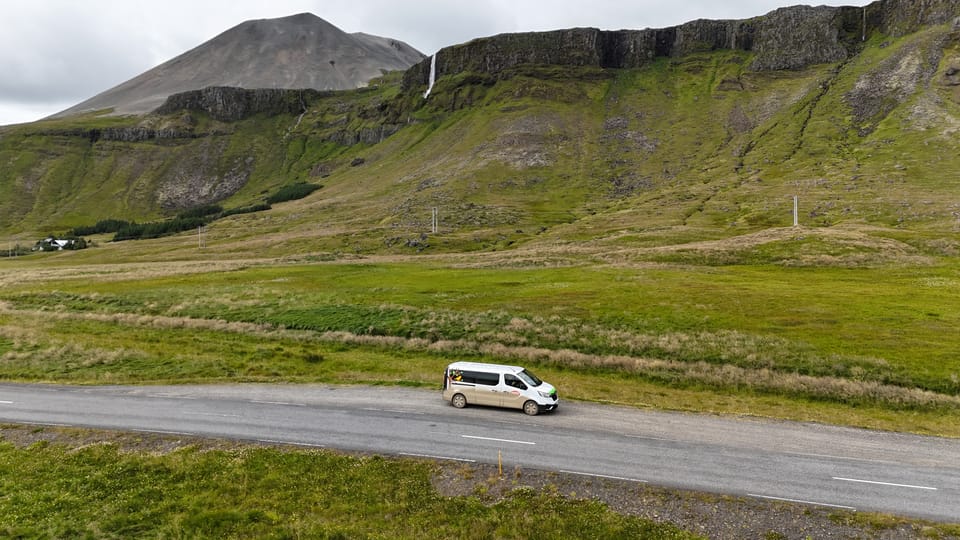
We drove back to Reykjavík to pick up the camper van. It was Sam, Savage, and I in one vehicle, with Slow + Steady in another. Between the two vans, the plan was to see as much of the Ring Road as possible.
We slept in the van that night at Laugardalur Hostel. Not glamorous. Just functional. A place to reorganize gear, dry things out, and switch modes.
That was the handoff. We stopped walking across Iceland and started driving through it.