Laugavegur Day 1
We woke up early, packed for trail life, and stashed our city stuff. We rented a week-long locker in Reykjavík (parking-garage setup), dropped the duffels, and walked to the bus station.
The ride to Landmannalaugar was long and bumpy in that “welcome to the Highlands” way. About halfway, we hit a roadside stop for pastries and coffee. Simple move, huge morale boost.
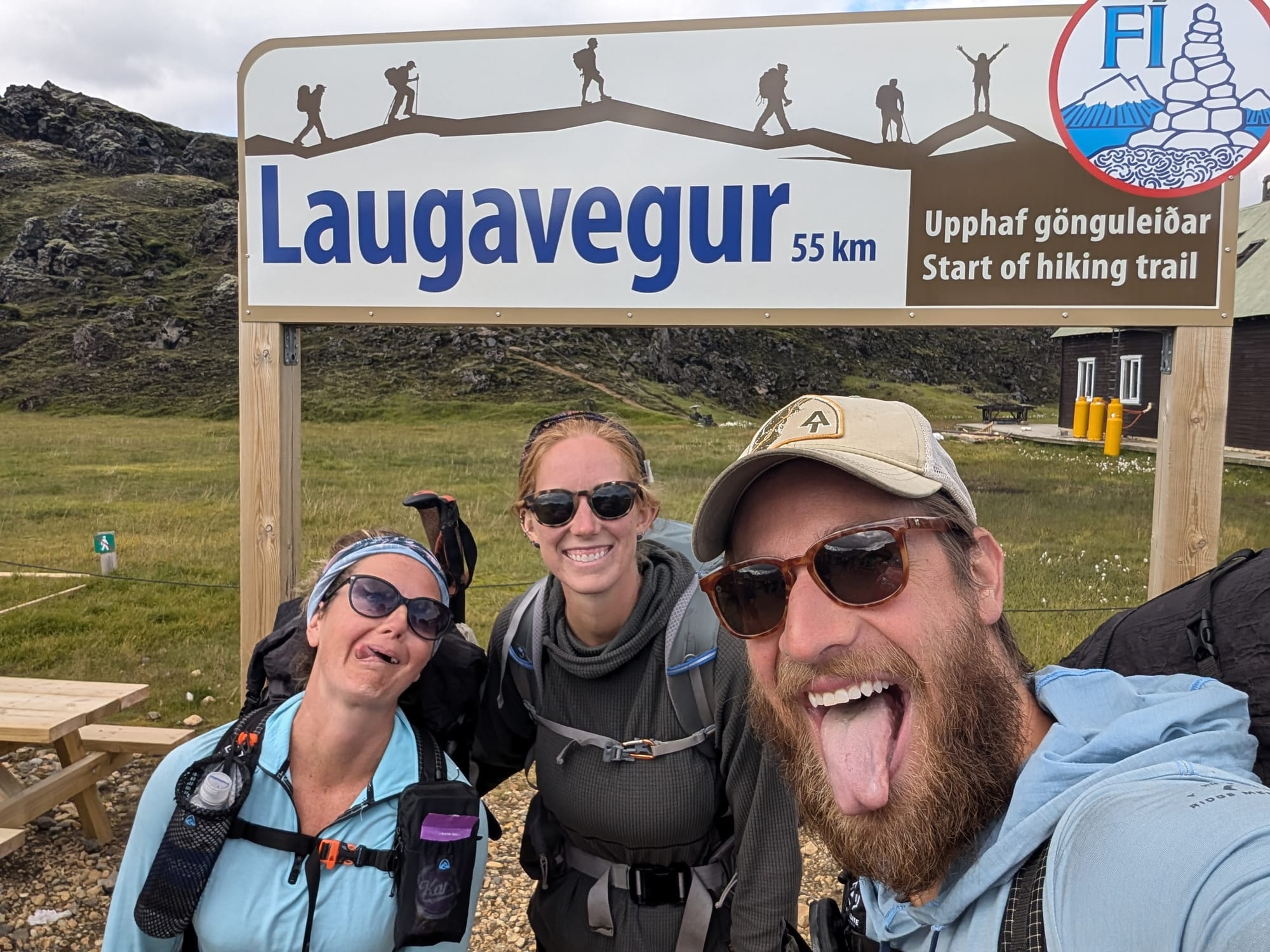
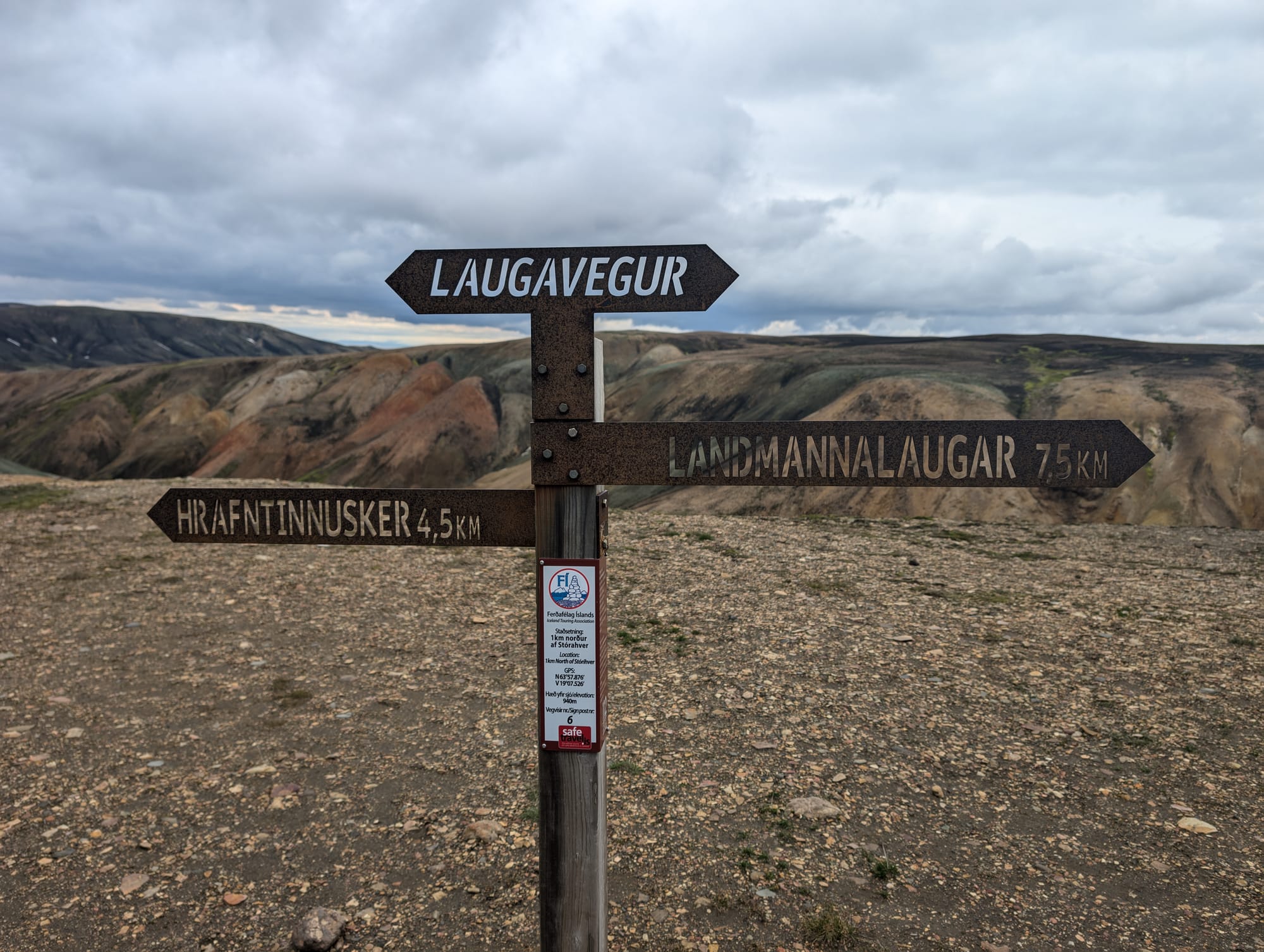
At the trailhead, we did what everyone does. A few photos with the signage, big grins, and that moment where the trail finally switches from plan to real.
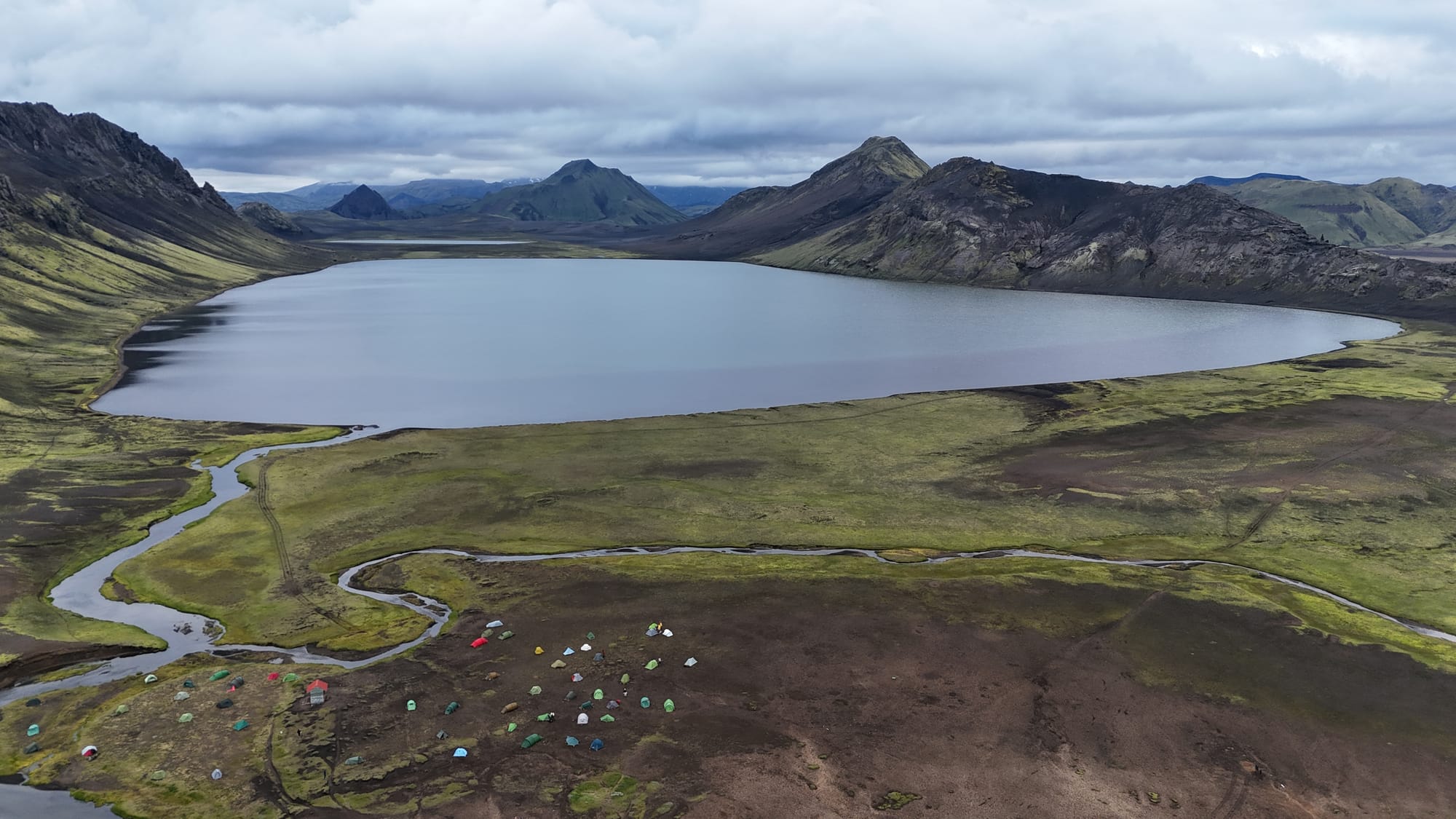
Our goal was aggressive: pass the first hut and keep going to the Álftavatn campsite.
What the landscape felt like (and what it actually is)
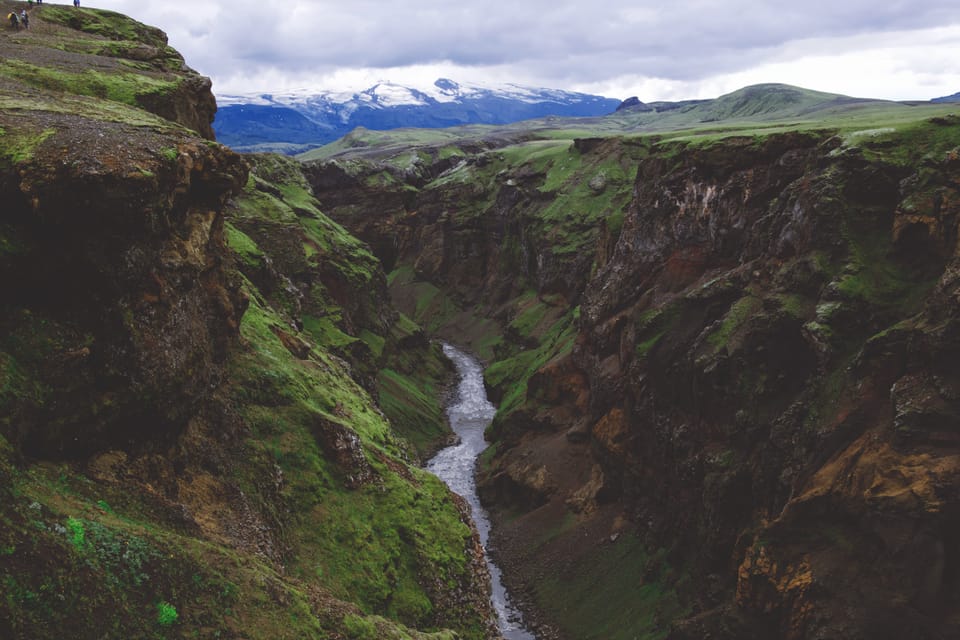
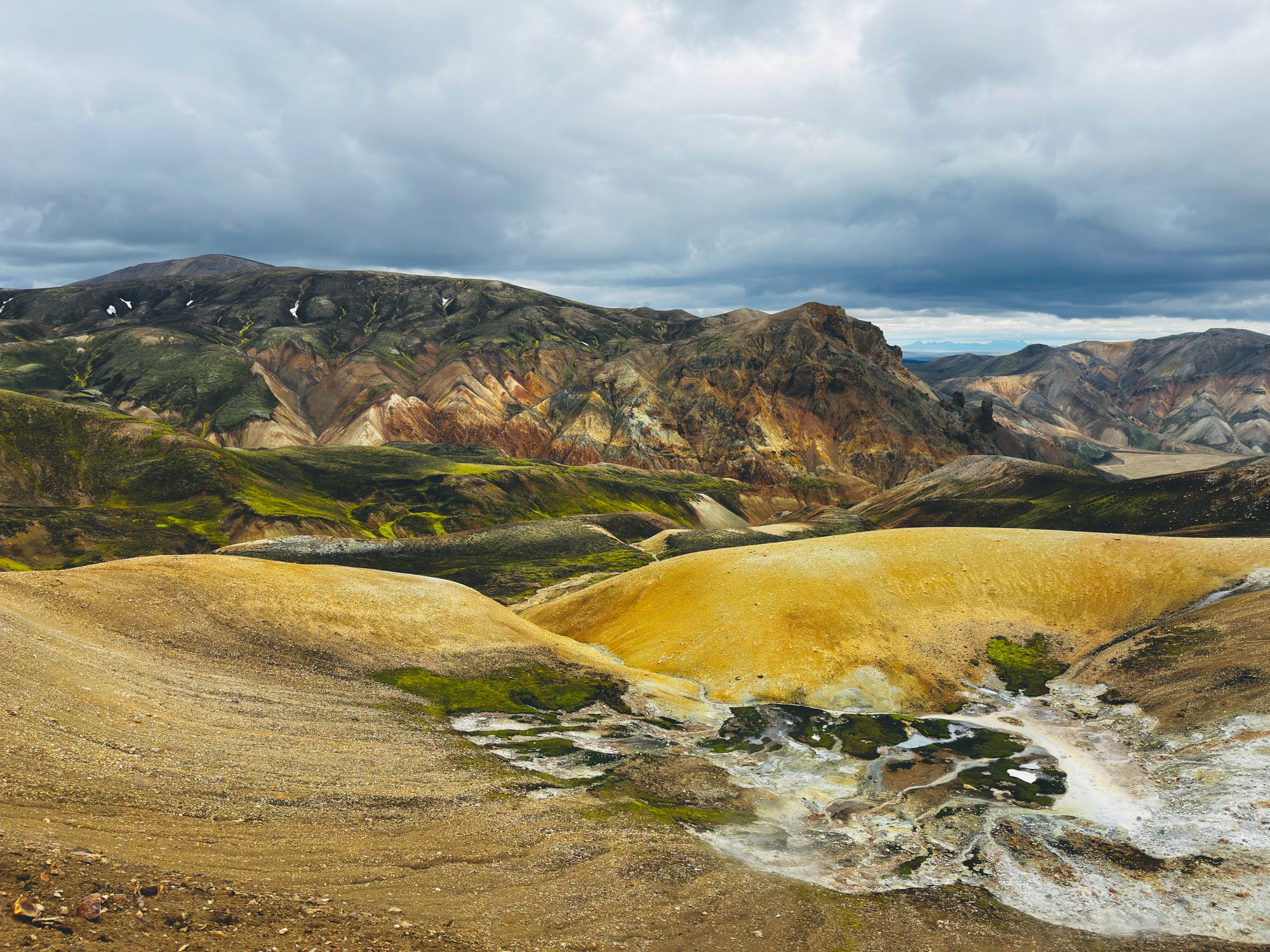
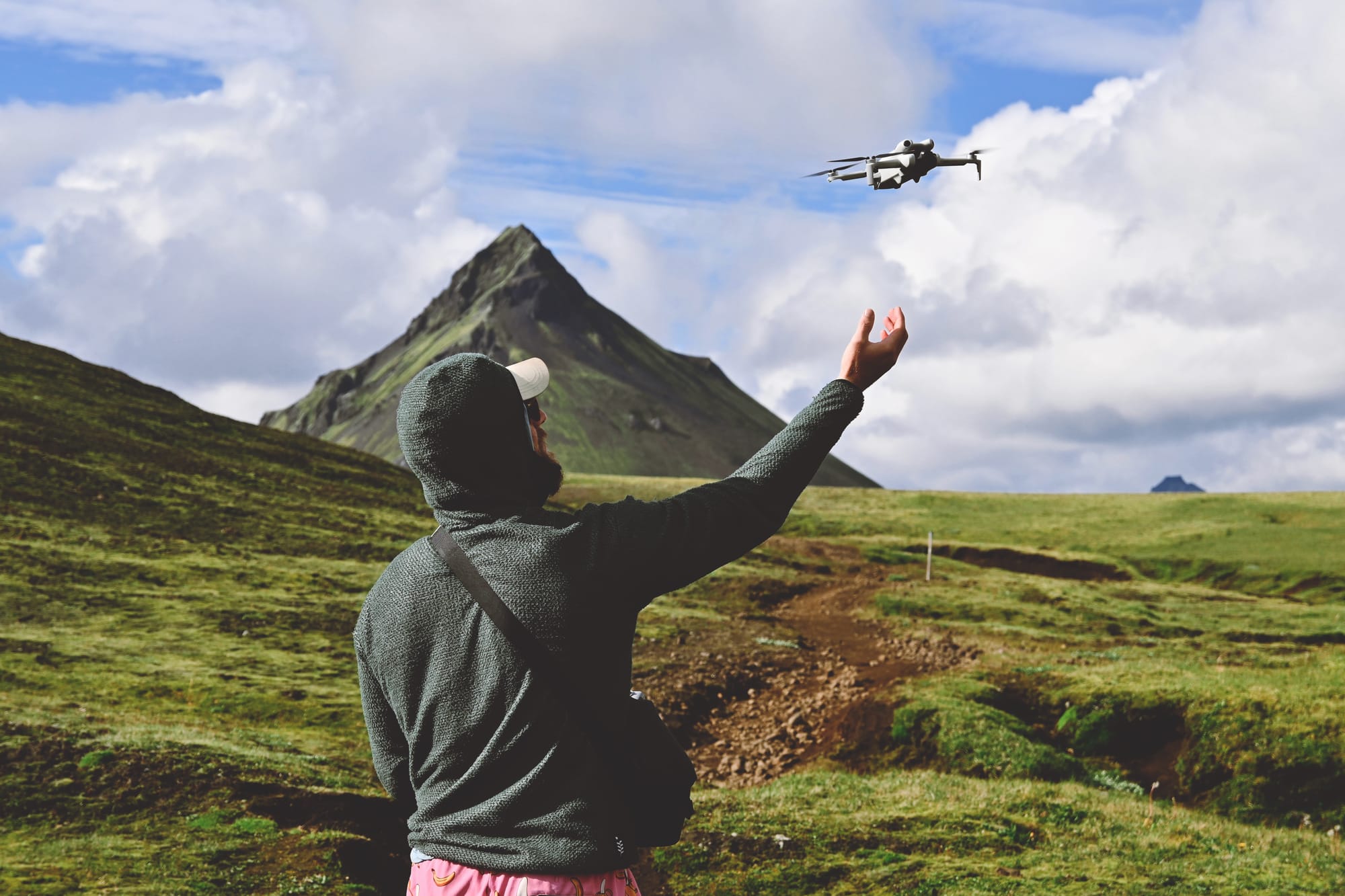
This section is where Iceland starts showing its cards fast. The scenery changes in chapters, like someone is swapping entire planets between ridge lines.
Landmannalaugar starts you in a geology flex.
- The mountains here are largely rhyolite, a silica-rich volcanic rock that weathers into those unreal colors (creams, reds, greens, yellows). This area sits in the Torfajökull volcanic system, which is unusually rhyolite-heavy compared to the rest of Iceland.
- Right out of the gate you cross Laugahraun, a rough obsidian-studded lava field. Obsidian is basically volcanic glass, and it shows up when lava cools fast. That sharp, black, jagged texture is the point. (This lava field is often linked to an eruption in the late 1400s.)
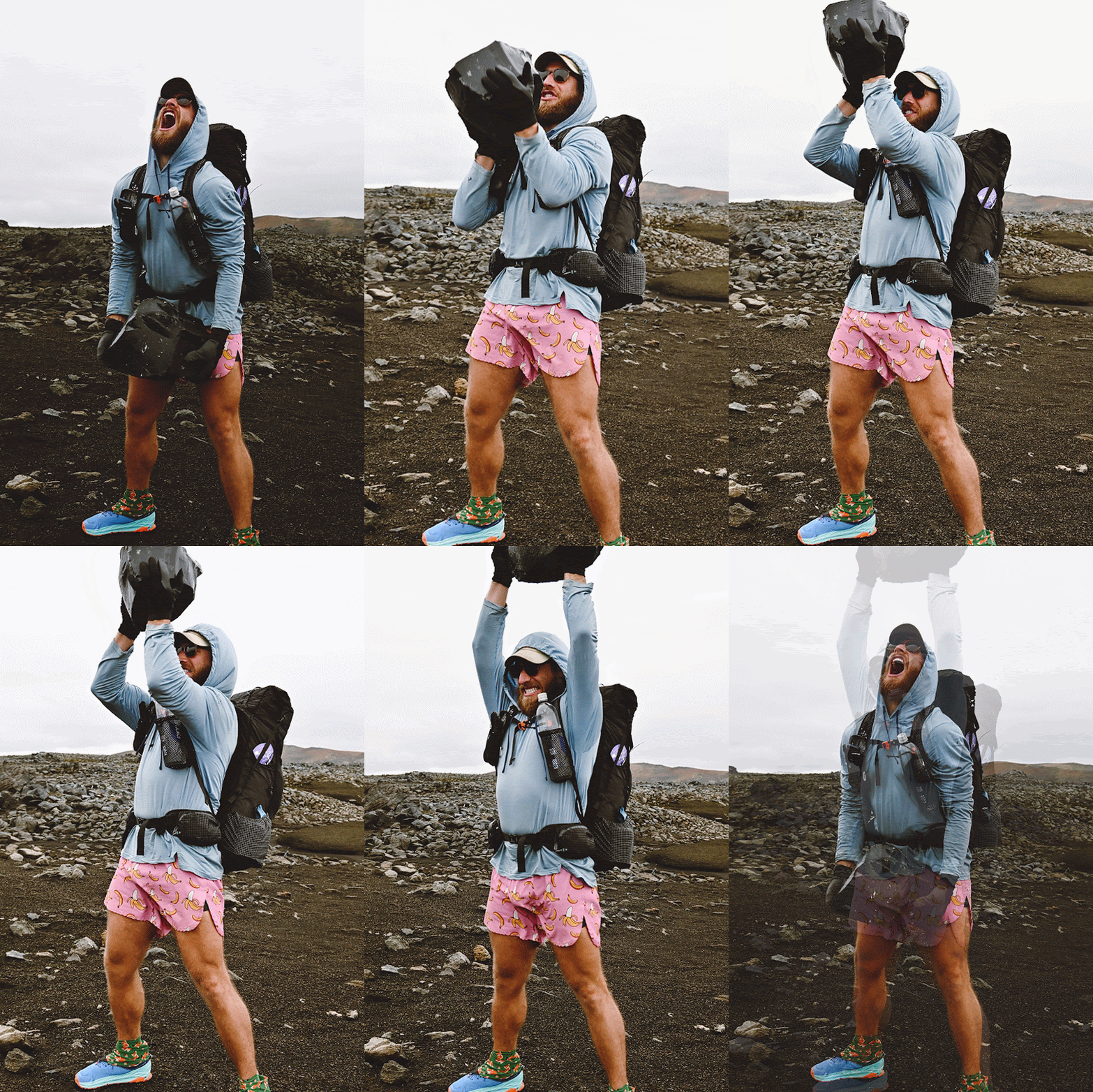
Then you climb into “snow + steam” country.
- As you gain elevation toward the first hut area (Hrafntinnusker), it’s common to be walking over snow patches even in summer, with darker volcanic ground cutting through the white like ink.
- The smell hits before the visuals sometimes. Fumaroles (steam vents) and geothermal zones show up like the earth is exhaling right beside the trail.
Why Iceland can do this at all (the 30-second version).
Iceland sits on the Mid-Atlantic Ridge where tectonic plates pull apart, and it’s also fed by a hotspot. That combo explains why the island has so much volcanic and geothermal action above sea level, and why the landscape looks freshly built.
On-foot notes
- Obsidian fields: loud underfoot, sharp-looking, and visually dramatic. It feels hostile, but it’s stable if you watch your footing.
- Snowpack + melt: the trail alternates between crunchy snow sections and wet runoff areas. You start learning quickly where the ground is solid and where it’s spongy.
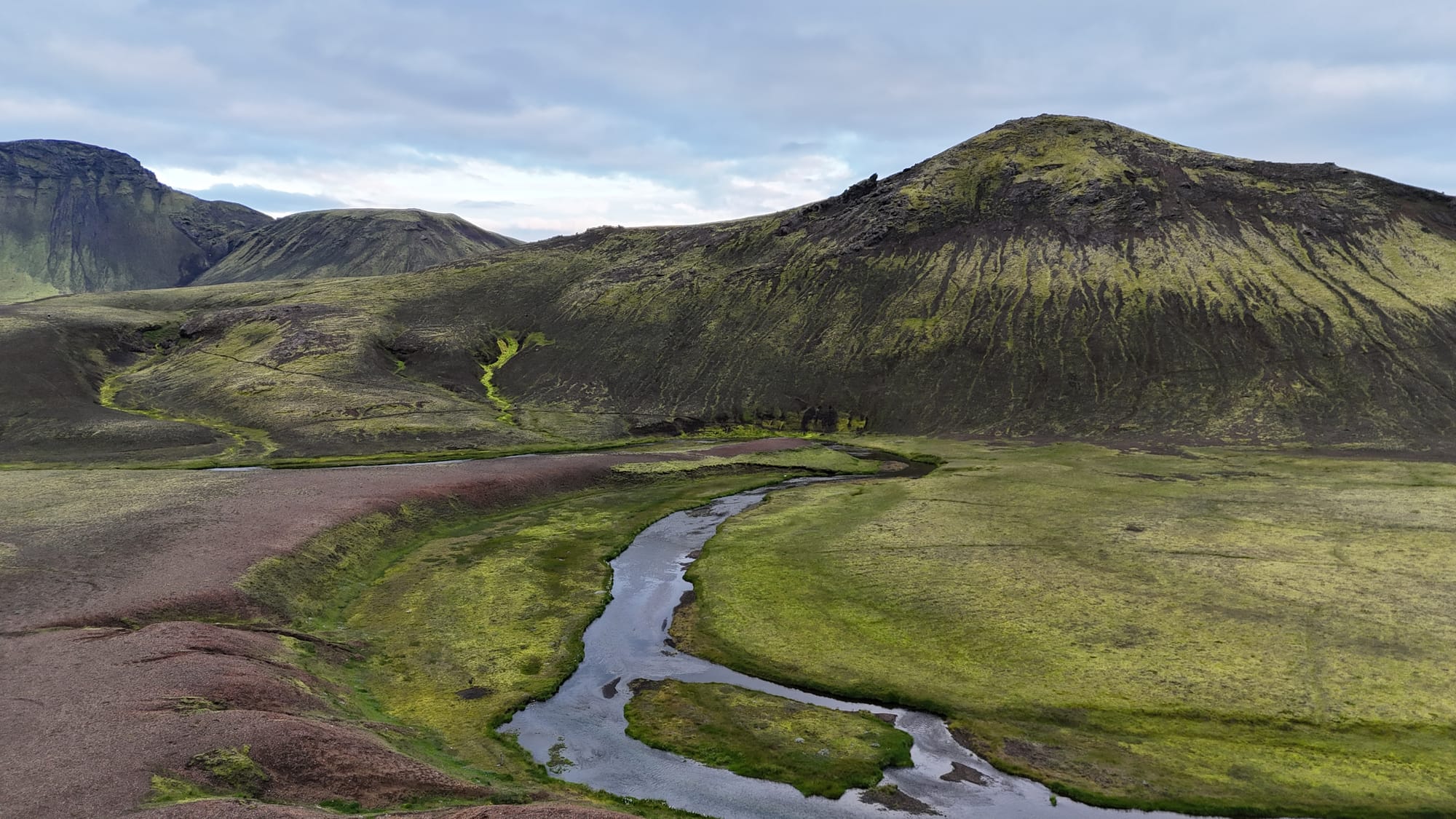
- Big land divides: wide valleys and ridgelines where you can see multiple terrain types at once. Lava, snow, and bright mineral mountains all in one panorama.
- The constant theme: scale. Iceland makes you feel small in a good way.
By the time we were pushing toward Álftavatn, it didn’t feel like “we hiked from point A to point B.” It felt like we walked through a timeline of the island being built.