Meet Eleanor
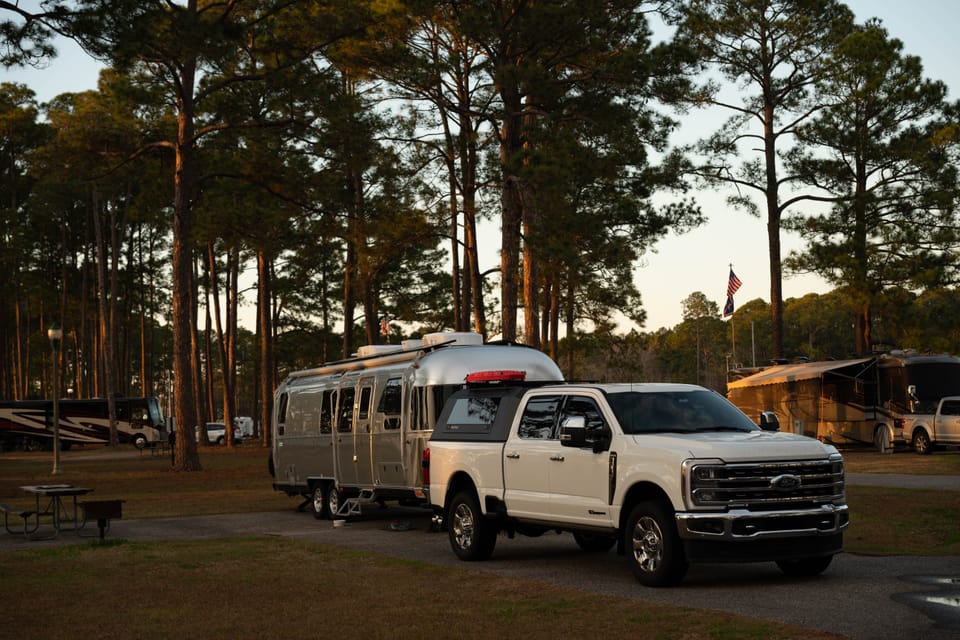
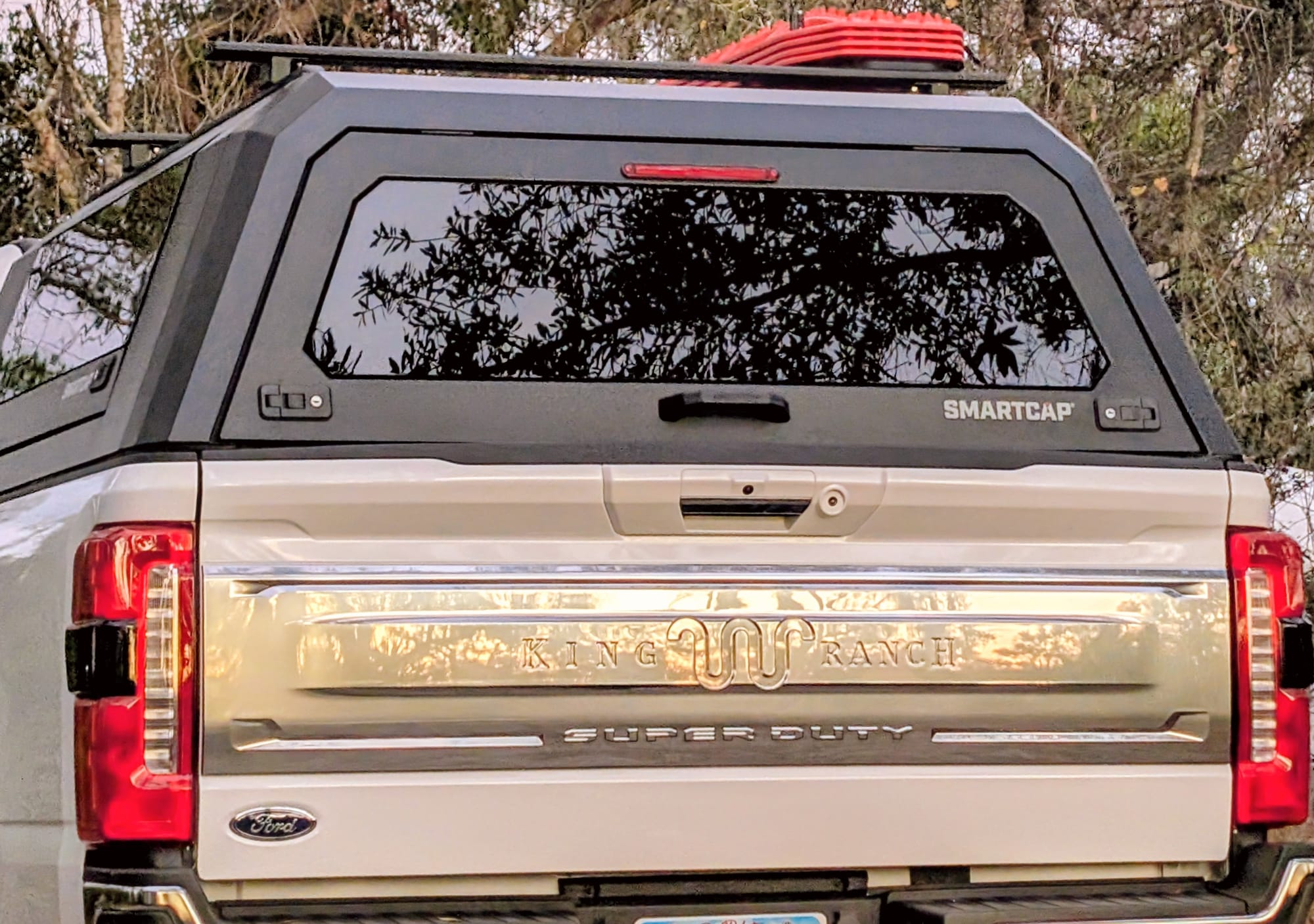
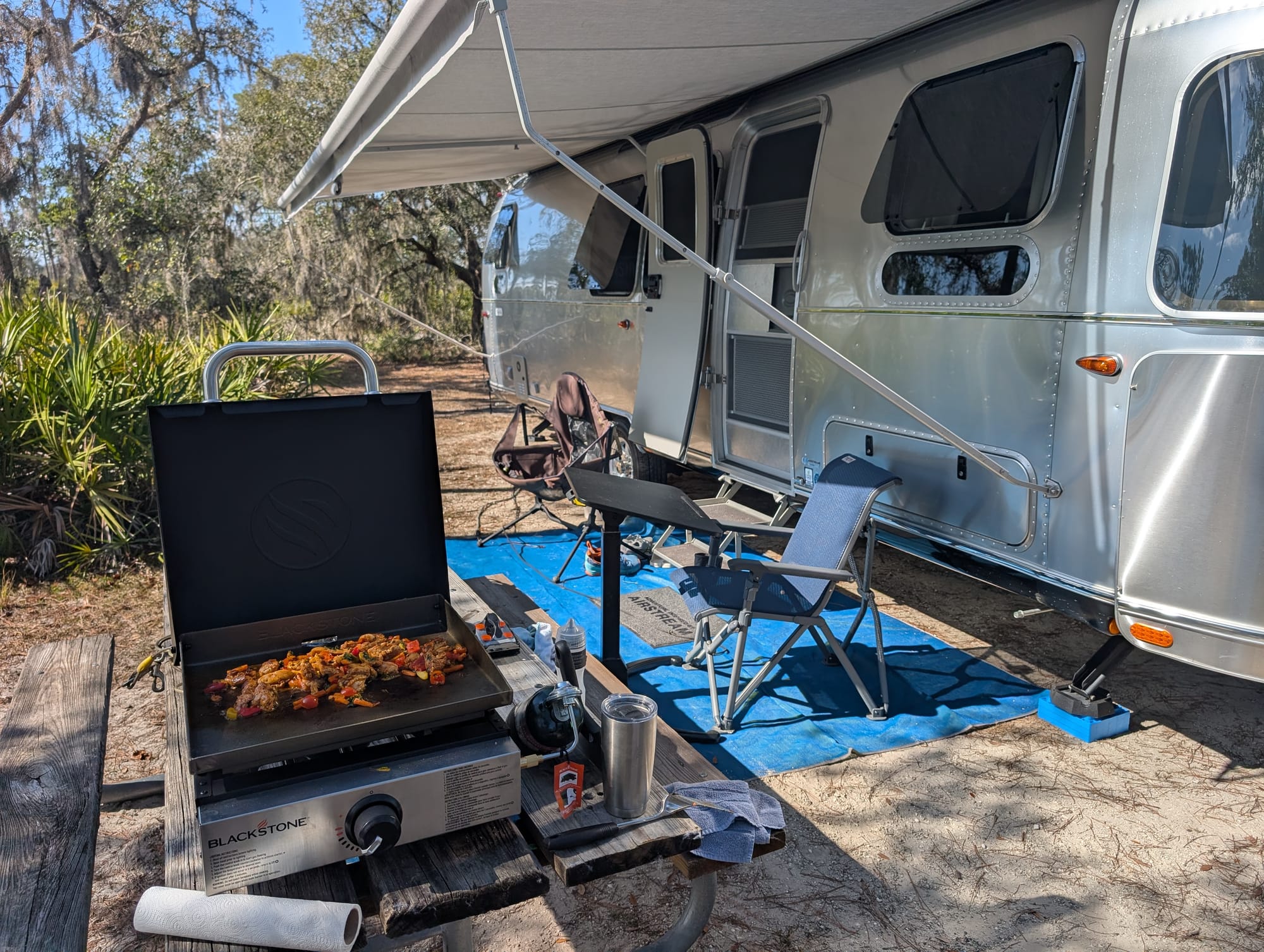
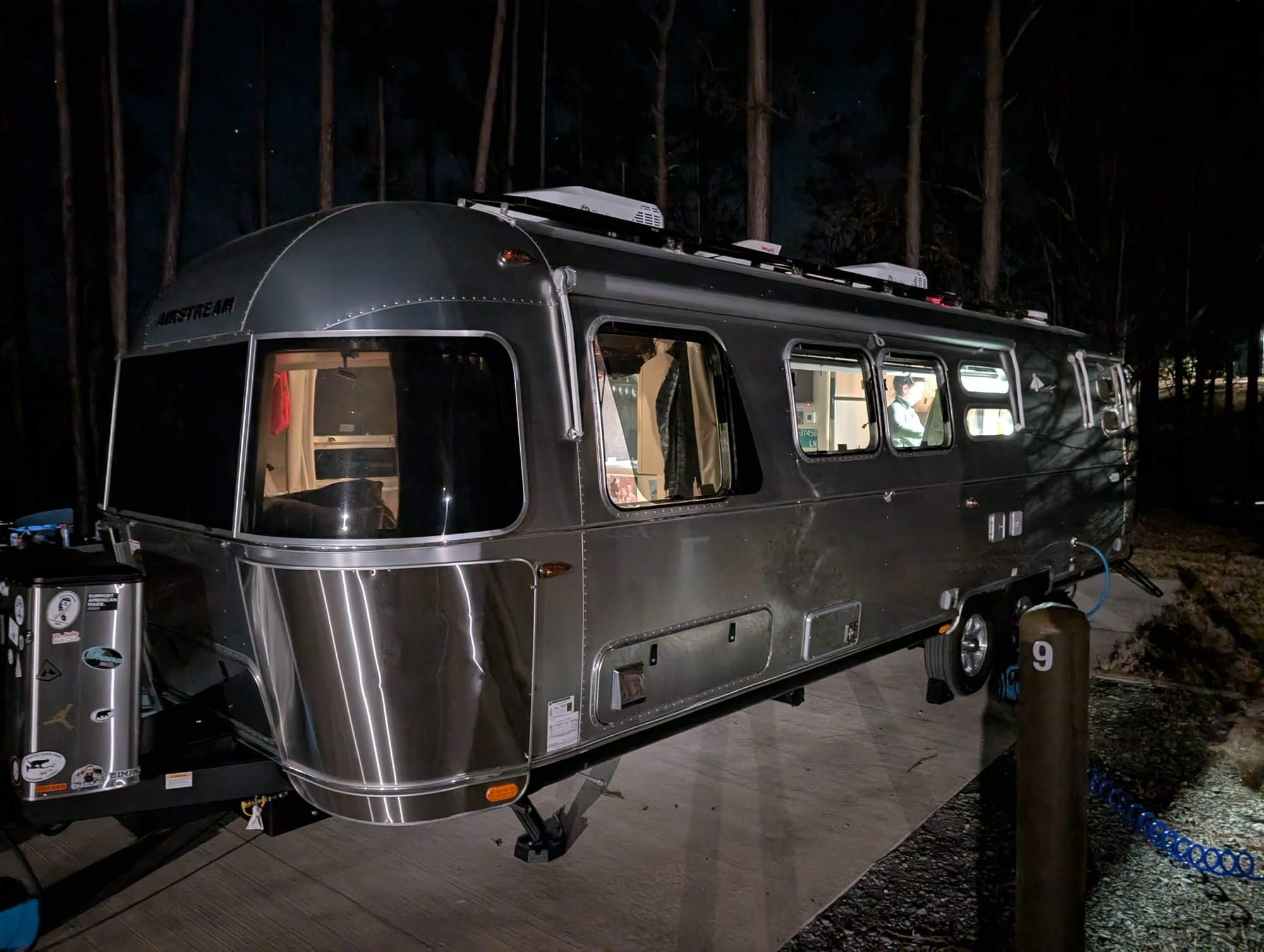
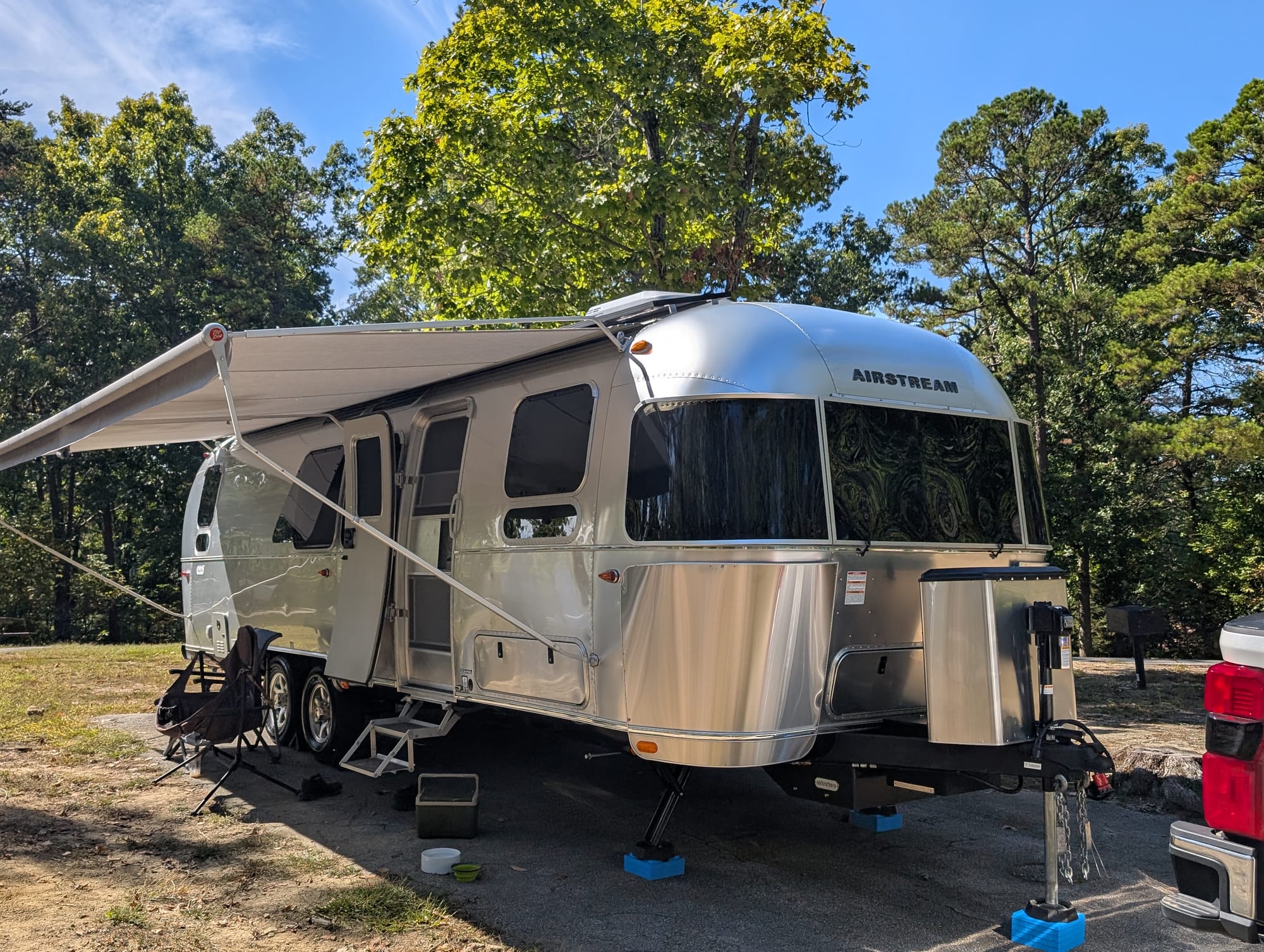
Our rig is a 2025 Airstream Flying Cloud, the 30' Office floor plan with a front bed (twin) setup. On paper it’s a manageable trailer. ~5,650 lbs dry, ~1,650 lbs net carrying capacity, with a 7,300 lb GVWR. In real life, behind Jolene, our 2024 F-250 King Ranch diesel, it pulls like it’s not even there.
The part that surprised me wasn’t highway cruising. It was the slow-speed stuff. I expected turning and backing to be the stress test, but it hasn’t been. The double axle makes a difference. It tracks predictably and feels more forgiving when you’re backing into sharper angles than a single-axle trailer would be.
As far as build feel goes, the simplest way I can say it is this. It feels solid. Basically all of it. Nothing about it has felt fragile in the way I assumed a travel trailer might.
Airstream, Briefly
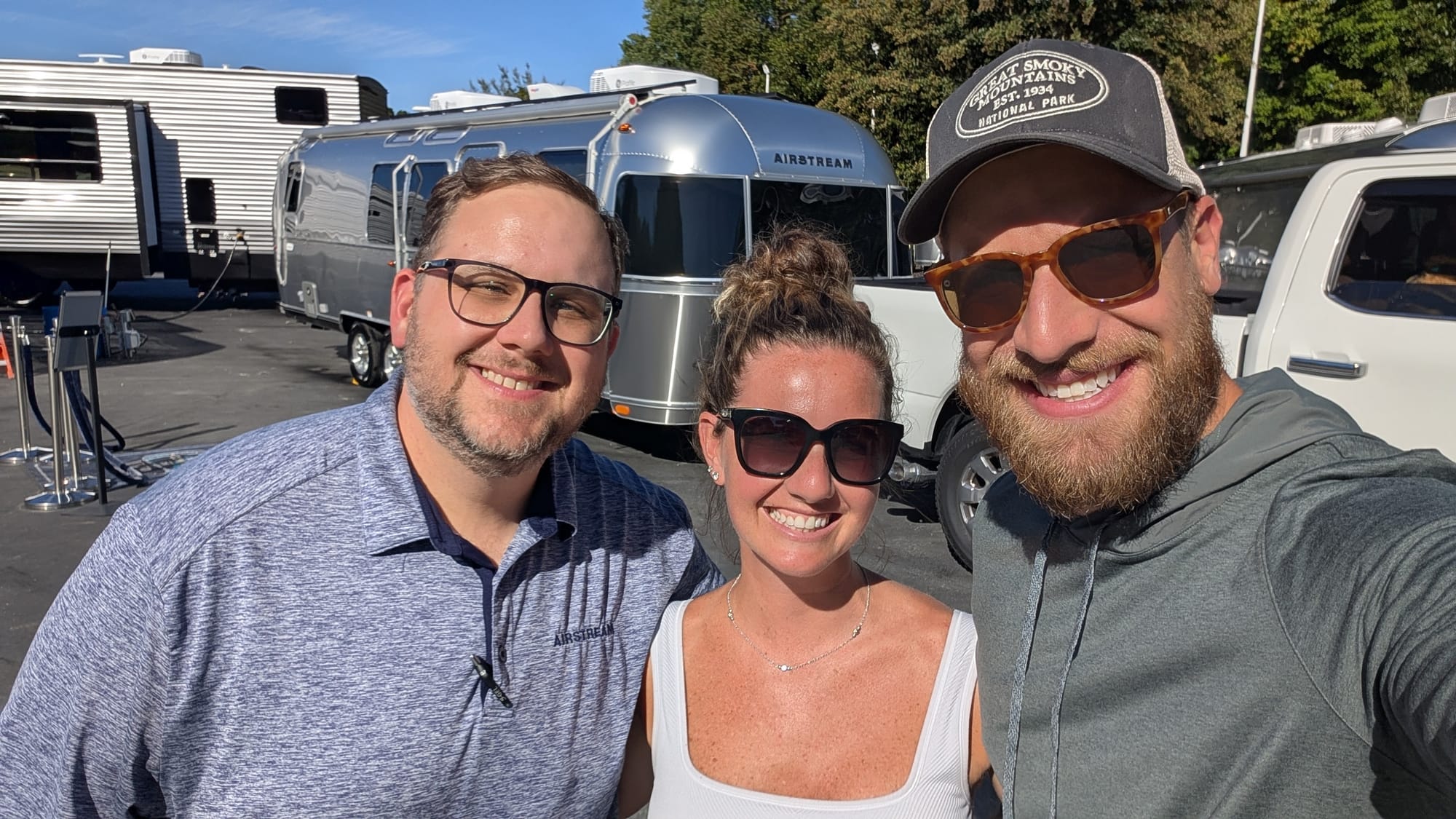
Before we owned one, we didn’t have a deep Airstream history lesson in our heads. We started with basic research and a lot of YouTube (KYD, 13 Adventures, Chad's RV, and so many more). The real clarity came in person. At the January 2025 RV show in Tampa, we walked through around eight Airstream models, and it helped us narrow quickly. We kept circling back to the Office layout because we weren't buying a weekend rig. We need a space that can support workdays.
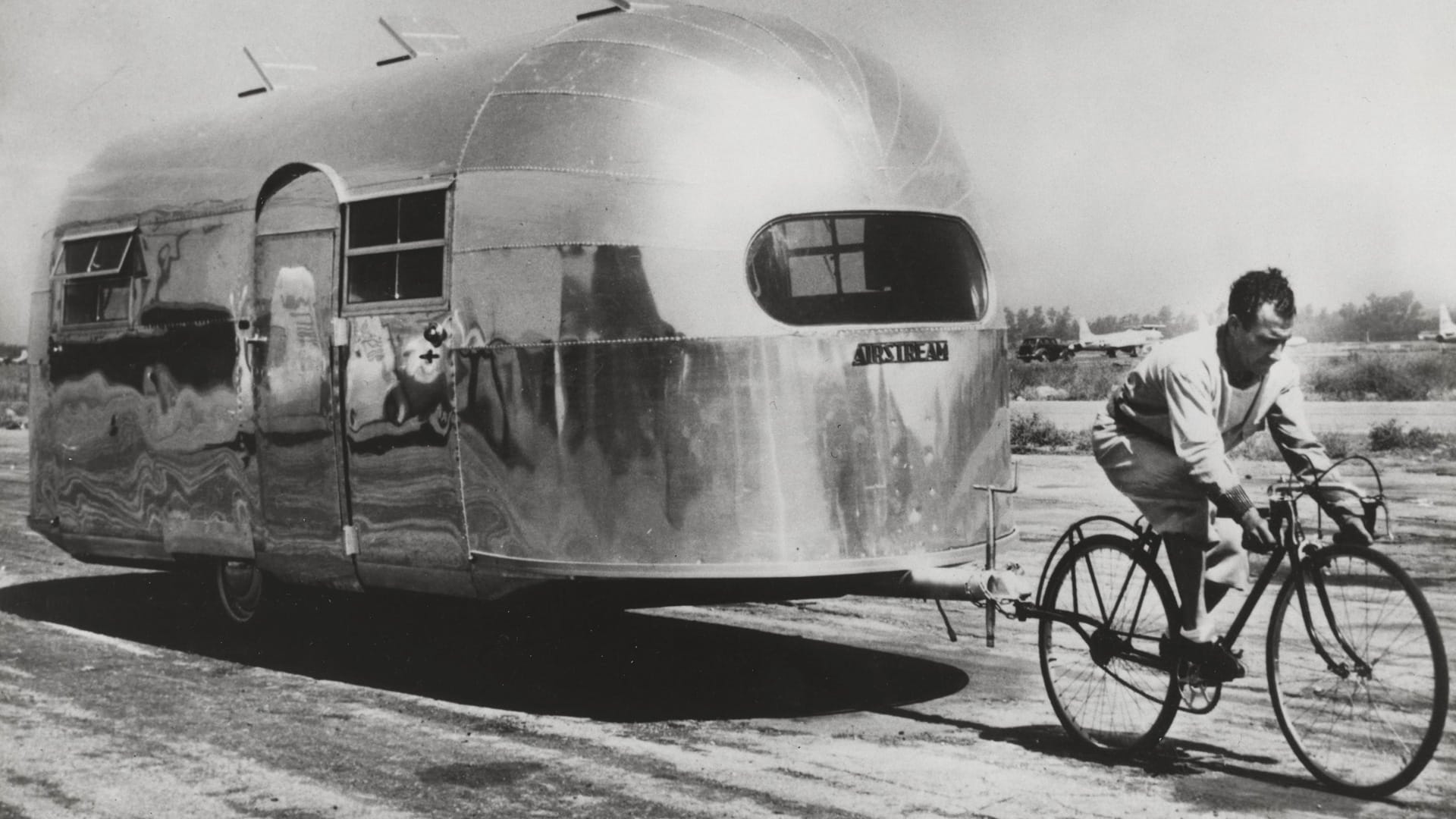
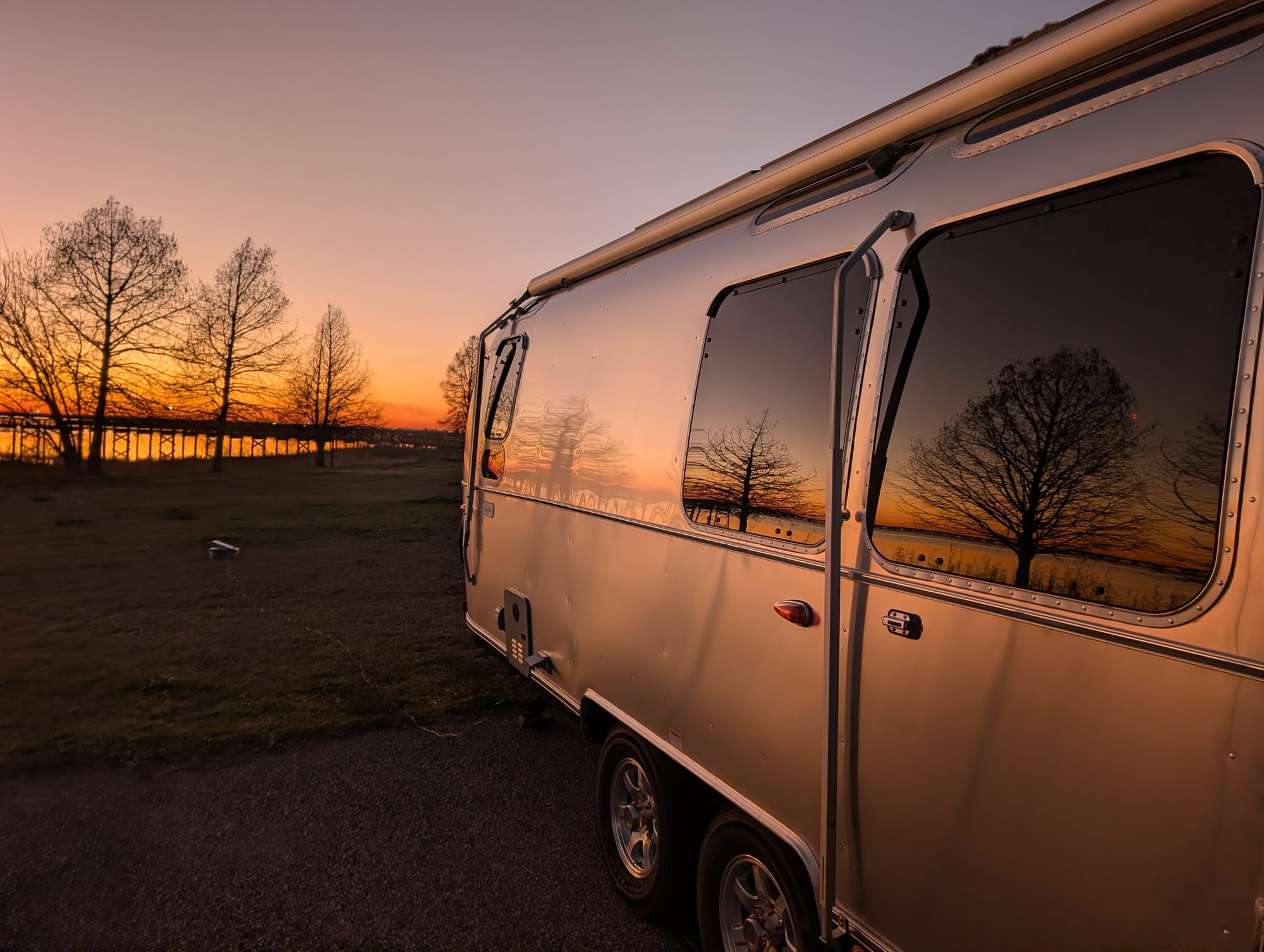
After living in it, the biggest thing that stands out is how timeless the design is. In a park, you honestly can’t tell if an Airstream you’re looking at is a 2026 or a 2002. That’s not just style, it’s consistency. The shape, the materials, and the way they don’t chase trends the way SOB (some other brands) do. If you’re thinking long-term ownership, that matters.
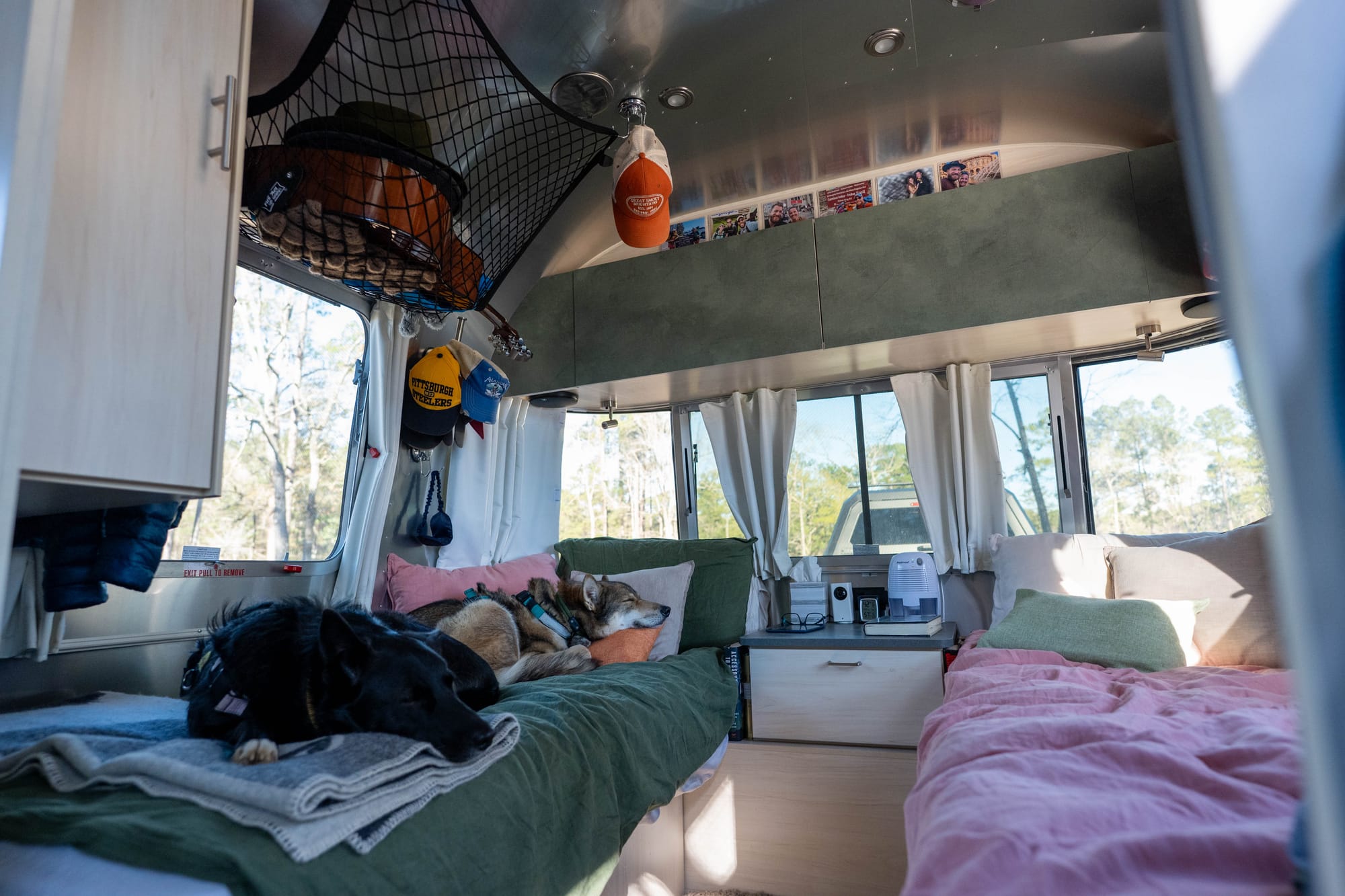
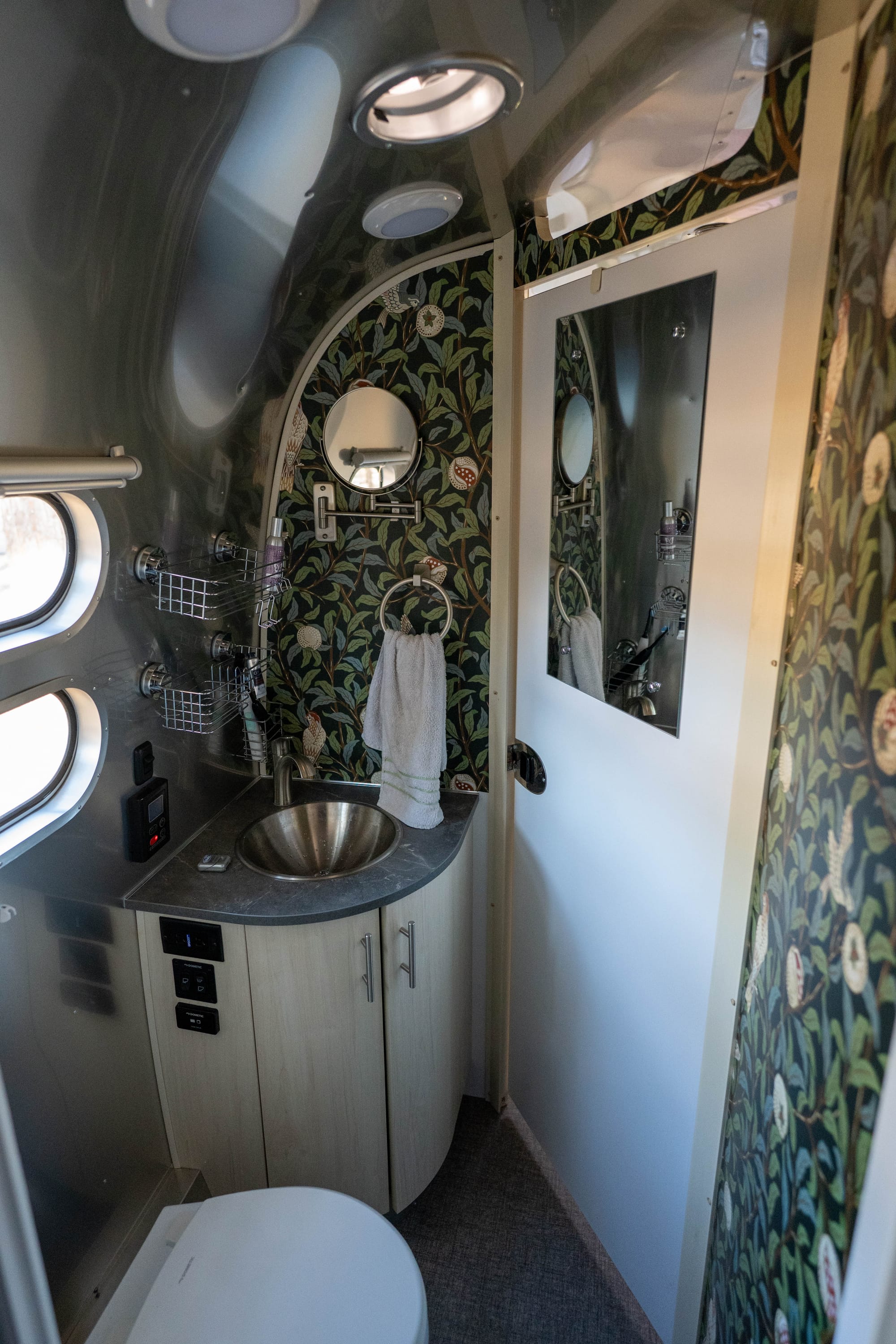
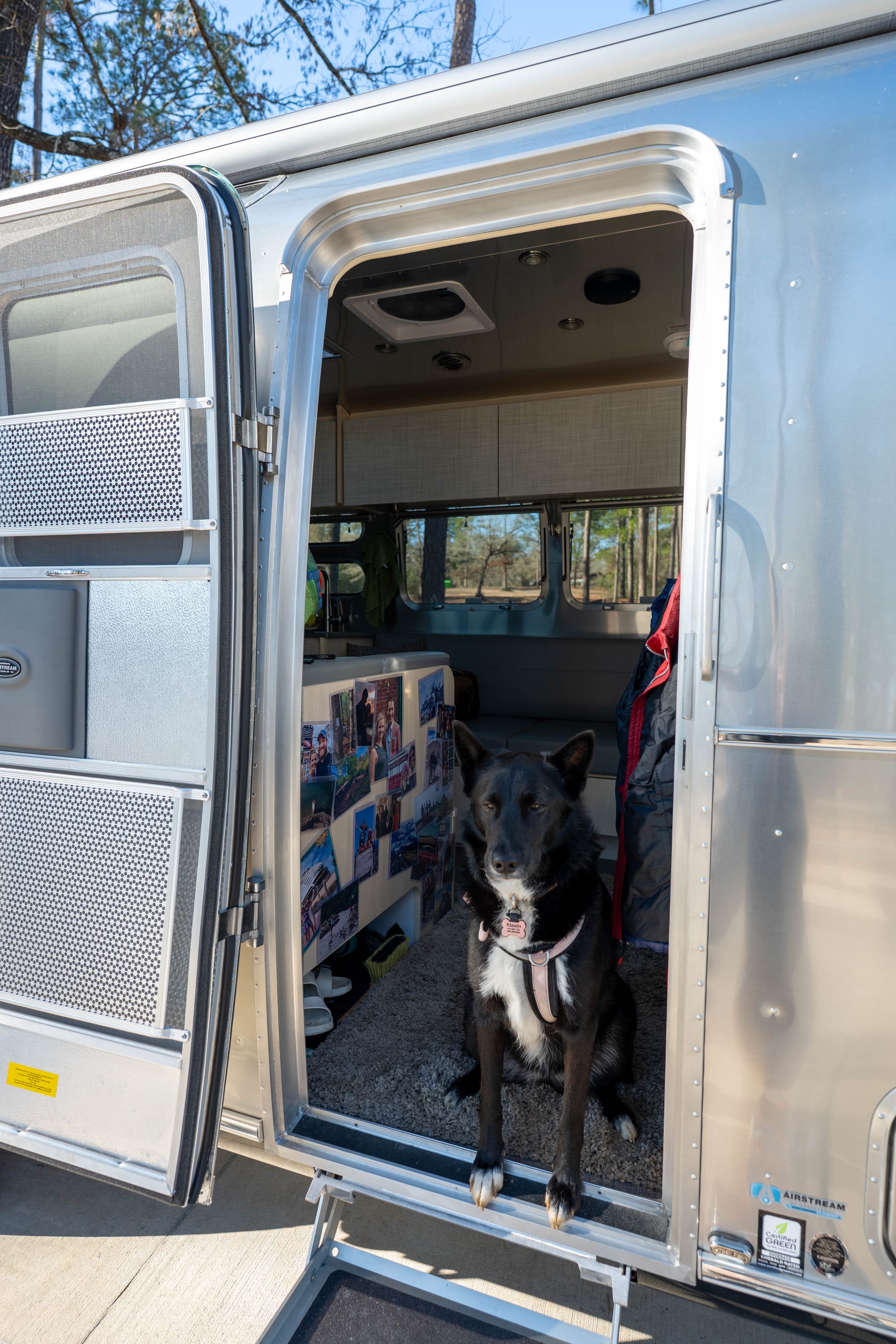
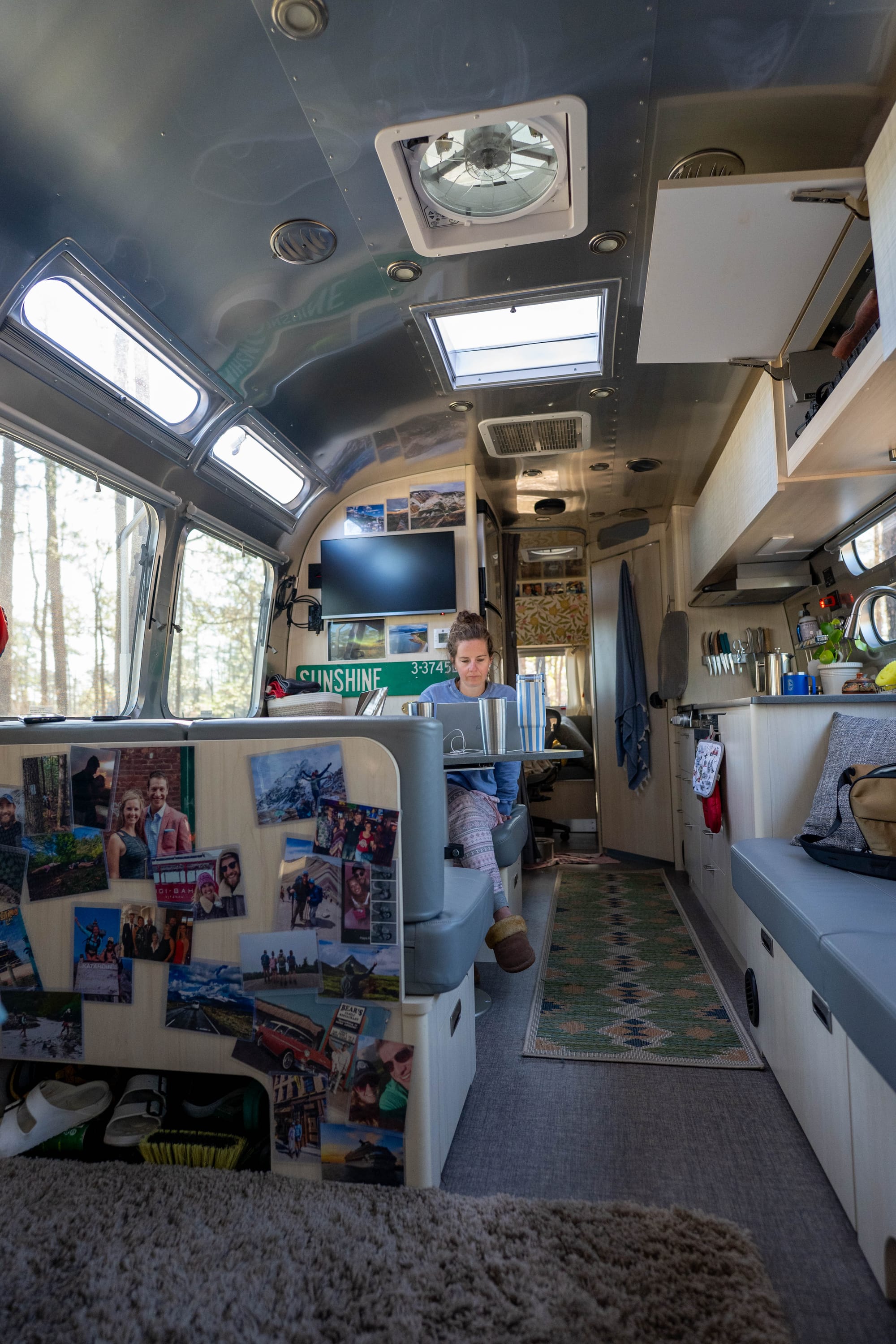
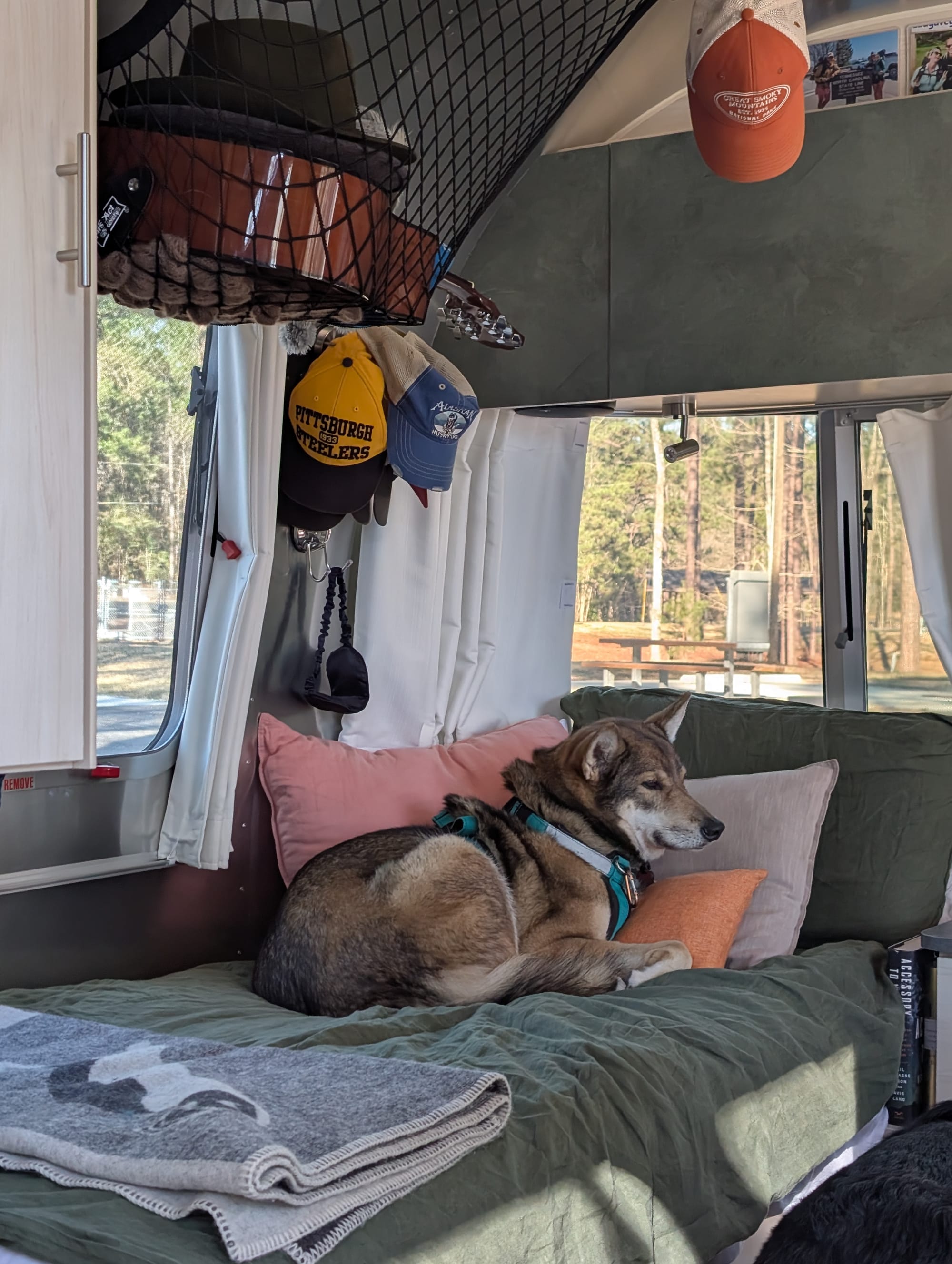
We also learned the interior can go either direction. Modern and clean, or more personal and lived-in. We love the aluminum look, but we didn’t want the inside to feel sterile, so we made changes early. Photos up, vinyl wallpaper over the cabinets, and updates in the bathroom. Not to turn it into something else, just to make it feel like home.
The other piece is practical. Construction, resale, and repairability. We’re still new to full-time, but we wanted a rig with a proven track record and a strong support ecosystem behind it.
Why We Chose This One
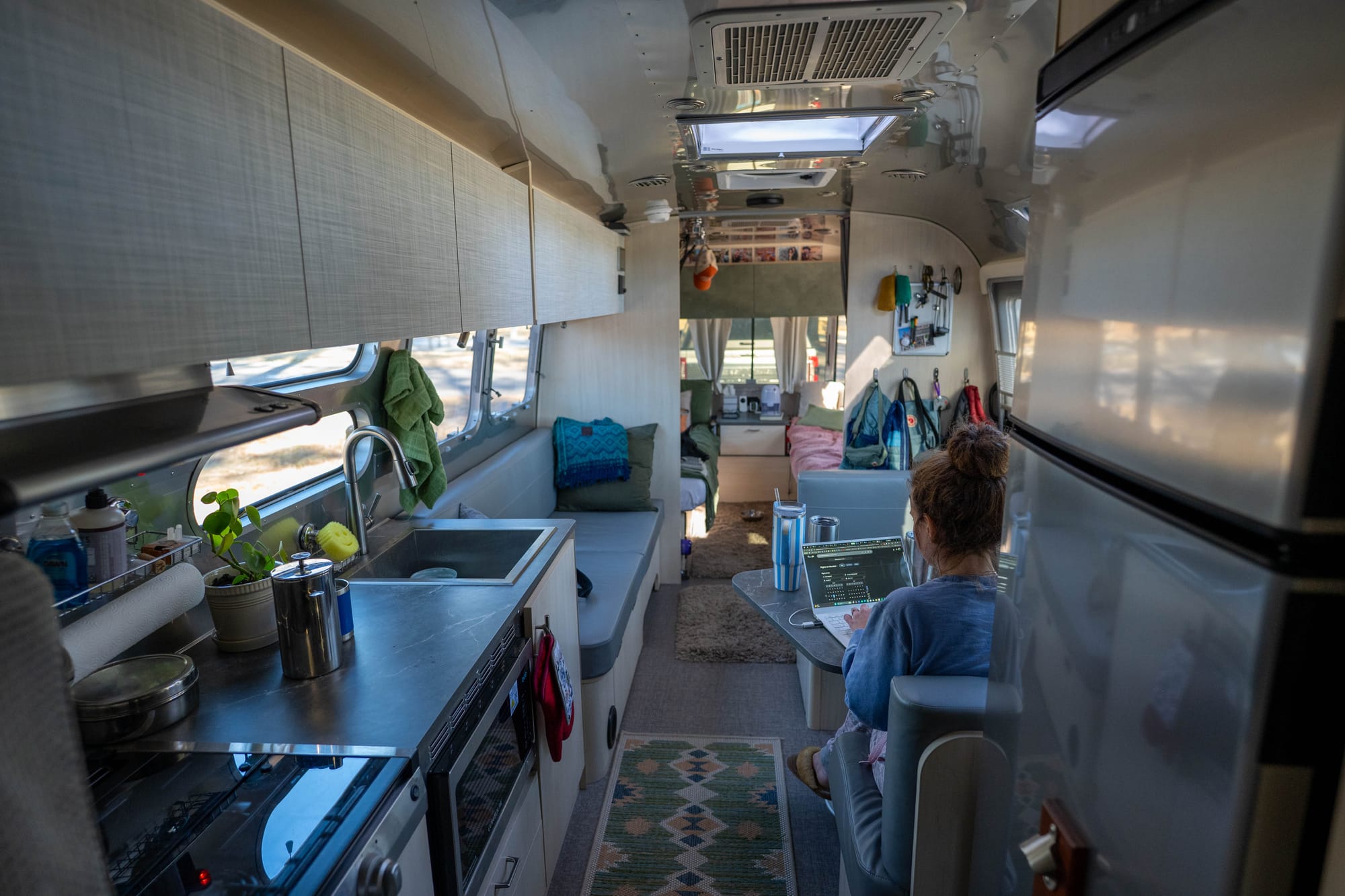
We went into this with a short list of non-negotiables. First, we needed 3+ days of boondocking ability without feeling like we were constantly managing scarcity. Second, we needed a dedicated office space that works as a real work zone, not a table we’d have to clear off every morning.
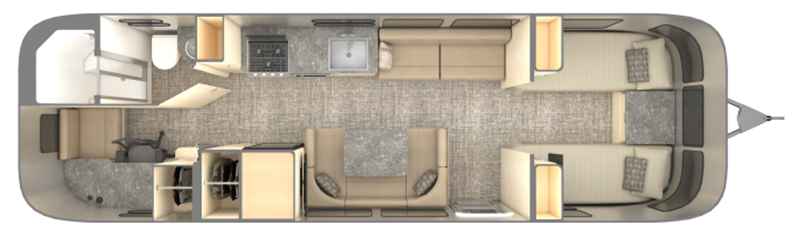
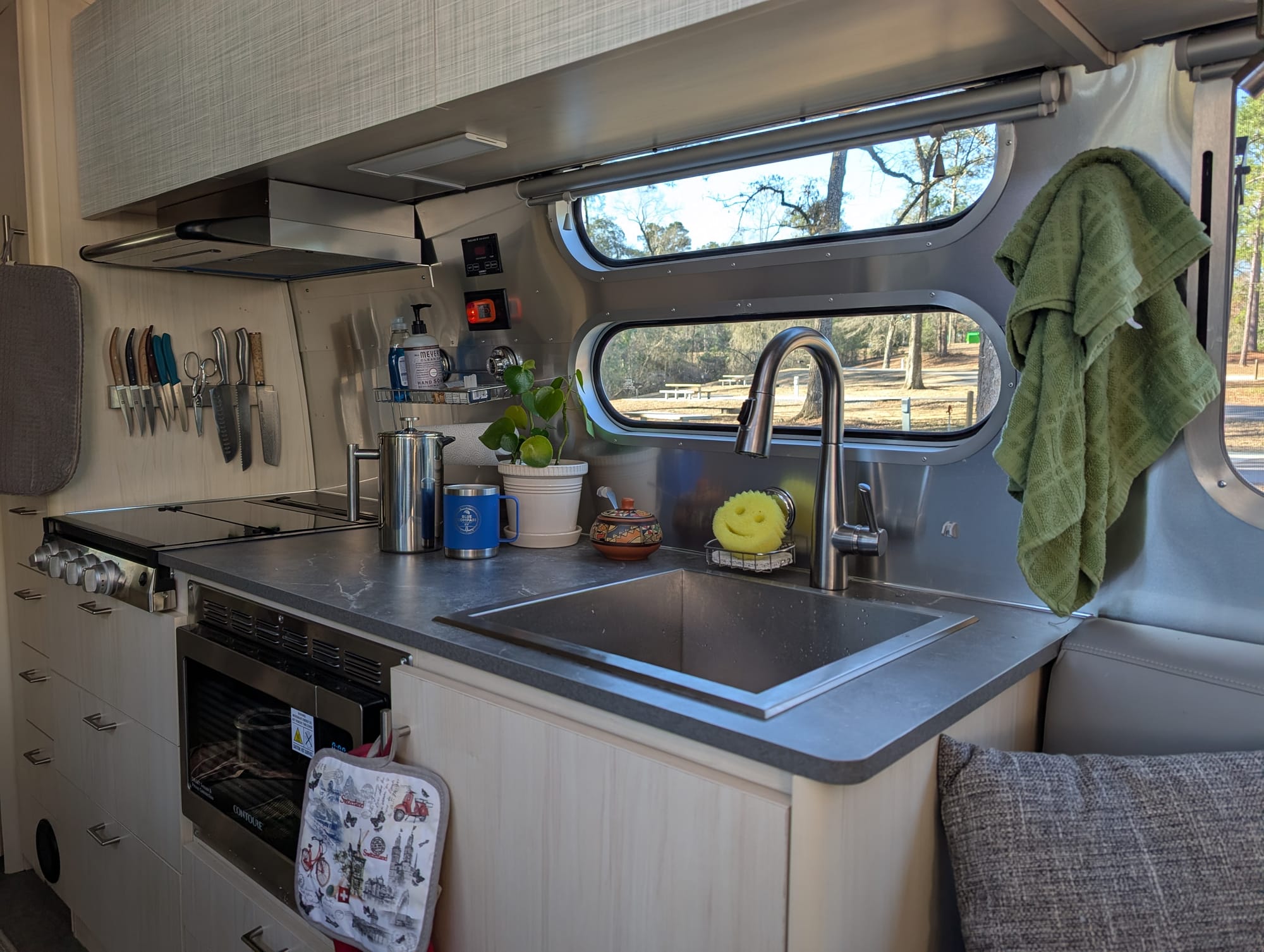
We also had a clear avoid list. We didn’t want a rig loaded with extra powered features just because they look good on a spec sheet. Automatic awnings, extra exterior lighting, powered couch and table features. More moving parts, more things to troubleshoot, and not the kind of complexity we were trying to add to daily life.
We looked seriously at other options. We toured multiple Brinkley models and came away impressed with their build quality and layouts. Inside the Airstream lineup, we loved the 27' Trade Wind. It’s a great adventure and vacation rig. It just wasn’t the right fit for full-time work on the road. The Office model solved the problem we actually have.
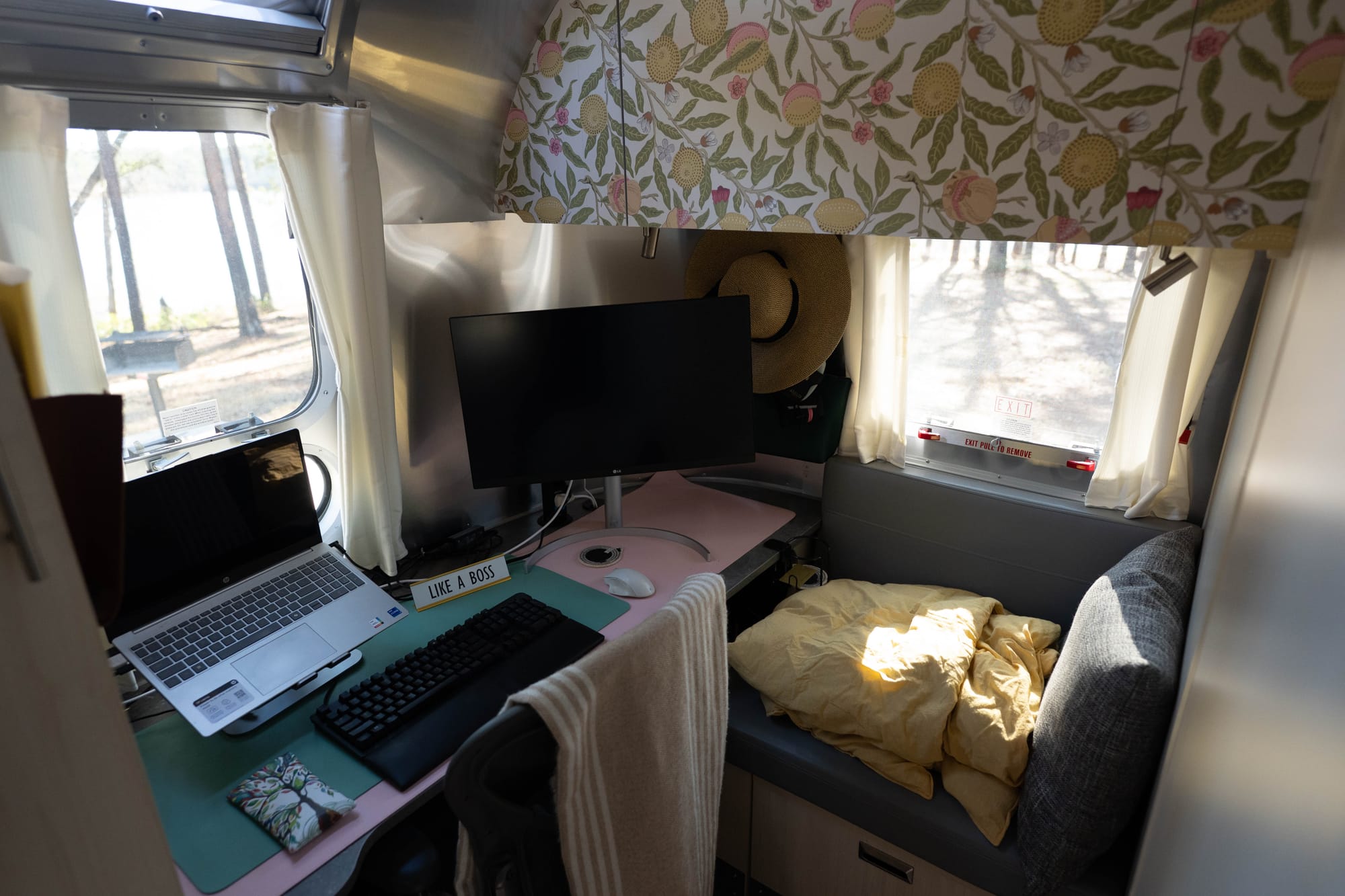
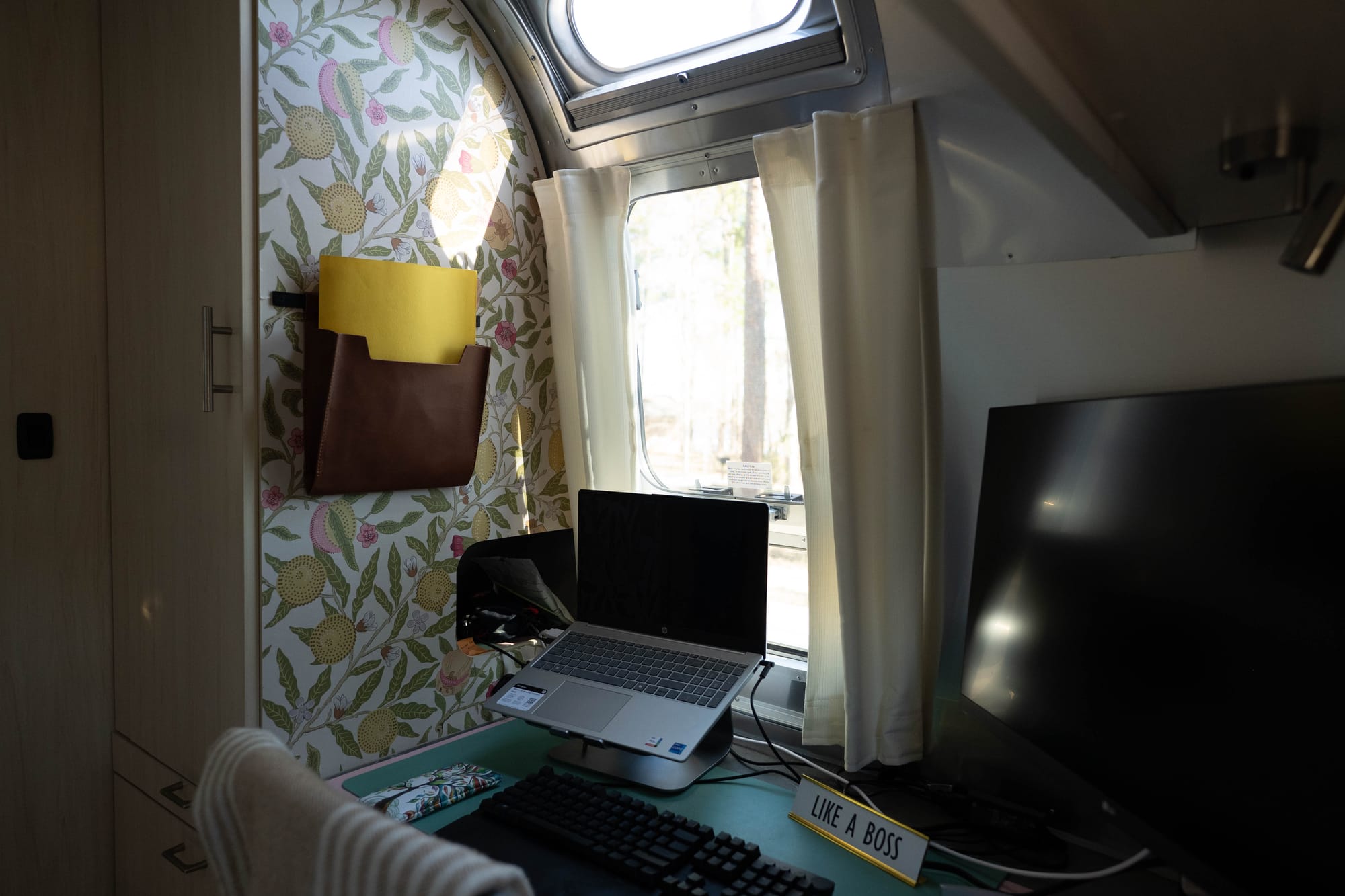
Sam's office space
We accepted a few tradeoffs to get what mattered. One simple one is Formica counters instead of Corian. Not a dealbreaker. We cared more about the overall platform. How it’s built, how it holds value, and how it fits the way we plan to live and work.
Power, Solar, Lithium
We built this rig around one requirement. Work reliably off-grid. The goal isn’t never plug in. It’s having enough capacity, and enough visibility into the system, that we’re making decisions with data instead of guessing.
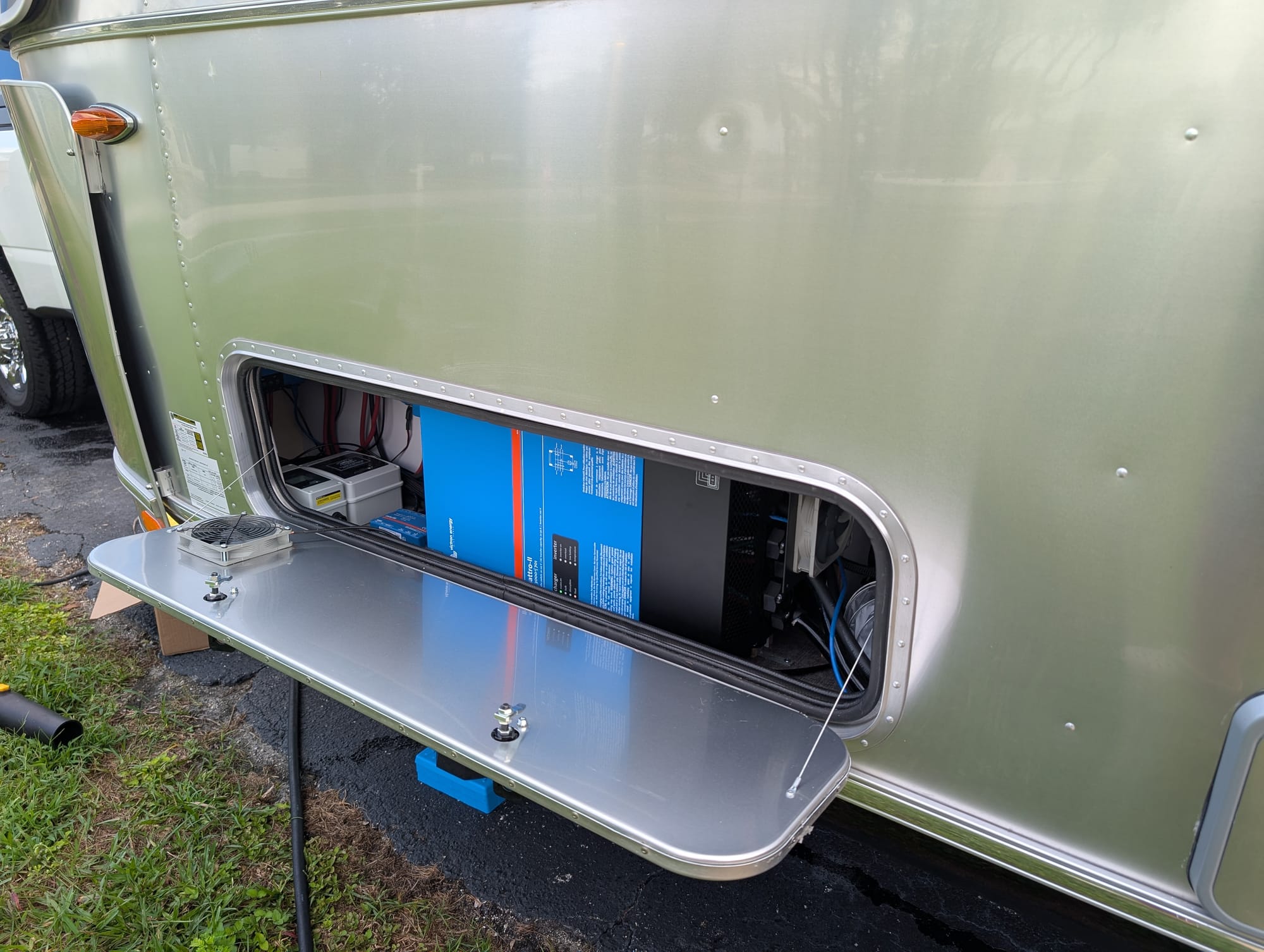
At the center is a 24V lithium battery bank using Epoch LiFePO₄ batteries (heated, Bluetooth-enabled), totaling about 460Ah at 24V, or roughly ~11 kWh usable. The number that matters in daily life isn’t the amp-hours headline. It’s the energy in kWh and how fast you can replace it. I originally thought we had “920Ah,” until I understood how the 24V series wiring changes how that number shows up. The usable energy is still the point.
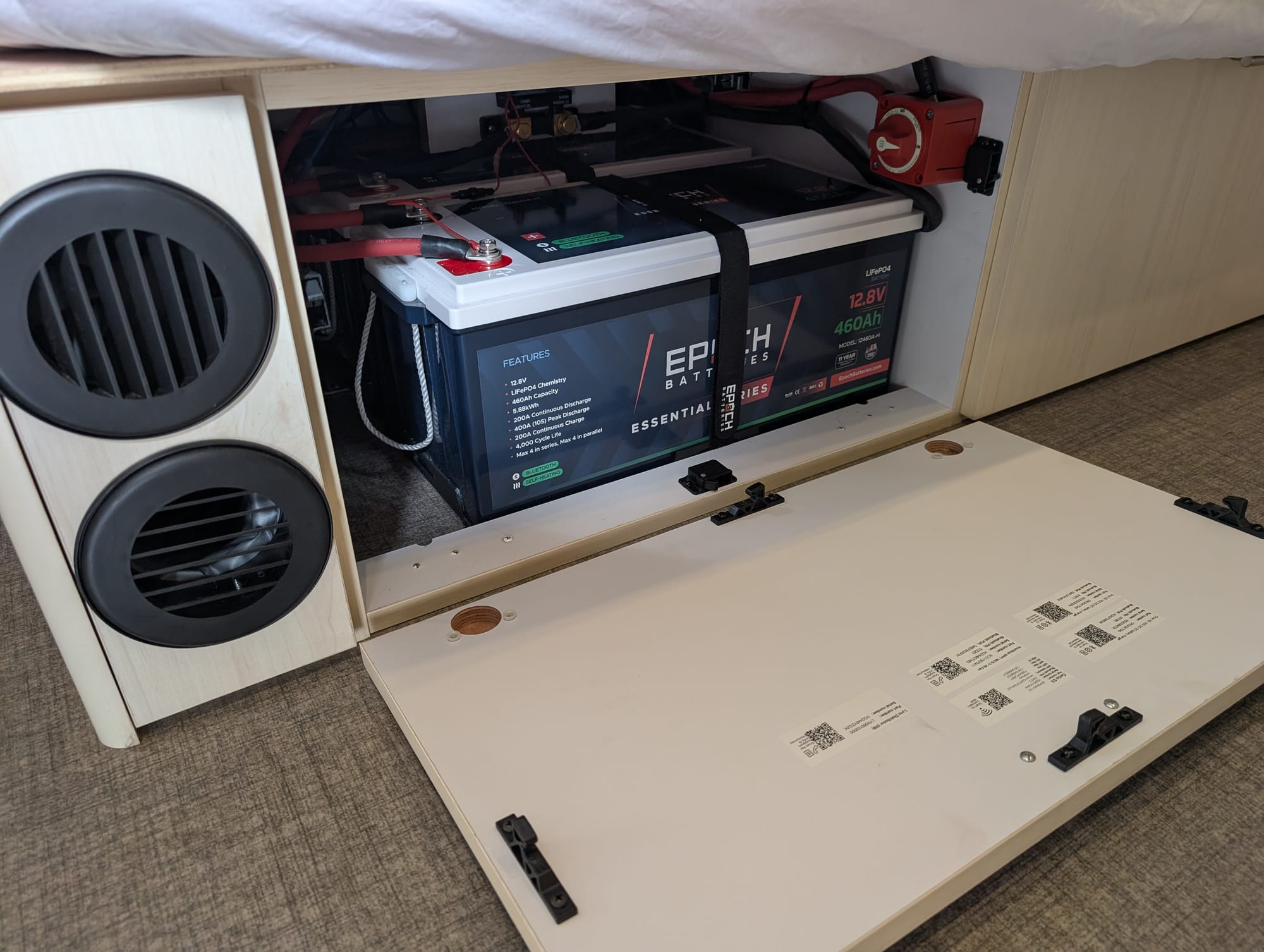
big batteries + big solar = self contained power
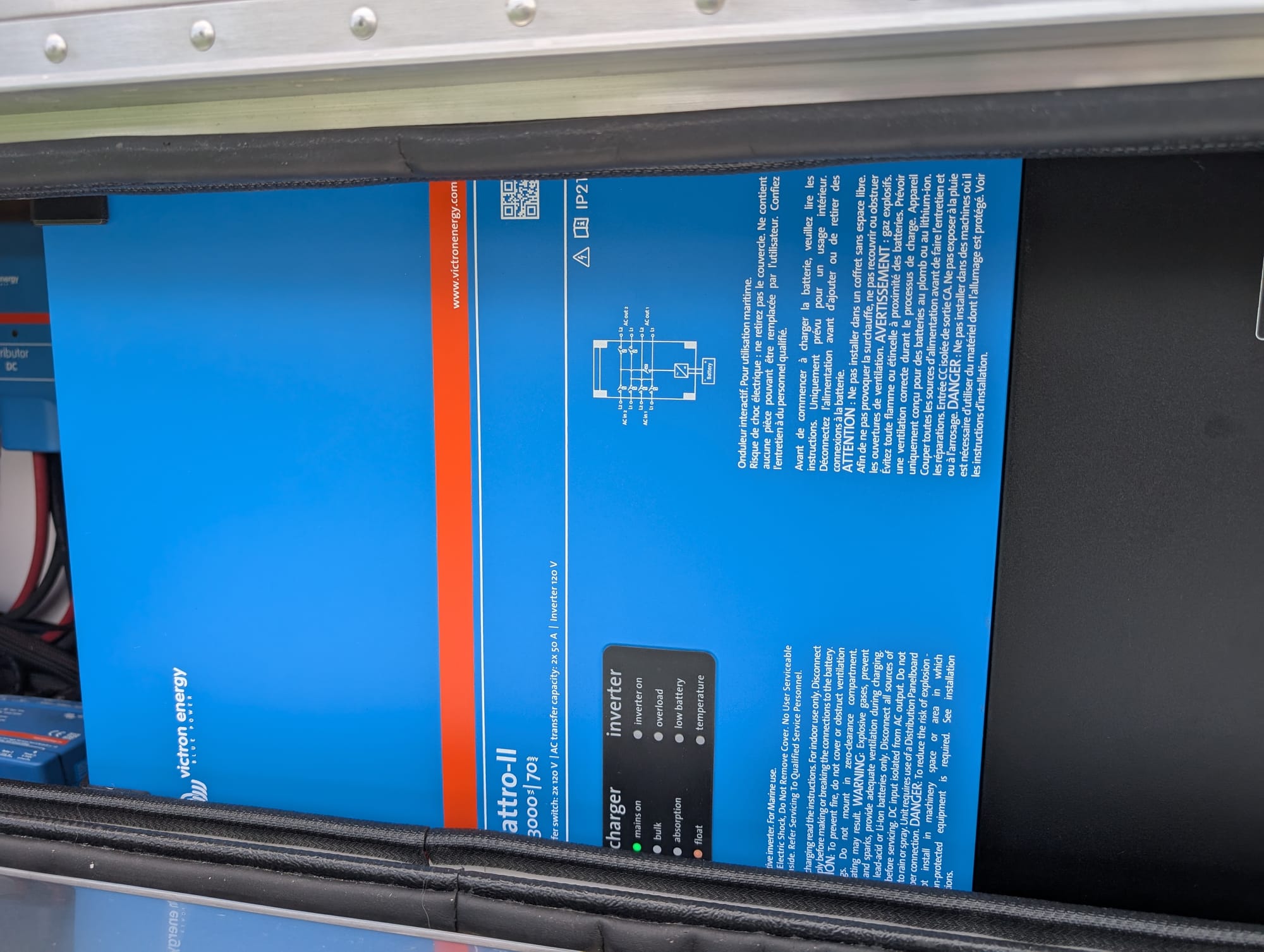
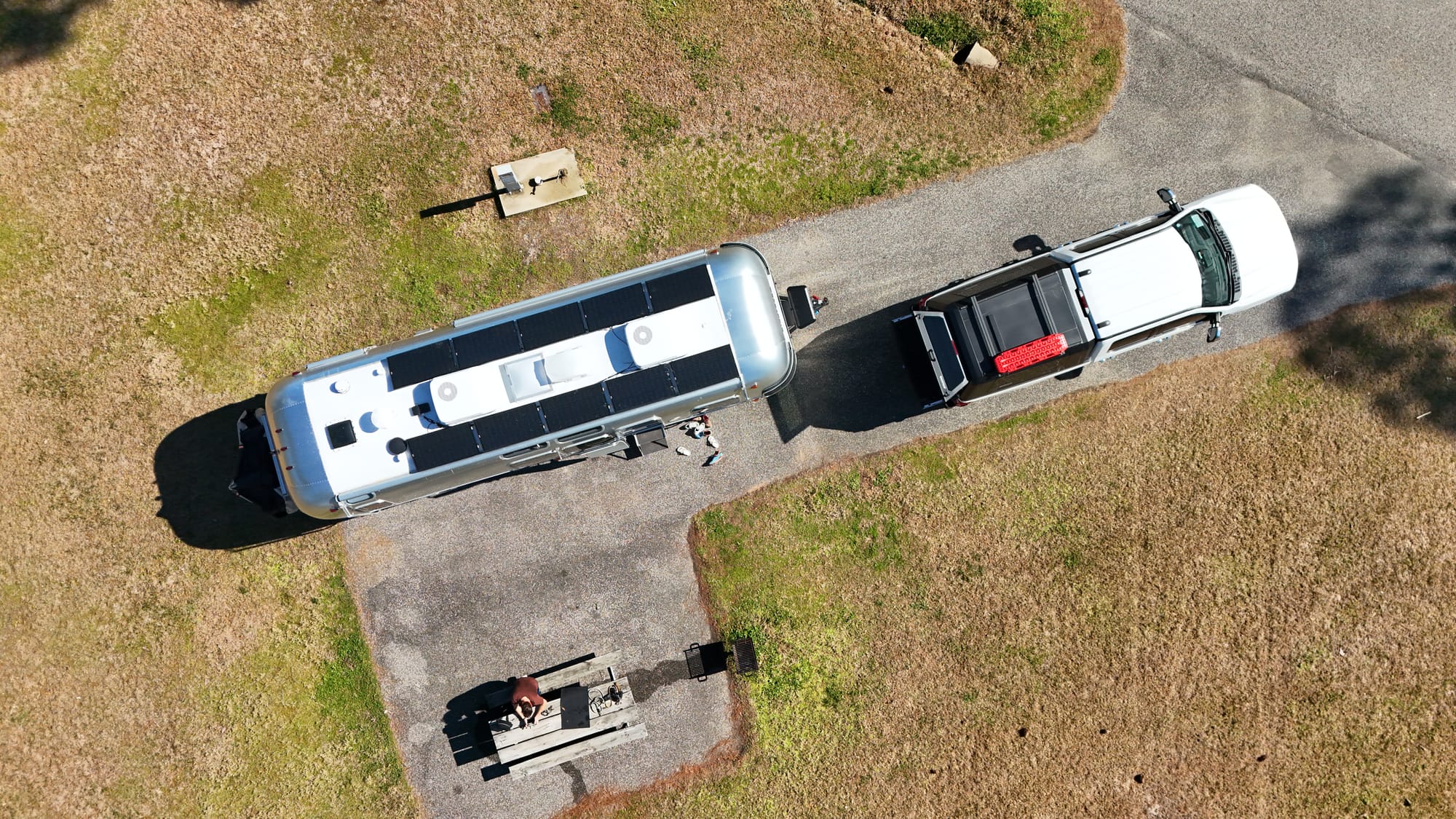
Up top we have 1,000 watts of roof solar, feeding a Victron SmartSolar MPPT 150/70. Power conversion and charging runs through a Victron Quattro inverter/charger, and the whole system is monitored and managed through a Victron Cerbo GX so we can track state of charge, see inputs and loads, and make cleaner calls on when to conserve versus when to spend.
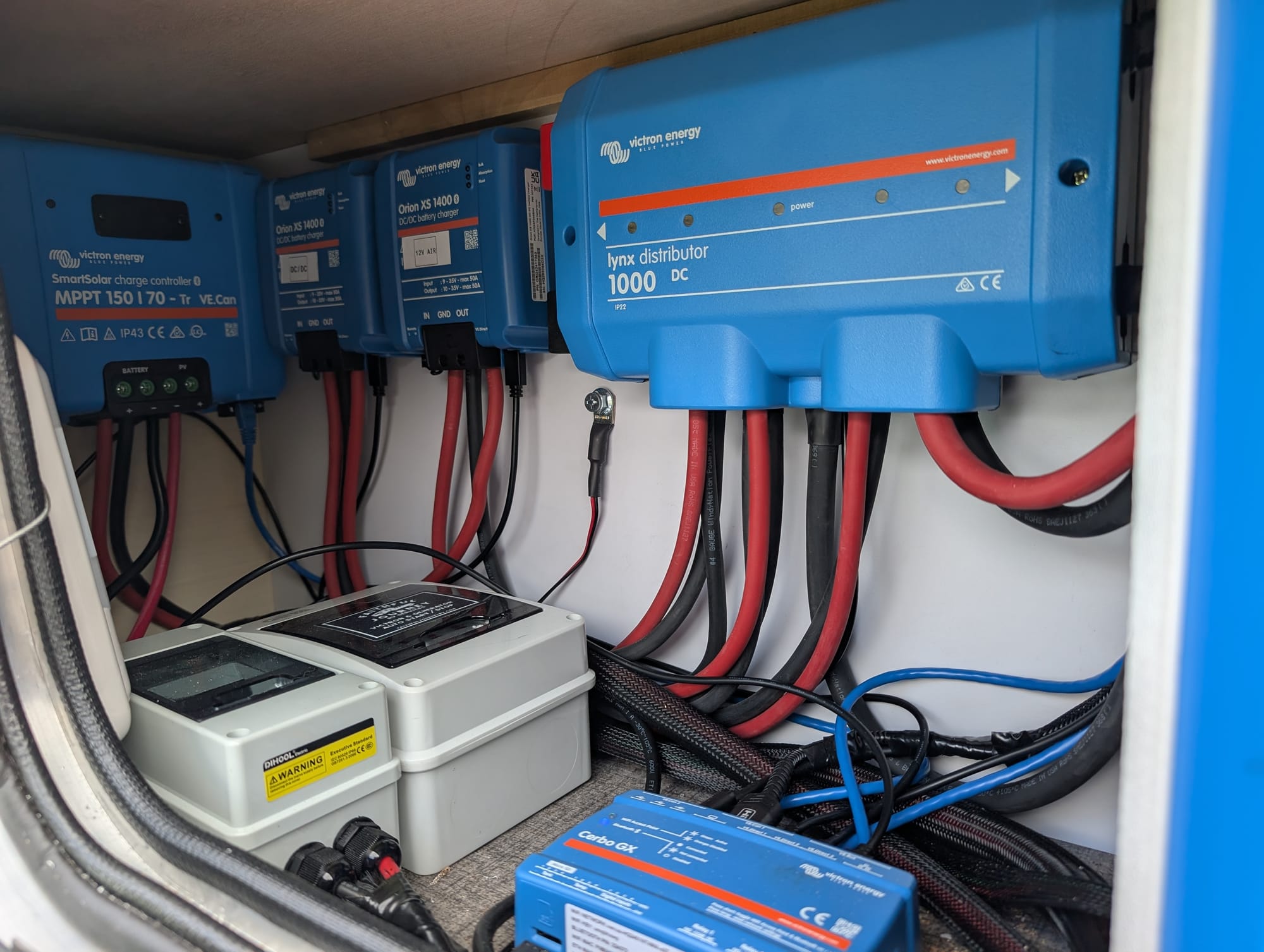
Charging options are layered on purpose.
- Solar for steady daily input.
- Shore power (50A capable) when we want to reset quickly.
- An onboard Onan generator that can feed the Quattro for high-rate charging and AC loads.
- A Victron Orion XS DC-DC to pull from the truck alternator when it makes sense.
In practice, our “how many days can we run?” answer depends on sun and how aggressive we want to be with refills. The 3 to 4 day minimum we’ve seen is based on moderate solar and normal use, including intermittent A/C or heat pump. With strong solar and the willingness to run the generator to top the bank back up, we’ve got a lot more runway than that. Probably 7+ days but we haven't put that to the test, at least not yet.
Two other upgrades matter in daily use even though they’re not power on paper. We did a 3 inch lift for extra clearance, and we added water and propane tank sensors so those readings feed into the Cerbo as well. The goal is one dashboard and fewer surprises.
Work vs Travel (Early Learnings)
Right now we’re moving every 4 to 6 days, and we’ve kept drive days to under 4 hours. That creates two kinds of moves. Weekend moves where we can absorb the time without it affecting work, and weekday moves where it’s usually a half-day split. Work, drive, then some evening catch-up.
The rhythm is already shifting away from a strict “5 on, 2 off.” We’re learning to use daylight when it’s there. Work some mornings, push tasks later into the evening, and protect the middle of the day when the weather is good and the place we’re in is worth being outside for.
The biggest early friction point was getting hit with real cold in the first few weeks. Running the furnace and managing humidity turned into an immediate systems problem, not just a comfort thing. We’re learning fast, but we’re not pretending we’ve got it fully dialed.
What’s been easier than expected is the overall transition from land life. In a weird way, it feels familiar. Like going back to how life felt working on a ship, except this time the cabin is bigger and we're the captains.
If there’s a sentence that captures where we’re at, it’s this. We’re going slow, learning from mistakes, and relying on preparation over luck.