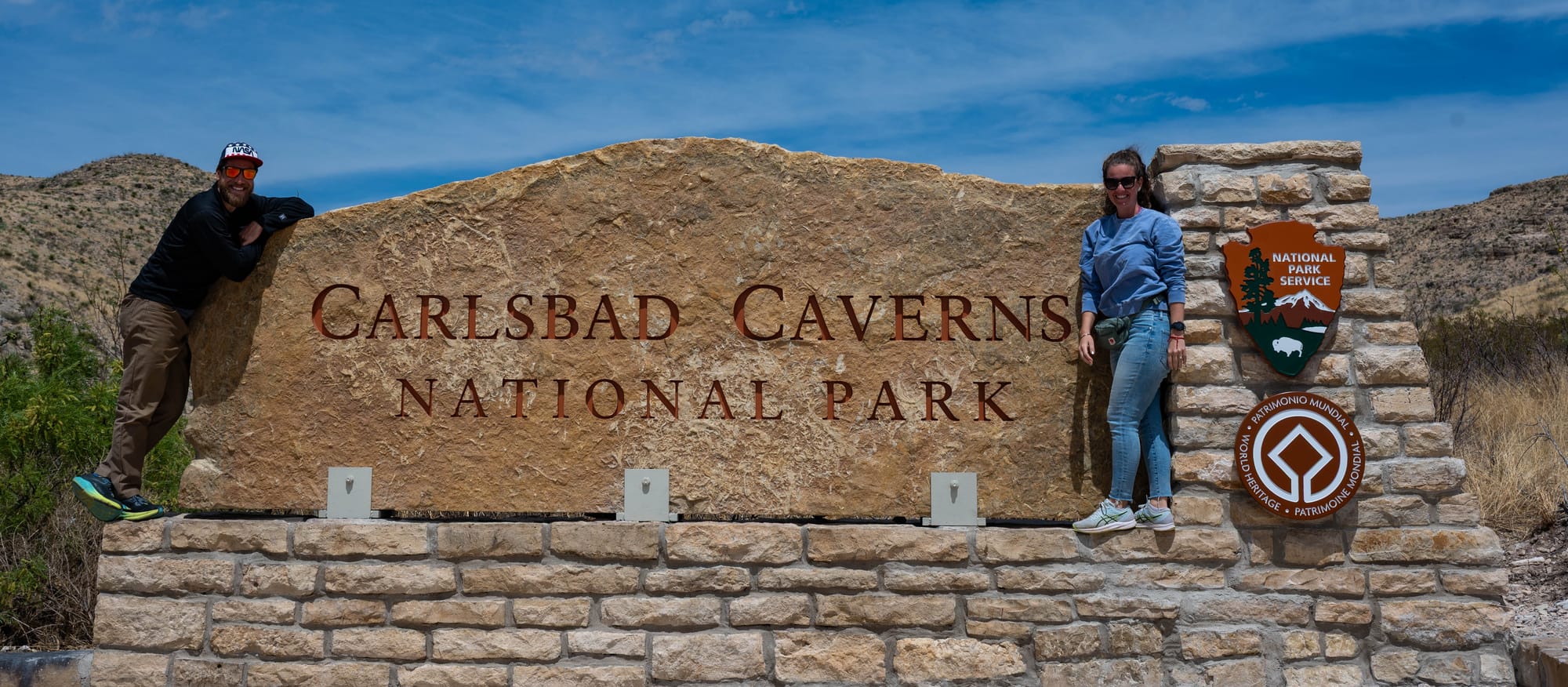
Carlsbad Caverns National Park
We had never really thought much about caverns before this trip.
Florida Caverns was our first, and it surprised us. We’re usually drawn to going up. Mountains, overlooks, elevation. Caves and caverns are the opposite, but going down into the earth ended up being just as compelling.
As we moved west, Carlsbad Caverns was on the list. We knew it was bigger, but not how much bigger. Beyond a few photos, we didn’t have much context.
It turned out to be the deepest we’ve ever gone into the earth.
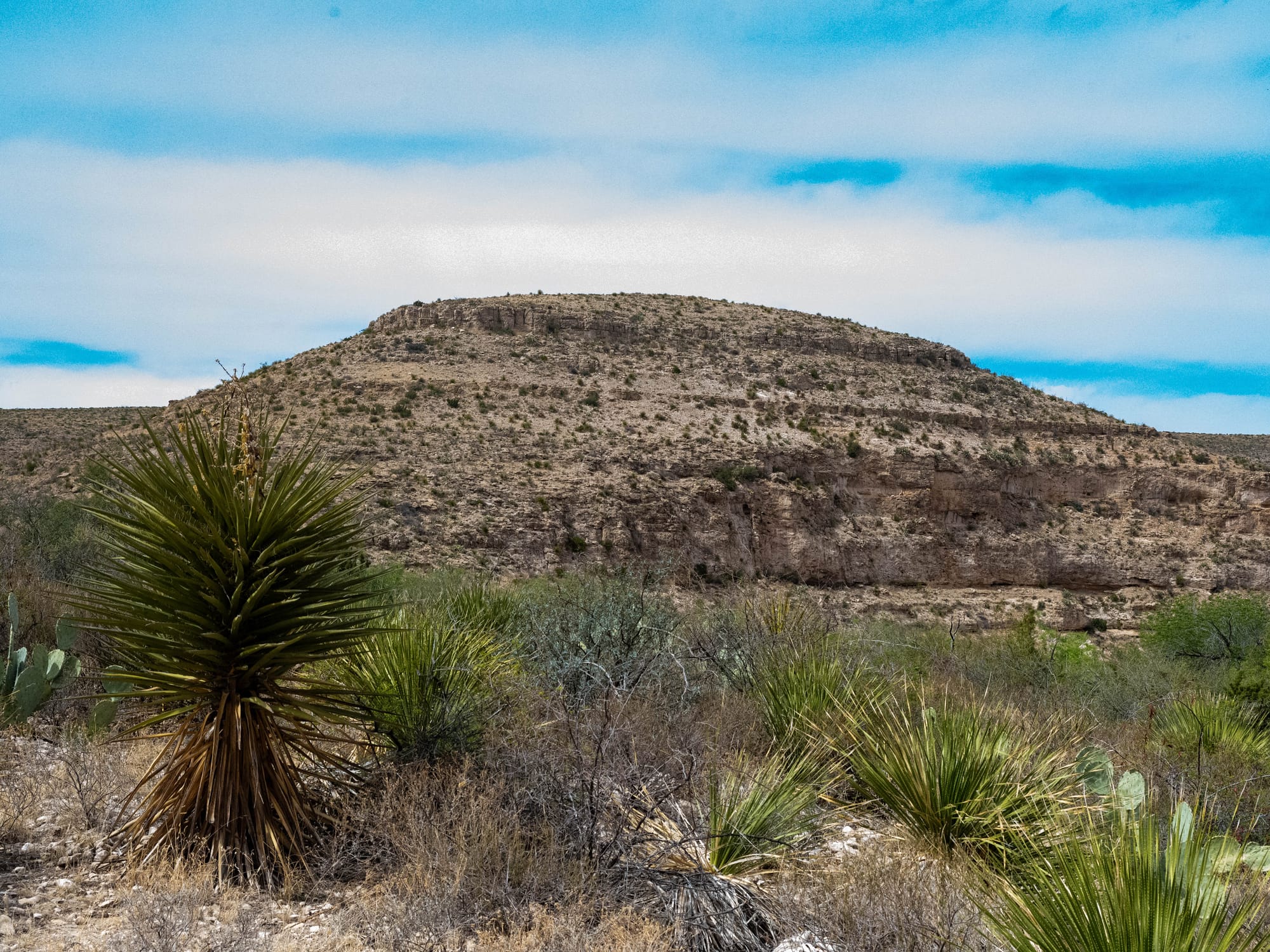
🗺️ The Lay of the Land
- Location: Carlsbad, New Mexico · 32.1479, -104.5567 · [Google Maps]
- Official site: [Carlsbad Caverns National Park]
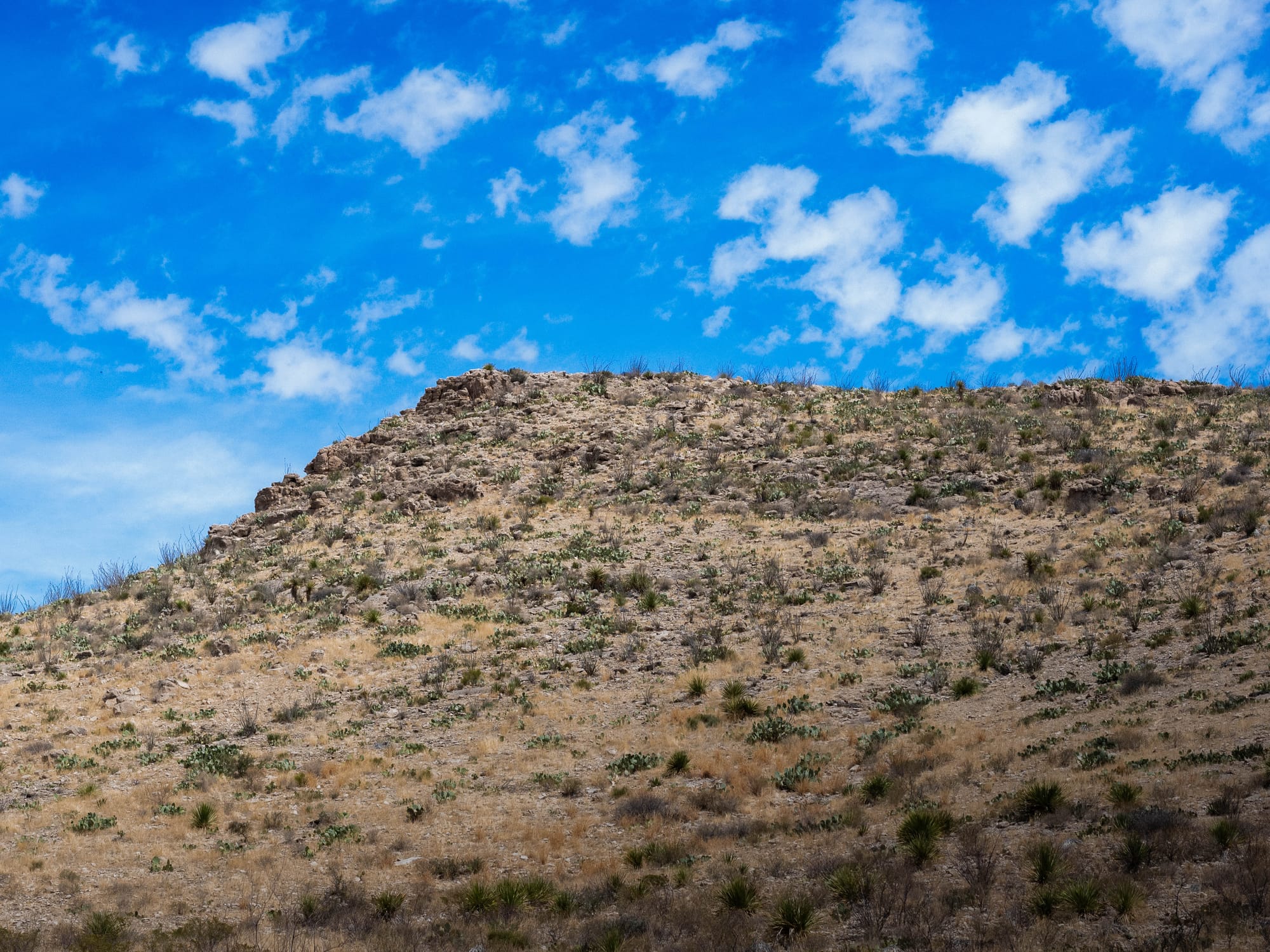
- Landscape: Chihuahuan Desert · limestone caverns
- Our visit & conditions: April 2026 · day visit
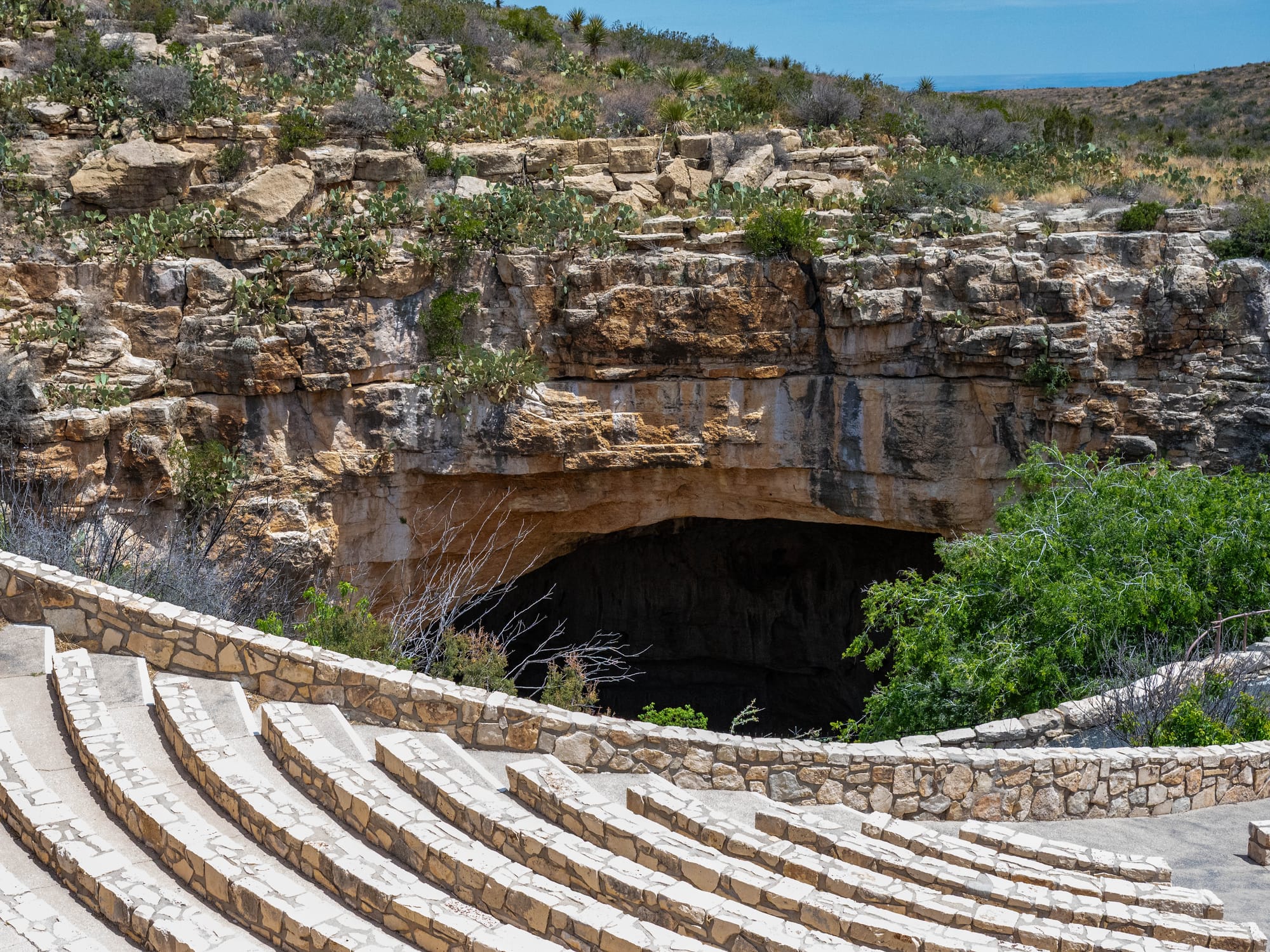
The descent sets the tone.
You enter through the natural opening and begin dropping into the earth. It’s gradual at first, then it keeps going. Switchbacks, steady decline, and a growing sense that you are much farther below the surface than expected.
At some point you turn and look back up.
That’s when it clicks.
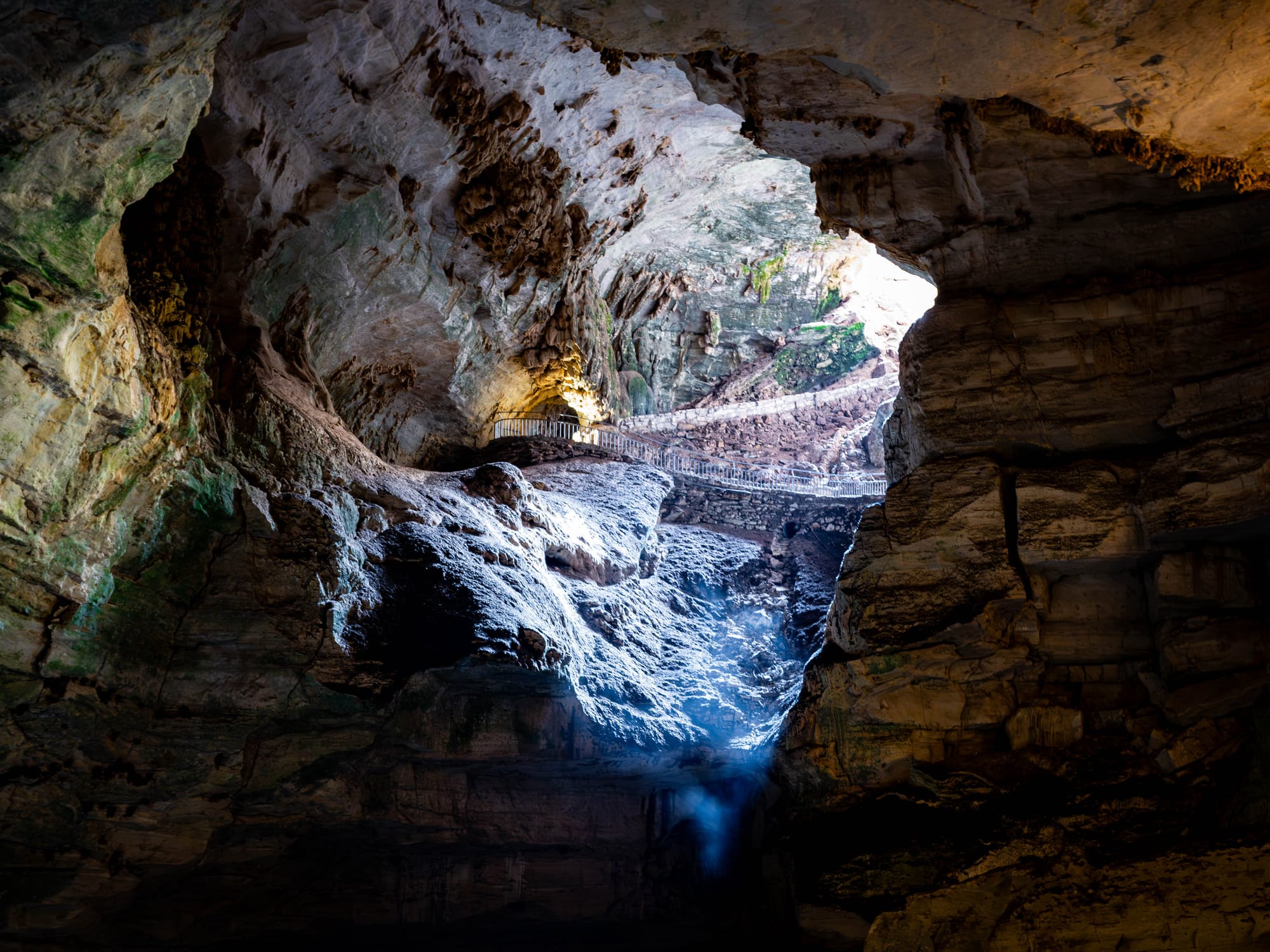
The cavern is quiet in a way shaped by the space itself. People are encouraged to whisper, and most do. Sound carries. There’s a faint airflow, a steady cool temperature, and a slight odor that you notice early and then forget.
The path is fully developed. It is paved, lit, and graded. Compared to tighter cave systems, this feels engineered. But the scale changes the equation. You’re not navigating passages. You’re moving through massive open chambers.
And it doesn’t really let up.
You’re not walking to features. You’re surrounded by them the entire time.
We spent a little over three hours inside and could have stayed longer without retracing anything.
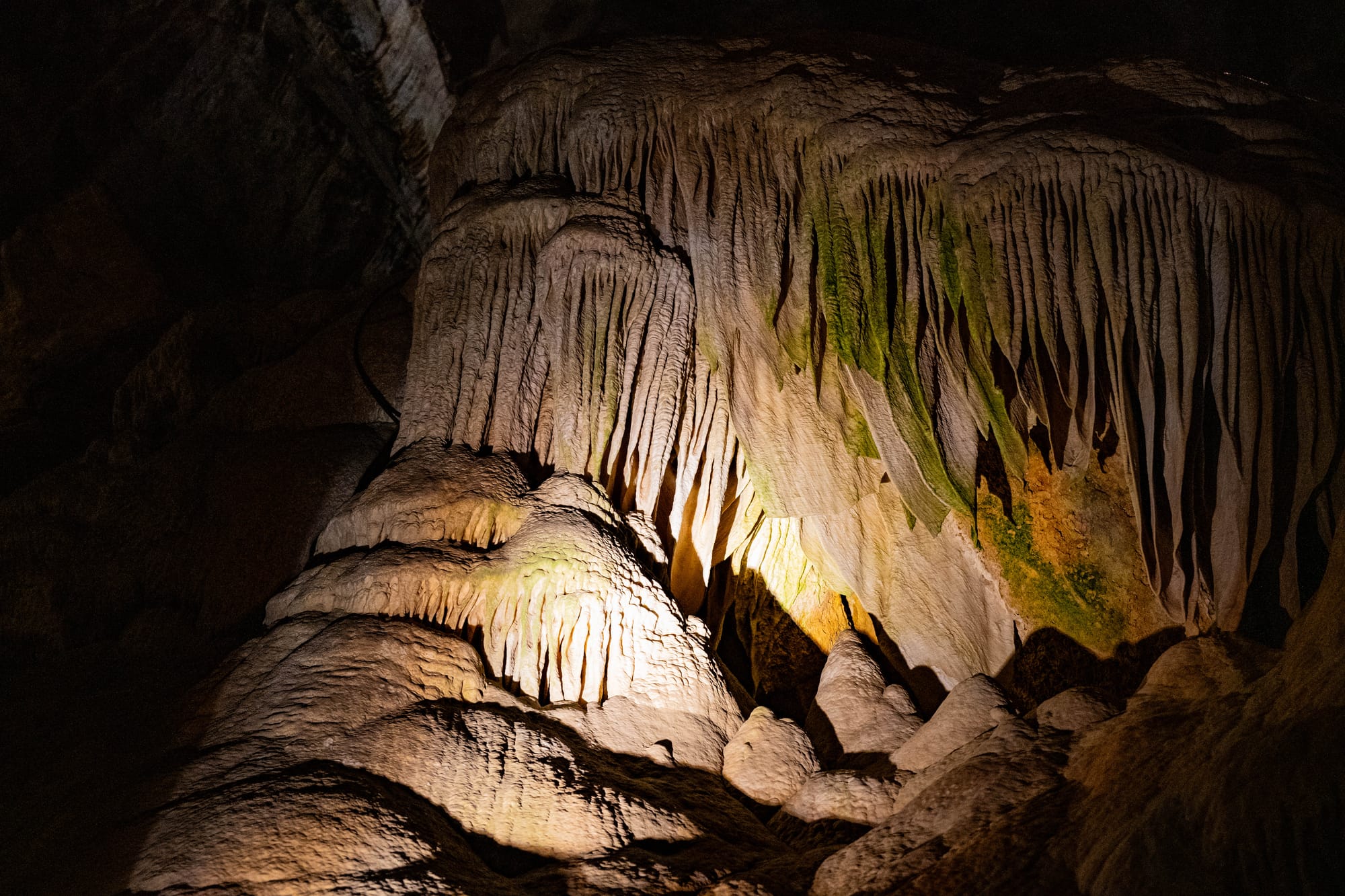
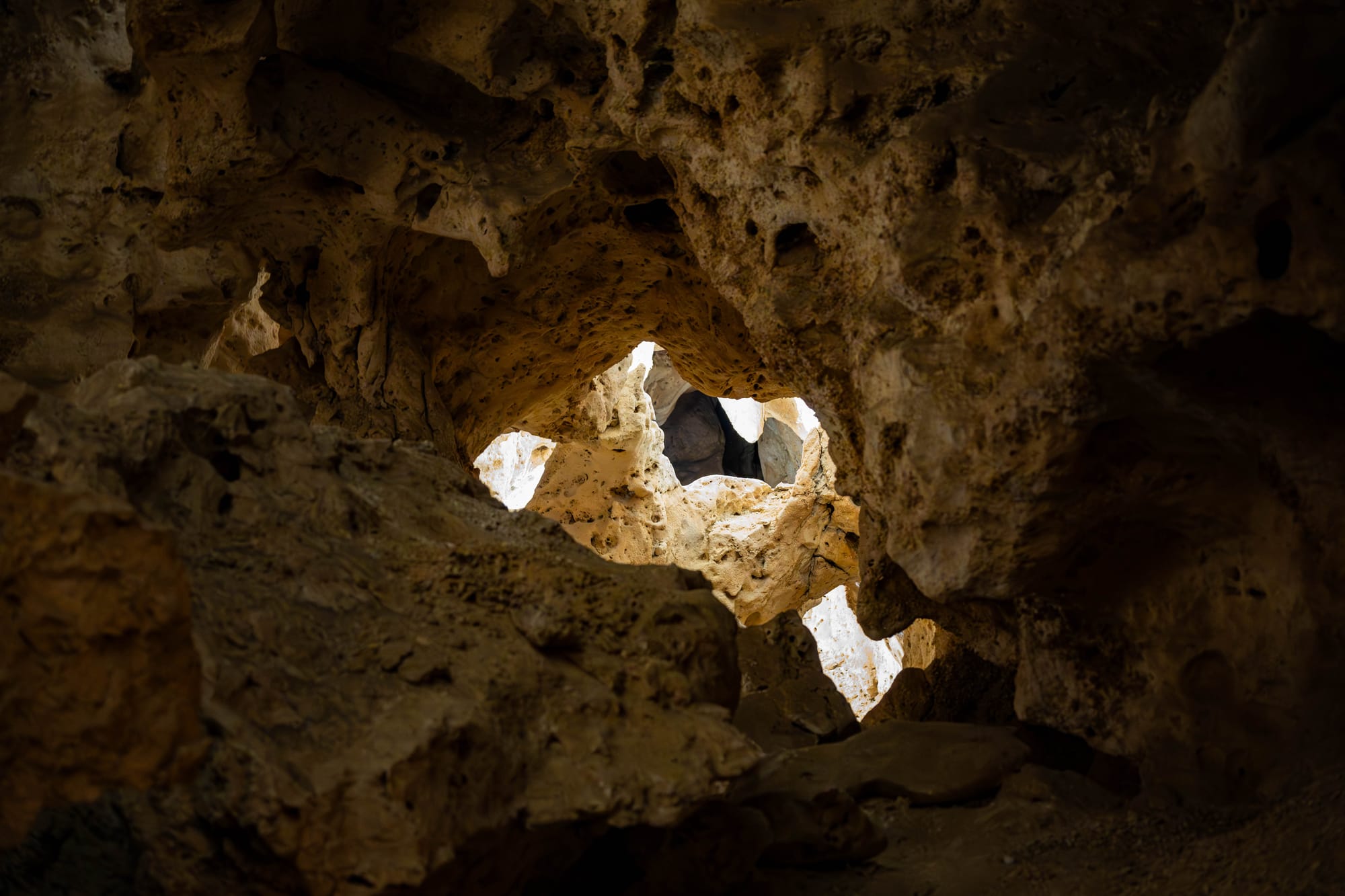
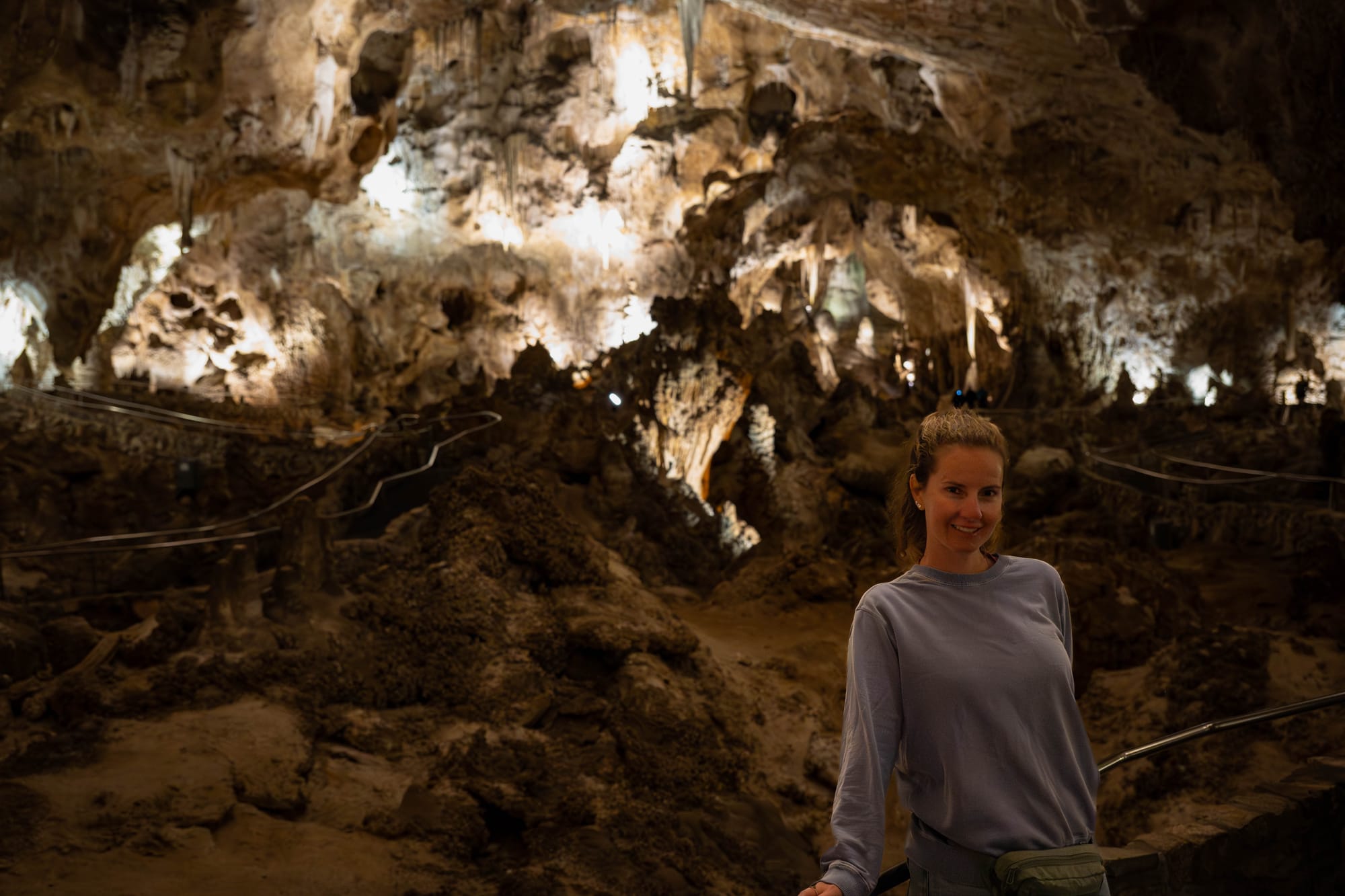
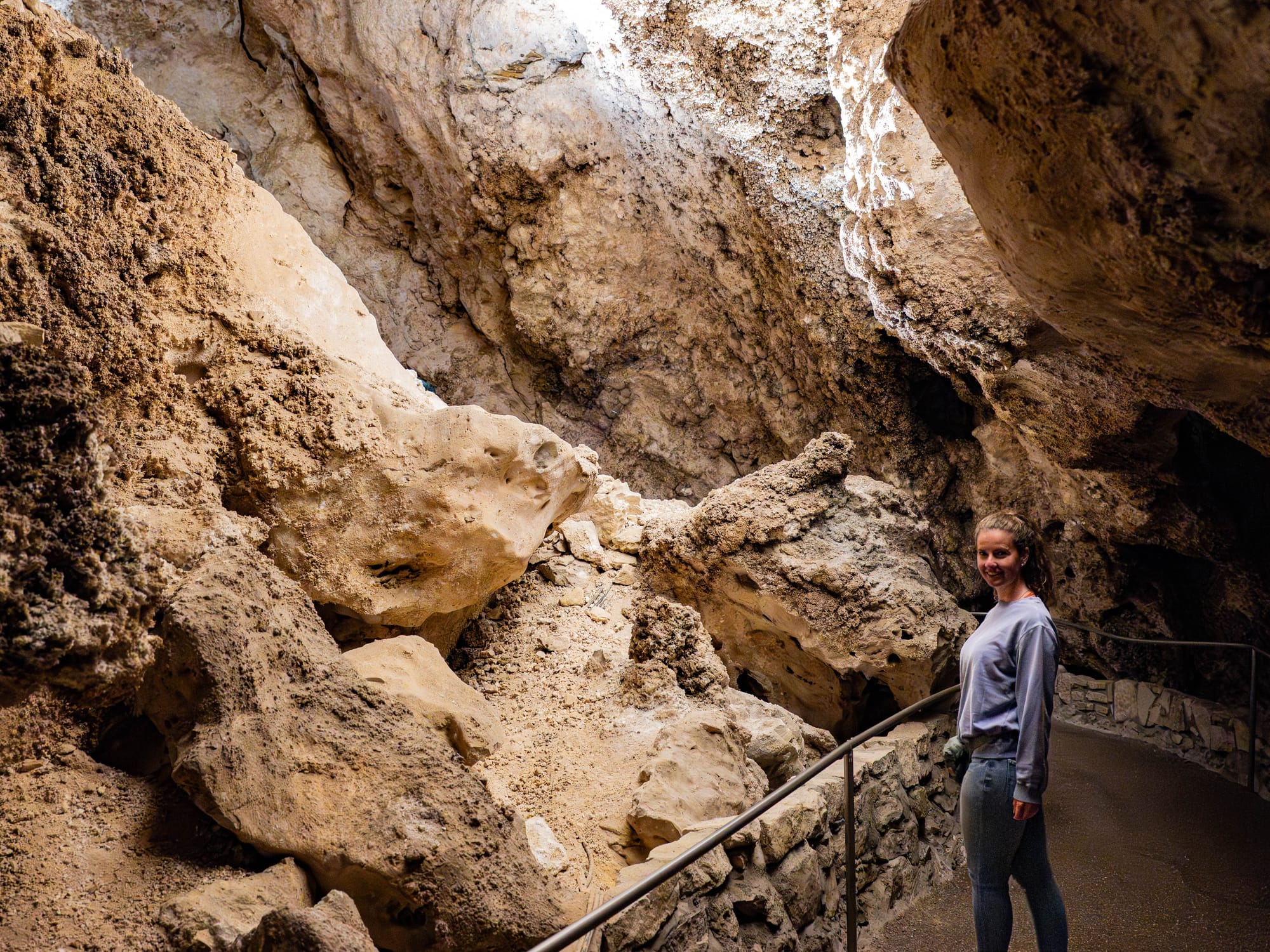
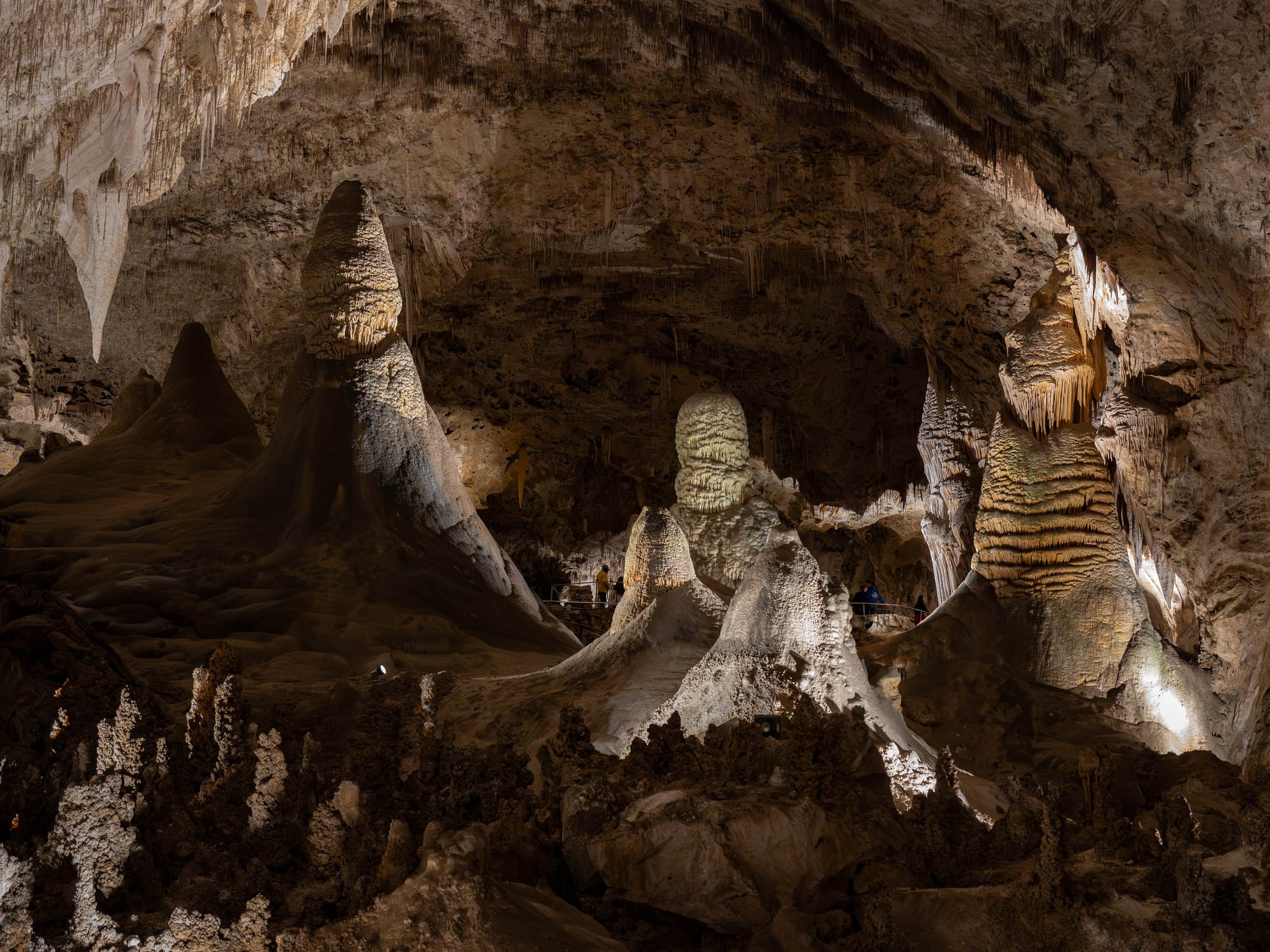
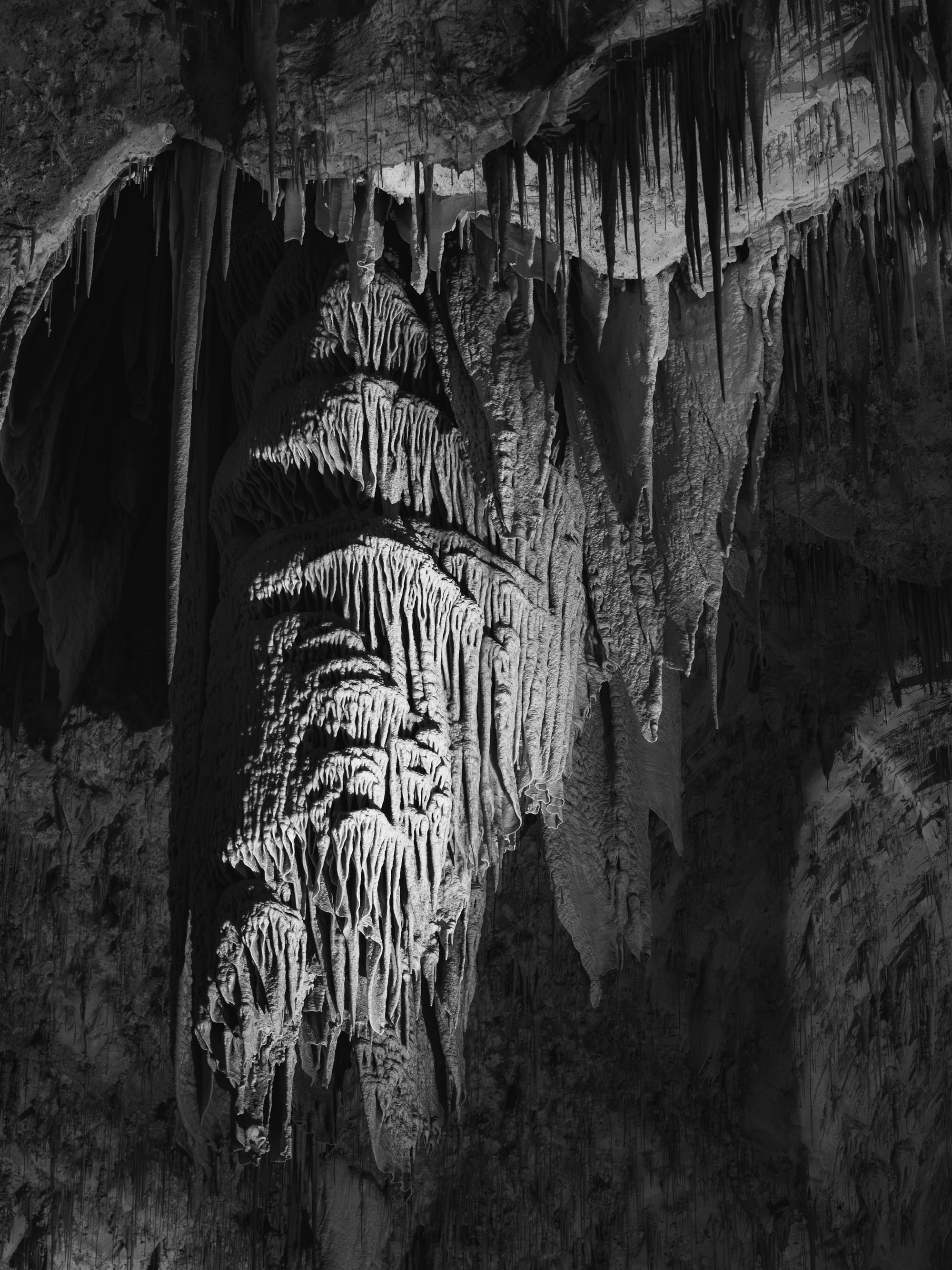
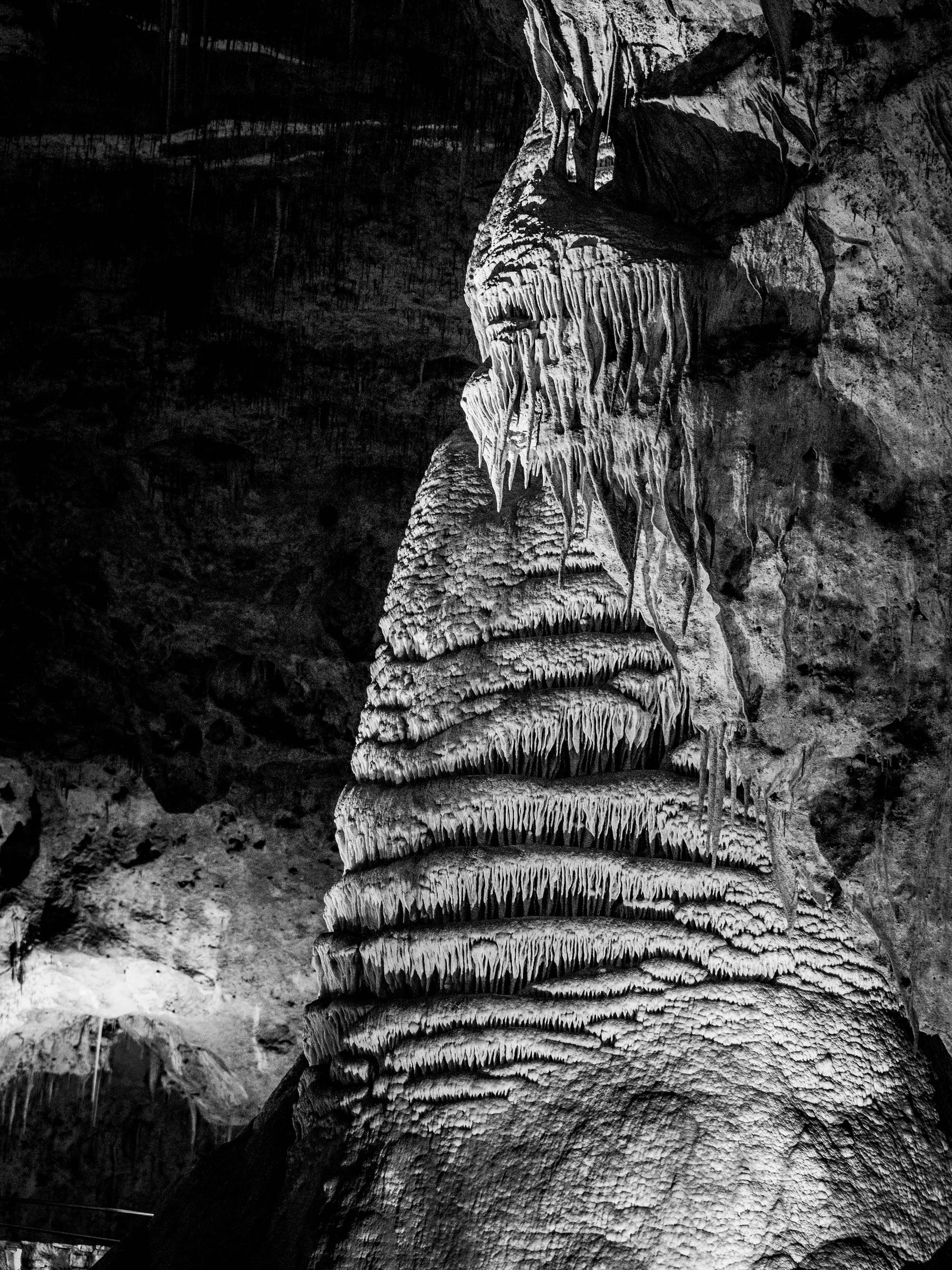
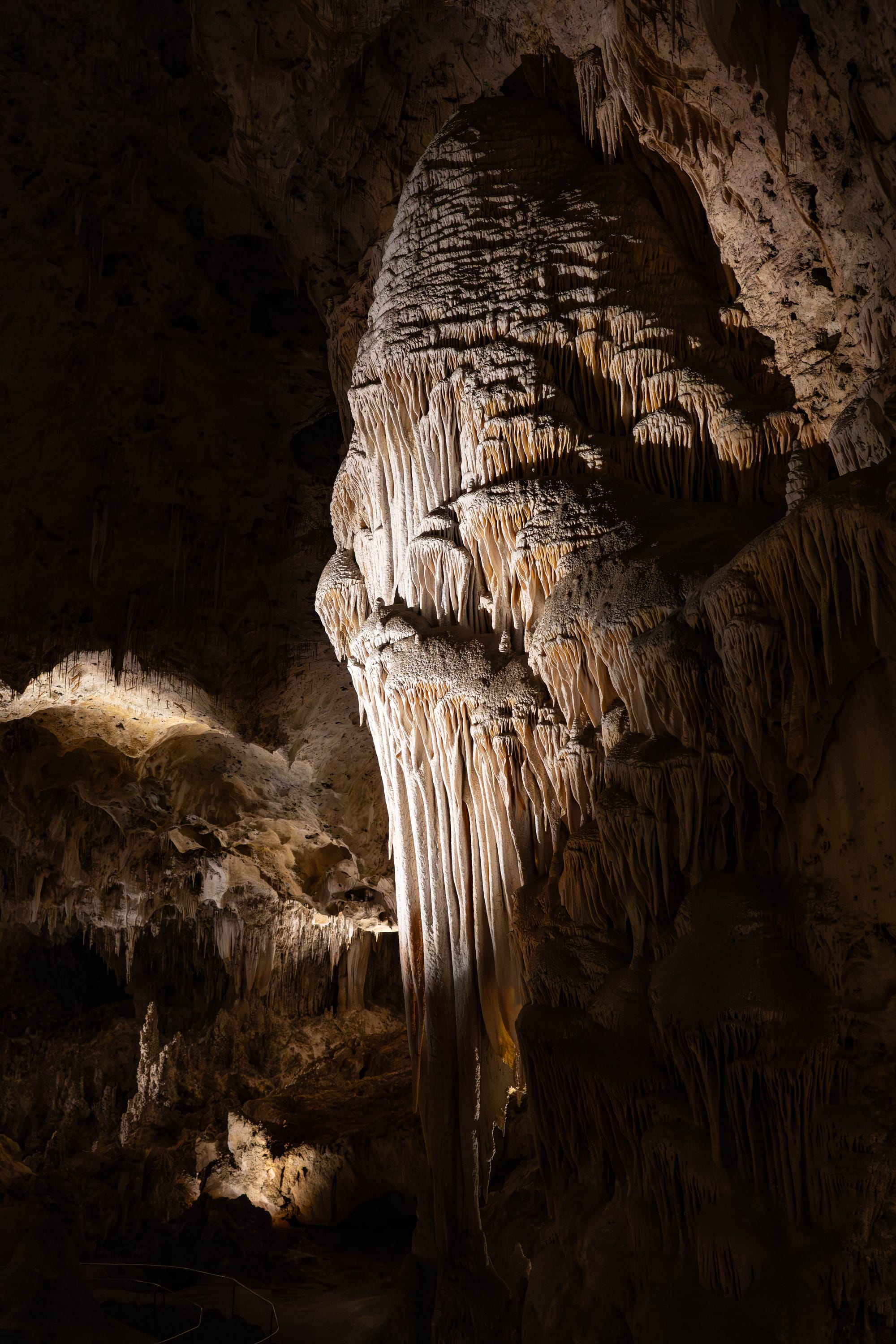
Top: "Whales Mouth"
Once you settle in, the variety starts to separate itself.
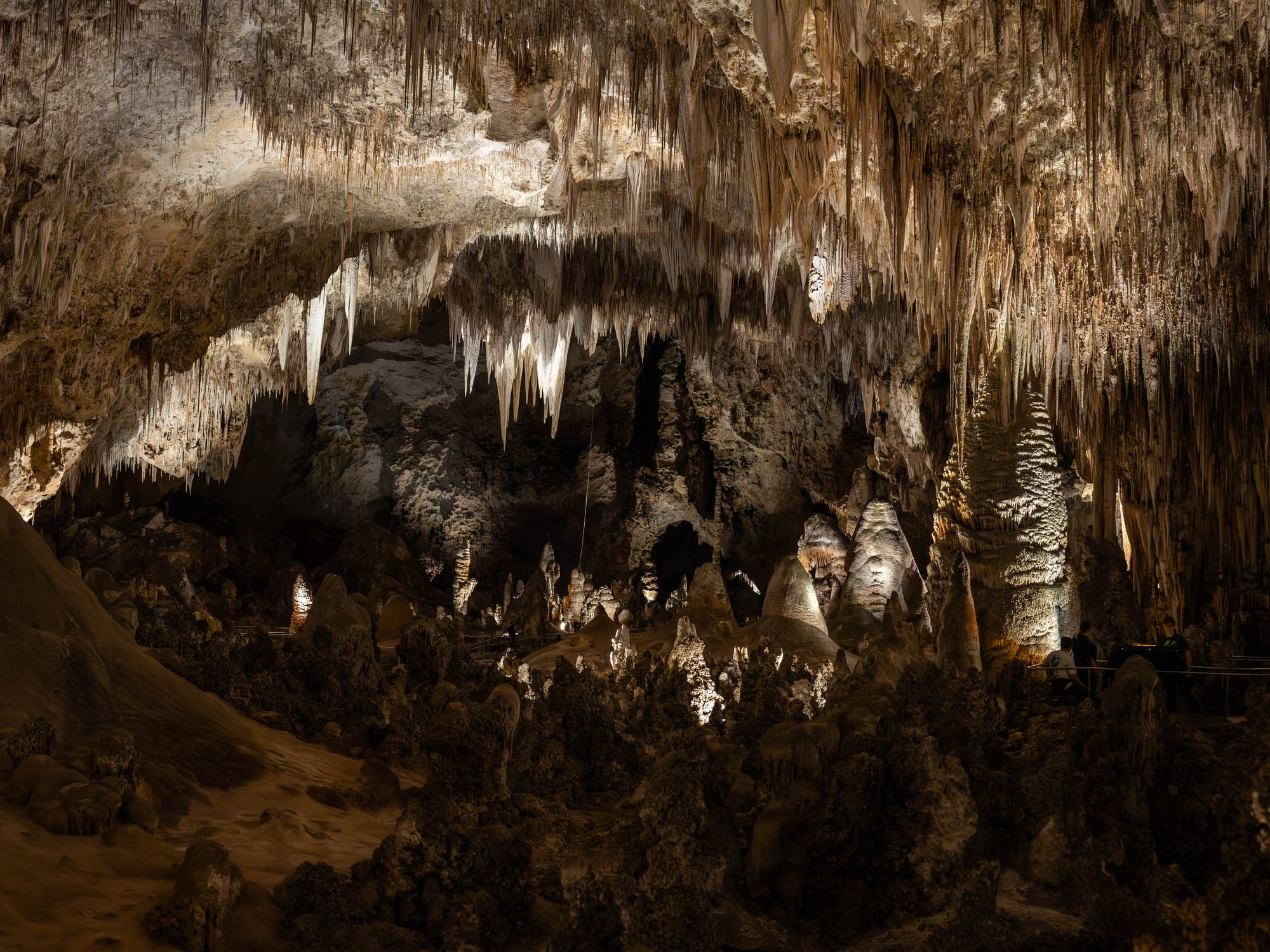
The Big Room is the anchor. It spans roughly 8.2 acres—about six football fields—with ceilings rising over 250 feet. It reads more like terrain than a room.
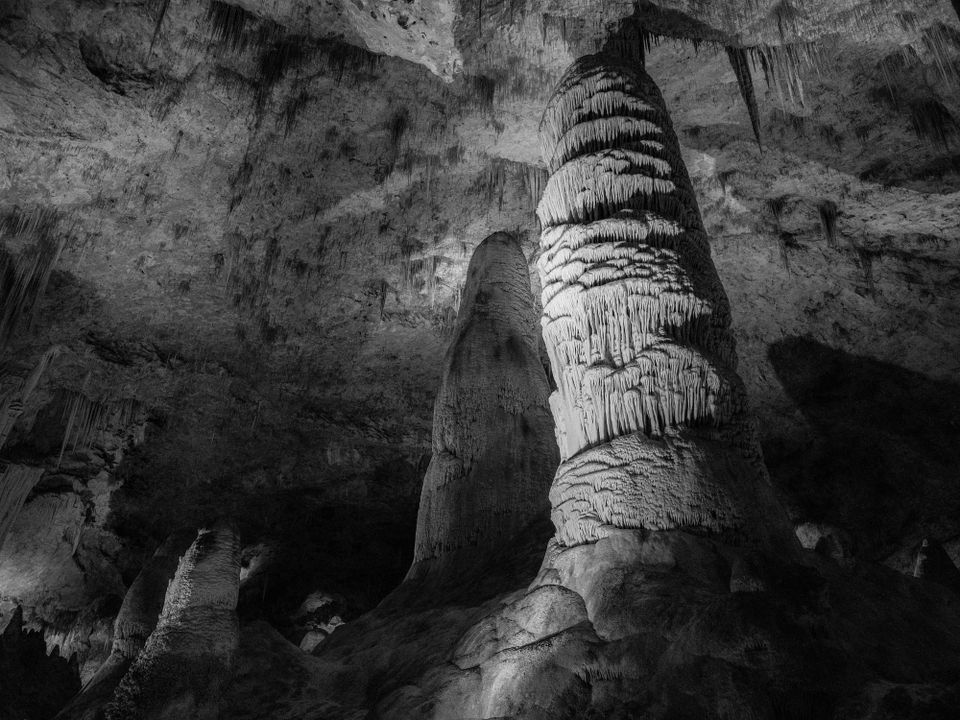
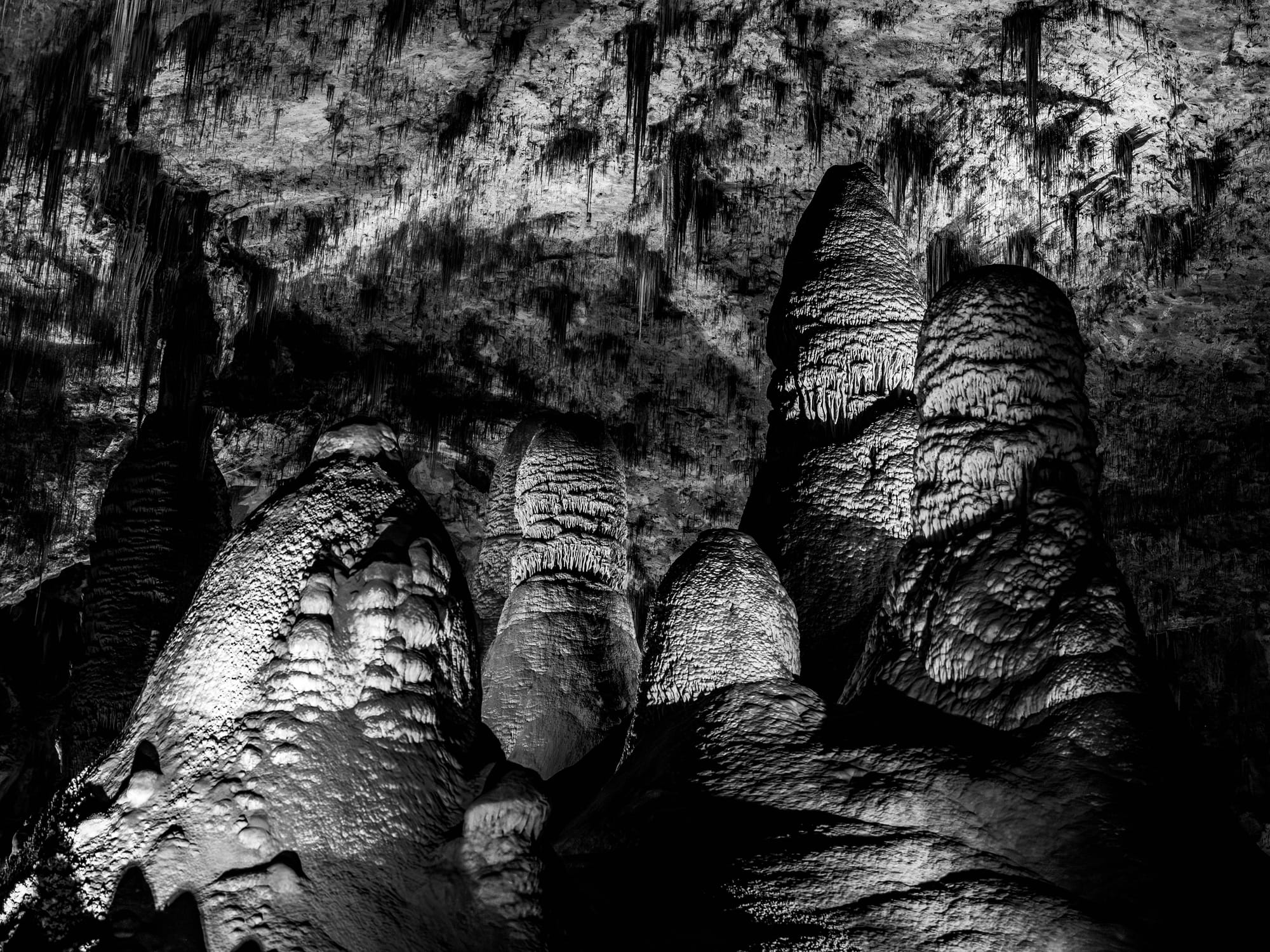
The Hall of Giants holds some of the largest stalagmites in the cave. Thick, vertical formations built upward over long periods, some rising several stories from the floor.
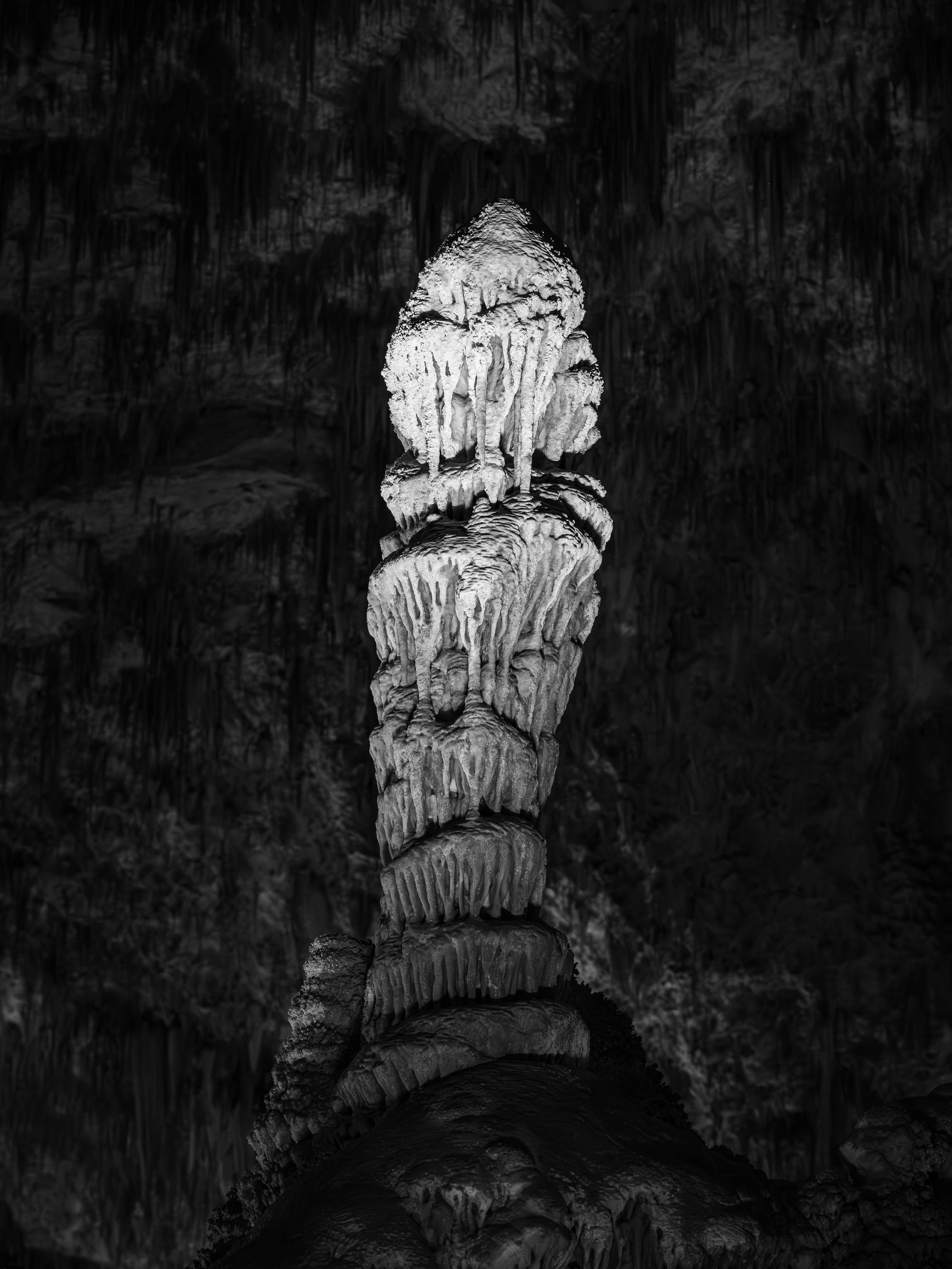
The Rock of Ages stands out as a near-column—rising vertically but never quite connecting to the ceiling.
Then there are draperies and flowstone. These form when water moves along angled surfaces, spreading outward in thin layers rather than building vertically.
You also see soda straws—thin, hollow stalactites that represent the earliest stage of formation. Some continue to grow. Many don’t.
All of this forms the same way.
Mineral-rich water enters the cave and leaves deposits as it evaporates. Drop by drop.
Time is the constraint.
A rough estimate is about one inch every hundred years. Many of the formations here have been building for hundreds of thousands of years.
And they’re still forming.
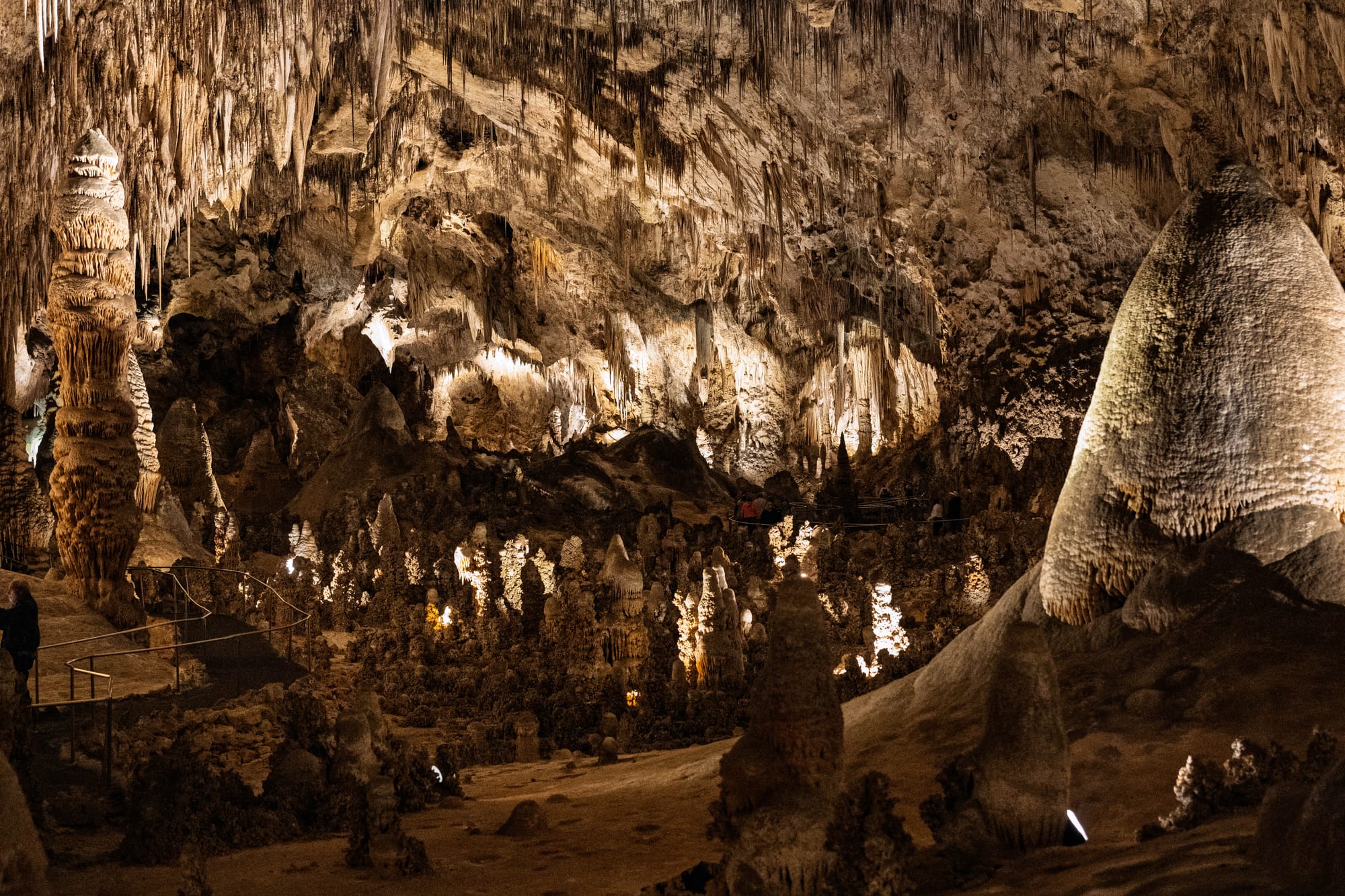
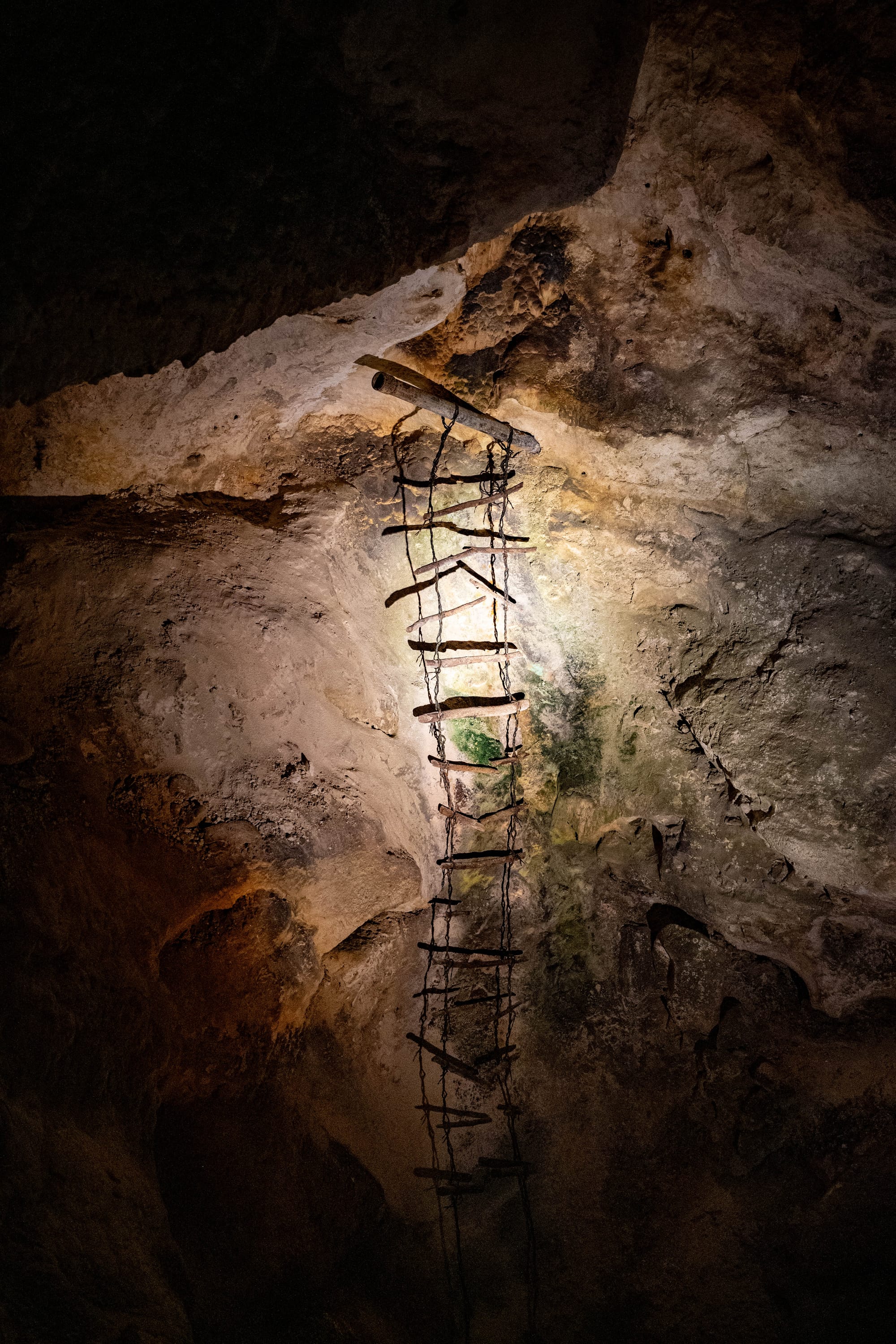
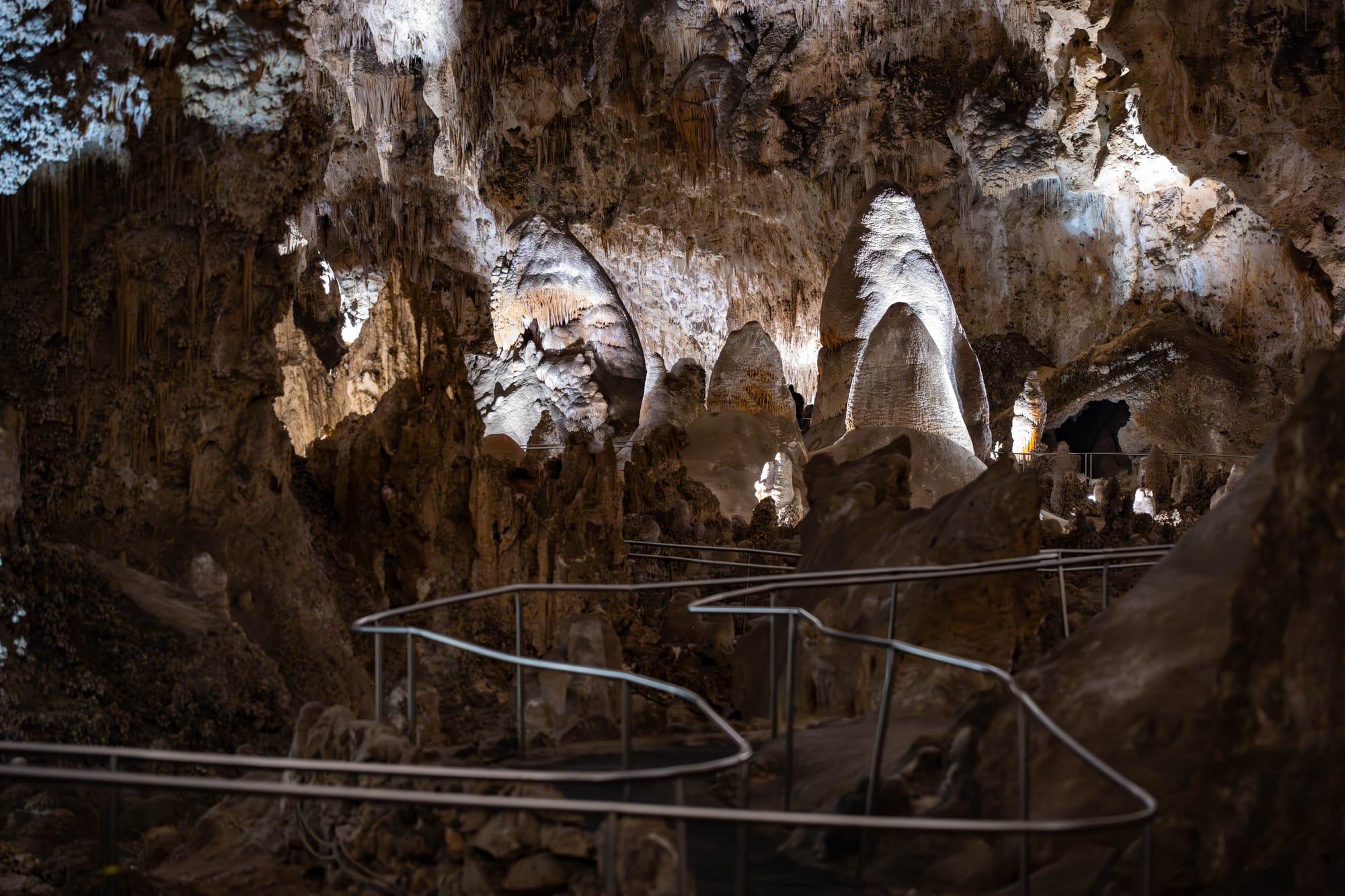
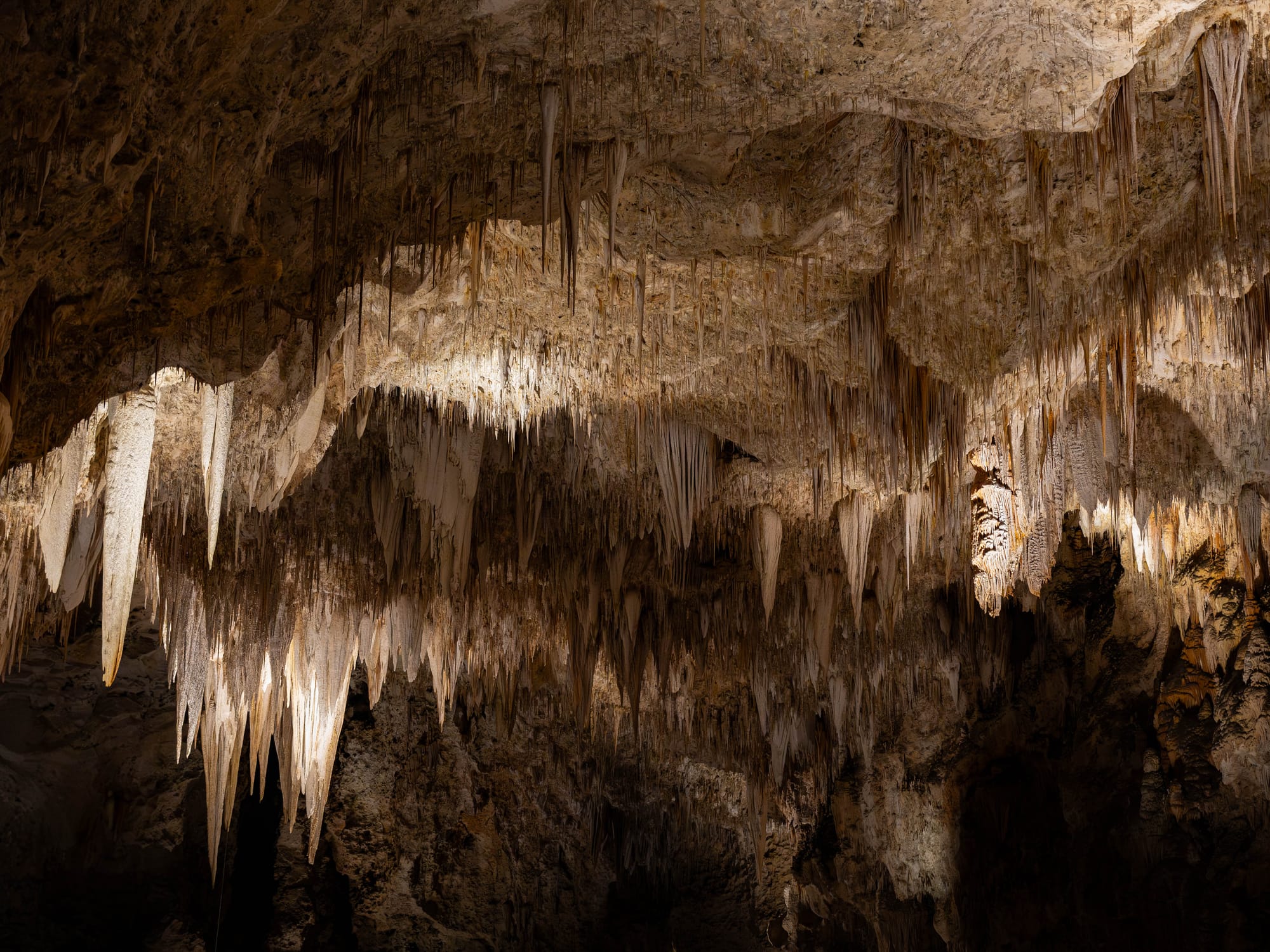
Top: The Big Room, Original Exploration Ladder | Bottom: "Hall of Giants" and "The Chandelier"
Cavern Highlights
Carlsbad exists because of two separate processes.
First, the reef.
Around 250 million years ago, this region was covered by a shallow sea. A massive reef system—the Capitan Reef—formed along its edge. When the sea receded, the reef became limestone.
That’s the foundation.
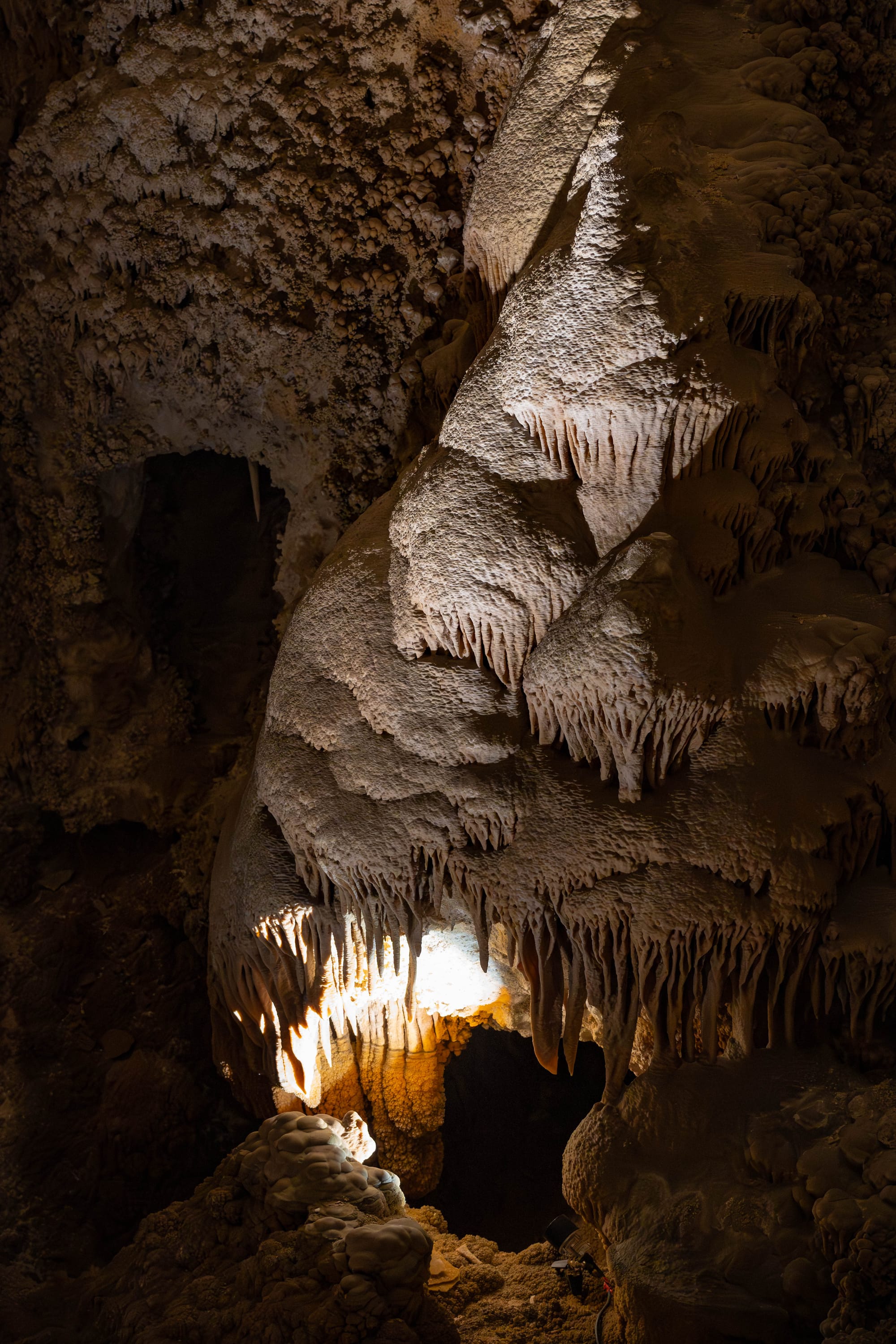
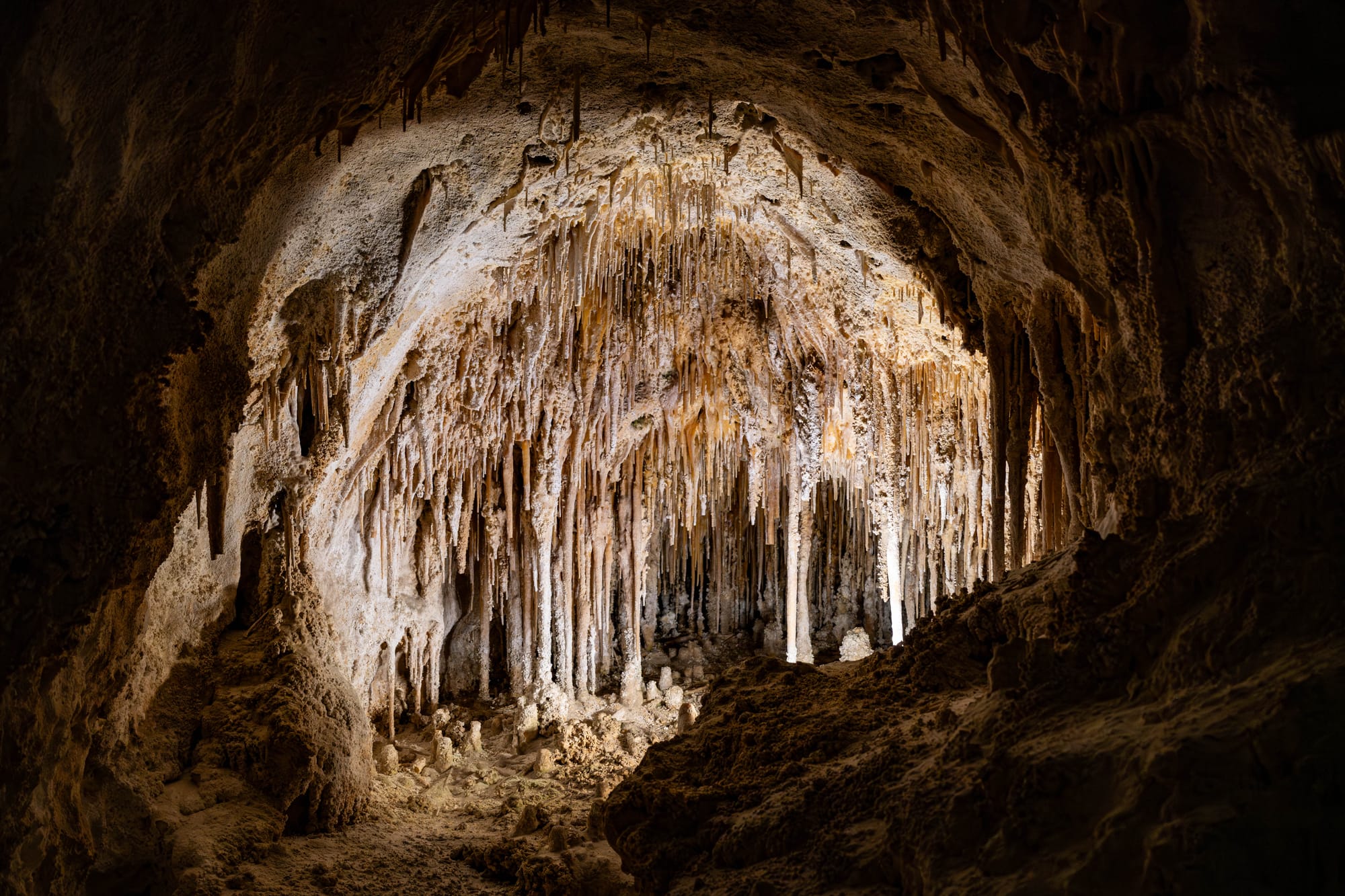
Bottom Left: "The Doll's Theatre"
Then came the cave.
Unlike most caves, Carlsbad formed from below. Hydrogen sulfide gas rose from deep underground, mixed with groundwater, and formed sulfuric acid. That acid dissolved the limestone, carving out large chambers from the inside.
That explains the scale.
Once the water drained, formations began to grow through mineral deposition.
The human story starts in the late 1800s.
When a local cowboy named Jim White noticed what looked like smoke rising from the desert. It turned out to be bats—hundreds of thousands of them leaving the cave at dusk.
Curious, he found the entrance and began exploring the cavern on his own, using a homemade ladder and lantern. He mapped portions of it, guided early visitors, and spent years trying to convince others that what was underground was worth protecting.
It took time.
By the early 1900s, photographs and growing interest brought attention to the cave’s scale, and in 1923 it was designated a national monument, then later established as a national park in 1930.
The larger context ties directly to the landscape above.
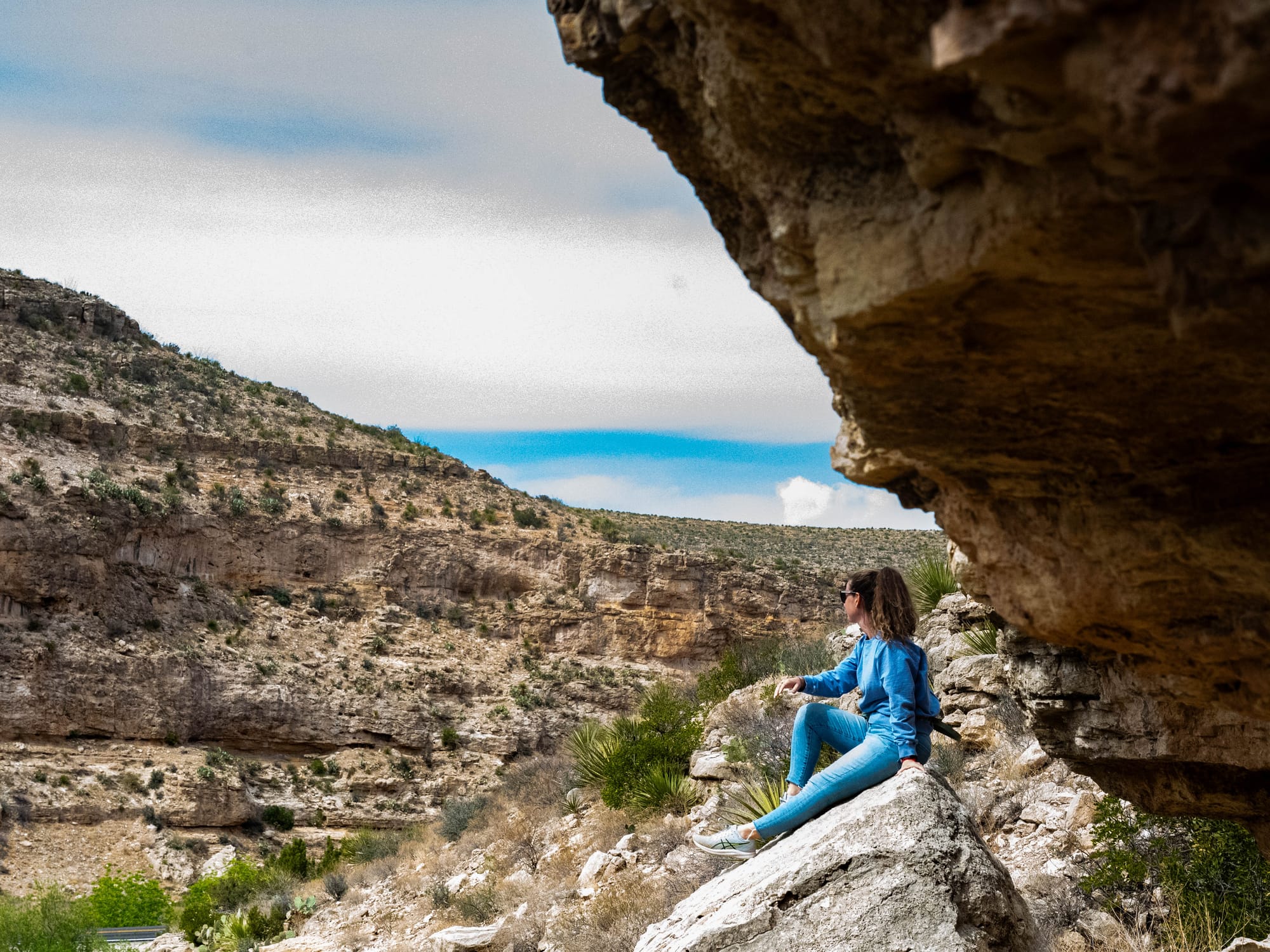
Carlsbad sits along the Capitan Reef, the same ancient formation that runs through the Guadalupe Mountains just to the southwest. What you see in the mountains, exposed limestone cliffs and ridgelines, is the outer edge of that reef system. What you see in the caverns is what formed inside it.
One is the structure.
The other is what happened within it over time.
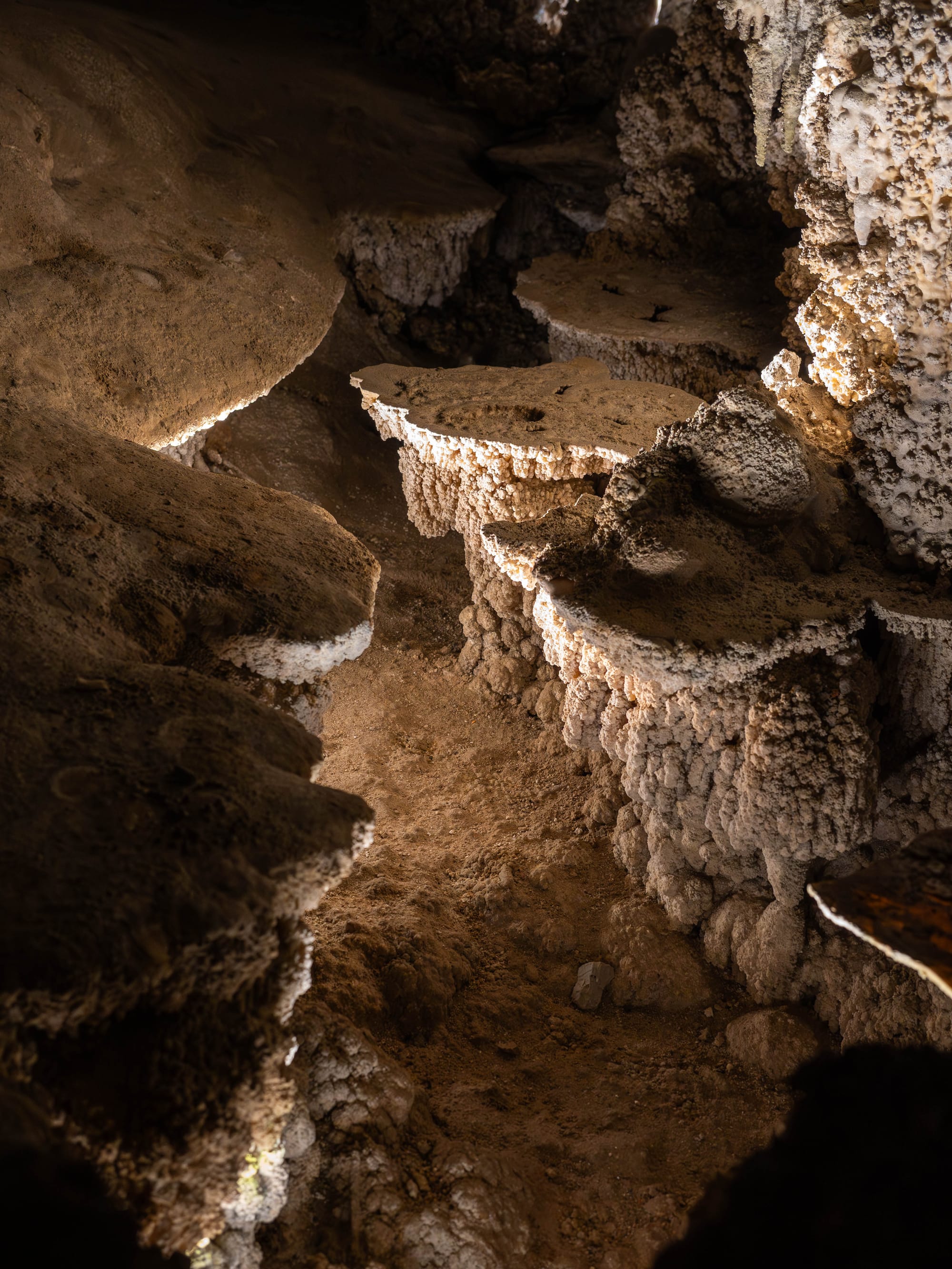
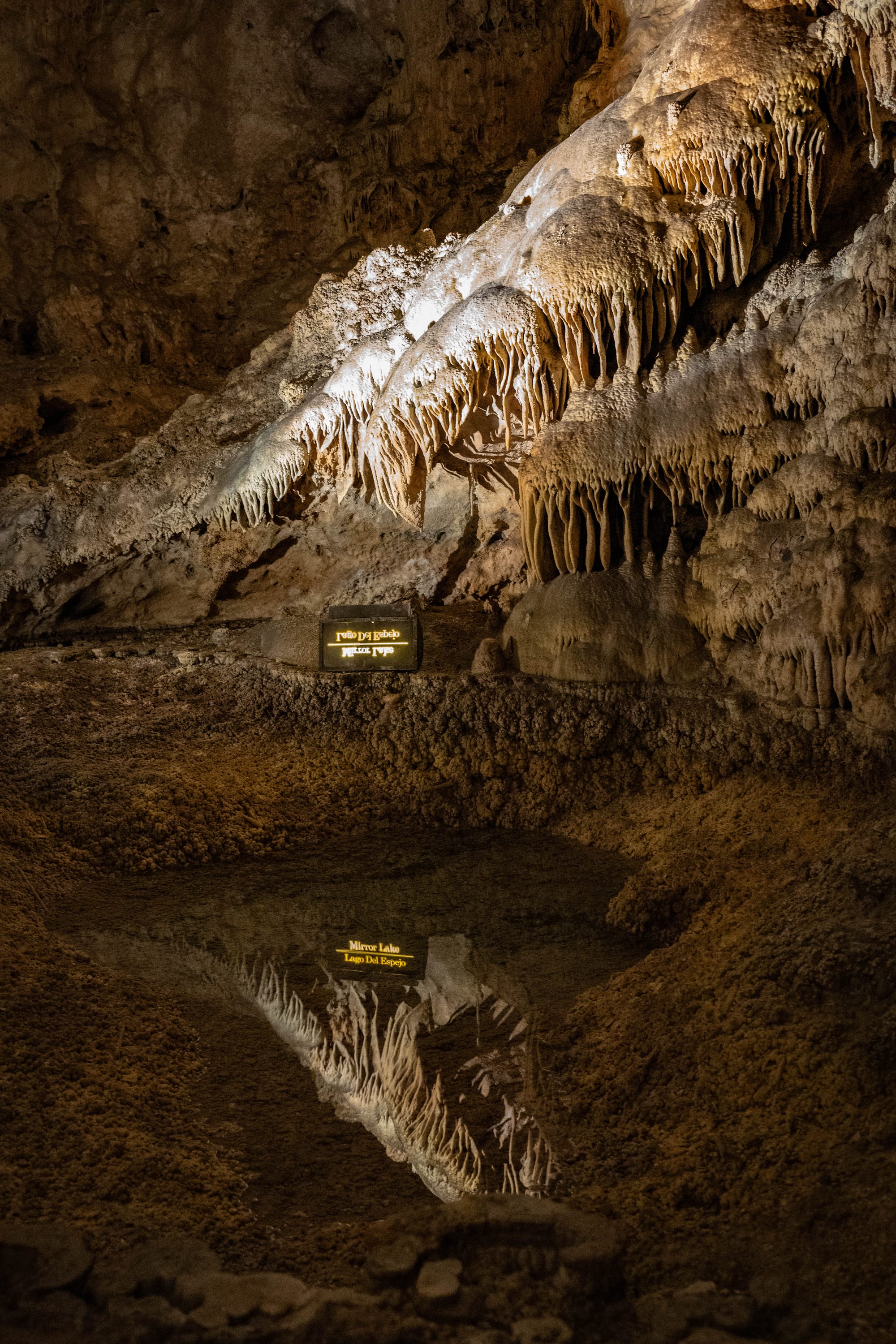
The scale is immediate, but the impression builds over time.
There’s no single viewpoint that explains the cavern. It’s the constant presence of formations in every direction that defines it.
The other thing that stood out was the lack of ranger-led programming.
The park is clearly built for it—amphitheaters, guided routes, interpretive spaces—but during our visit, there were no ranger-led tours and very little direct engagement.
For a place this complex, that felt like a major miss.
This is a system that benefits from explanation. Without it, you’re left to piece things together yourself.
Final Takeaways
Carlsbad Caverns makes more sense once you understand how it formed.
A reef becomes stone. Stone is dissolved from below. Space opens. Then mineral deposits slowly build it back.
That sequence explains what you’re seeing.
It’s not something you fully process in one visit.
But it’s one of the few places where the geology and the experience align closely enough that you leave with a clearer understanding of both.
I would definitely go back.