Bear Lake State Park
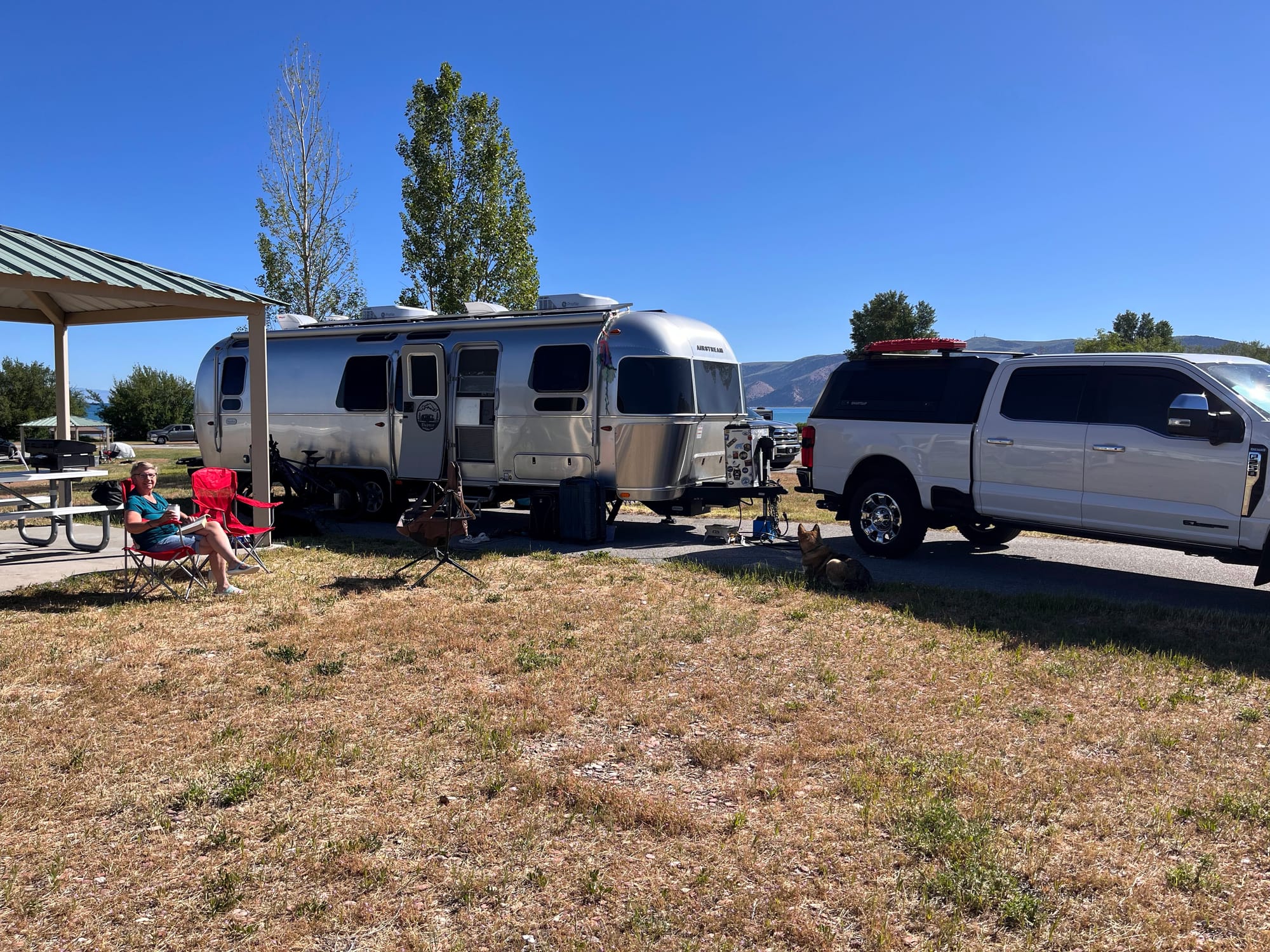
Brandon and Sam chose to set up the trailer in Bear Lake State Park, Utah, for the week when we (Yvonne and Dave) stayed to take care of the dogs while Sam and Brandon ventured off to Europe for a few days. This meant the most important criteria was ease of living in the Airstream for novices.
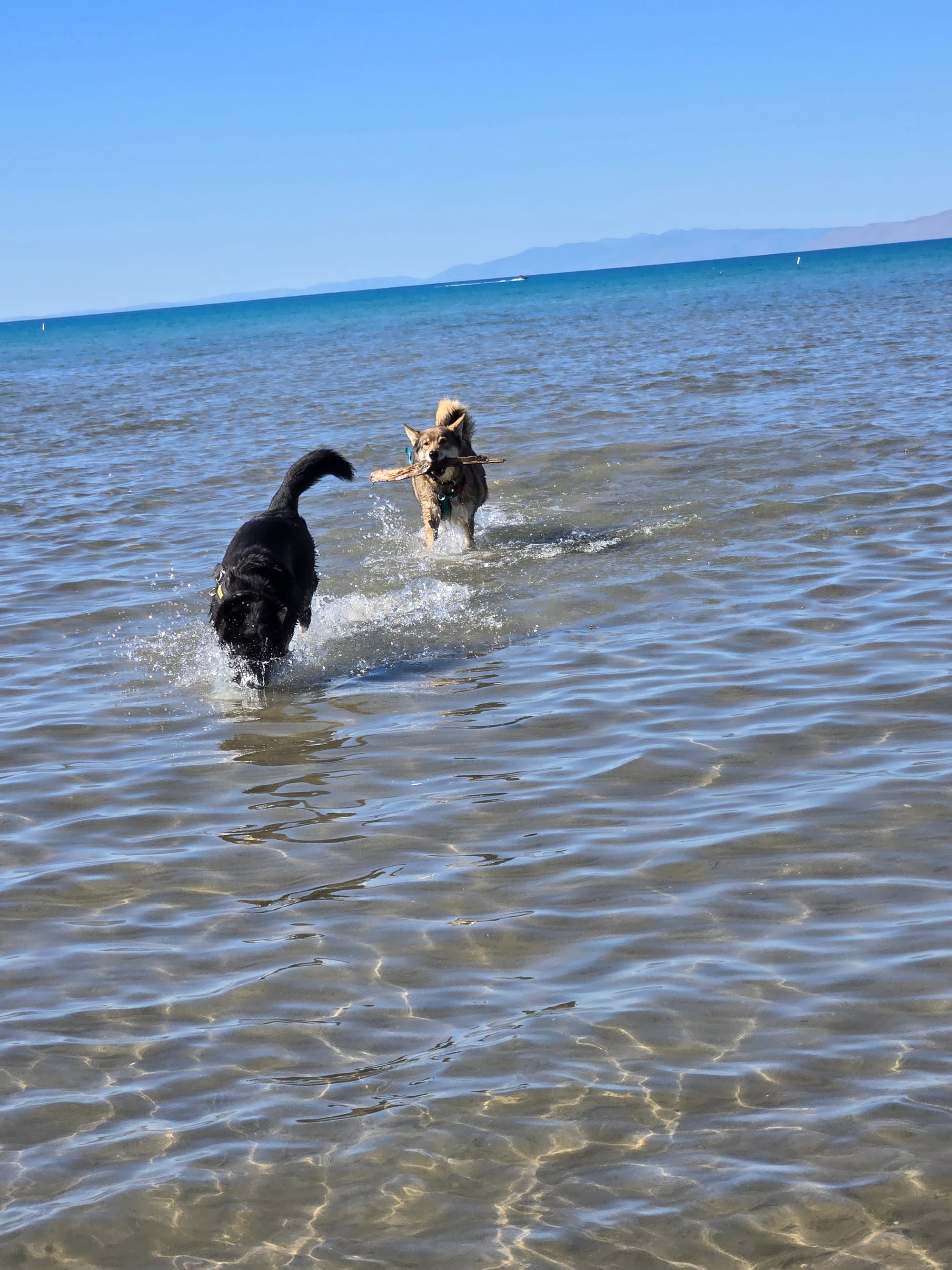
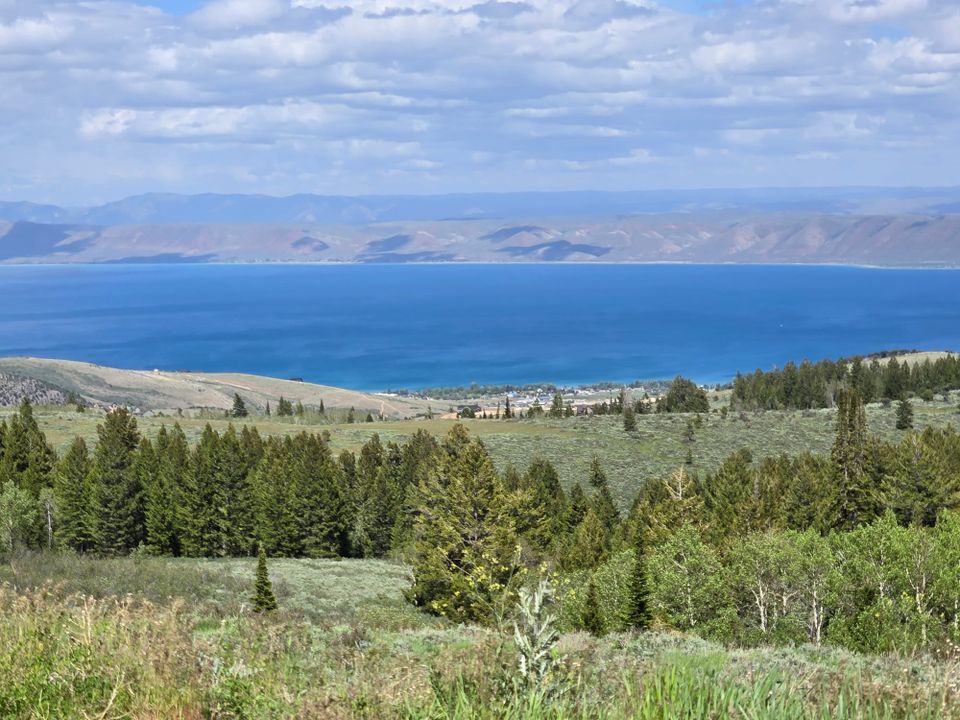
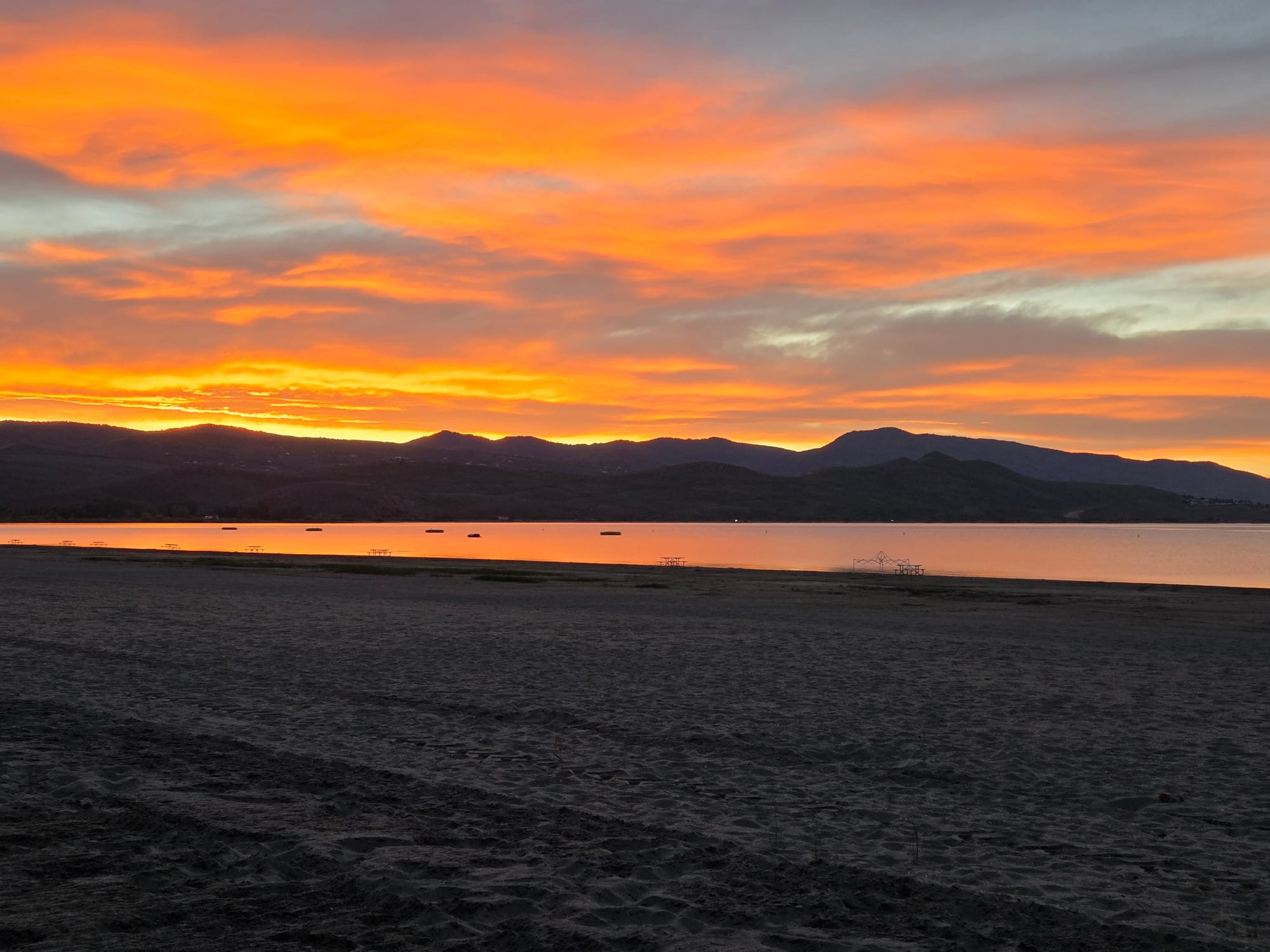
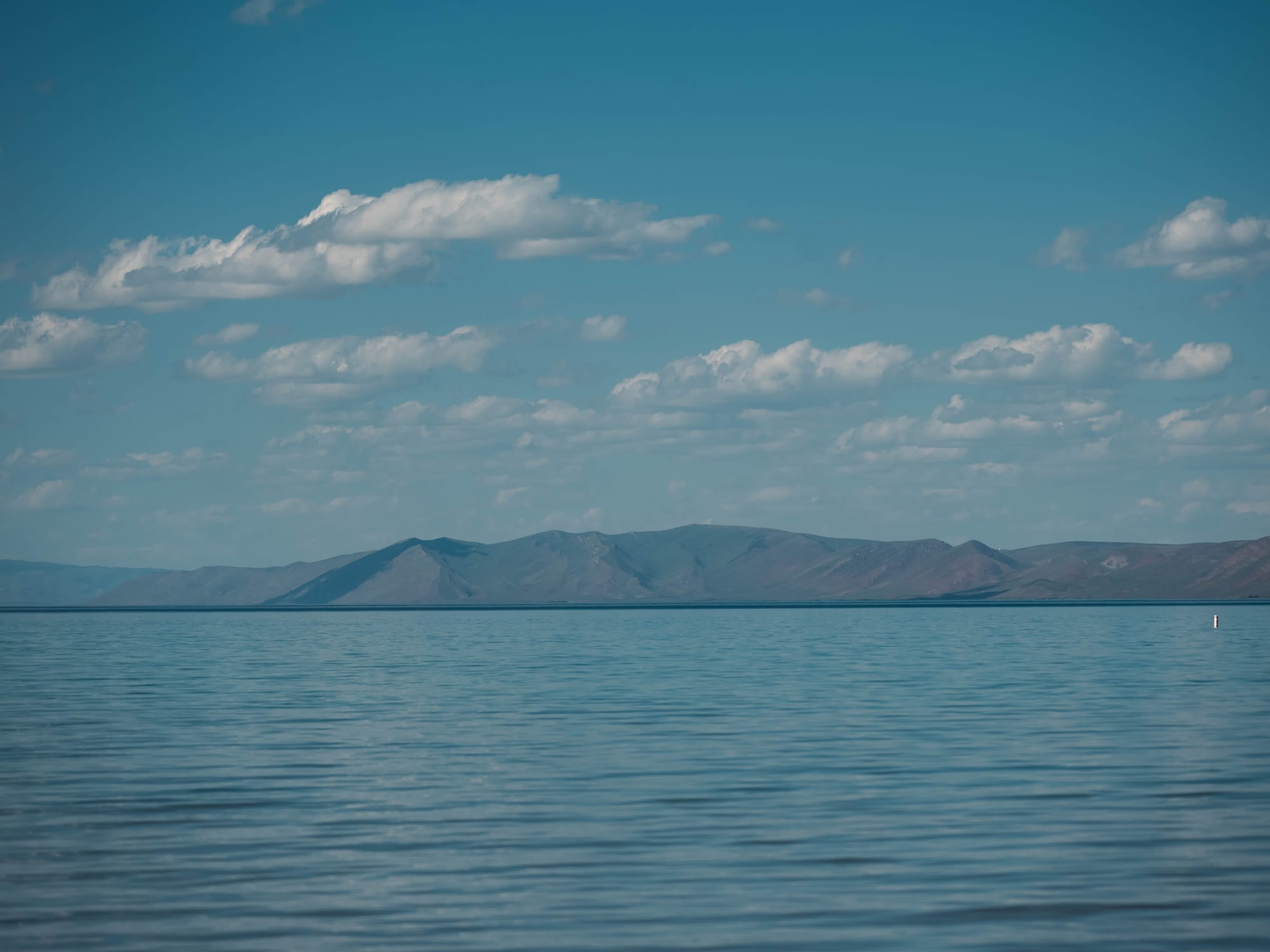
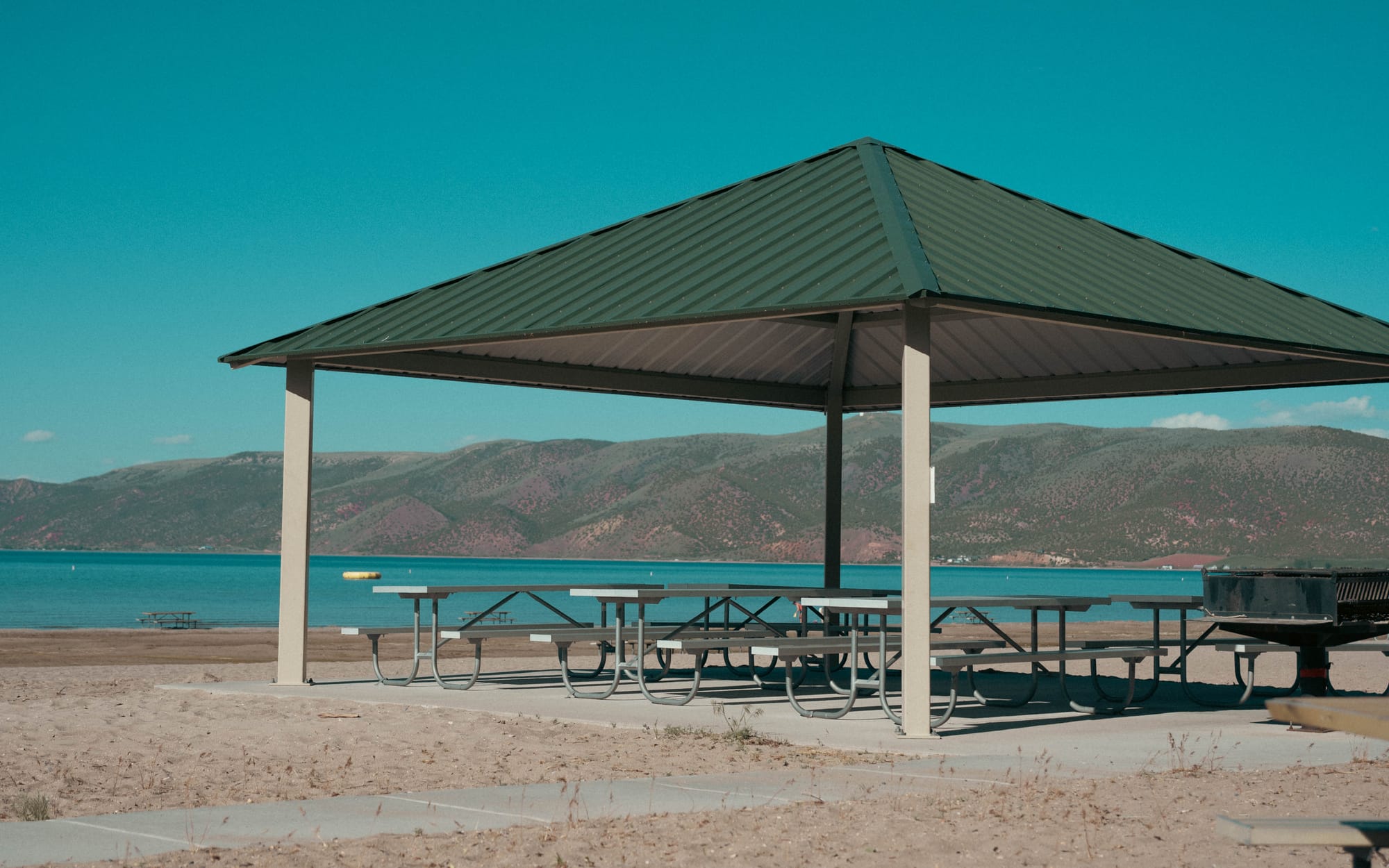
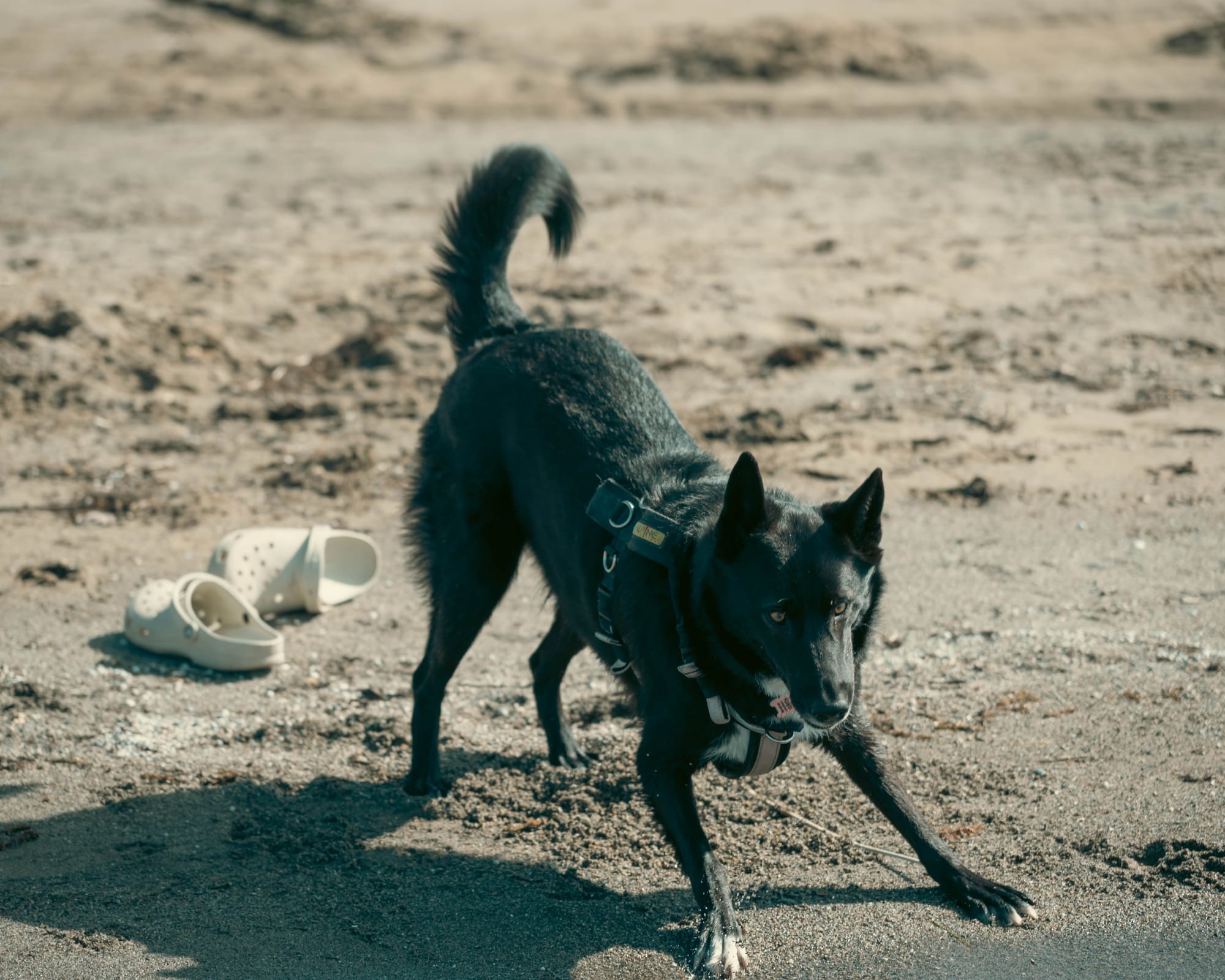
The park provided reliable full hook-up so we could use the trailer as if it was a cottage. No worries. Bear Lake itself was a big surprise. The colour is an amazing blue due to the calcium carbonate suspended in the water refracting the light. The beach extends forever allowing lots of room for the dogs to run and play.
Additionally, the water level in the lake was unusually low this spring which meant the dogs could wade out and play in the water to cool off. The big attraction to this park is the lake and it did not disappoint.
We took advantage of the canoe rentals right on site and a guided nature hike. The park is close (10 miles/16 kilometers) to Garden City. Garden City has a good grocery store, clean modern laundromat and a great coffee shop.
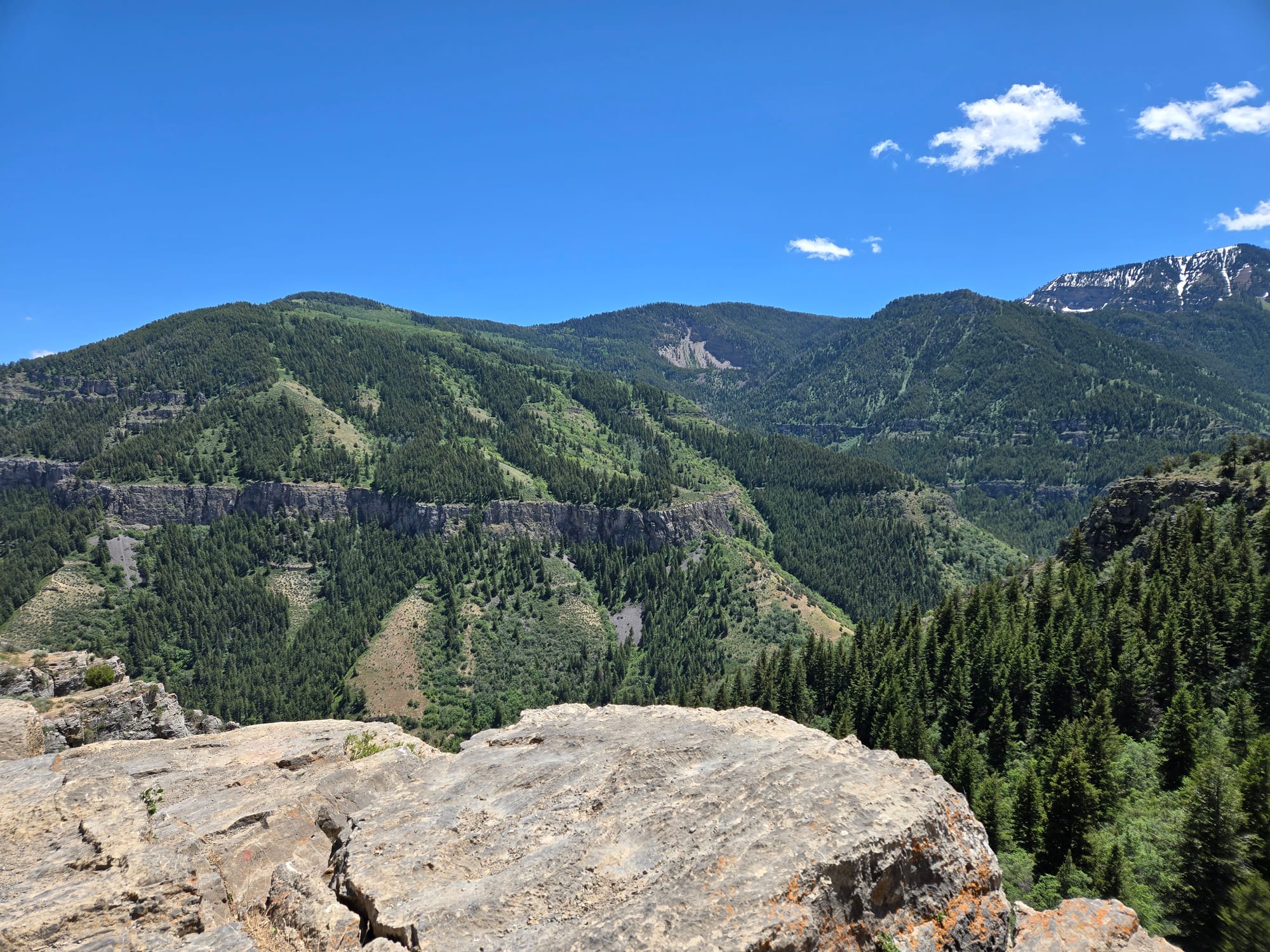
Garden City is also the entrance to the Logan Canyon and the Cache National Forest. We hiked two short trails. Limber Pines was perfect for taking the dogs on a hike. Wind Caves was a little longer drive up the canyon so we hiked this trail without the dogs. They seemed happy enough to sleep the afternoon away. The drive down highway 89 through the Logan Canyon was a great way to be introduced the the geography of northern Utah. Spectacular views.
Bear Lake State Park was crowded on the weekend. No vacancies and lots of families. We noticed a lot of multi-generational families enjoying time around the campfire. And so many dogs! But they were all well behaved dogs. The group camping was also being used by camps (girls at one end of the park and boys at the other). We could hear the singing of camp songs early in the evening.
🗺️ The Lay of the Land
- Location: Laketown, Utah · Bear Lake · 41.9634, -111.3991 · [Google Maps]
- Official site: Bear Lake State Park
- Landscape: turquoise freshwater lake · sandy beach · mountain valley
- Vibe: bright blue water, beach camping, and summer lake-town energy
- Our stay & conditions: June 4–12, 2026 · 8 nights · warm lake days, cool mornings, clear stretches, and wind
🏕️ Camp Setup
- Site types: RV sites · tent sites · group sites · boat slips
- Arrival & setup: Easy
- Hookups: 💧 / ⚡ / 🚽 | 🧻
- Connectivity: 📶 AT&T 🟢 | 📶 Verizon 🟢 | 📶 T-Mobile 🟢 | 📡 Starlink ⟂ | 📶 Park Wi-Fi ⟂
- Facilities: Restrooms · Showers · Kayak/Boat Rentals
Legend:
🚽 = sewer at site · 🧻 = dump station
🟢 = solid for work · ⚠️ = usable with limits · ❌ = unusable
Park Highlights
Bear Lake sits high in the Bear Lake Valley, straddling the Utah and Idaho border.
Utah State Parks lists the lake at 5,923 feet elevation, about 20 miles long, 8 miles wide, and 208 feet deep, covering roughly 112 square miles. It is a large natural lake, not a small reservoir tucked into the mountains.
The color is the first thing people notice.
Bear Lake’s blue-green water comes from calcium carbonates suspended in the lake, which scatter light and give the water its bright turquoise color. That color is the reason Bear Lake is often called the “Caribbean of the Rockies.”
The basin itself is geologically active. Bear Lake occupies a fault-bounded valley along the Utah-Idaho border, with the lake sitting in a deep basin shaped by movement along those faults. The lake was formed by earthquake activity about 28,000 years ago.
Bear Lake is also different from the Utah reservoirs we had been visiting because it began as a natural lake. The Bear River did not historically flow directly into Bear Lake. Between 1909 and 1918, canals were built to divert Bear River water into the lake for irrigation storage, adding a water-management layer to an already significant natural system.
The human history goes back long before modern recreation.
Donald Mackenzie, an explorer for the North West Fur Company, came through in 1819 and called it Black Bear Lake, later shortened to Bear Lake. The south end of the lake also became known for the fur trader and Native American rendezvous held there in the summers of 1827 and 1828, which is where Rendezvous Beach gets its name.
🚴 On the Ground
- Activities available: ● 🥾 Hiking | ● 🚴 Biking | ● 🐕 Dogs | ● 🚣 Paddling | ● 🎣 Fishing | ● 🐦 Birding | ● 🏊 Swimming | ● 📸 Photography | ● 🏕️ Camp-centric | ○ 🧗 Climbing
- Trail mileage available: 🥾 ~4 mi. | 🚴 ~4 mi. | 🚣 ⟂
- Crowd level: Steady
Legend: ● = available · ○ = not available
⚡ TL;DR
- Park highlight: Bear Lake’s blue-green water framed by a high mountain valley
- Best for: Lake days, family camping, boating, swimming, and beach time
- Skip if: You want mountain hiking from camp or a low-key campground without summer crowds
- Worth planning around?: Possibly
Final Takeaways
Bear Lake worked as a full lake stay, not just a campground stop.
The park is built around the water: swimming, boating, fishing, beach time, and long summer days along the shoreline. The blue-green color gives the lake its reputation, but the size and setting are what make it feel like a true destination.
Bear Lake is a summer lake destination. Plan for that, and it works.