Jurassic National Monument
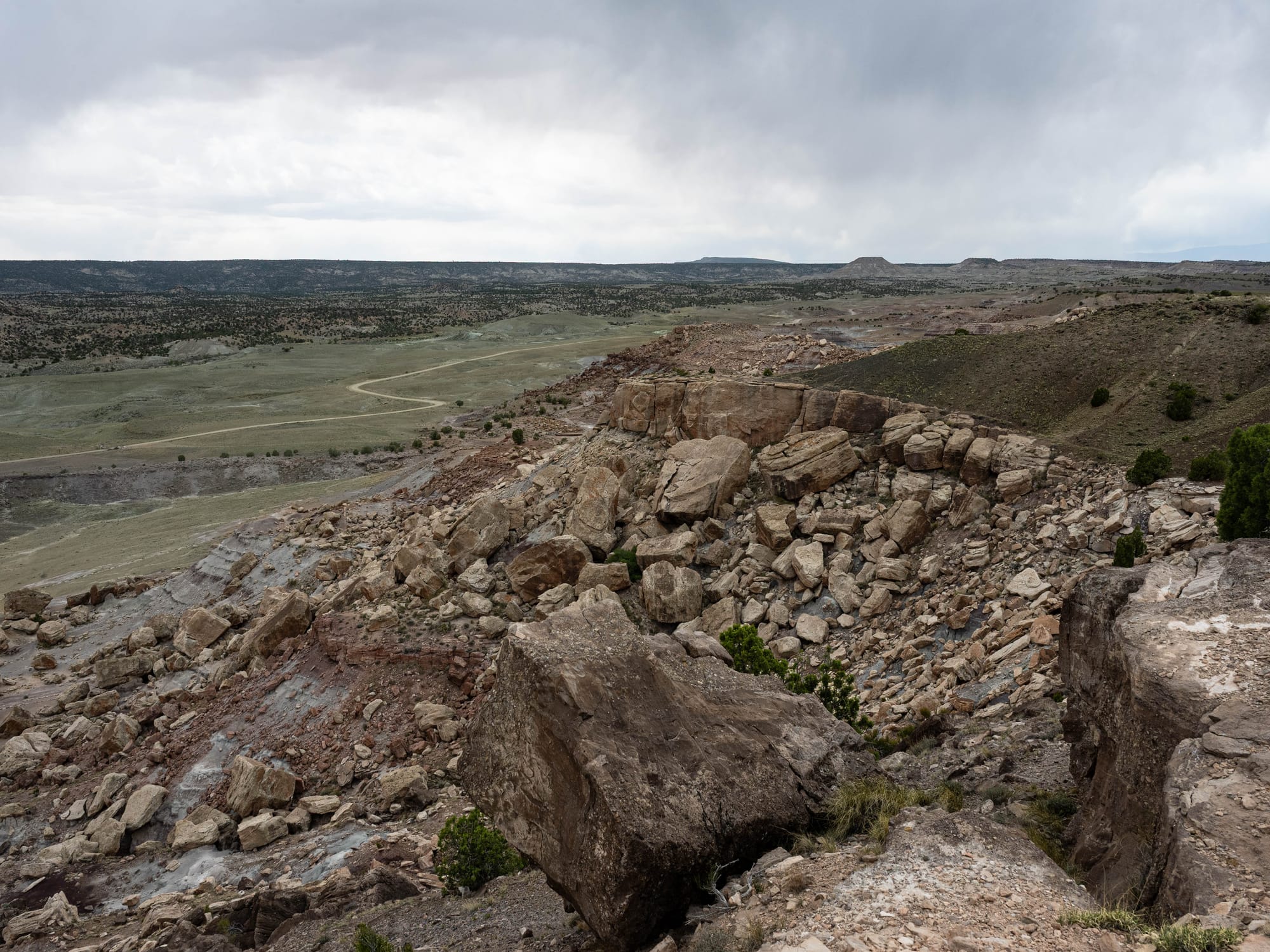
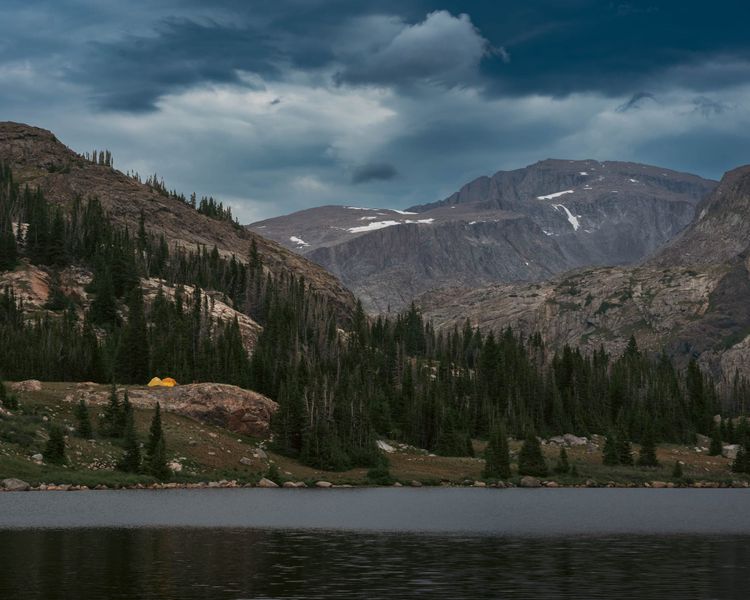
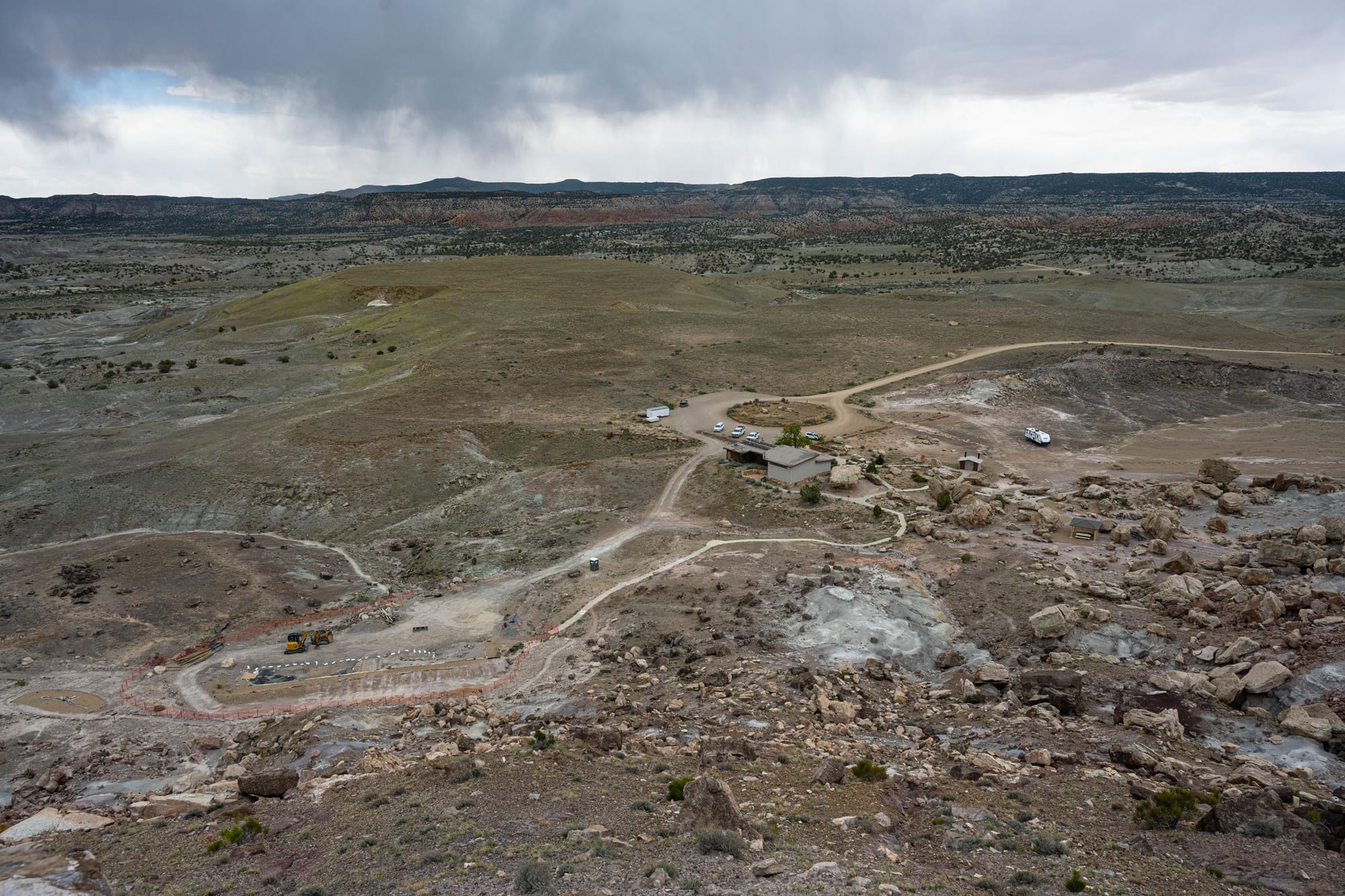
Jurassic National Monument sits east of Huntington, Utah where the road leaves the main valley and turns toward open desert.
You are not pulling into a polished paved park. You are driving 20 miles on a dirt road to a fossil quarry that still feels tied to the ground around it.
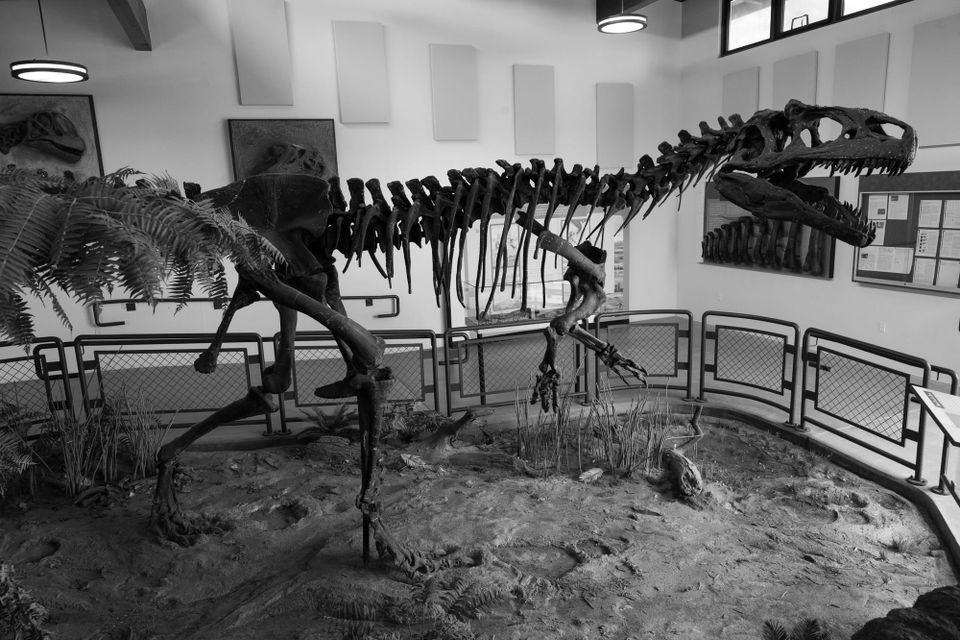
The monument protects the Cleveland-Lloyd Dinosaur Quarry, one of the densest Jurassic dinosaur bone deposits ever found. The site is focused: a visitor center, quarry exhibits, short trails, picnic areas, and the surrounding public land.
🗺️ The Lay of the Land
Location: Cleveland, Utah · 39.3228, -110.6895 · [Google Maps]
Official site: Jurassic National Monument
Landscape: high desert · Morrison Formation badlands
Vibe: remote fossil quarry, exposed layers, and unanswered questions
Our stay & conditions: May 2026 · day trip from Huntington · dry, open, and quiet
Park Highlights
The history starts before the formal science. Ranchers and sheepherders noticed bones in the area in the late 1800s. The University of Utah collected fossils here in 1927. Princeton crews excavated from 1939 to 1941. The Bureau of Land Management opened a visitor center in 1968, and the site became part of Jurassic National Monument in 2019.
Cleveland-Lloyd was important long before it had the national monument name.
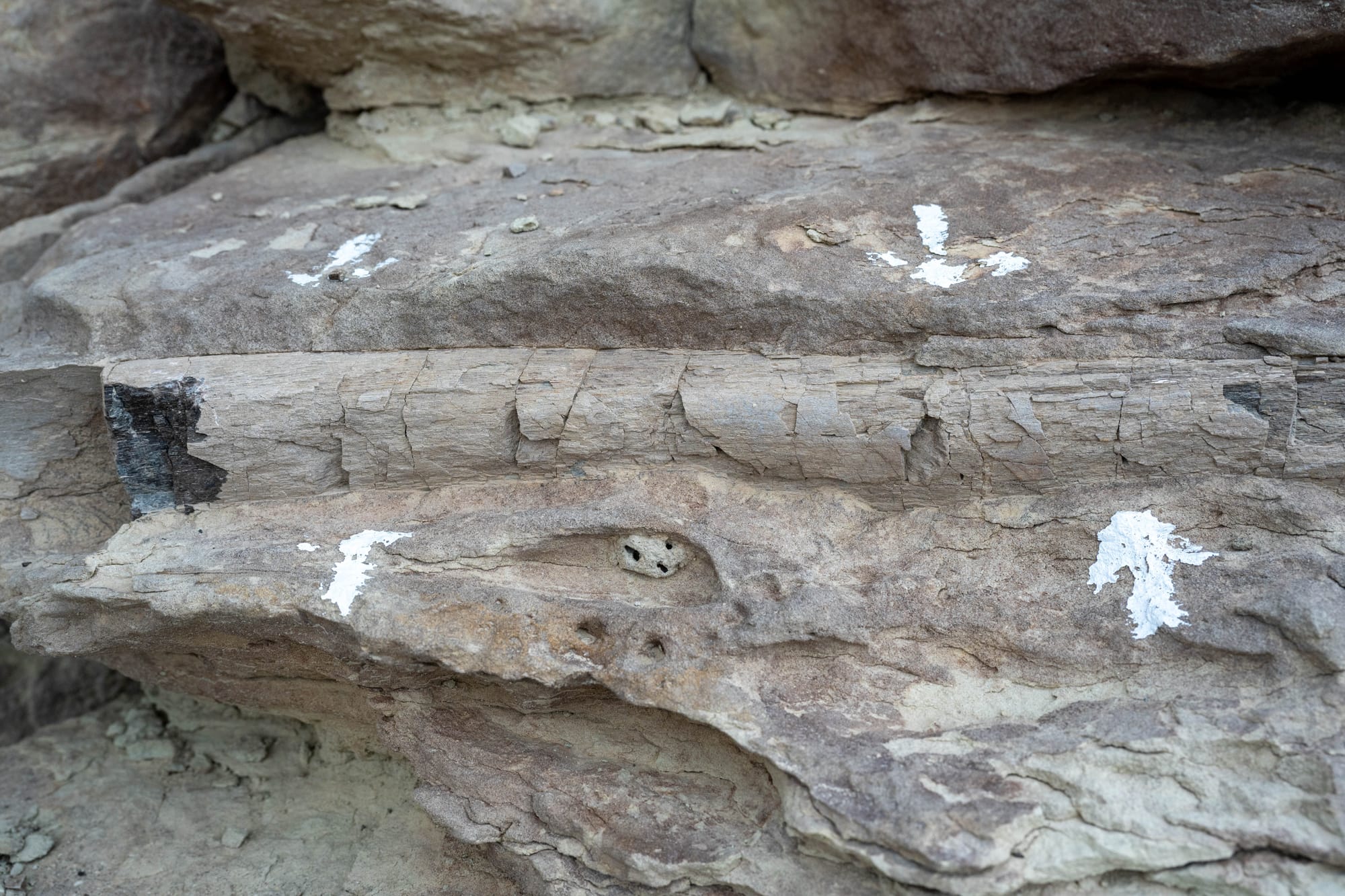
The quarry sits in the Morrison Formation, a Late Jurassic rock unit spread across much of the interior West. The Morrison preserves evidence from old river systems, floodplains, ponds, mud flats, and dry periods. It is not one single environment. It is a record of changing conditions over time.
More than 12,000 fossils from at least 74 individual animals have been discovered. Most of the bones are disarticulated, meaning they were not found as complete skeletons laid neatly in the rock. They were mixed together. That alone points away from a simple burial scene.
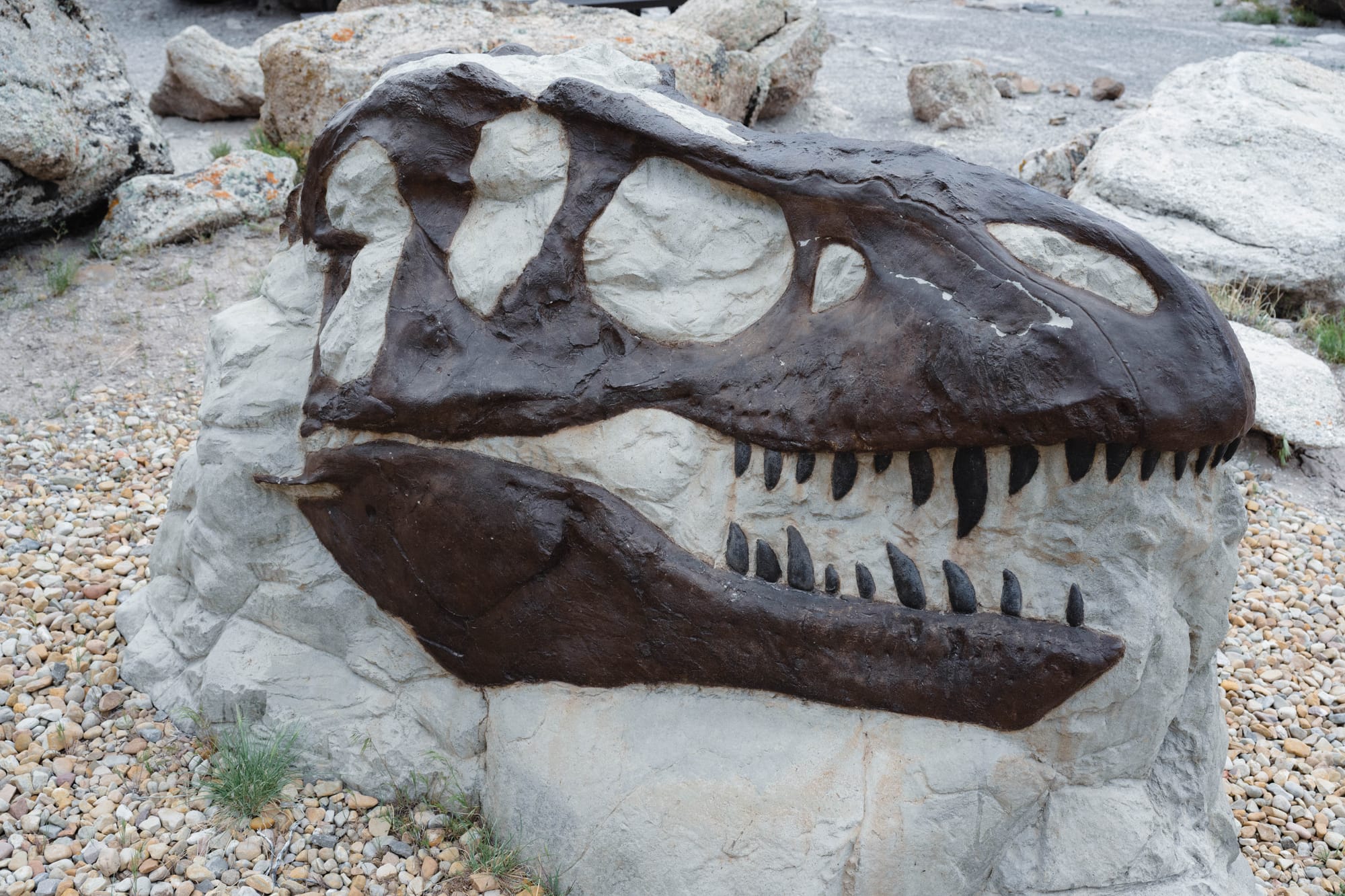
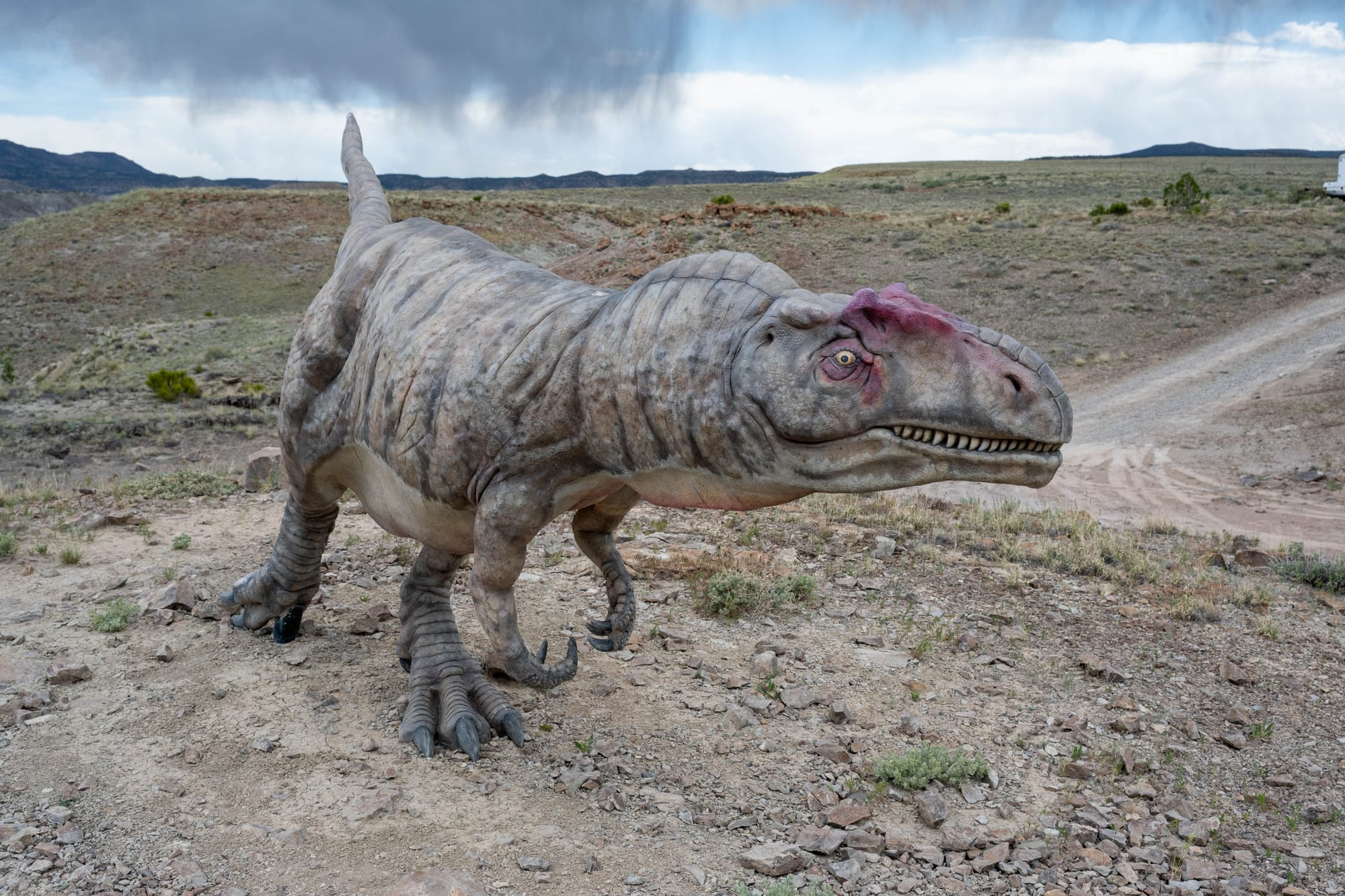
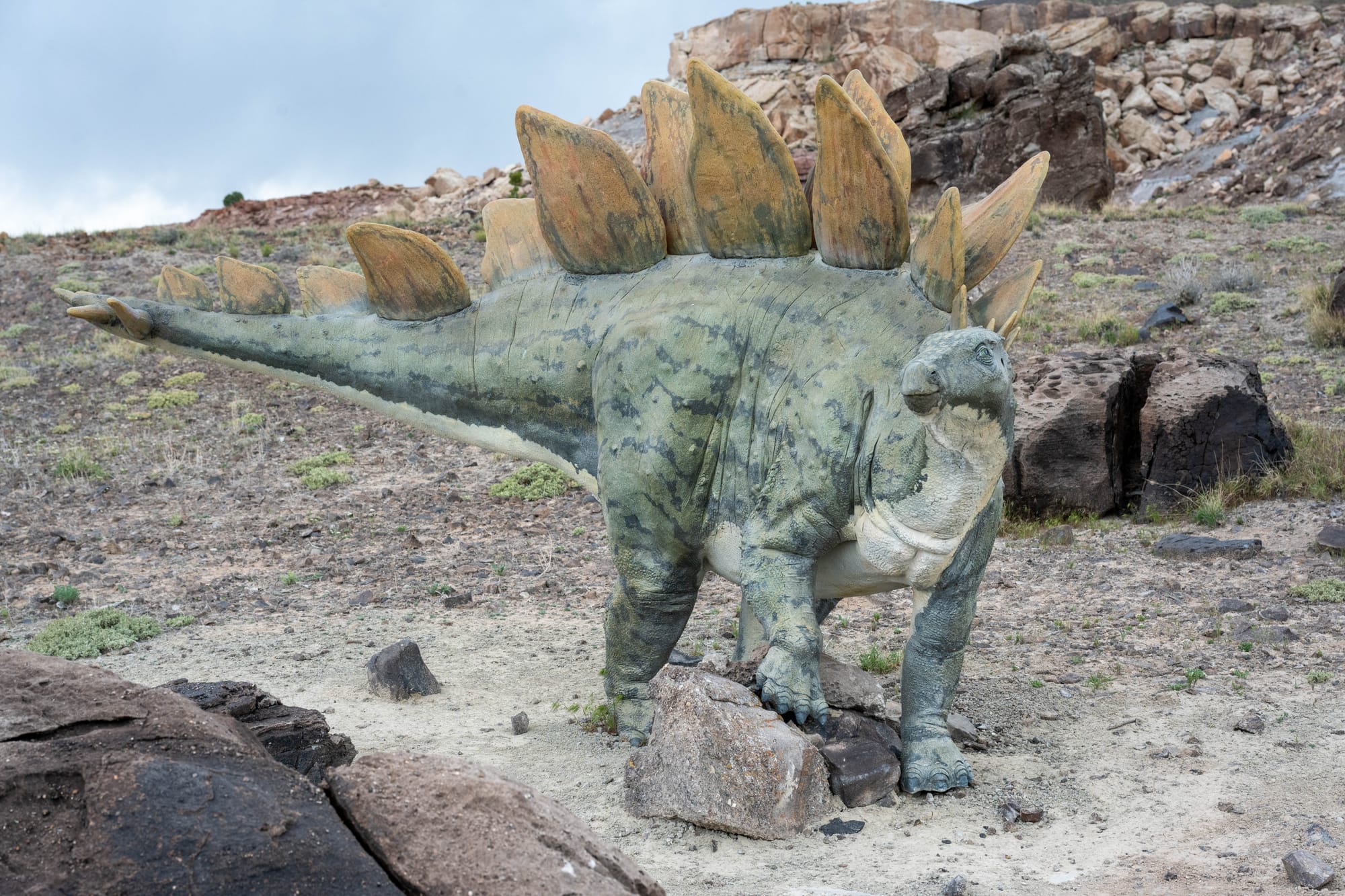
Allosaurus dominates the quarry, but it was not the only dinosaur found here. Other theropods include Ceratosaurus, Marshosaurus, Stokesosaurus, and Torvosaurus. Herbivores include Stegosaurus, Camptosaurus, Camarasaurus, Apatosaurus, Barosaurus, and Diplodocus.
That mix makes the predator imbalance stand out.
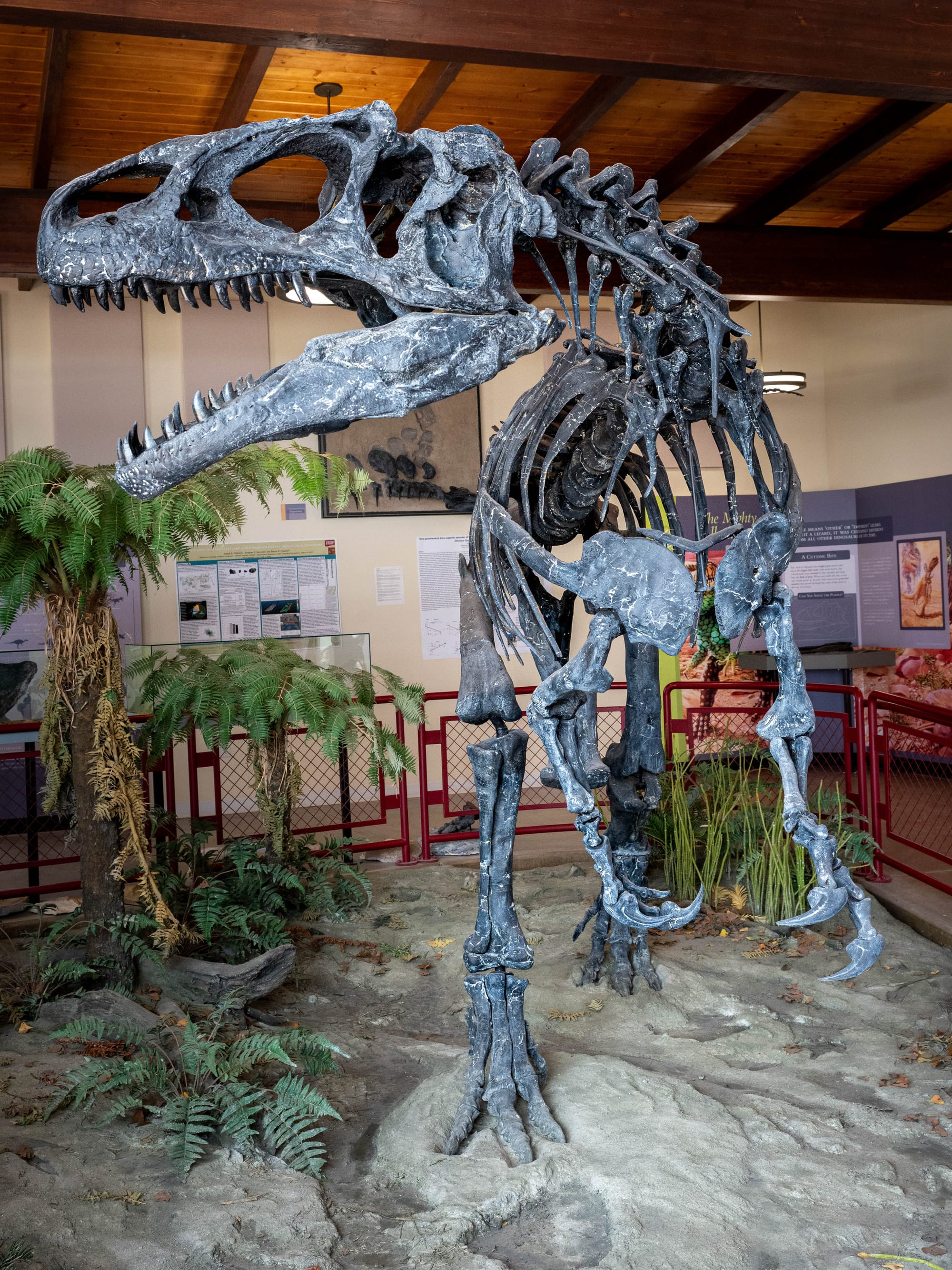
More than 75 percent of the bones are from carnivorous dinosaurs, especially Allosaurus fragilis. More than 46 individual Allosaurus have been identified here. In a normal living ecosystem, large predators are not usually the most common animals on the landscape.
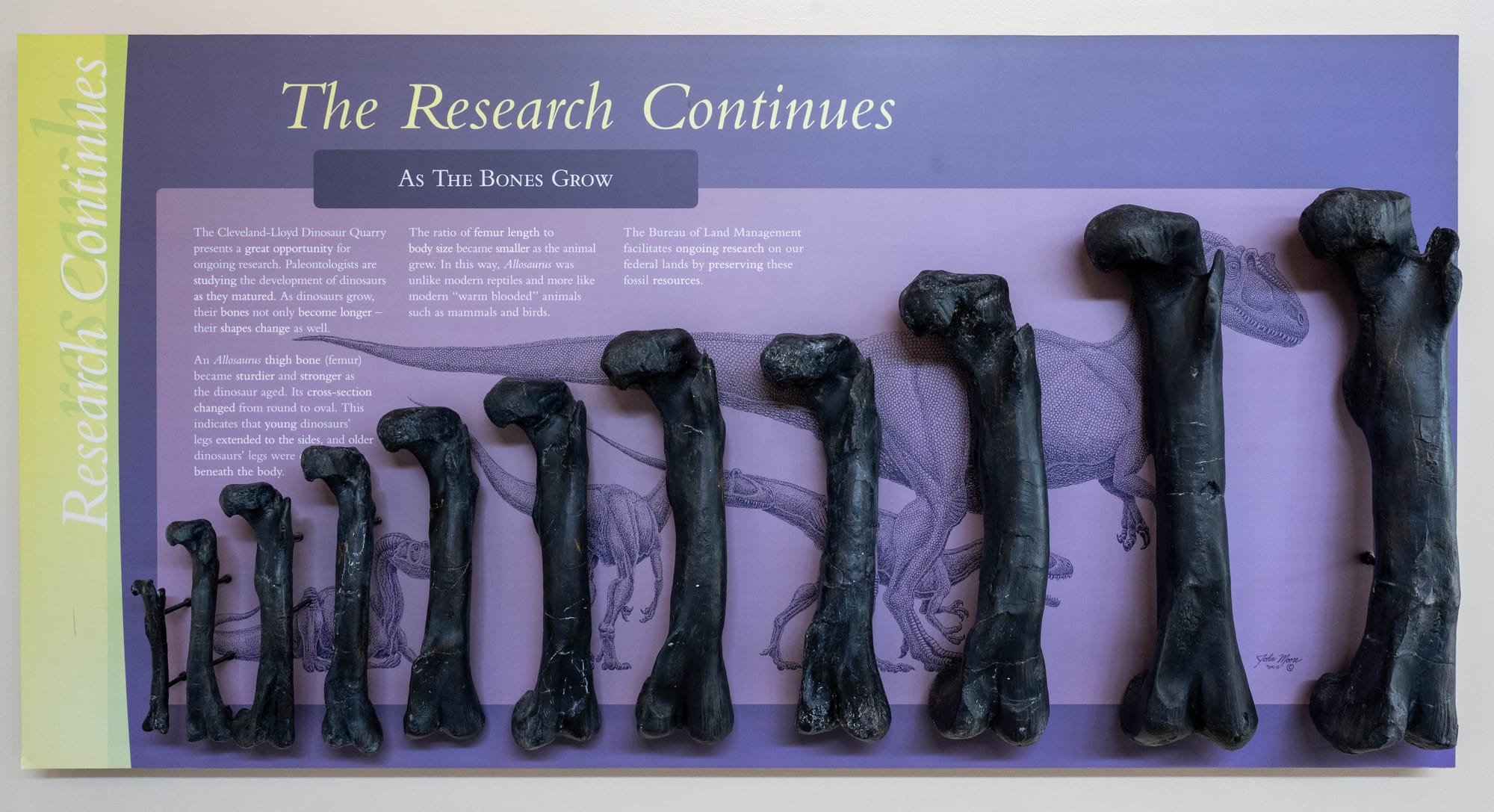
Allosaurus is not just the famous dinosaur on display. It is the repeated evidence. One skeleton can show the shape of an animal. Dozens of individuals can show variation, age differences, injuries, proportions, and repeated patterns across the same species.
That is why Cleveland-Lloyd became so useful for studying Allosaurus.
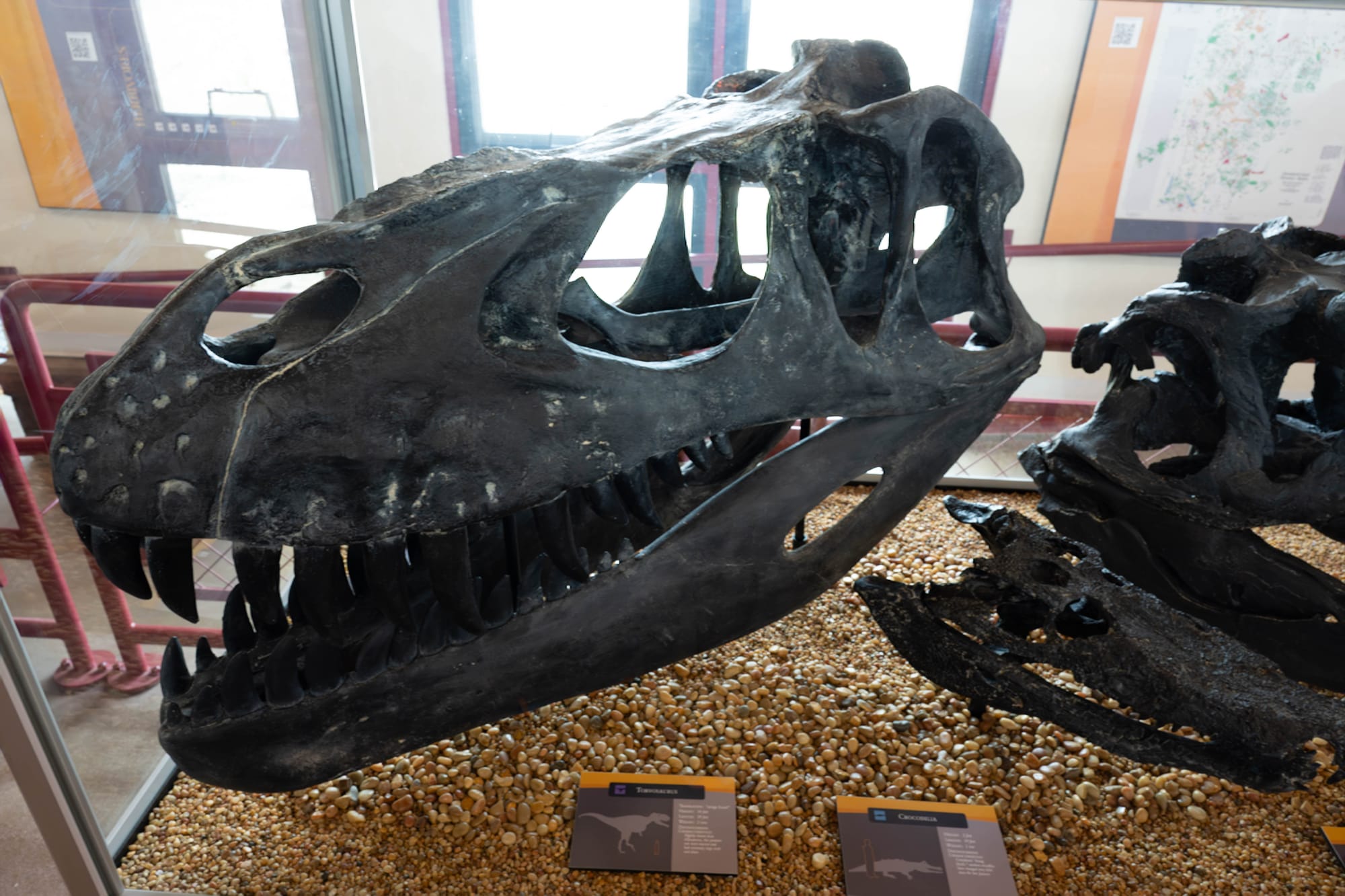
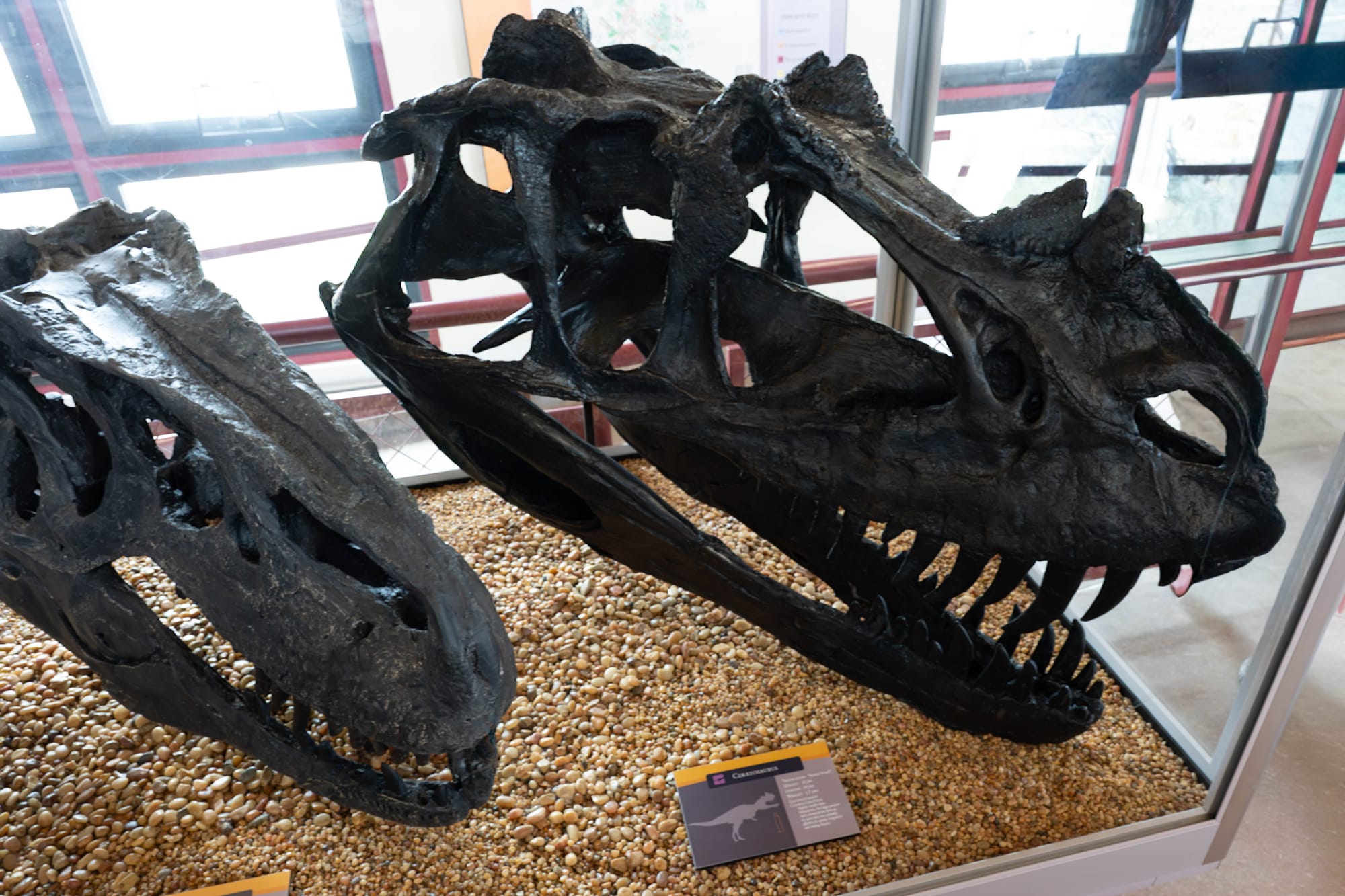
L: Torvosaurus (Height: 14' | Length: 39' | Weight: 2 tons) · R: Ceratosaurus (Height: 10' | Length 30' | Weight: 1.5 tons)
The harder question is how the bone bed formed.
Several explanations have been proposed. A predator trap is one. Carnivores may have been drawn to struggling animals or carcasses and then become trapped themselves. Drought is another. Animals may have gathered near a shrinking water source during dry periods. Mud, scavenging, water movement, and repeated burial events may also have played a role.
The site does not give one clean answer.
That keeps it from feeling like a finished museum story. The visitor center gives the framework, but the quarry still feels like a field site. The surrounding land is dry, exposed, and spare. The trails place the fossils back into that setting instead of separating them from it.
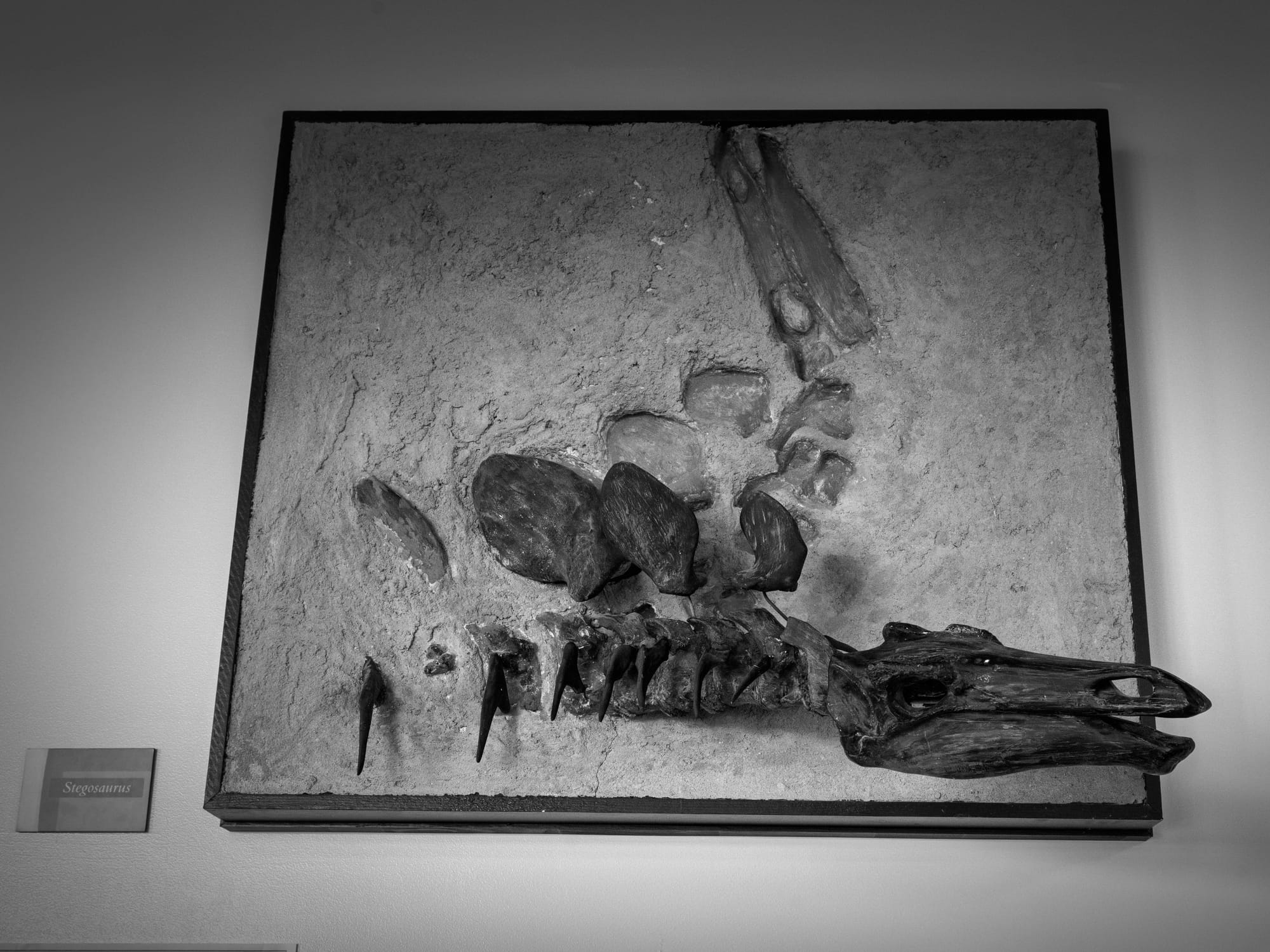
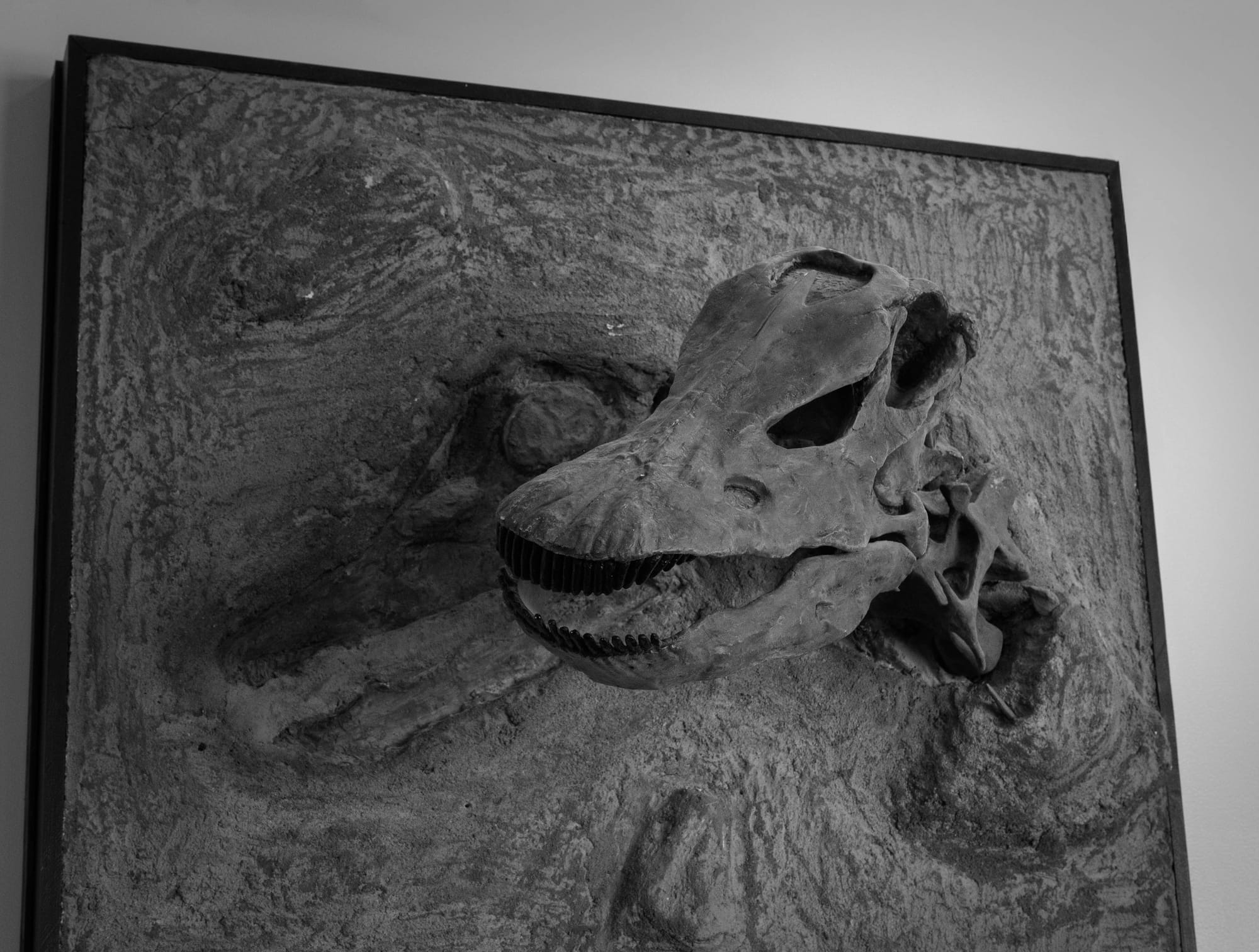
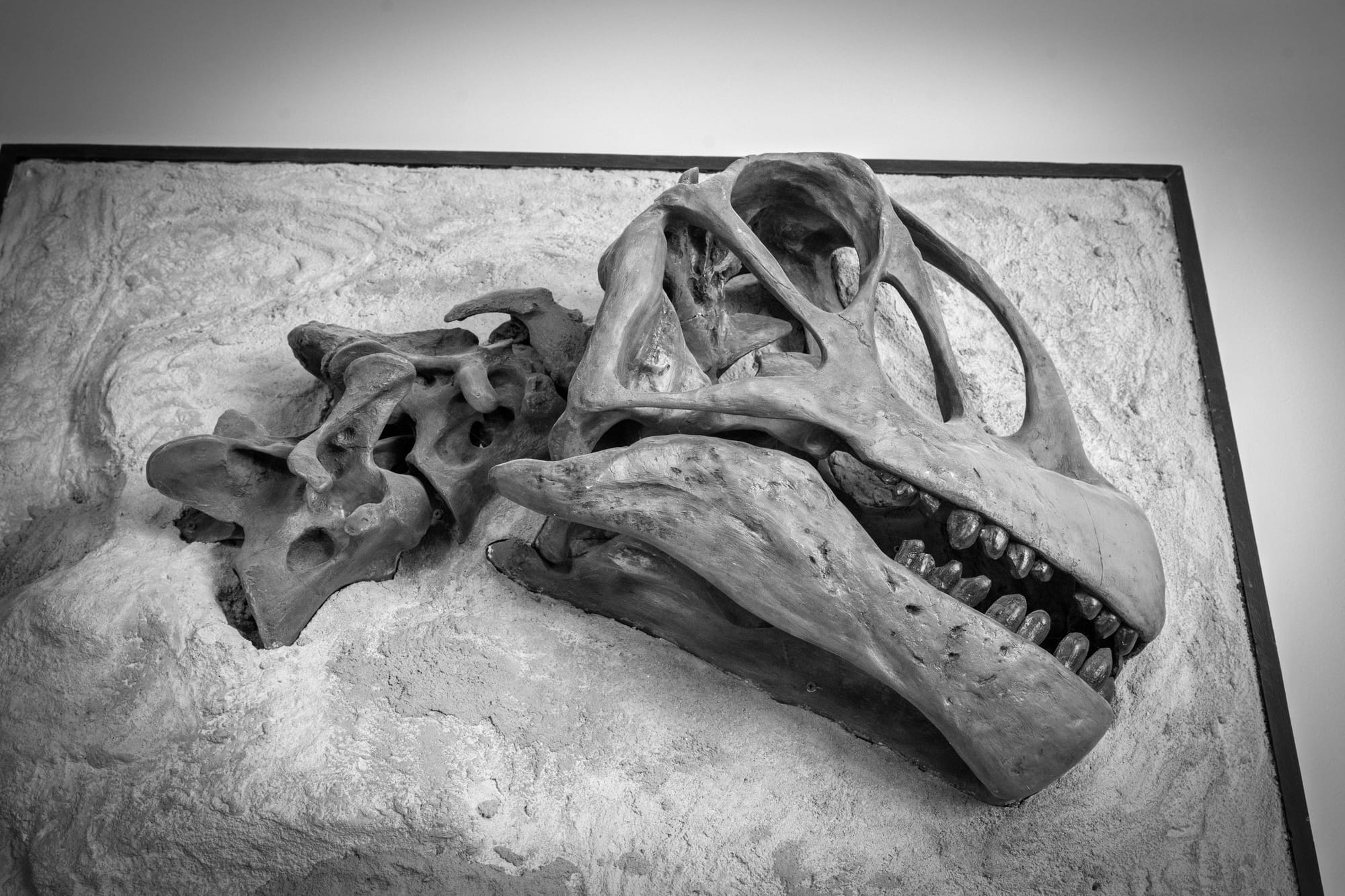
Stegosaurus | Diplodocus | Camarasaurus
⚡ TL;DR
- Park highlight: Cleveland-Lloyd Dinosaur Quarry and its predator-heavy Jurassic bone bed
- Best for: Fossil context, Allosaurus history, short trails, and a focused day trip from Huntington
- Skip if: You don't like dinosaurs
- Worth planning around?: Maybe
Final Takeaways
Jurassic National Monument works because it stays focused.
The site has one clear subject: the Cleveland-Lloyd Dinosaur Quarry. Everything else supports that. The dirt road, the visitor center, the exposed ground, and the fossil record all keep pulling attention back to the same problem.
A lot of bones were found here. Too many of them were predators. There still is not one clean explanation.
JNM gives you enough context to understand why the site matters, then leaves the central question open.