Mount Rushmore National Memorial
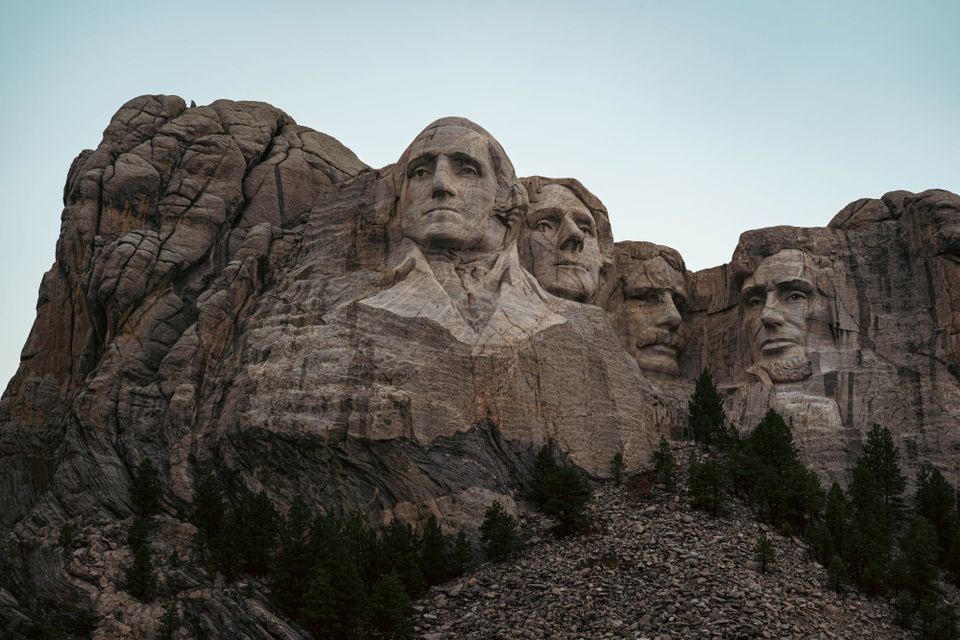
We reached Mount Rushmore by way of Iron Mountain Road, which may be one of the more absurd approaches to a national memorial in the country.
The road twists through the Black Hills on tight switchbacks, passes through three narrow tunnels cut directly through granite, and repeatedly disappears into ponderosa forest.
Some of those tunnels were deliberately aligned to frame Mount Rushmore in the distance, so the monument starts appearing before you ever reach the entrance.
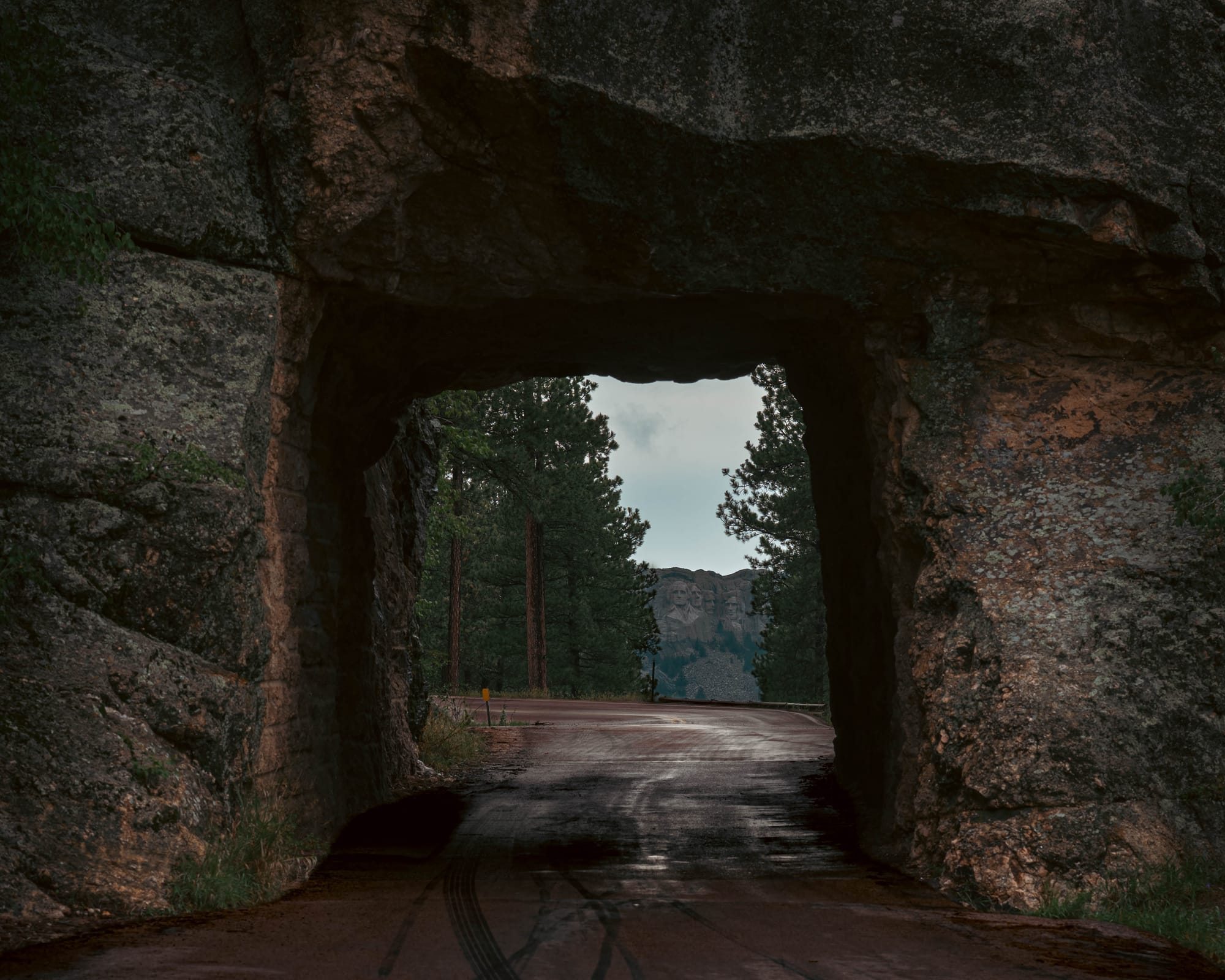
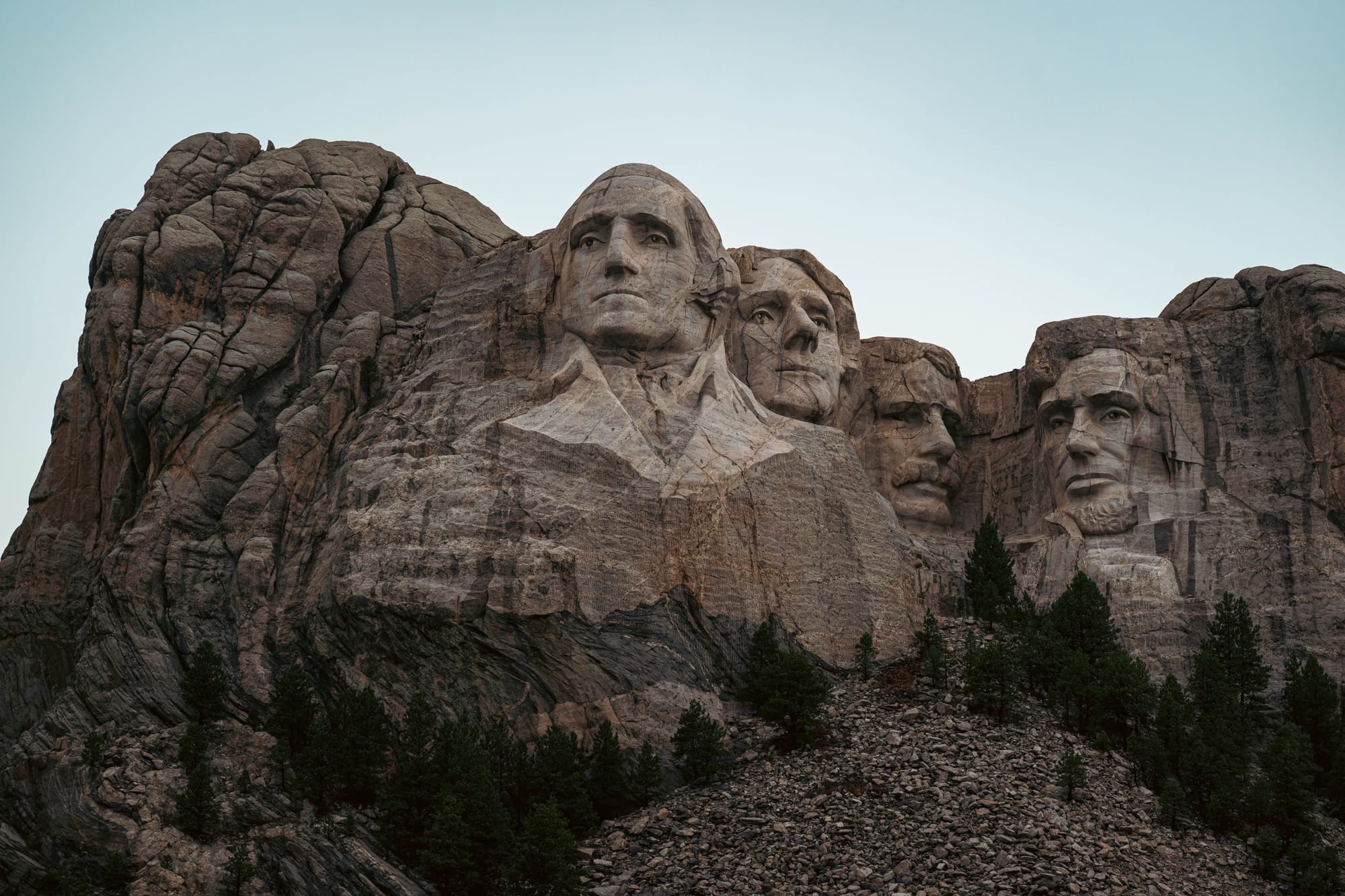
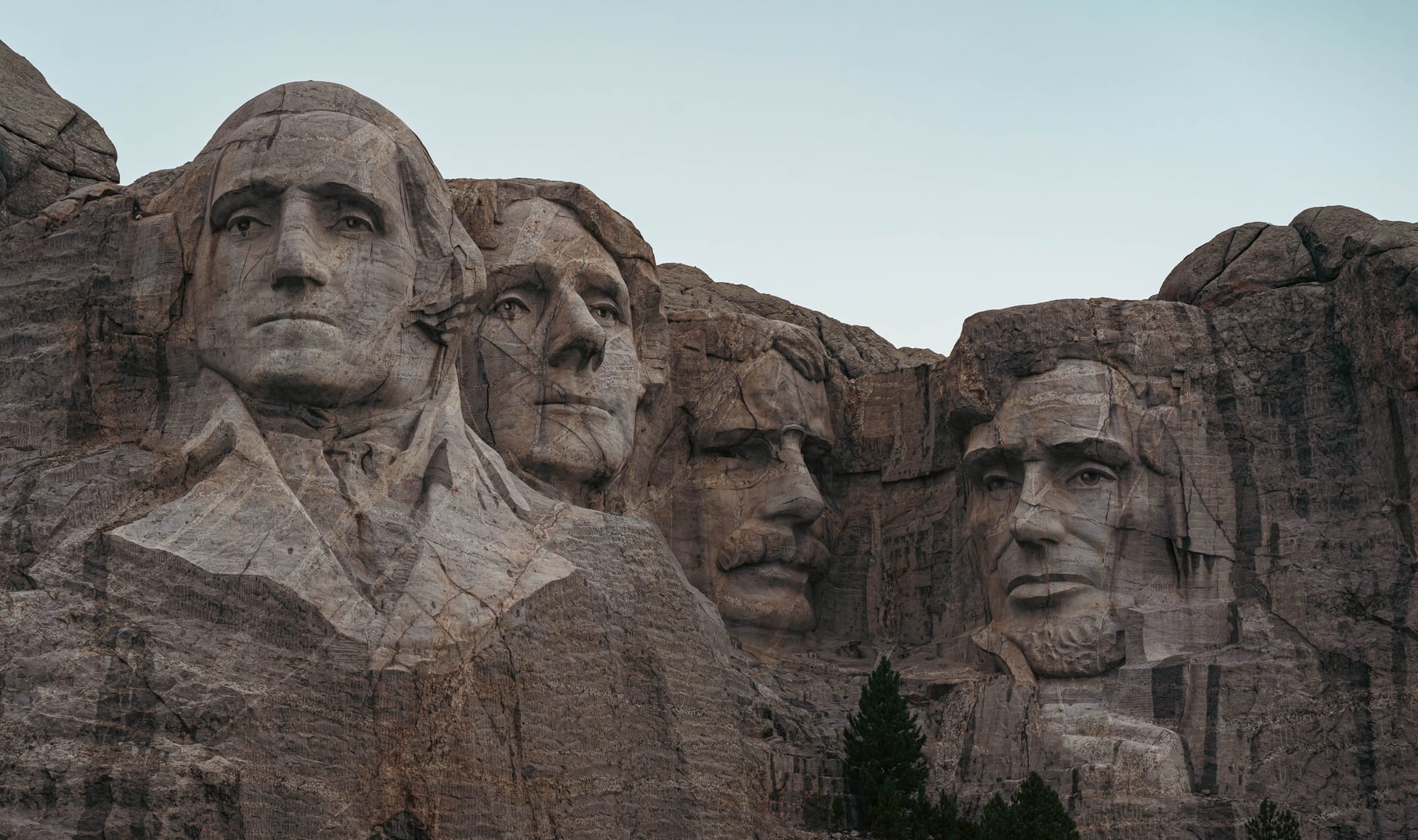
Mount Rushmore is so familiar that it is easy to think you already know what it looks like. In person, the precision is what caught me off guard.
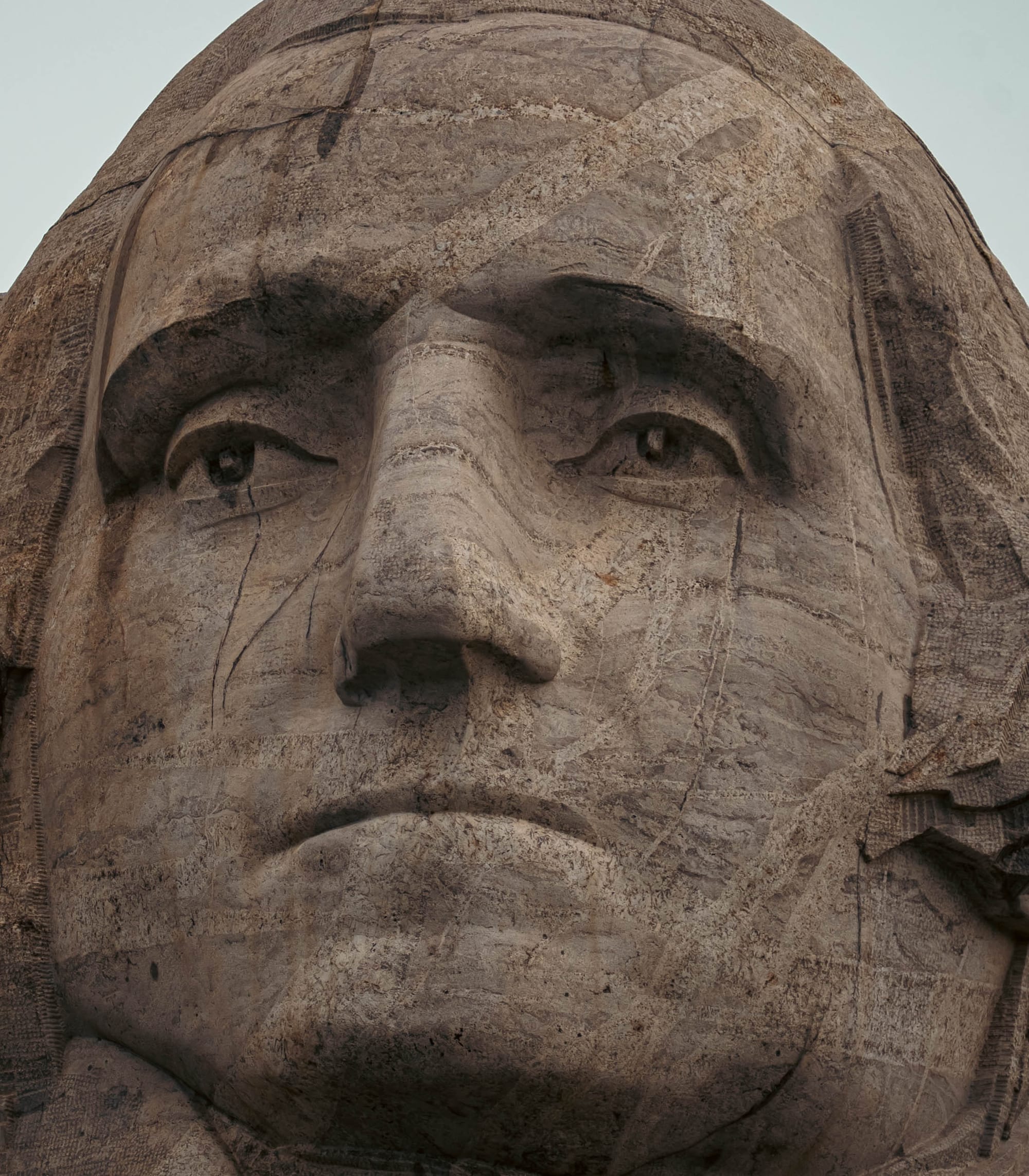
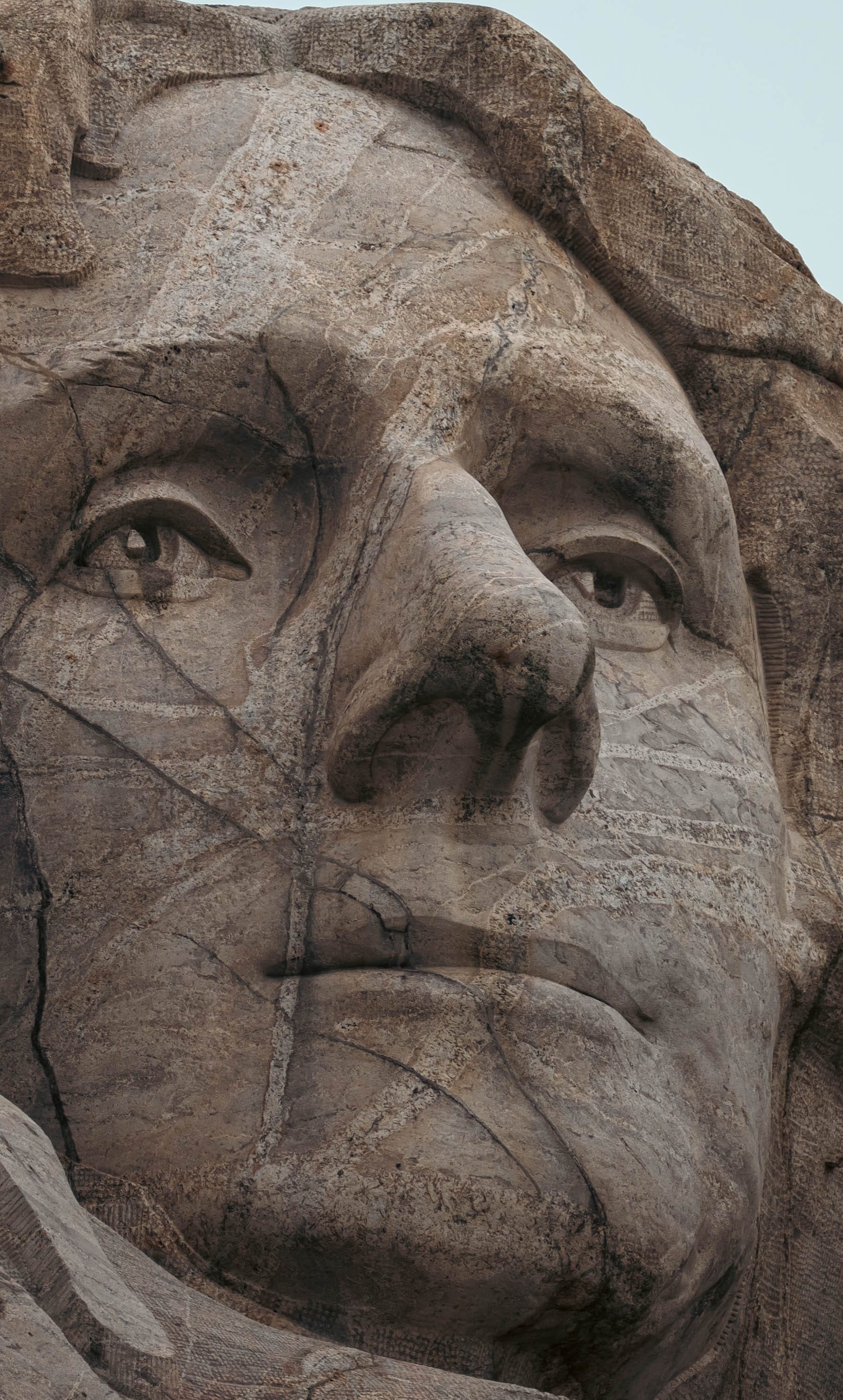
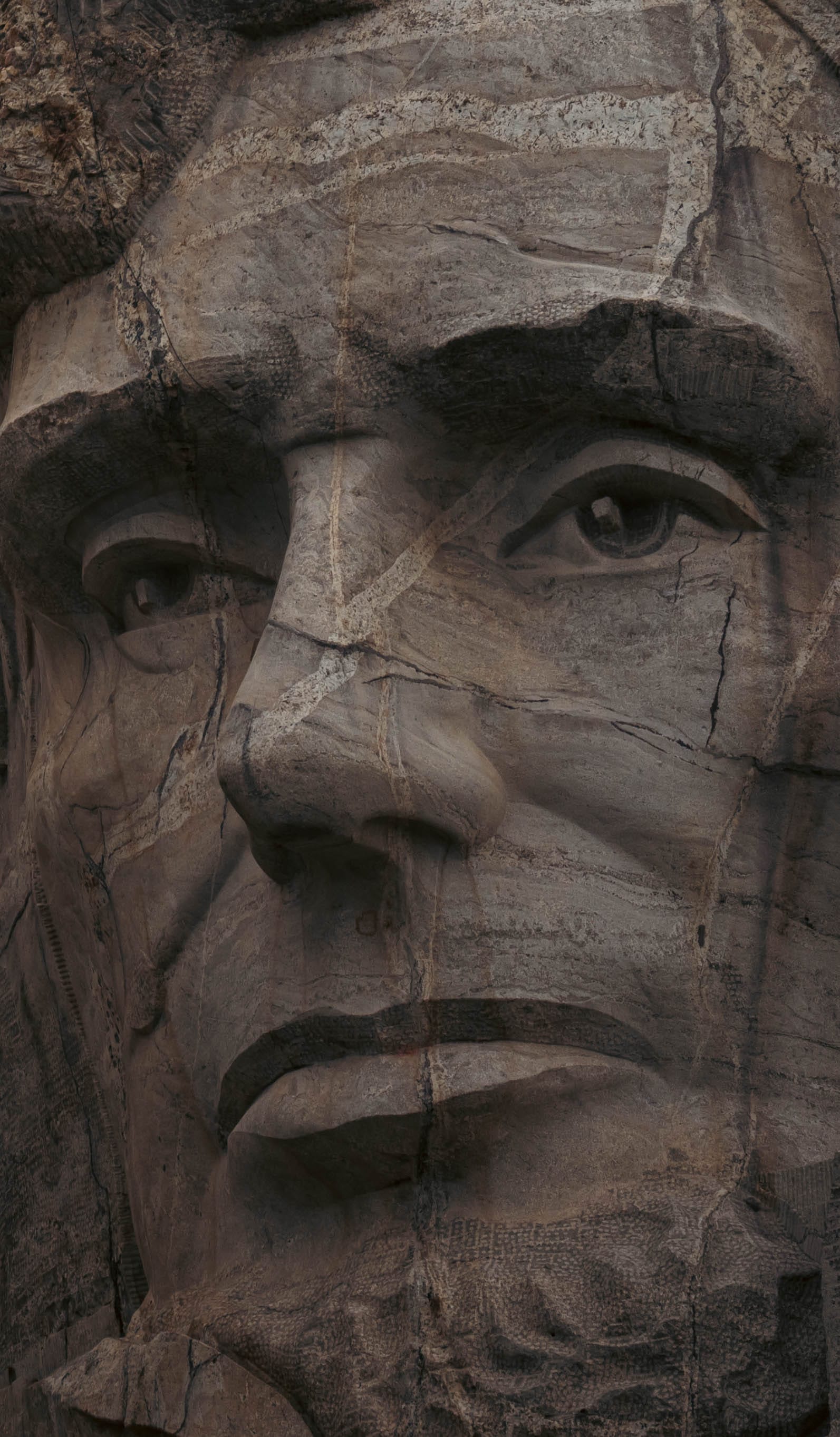
Washington, Jefferson, Roosevelt, and Lincoln are not vague approximations made recognizable by context. Their proportions, expressions, and individual features are remarkably convincing.
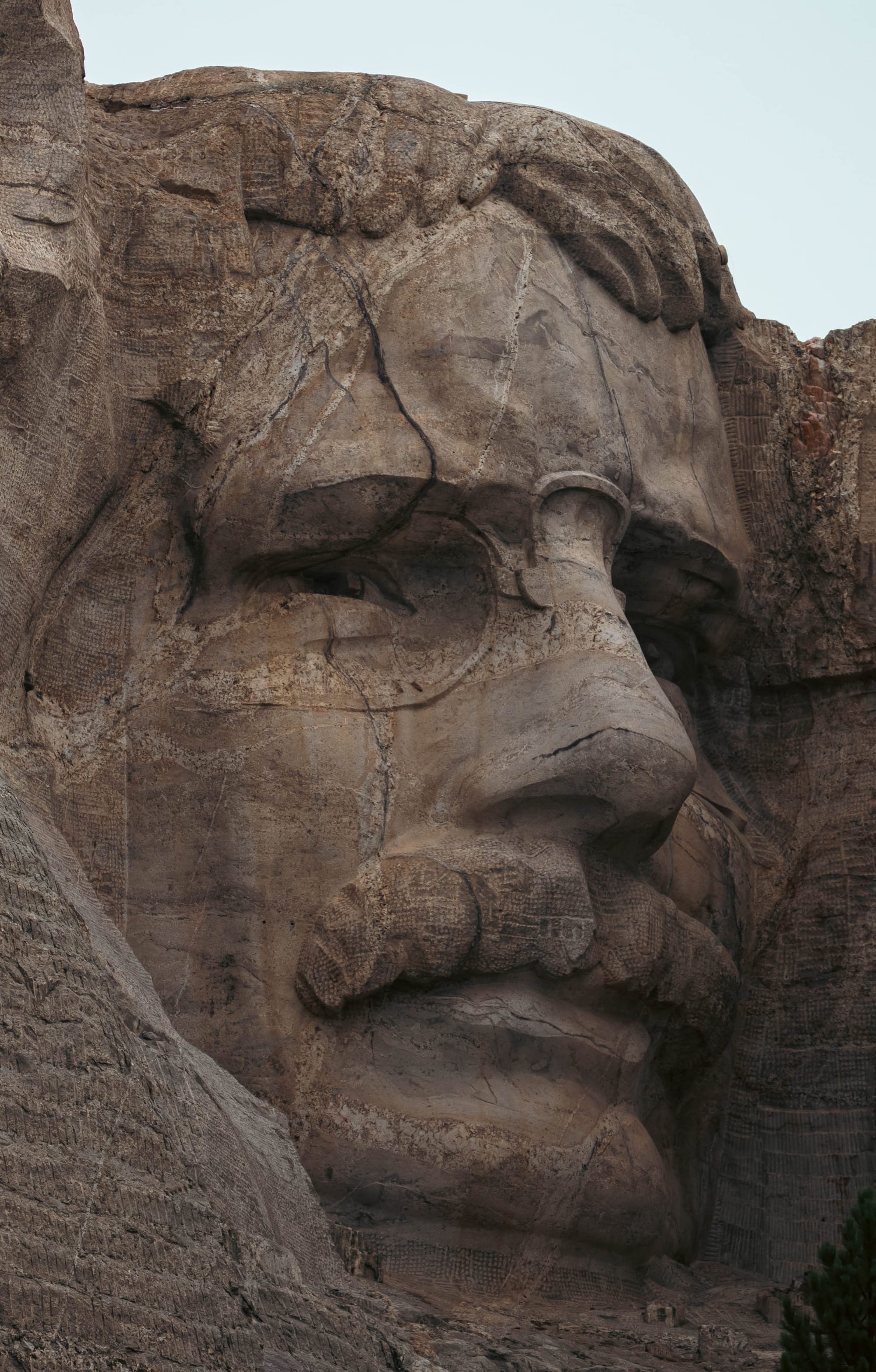
Washington's nose catches the changing light and throws a hard shadow across one side of his face. Lincoln's eyes seem far deeper than they should at that scale. Roosevelt's glasses are suggested through stone and shadow rather than a literal pair of frames.
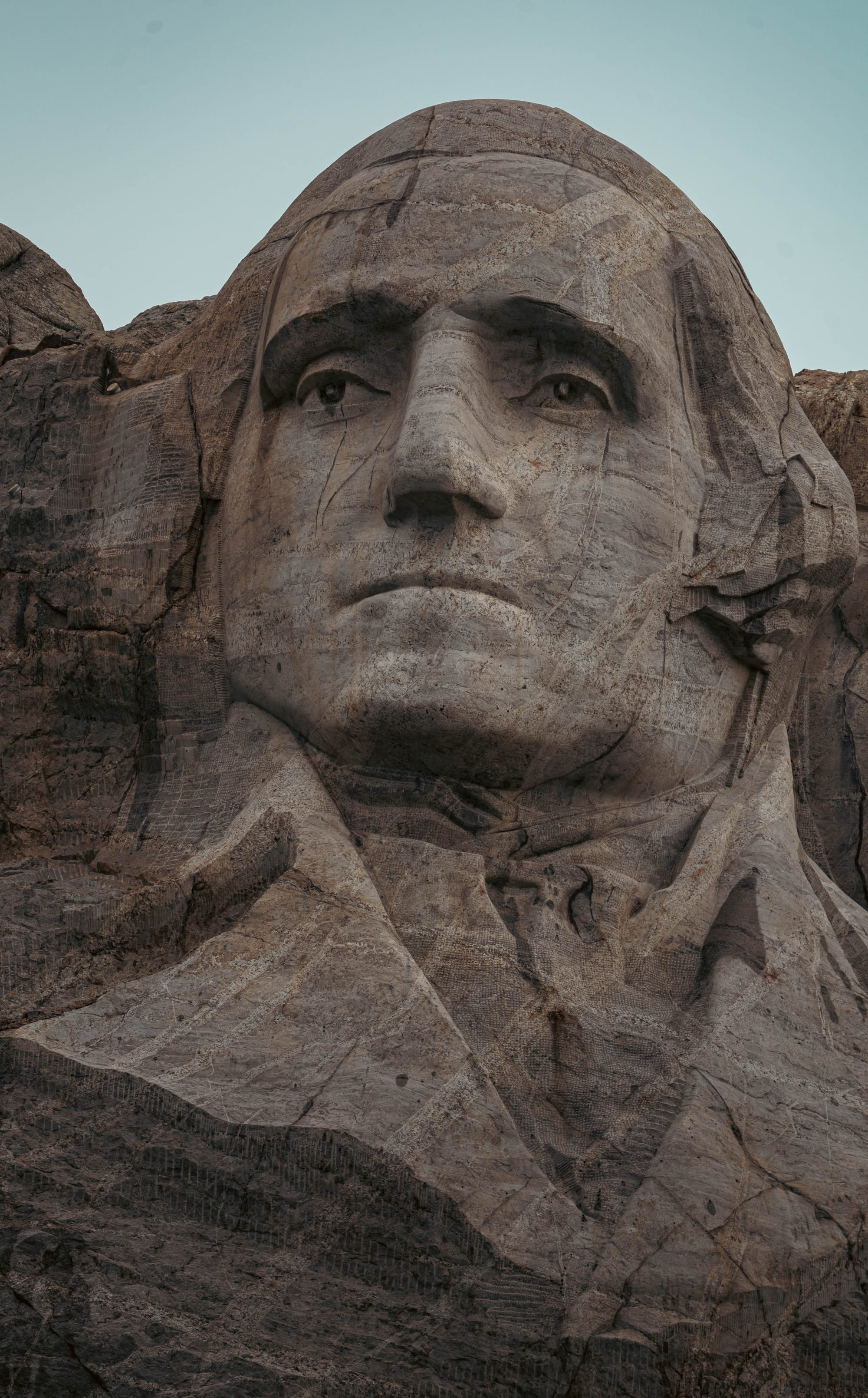
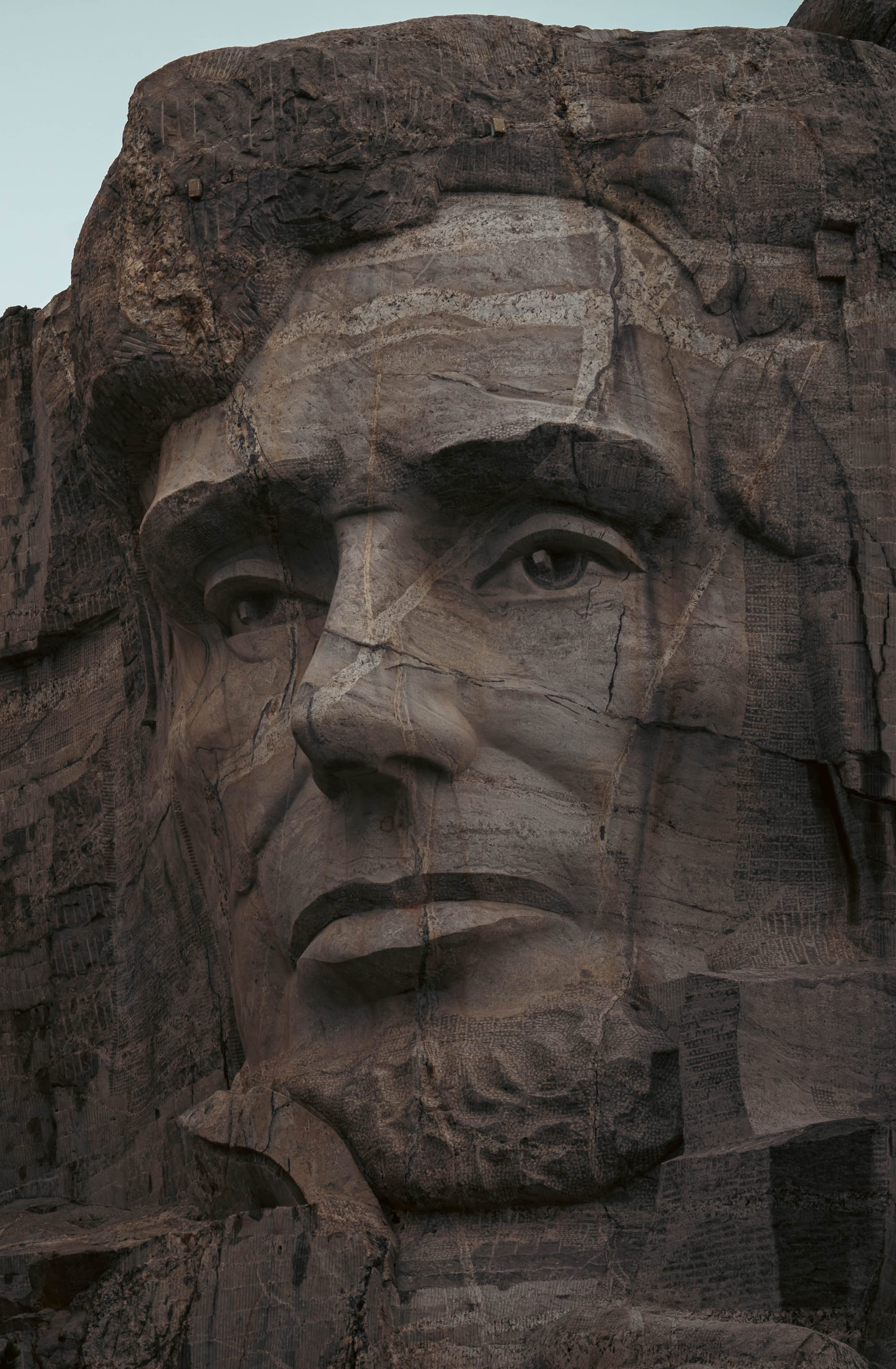
The workmanship is incredible.
But after several days surrounded by the granite formations and forests of the Black Hills, there was something uncomfortable about seeing one of those mountains deliberately altered on such a massive scale.
The question was not whether the sculpture was impressive.
It was why here.
The Black Hills had a story long before anyone proposed carving four presidents into them. Yet most of what we encountered at the memorial focused on the presidents, Borglum, the workers, and the construction itself.
That left me wondering what part of the story we were missing.
🧭 Lay of the Land
- Location: Keystone · South Dakota · 43.8791, -103.4591 · [Google Maps]
- Official site: [Mount Rushmore National Memorial]
- Landscape: Granite · Ponderosa pine forest
- Our visit: August 2026 · evening visit · clear, warm conditions
Carving a Mountain
Mount Rushmore began less as a national statement than as a South Dakota tourism idea.
State historian Doane Robinson wanted a major attraction in the Black Hills and initially imagined figures tied more directly to the American West. When sculptor Gutzon Borglum became involved, the concept grew much larger.
Borglum chose George Washington, Thomas Jefferson, Abraham Lincoln, and Theodore Roosevelt to represent what he saw as four stages of the American story: founding, expansion, preservation, and development.
Washington represented the nation's founding. Jefferson stood for territorial expansion, particularly through the Louisiana Purchase. Lincoln represented preservation of the Union. Roosevelt represented industrial growth and increasing national power.
The mountain was meant to tell a specific version of American history.
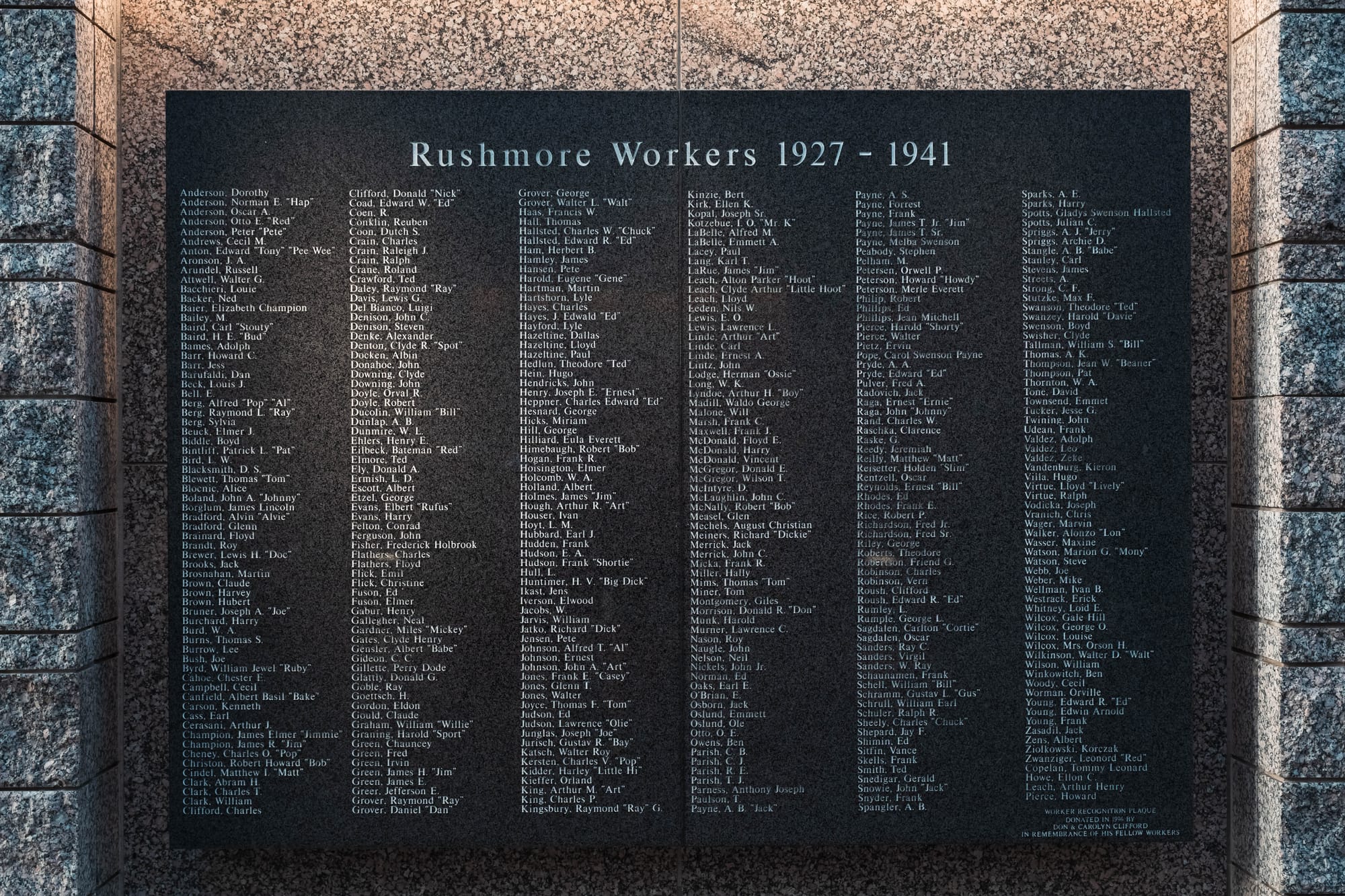
Construction ran from 1927 until 1941 and involved roughly 400 workers. Crews climbed hundreds of stairs to the top before being lowered over the mountain in bosun chairs suspended by steel cables.
About 90 percent of the rock was removed with dynamite.
Workers then used a process called honeycombing, drilling closely spaced holes into the remaining granite so smaller sections could be removed with greater control. Pneumatic tools finished the surface.
Remarkably, no workers were killed during the fourteen-year carving project.
Precision came from a pointing system based on Borglum's scale models. He worked at a 1:12 ratio, allowing measurements from the models to be transferred directly to the mountain.
Washington's head is roughly 60 feet tall. His nose projects about 21 feet. The eyes are approximately 11 feet wide.
Yet the finished work does not read like a collection of oversized features.
It reads like a face.
Borglum also understood that he was sculpting with light. The depth of the eyes, projection of the noses, and placement of features worked with the way sunlight and shadow moved across the mountain. Roosevelt's pince-nez are largely an illusion created by carved ridges and shadow.
The scale gets your attention.
The details make it work.
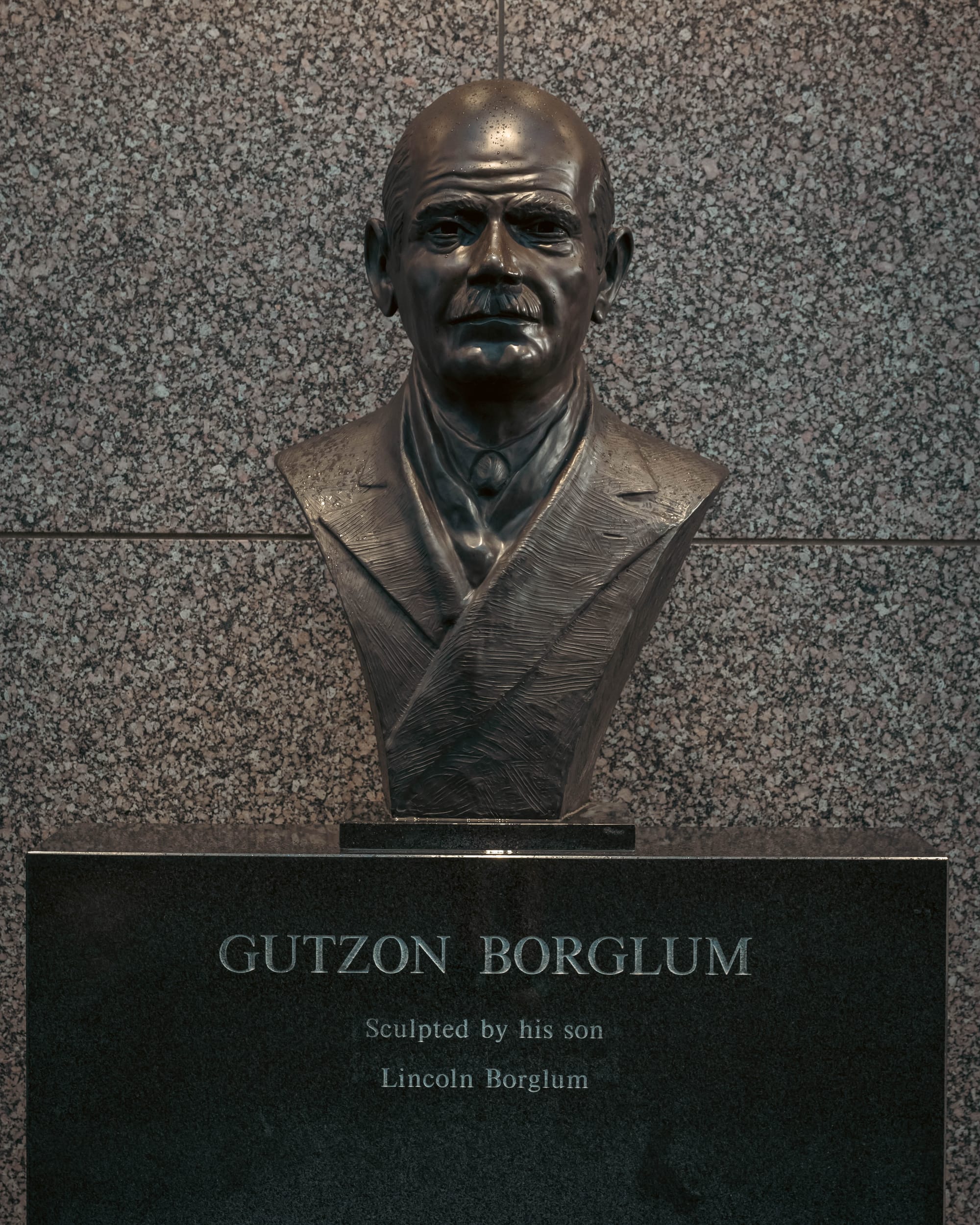
Gutzon Borglum
The more we learned about Mount Rushmore, the more complicated its creator became.
Gutzon Borglum was already an established sculptor before arriving in South Dakota. He had studied in Europe, completed significant public works, and developed a particular interest in monumental American sculpture.
Before Rushmore, he spent years working on the Confederate memorial at Stone Mountain in Georgia.
That project was closely connected to the United Daughters of the Confederacy and developed during the same period Stone Mountain became associated with the rebirth of the Ku Klux Klan. Historical accounts document Borglum working with people involved in the Klan and participating in the political world surrounding the project.
Whether he formally became a member is less clear, but his involvement went considerably beyond simply accepting a sculpture commission.
His relationship with Stone Mountain's leadership eventually collapsed, and he left the project. His original work there was removed.
By then, South Dakota had given him another mountain.
Before There Were Four Presidents
The Black Hills rise abruptly from the surrounding Great Plains, an island of pine forest, granite, and higher country that has held cultural and spiritual significance for Native nations for generations.
For the Lakota, the Black Hills are especially important.
National Park Service identifies the broader region as a Traditional Cultural Place and notes that the mountain selected for Mount Rushmore was known in Lakota translation as the Six Grandfathers.
The Treaty of Fort Laramie in 1868 established the Great Sioux Reservation and recognized the Black Hills as part of land reserved for the exclusive use of the Sioux.
The agreement did not last long.
In 1874, Lieutenant Colonel George Armstrong Custer led a military expedition into the Black Hills. Gold was confirmed, and prospectors began entering the region despite treaty protections.
The federal government attempted to acquire the Black Hills, but no agreement acceptable under the treaty requirements was reached.
Tensions escalated into the Great Sioux War of 1876.
The Battle of the Little Bighorn was one episode in that larger conflict. Lakota, Northern Cheyenne, and Arapaho forces defeated Custer's command in June 1876, but the United States increased military pressure afterward.
In 1877, Congress removed the Black Hills from the Great Sioux Reservation.
More than a century later, the dispute reached the Supreme Court. In United States v. Sioux Nation of Indians in 1980, the Court upheld compensation based on the government's taking of the Black Hills without constitutionally adequate payment.
Sioux tribes have generally refused to accept the settlement, maintaining a claim centered on the land itself rather than treating compensation as a completed sale.
A little more than fifty years after Congress took the Black Hills, workers began carving Mount Rushmore.
A Memorial to American Expansion
That chronology matters because expansion was part of Borglum's intended message.
Jefferson's place on the mountain was tied directly to the Louisiana Purchase and American territorial growth.
That creates a difficult tension between the monument and its location.
A sculpture partly celebrating the expansion of the United States was carved into land whose history shows some of the consequences of that expansion.
The symbolism does not disappear when the Black Hills history is included.
It adds depth.
What the Memorial Tells You
This was the part of our visit that left me the most conflicted.
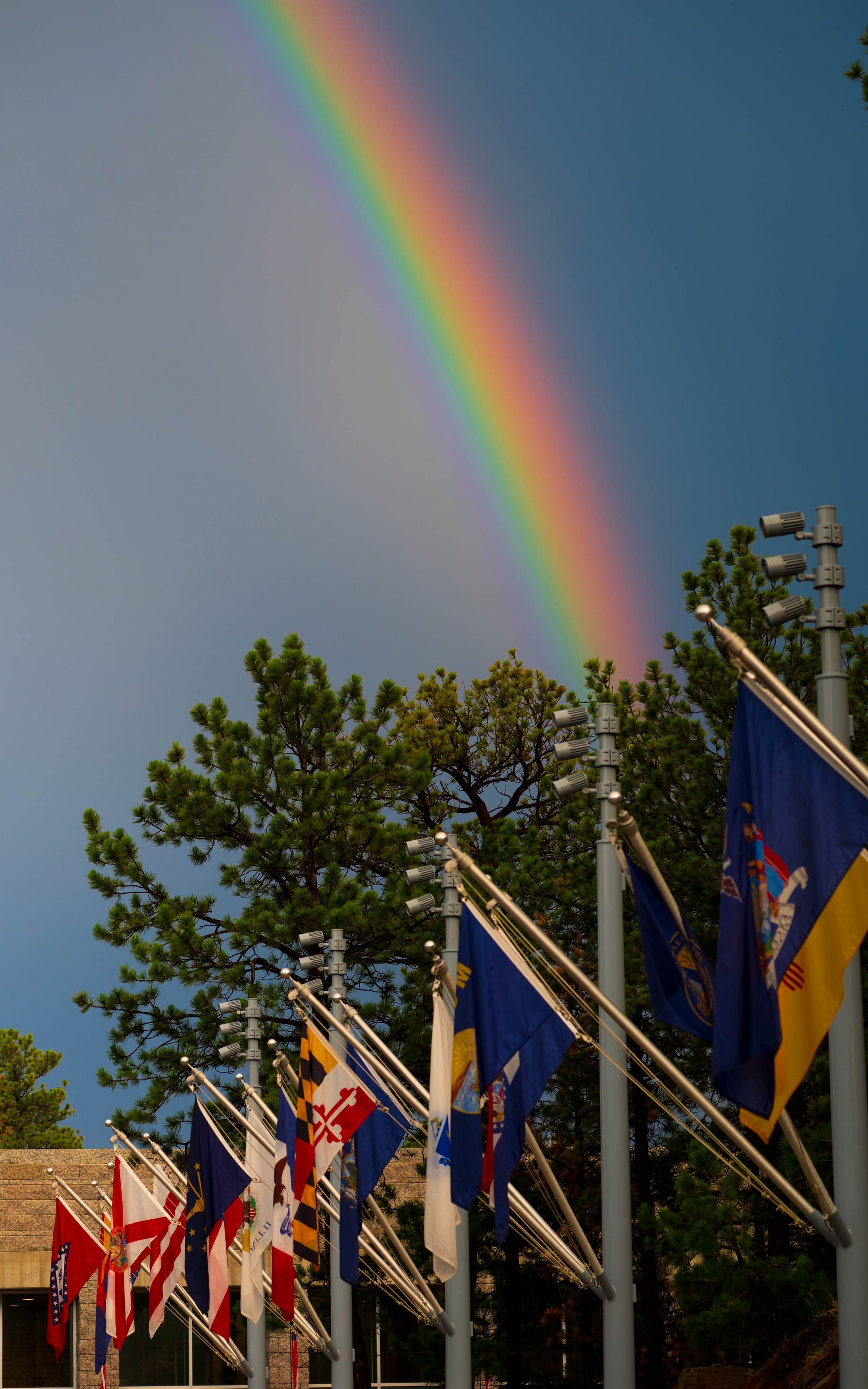
We walked the Avenue of Flags and spent time going through the visitor exhibits. The Sculptor's Studio was already closed by the time we arrived.
The dominant story was Mount Rushmore itself: Borglum, the presidents, the workers, the design, and the process of carving the mountain.
All of that belongs there.
What surprised me was how little of the longer Black Hills history we encountered while moving through those main exhibits.
That does not mean the NPS provides no Native interpretation.
In 2024, the memorial opened a Stone Hoop and Ethnobotanical Garden near the main entrance. Developed with input from associated Tribal Nations, it interprets Lakota ethnobotany, star knowledge, culturally important locations, and sacred sites within the Black Hills.
We walked past it without realizing what it was until afterwards.
That stuck with me.
The information exists, but where it sits affects which story a visitor is most likely to encounter.
The engineering explains how the faces got there.
The Black Hills history explains why their location carries so much weight.
⚡ TL;DR
- Highlight: Monumental sculpture whose precision and scale are more impressive in person than photographs suggest
- Best for: American history, monumental art, engineering, and understanding the complicated history of the Black Hills
- Skip if: You are looking primarily for a natural-landscape experience rather than a heavily developed historic memorial
- Worth planning around?: Probably
Final Thoughts
Mount Rushmore was worth seeing.
The artistry and engineering were more impressive in person than I expected.
But the memorial also became more complicated the longer I looked at it.
The four faces present one version of the American story: ambition, ingenuity, and national identity.
The mountain beneath them carries another story about treaty promises, Native sovereignty, war, and dispossession.
Neither disappears because the other exists.
That tension is part of the story.
Once you know both histories, it becomes difficult to see only the faces.