Palisades State Park

The drive east from Snake Creek continued through a version of South Dakota I hadn't seen much of yet. Two-lane roads rolled through farm country, with fields stretching across low hills and rows of corn disappearing toward the horizon.
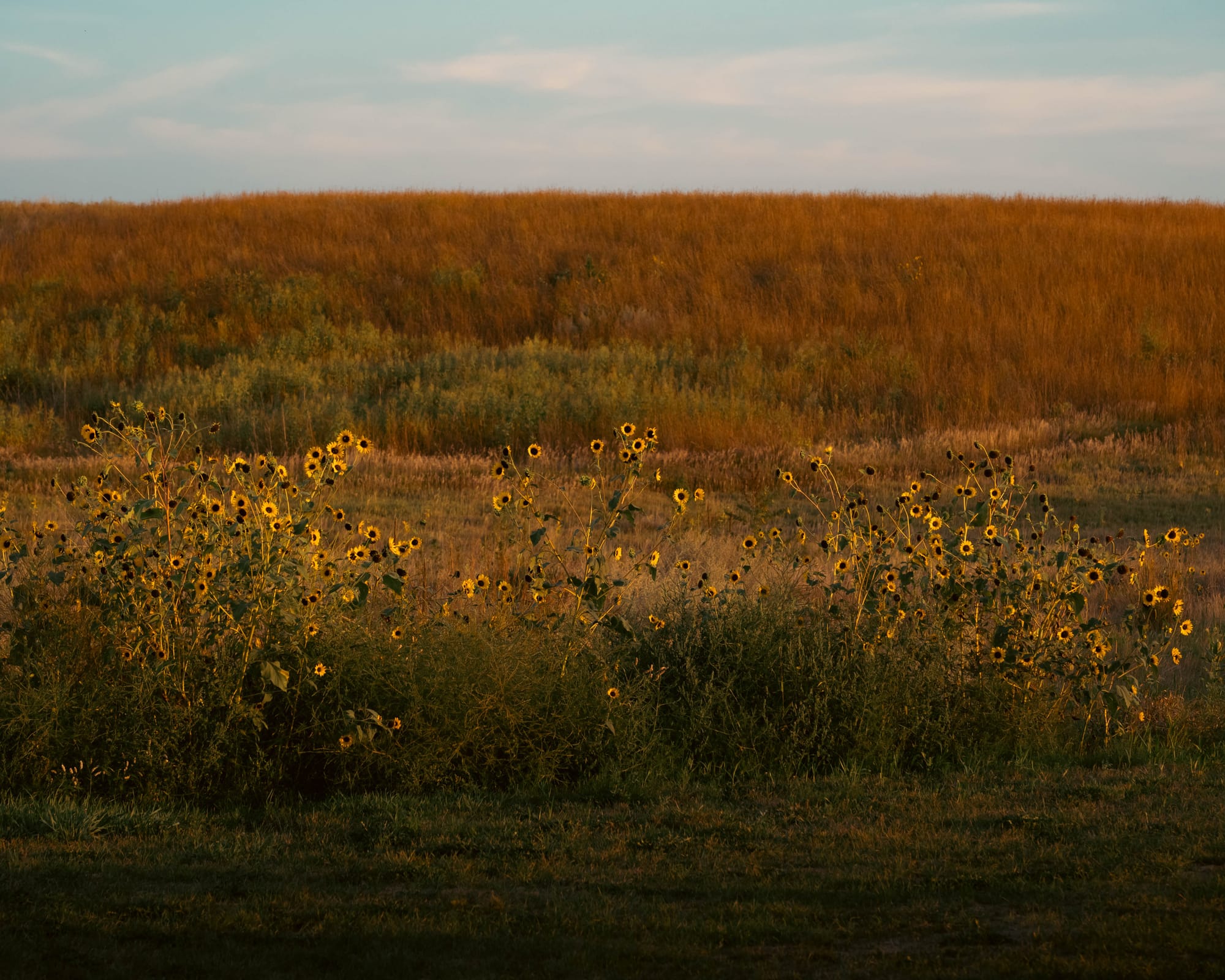
Late-afternoon light kept catching the landscape in ways that made me want to stop for a photo. A field would light up across the hills or a farmhouse would appear between rows of corn, but with thirty feet of Airstream behind me and nowhere obvious to pull over, I kept driving.
Sam was still away for work, so it was just me and the dogs when I pulled into Palisades State Park on Saturday afternoon.
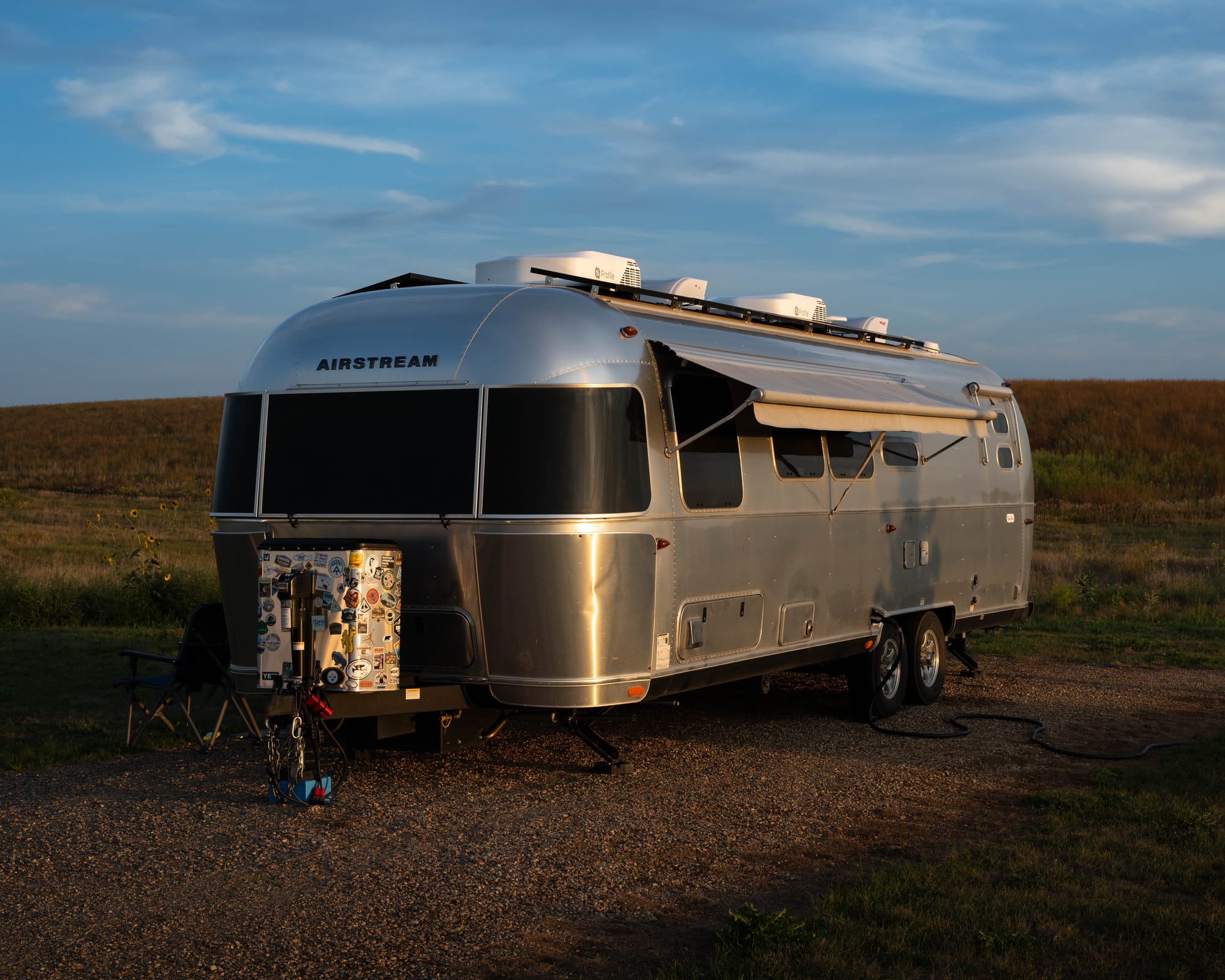
I backed into our site in the King Campground. Gravel sites were spread across a wide-open field with almost no shade. The Queen Campground on the other side of the park looked completely different, with mature trees surrounding many of the sites.
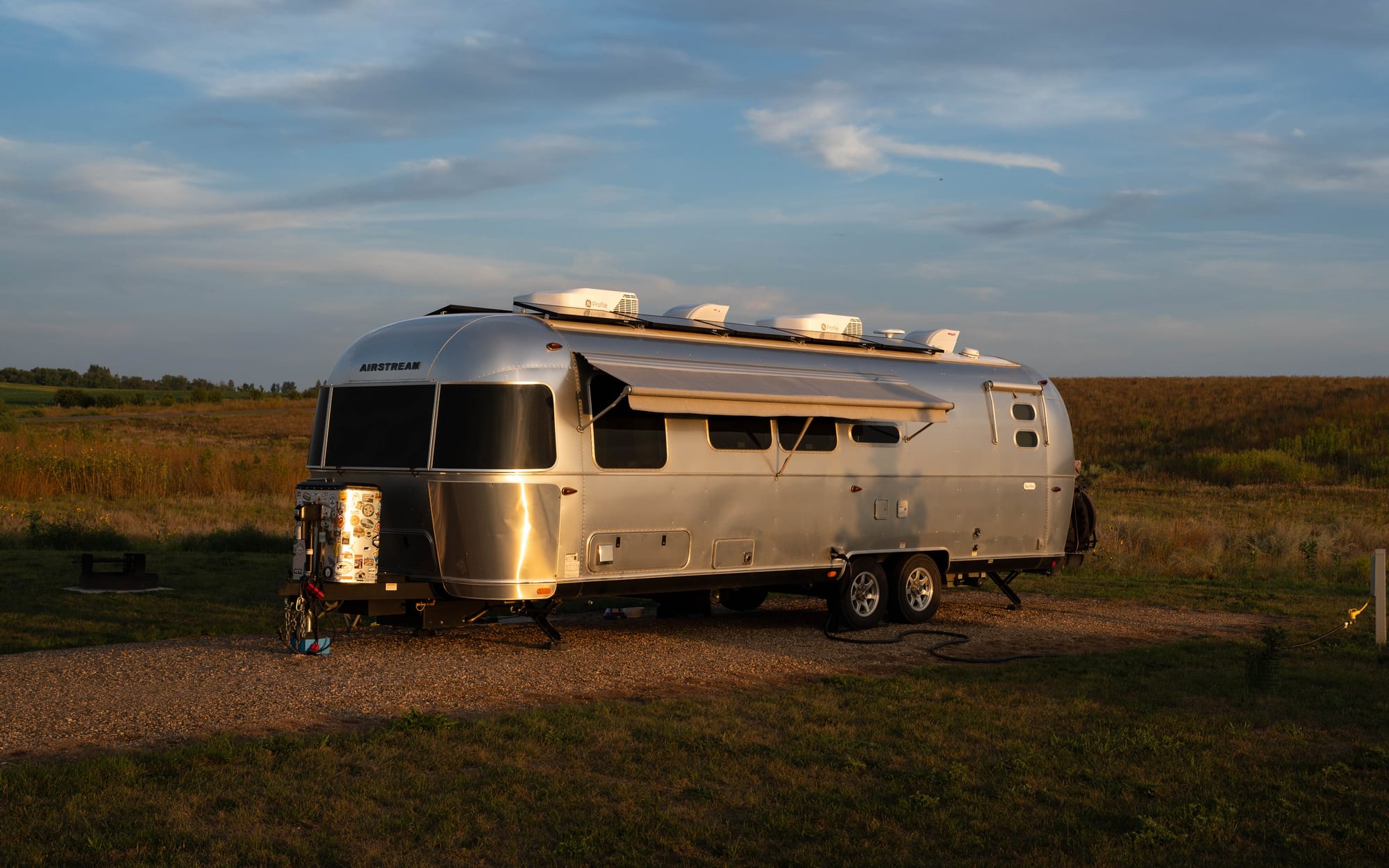
Saturday was busy, but rigs started disappearing Sunday. By Monday, there were only three of us left on my loop. The shaded side stayed busier, but King was almost empty.
That worked fine for me. I was still drowning in photographs from western South Dakota, with plenty of editing and writing left from the Black Hills, Custer State Park, and Badlands. Afternoons became catch-up time, with longer walks and runs around the park when it cooled down.
I hadn't noticed the quartzite when I arrived. From the campground, Palisades still looked a lot like the rolling farmland I'd been driving through.
Then we headed toward Split Rock Creek.
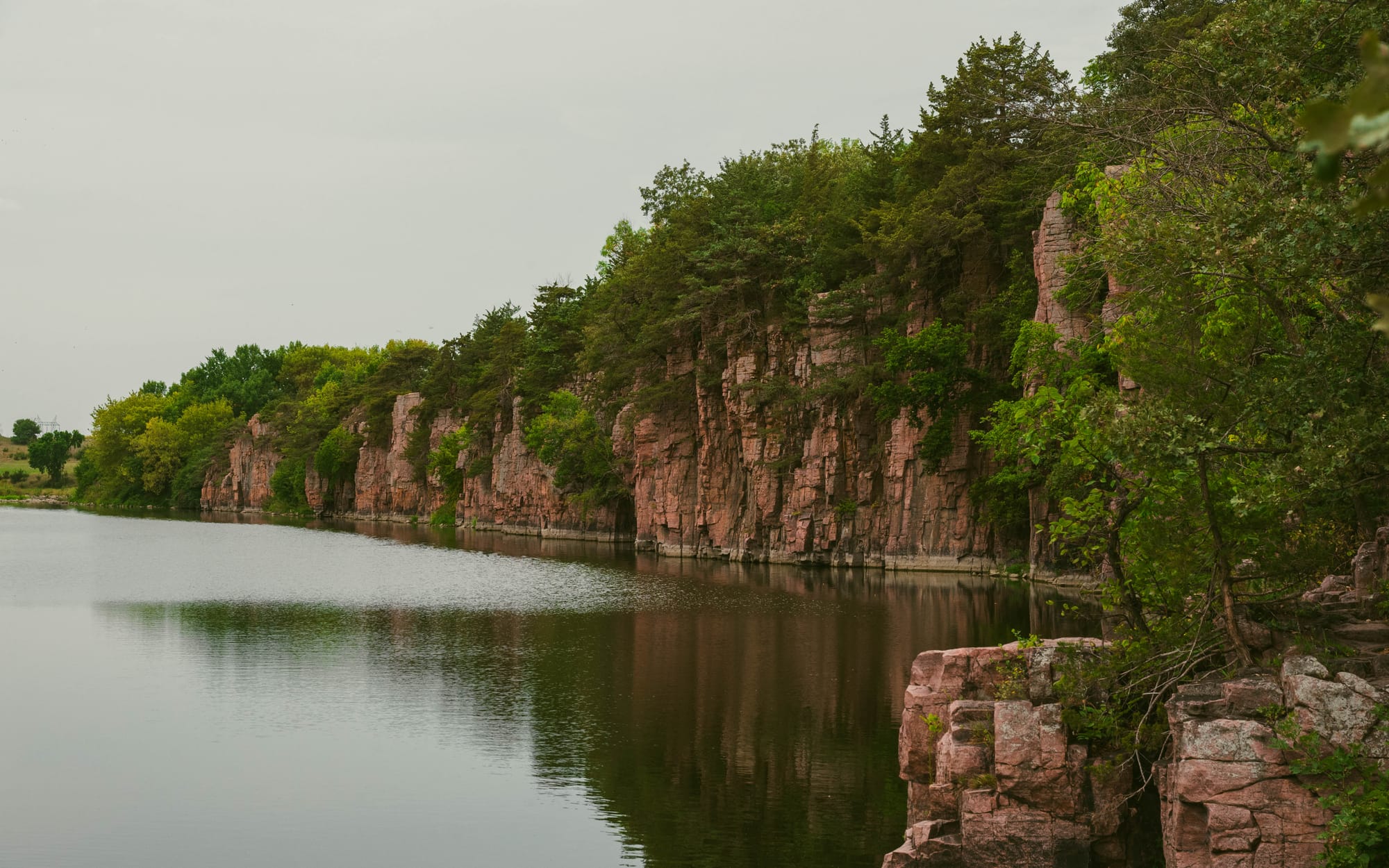
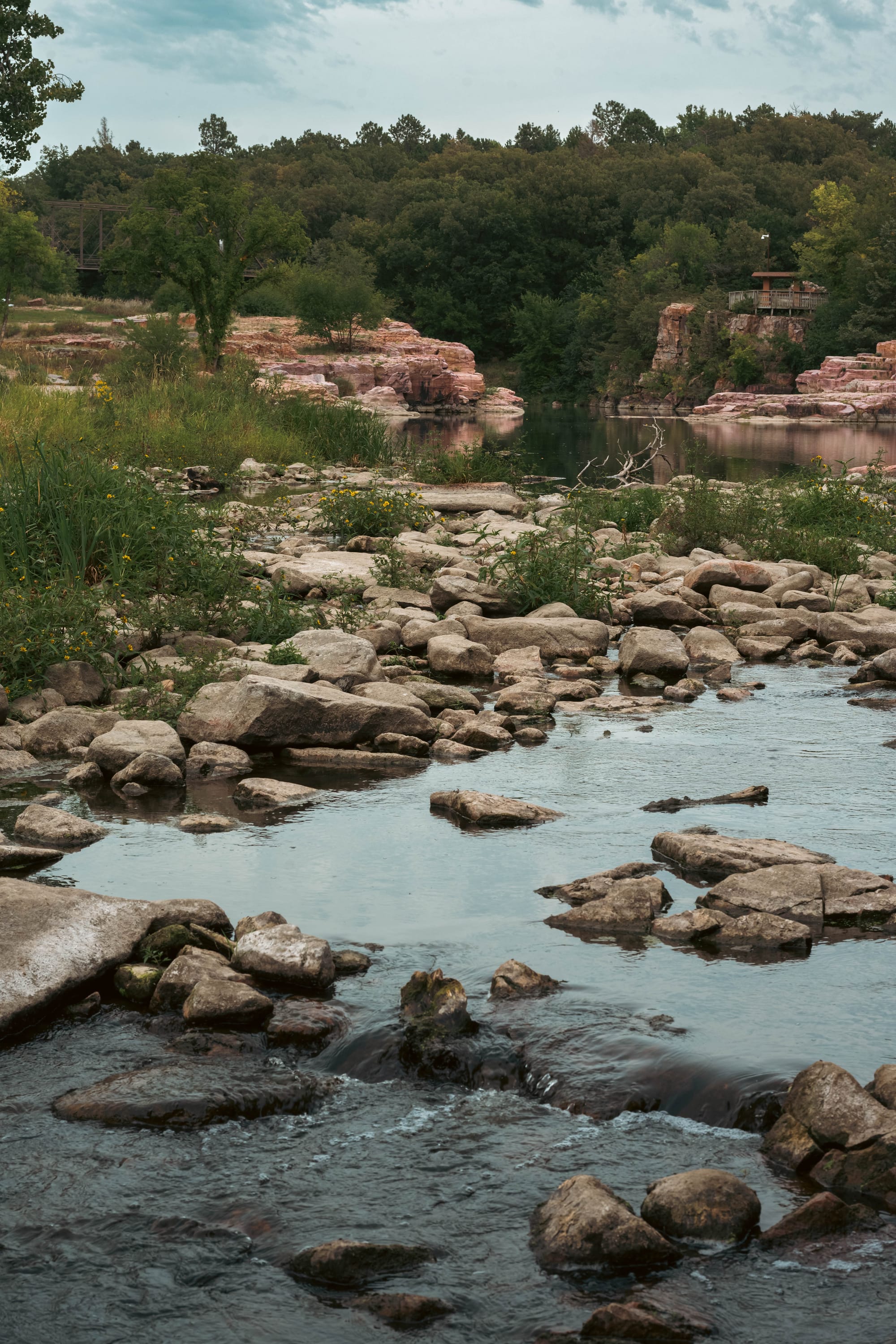
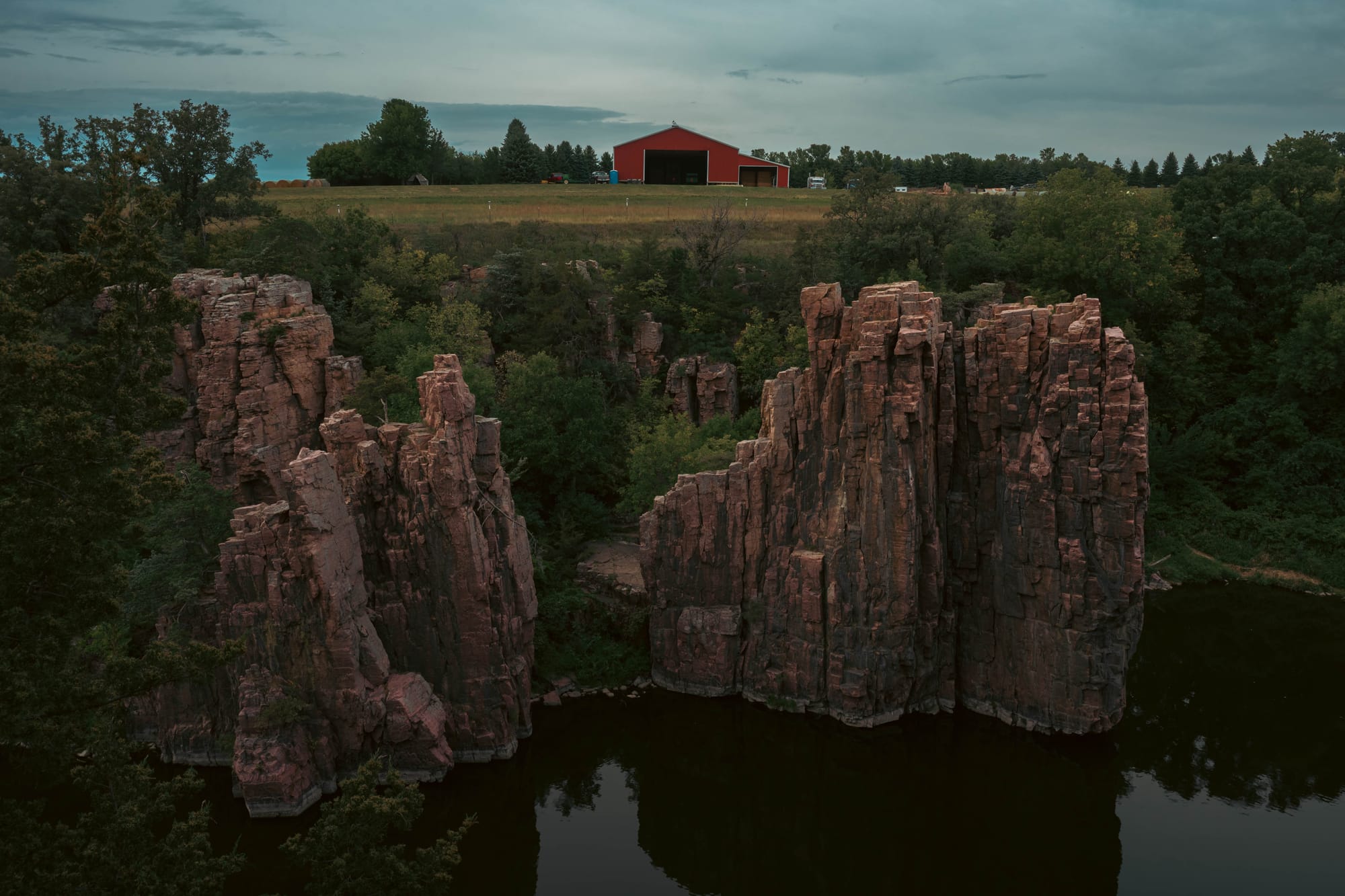
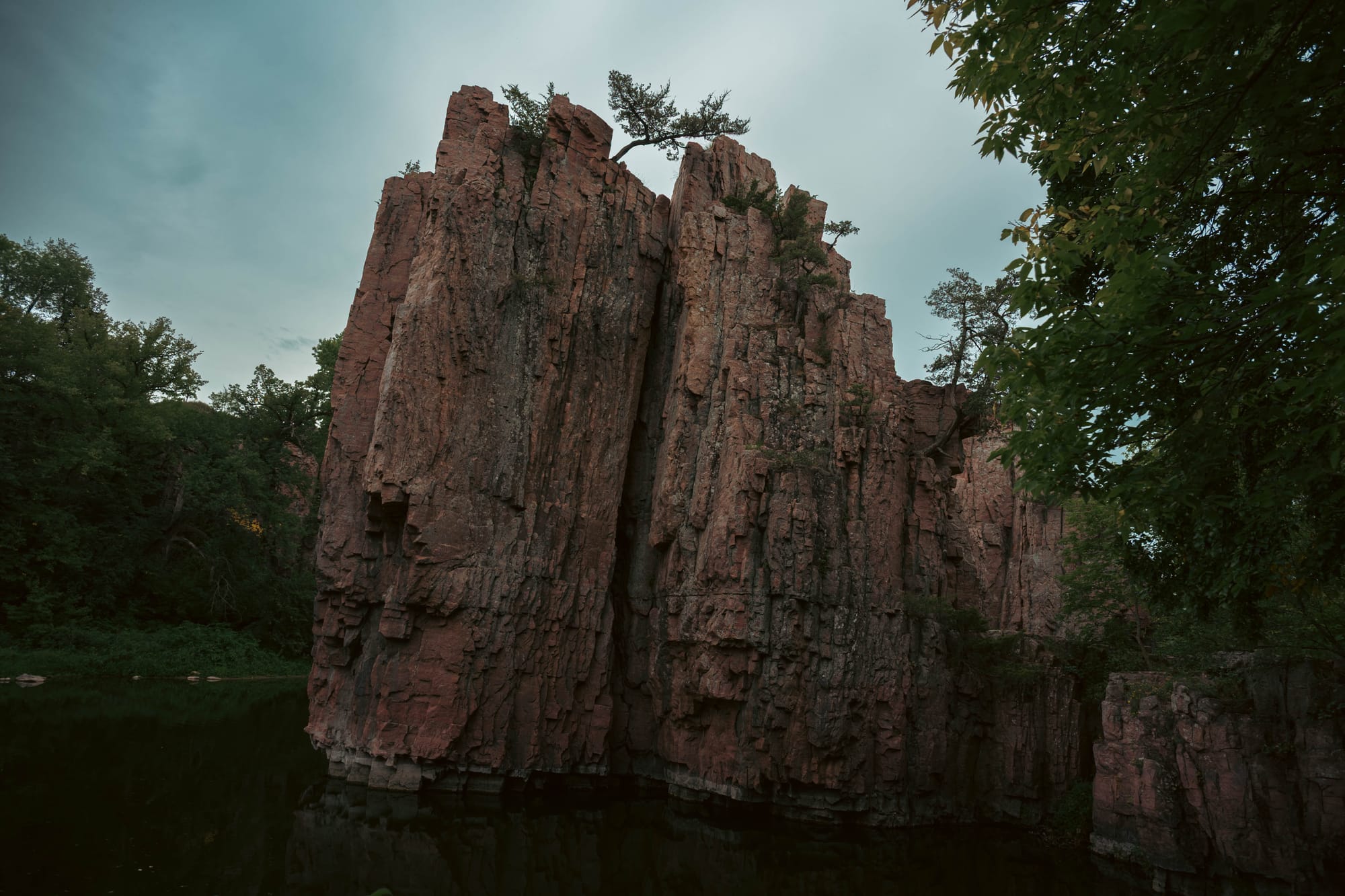
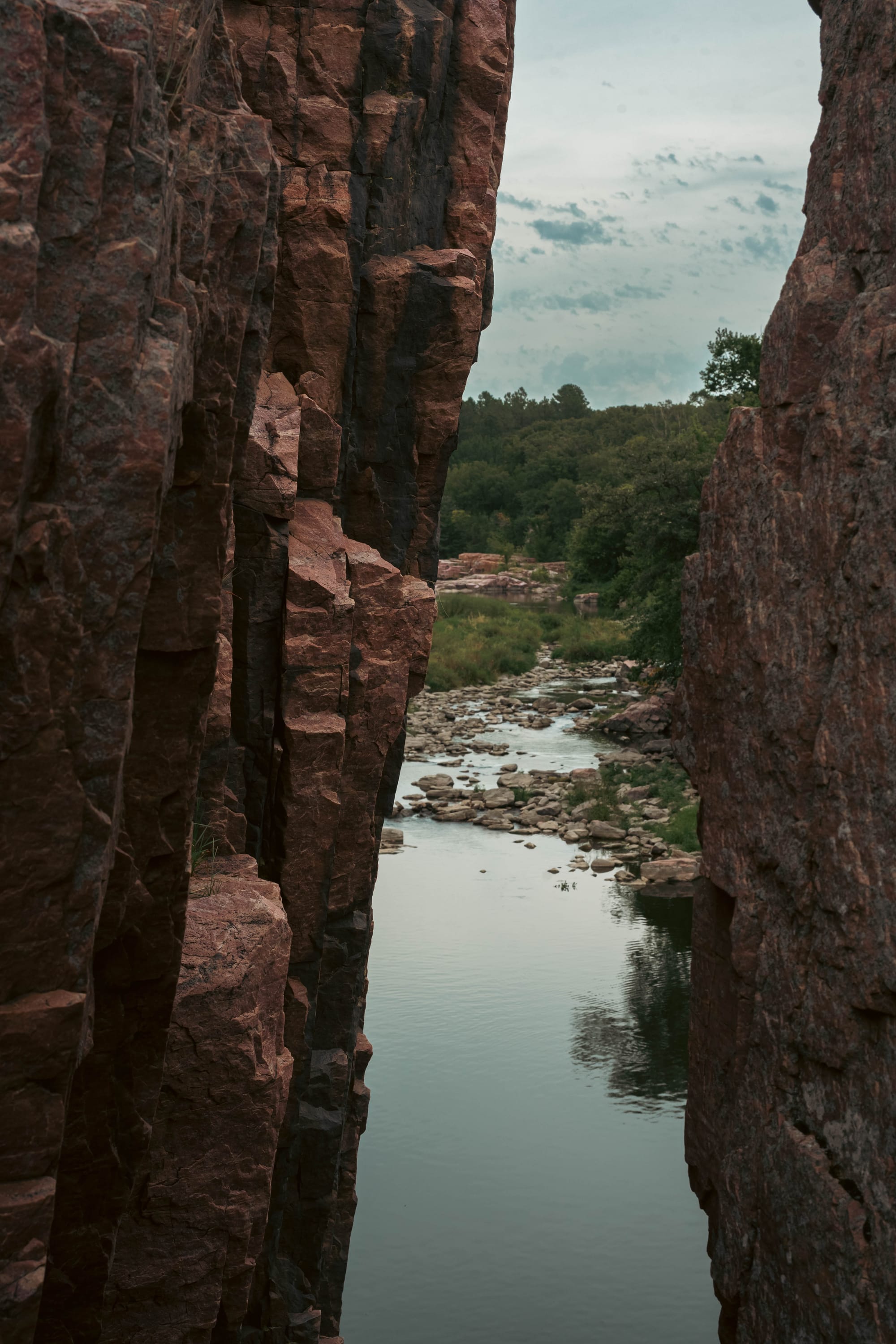
Suddenly there were pink rock walls and ledges rising around the water. The trails went from ordinary hiking to picking routes through and around the formations. We scrambled over rock and climbed around ledges until calling it a run wasn't particularly accurate anymore.
Where had all this pink rock come from?

🧭 Lay of the Land
- Location: Garretson · South Dakota · 43.6876, -96.5172 · [Google Maps]
- Official site: [Palisades State Park]
- Landscape: Sioux Quartzite gorge · prairie
- Our visit: August–September 2026 · 4 nights · hot with evening thunderstorms
🏕 Camp Setup
- Site types: Back-in · Electric · Tent-only · Cabins
- Arrival & setup: Easy
- Hookups: ⚡ | 🧻
- Connectivity: 📶 AT&T ⚠️ | 📶 Verizon ⚠️ | 📶 T-Mobile ⚠️ | 📡 Starlink 🟢
- Facilities: Restrooms · Showers · Drinking water · Trail access
Legend:
🚽 = sewer at site · 🧻 = dump station
🟢 = solid for work · ⚠️ = usable with limits · ❌ = unusable
Park Highlights
The rock lining Split Rock Creek is Sioux Quartzite, an exceptionally hard formation that extends beneath much of southeastern South Dakota but reaches the surface in only certain places.
Its story started more than 1.6 billion years ago with deposits of quartz-rich sand. Those sediments were buried and compacted into sandstone. Silica later filled spaces between the quartz grains, cementing them tightly together. Along with relatively mild metamorphism, that process produced the extremely hard quartzite exposed here.
Iron minerals give much of the rock its pink, red, and purple color.
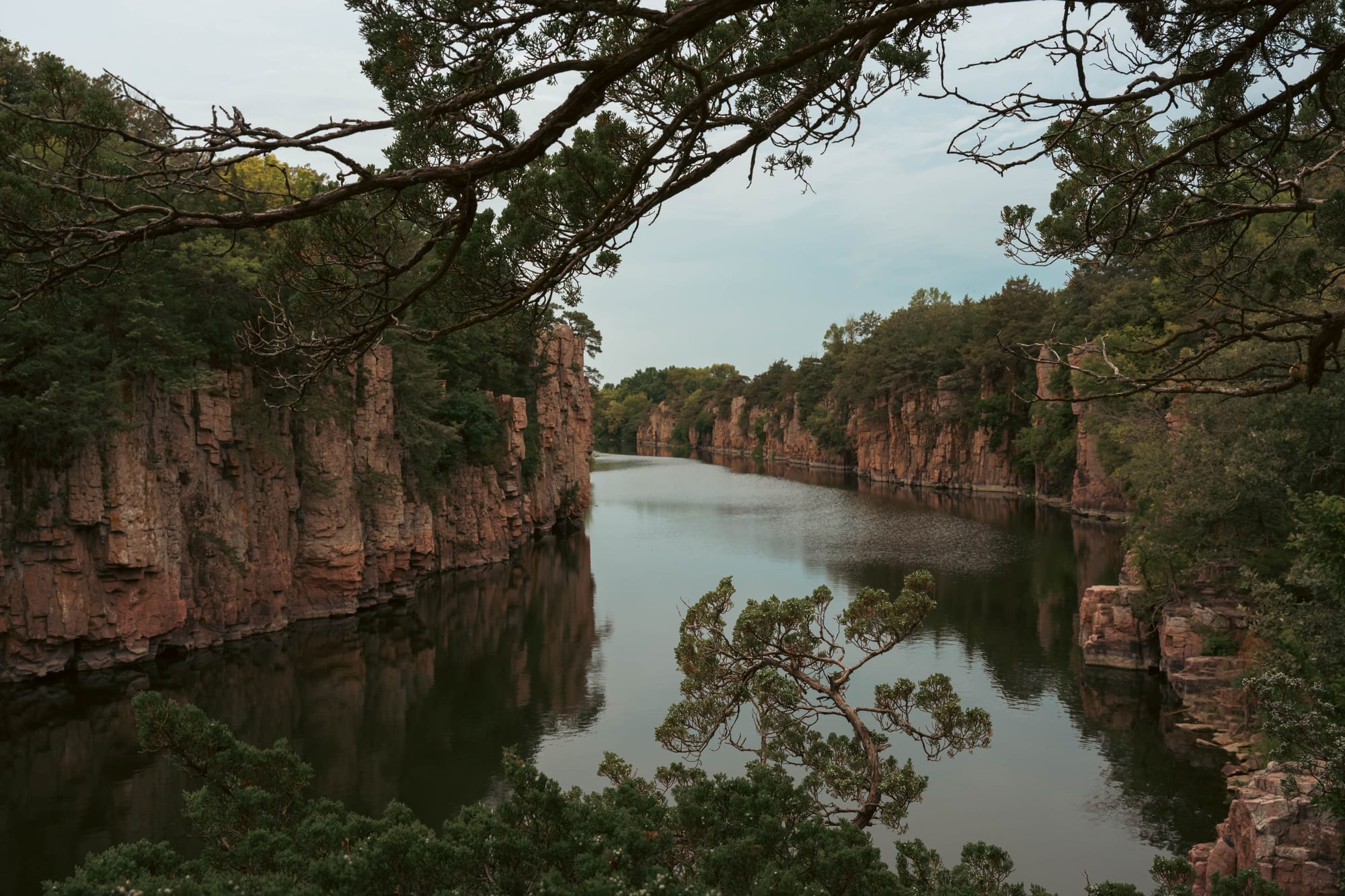
At Palisades, Split Rock Creek has cut into the surrounding landscape and exposed the quartzite as walls, shelves, and angular formations rising as much as 50 feet above the water.
That was the landscape I'd stumbled into on my runs. After miles of cornfields and rolling hills, Ktaadn and I had dropped into a small gorge lined with rock more than a billion and a half years old.
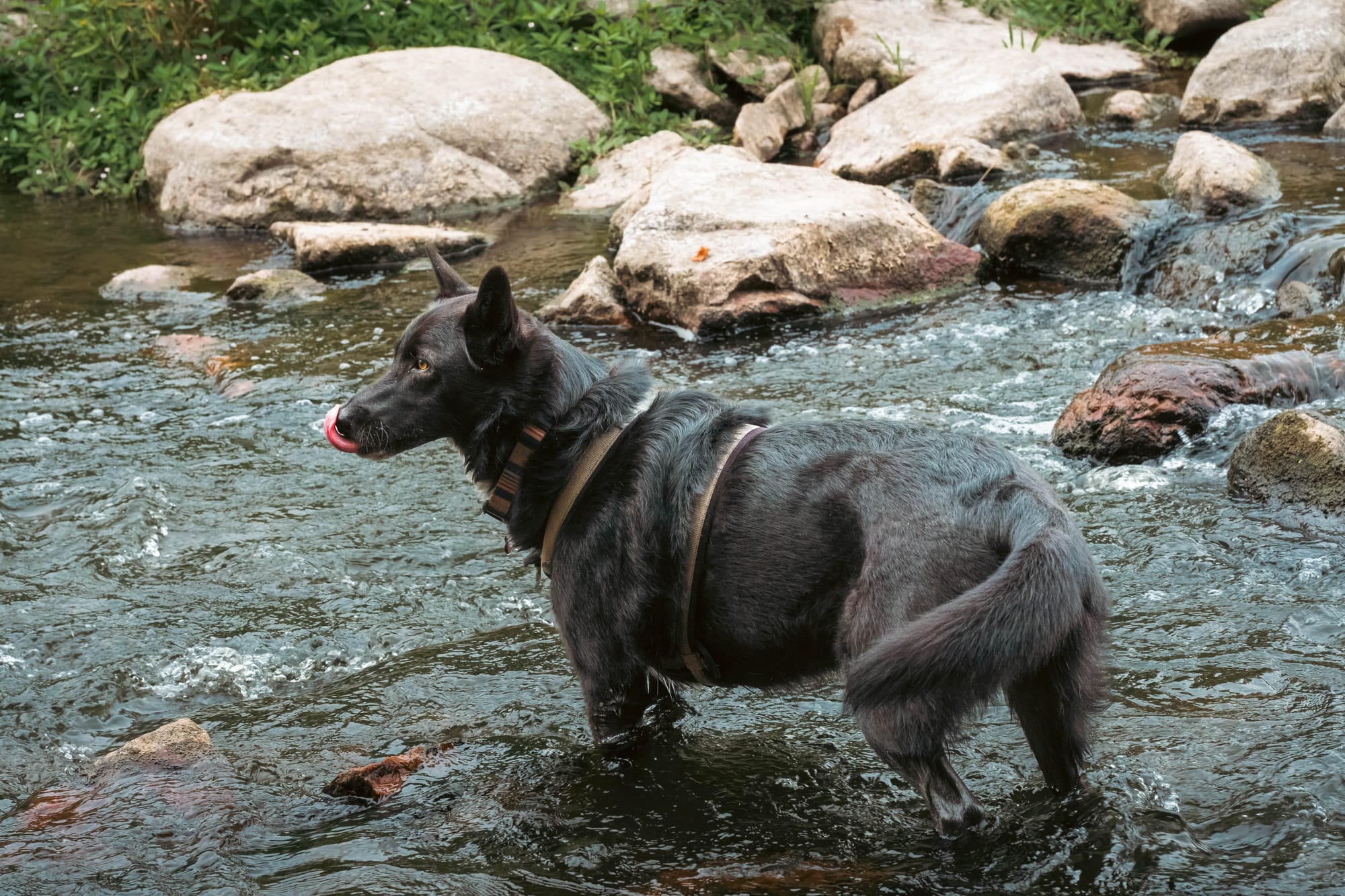
Around King and Queen Rock and Balancing Rock, the formations become part of the trail itself. We climbed around them while the dogs eventually found their way into Split Rock Creek.
I chose to stay dry.
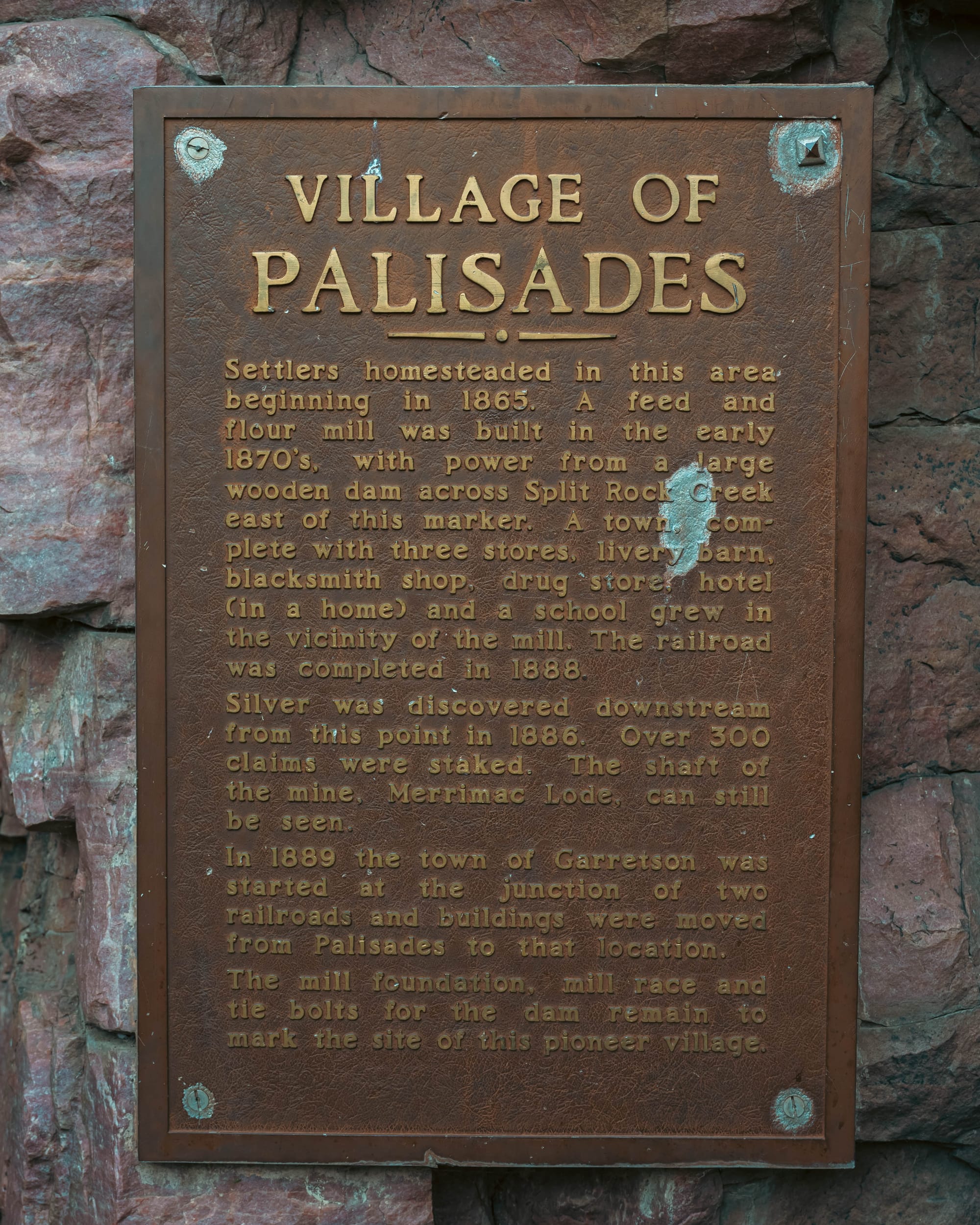
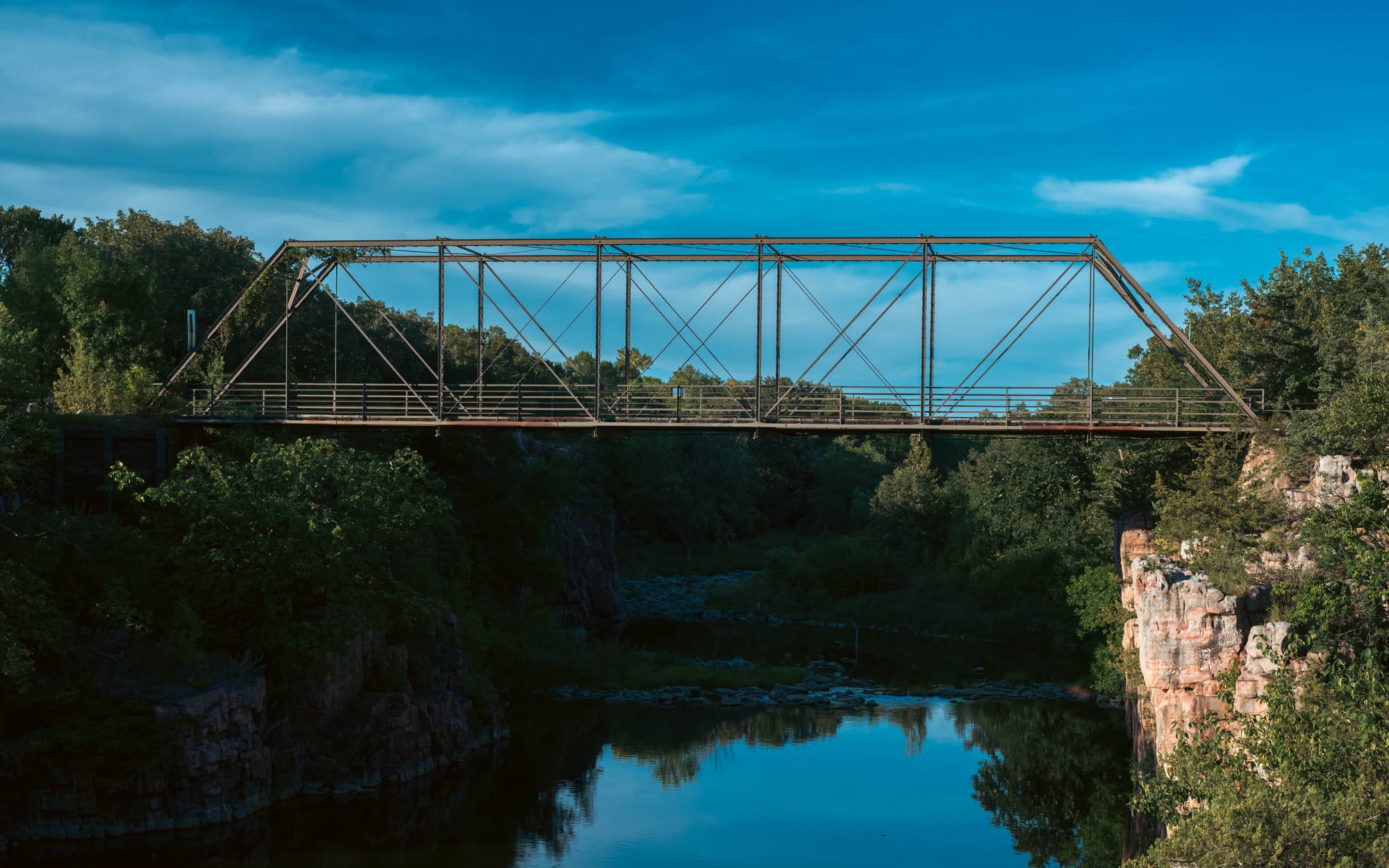
A flour mill once operated above Split Rock Creek, and a small settlement called Palisades developed around it. A silver discovery downstream in 1886 later triggered nearly 300 mining claims before the poor ore brought the brief rush to an end.
Palisades became a state park in 1972. For decades it covered around 167 acres and annual visitation grew to around 90,000 people. Beginning in 2019, South Dakota expanded the park to 435 acres, adding new trails, cabins, day-use areas, and 77 campsites.
Our site was one of them.
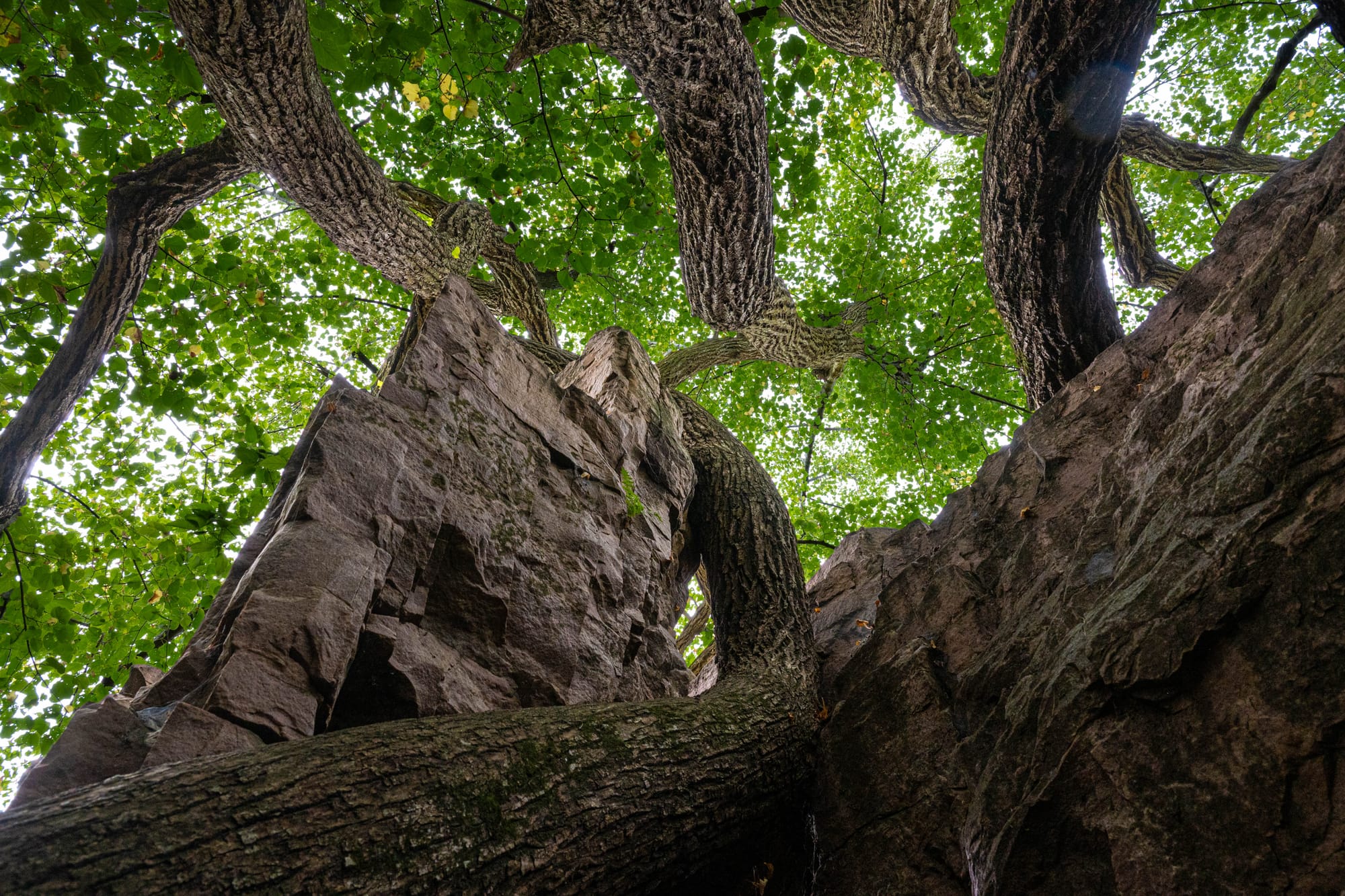
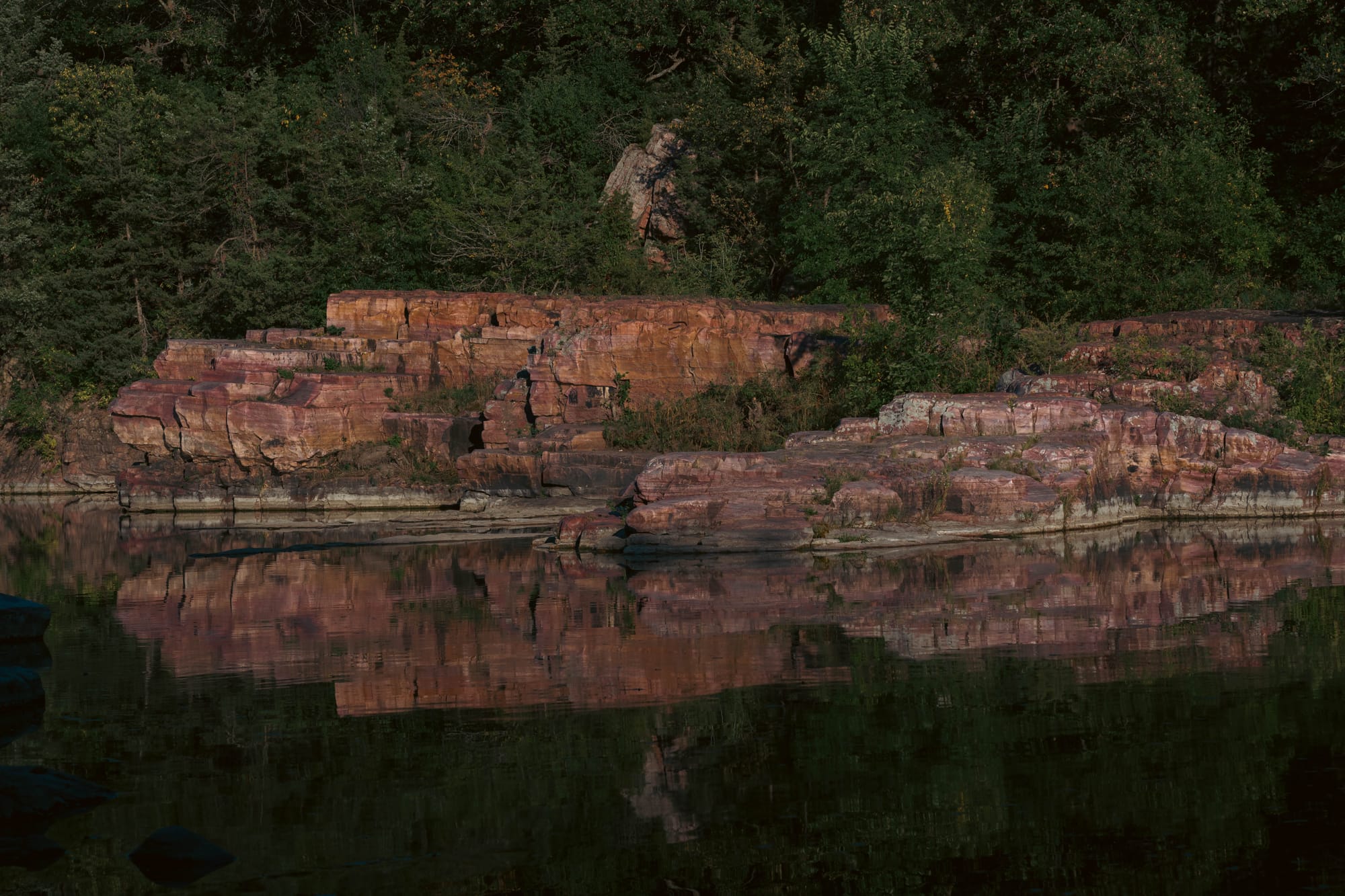
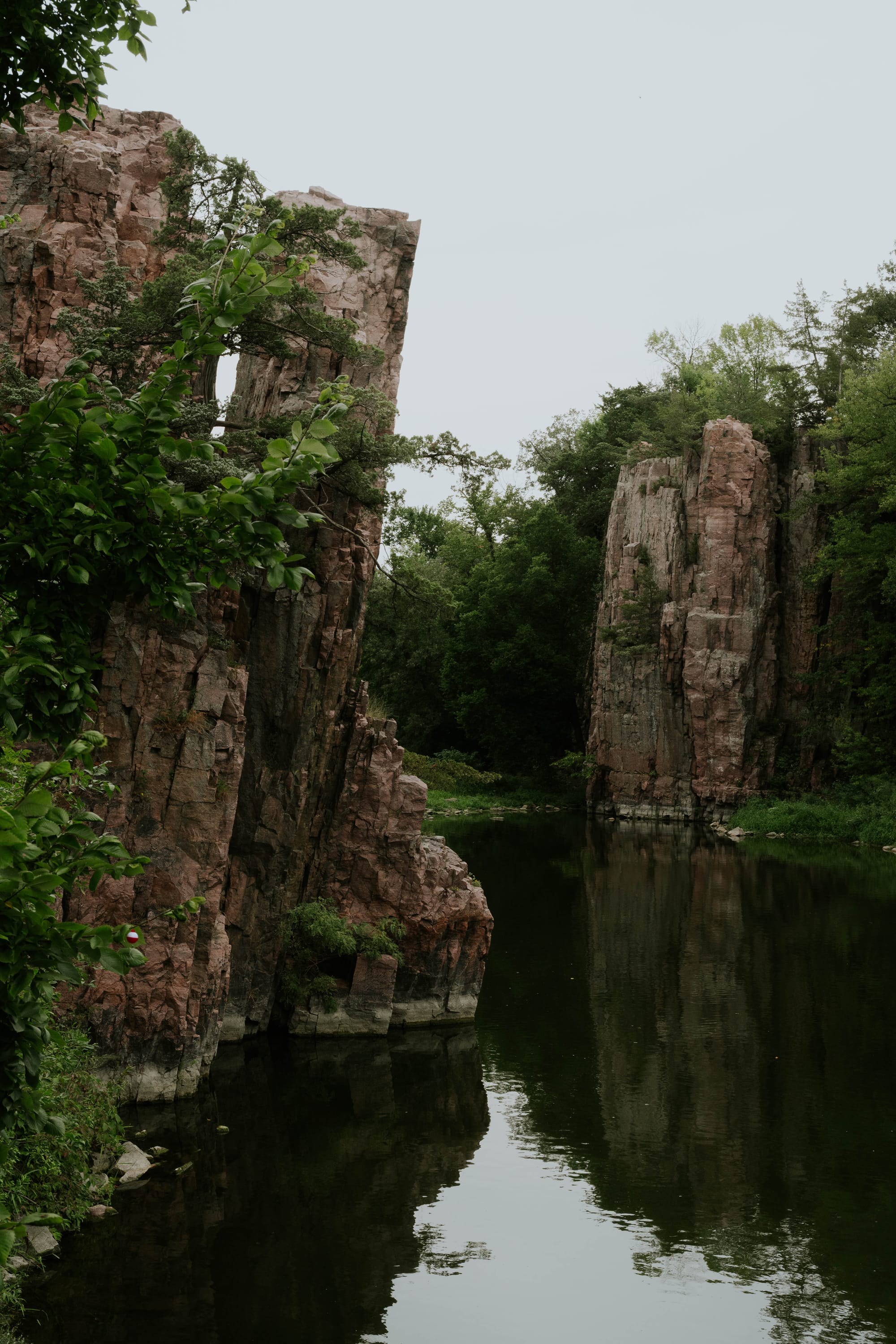
The difference I'd noticed when I arrived suddenly made sense. King wasn't simply the campground without shade. A few years earlier, it hadn't been a campground at all.
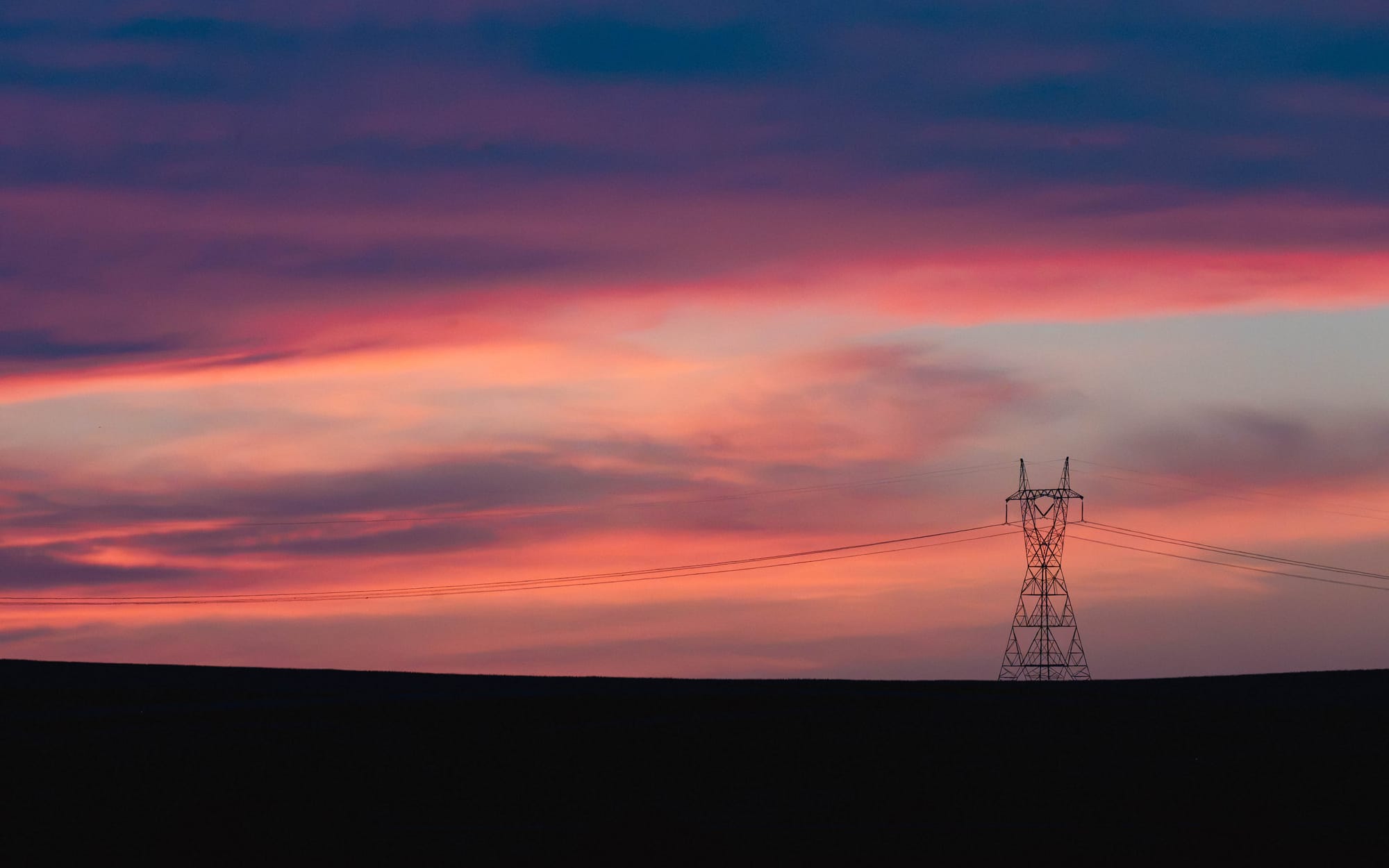
One evening, a thunderstorm appeared on the horizon around sunset. Lightning flashed inside it as I watched from the campsite, and for nearly two hours the storm slowly worked its way across the open landscape toward us.
Eventually it caught up with us, bringing lightning, thunder, and rain directly over the campground.
I'd watched another lightning-heavy storm from a distance in the Badlands only a week earlier. After spending so much of the summer around mountains, I was starting to appreciate something different about being back on the plains.
You can see the weather coming.
🚴 On the Ground
- Activities available: ● 🥾 Hiking | ● 🚴 Biking | ● 🐕 Dogs | ● 🚣 Paddling | ● 🎣 Fishing | ● 🐦 Wildlife / Birding | ○ 🏊 Swimming | ● 📸 Photography | ● 🏕️ Camp-centric | ● 🧗 Climbing
- Trail mileage available: 🥾 5.2 mi | 🚴 Park roads only
- Crowd level: Steady

⚡ TL;DR
- Park highlight: Sioux Quartzite cliffs and scrambling along Split Rock Creek
- Best for: Short hikes, rock scrambling, photography, and a campground weekend
- Skip if: You need enough trail mileage to fill several days
- Worth planning around?: Yes
Final Thoughts
Palisades surprised me.
From the campground, there wasn't much indication of what was tucked along Split Rock Creek. It took getting onto the trails before the landscape changed, and suddenly Ktaadn and I were scrambling around pink quartzite formations I hadn't even known were there.
It's still a small park. You can explore most of its main trails without needing several days, but there's enough packed along the creek to make Palisades feel like somewhere worth stopping for rather than simply somewhere to camp.
I came east expecting the landscape to keep getting flatter.
Palisades had other plans.