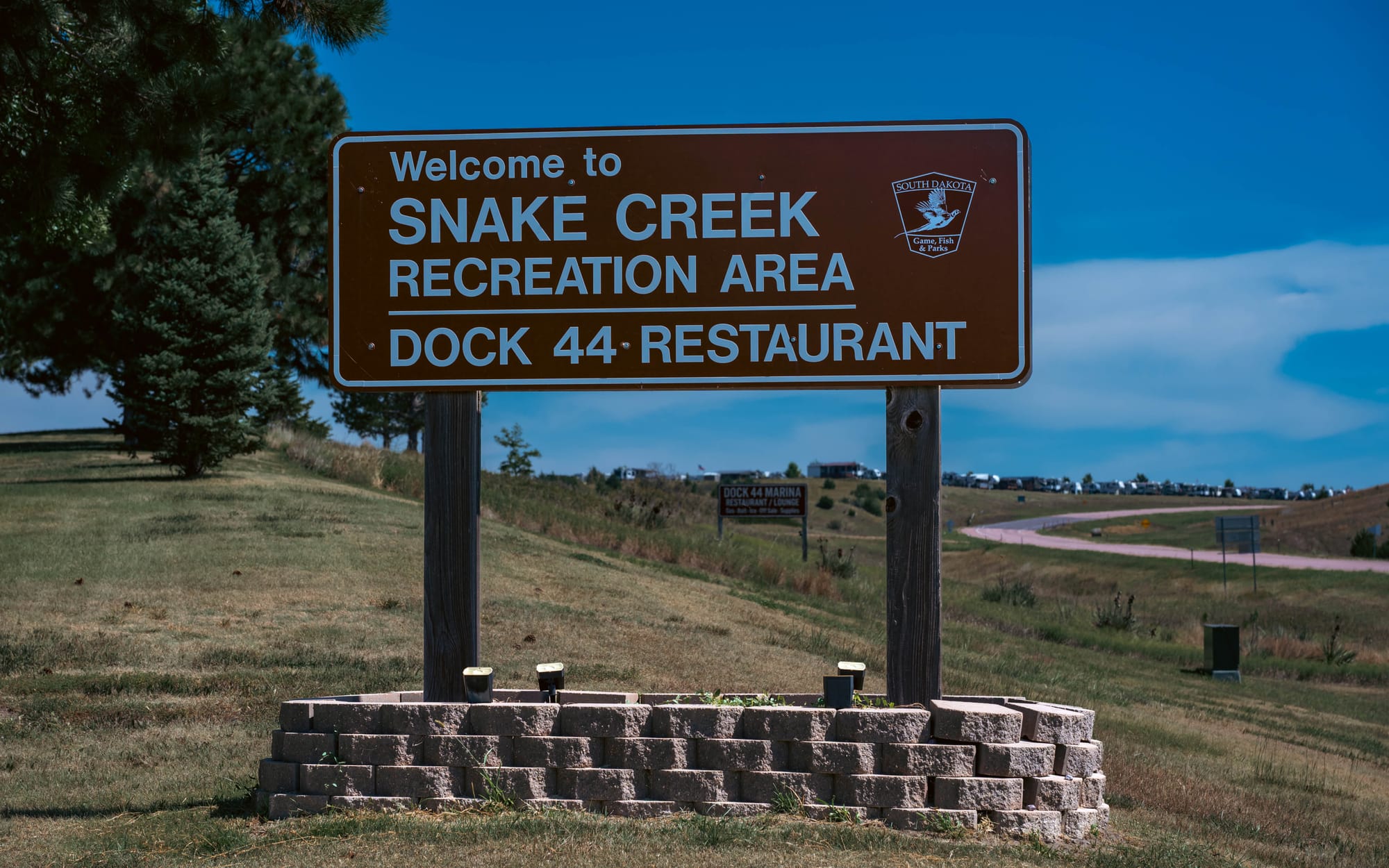
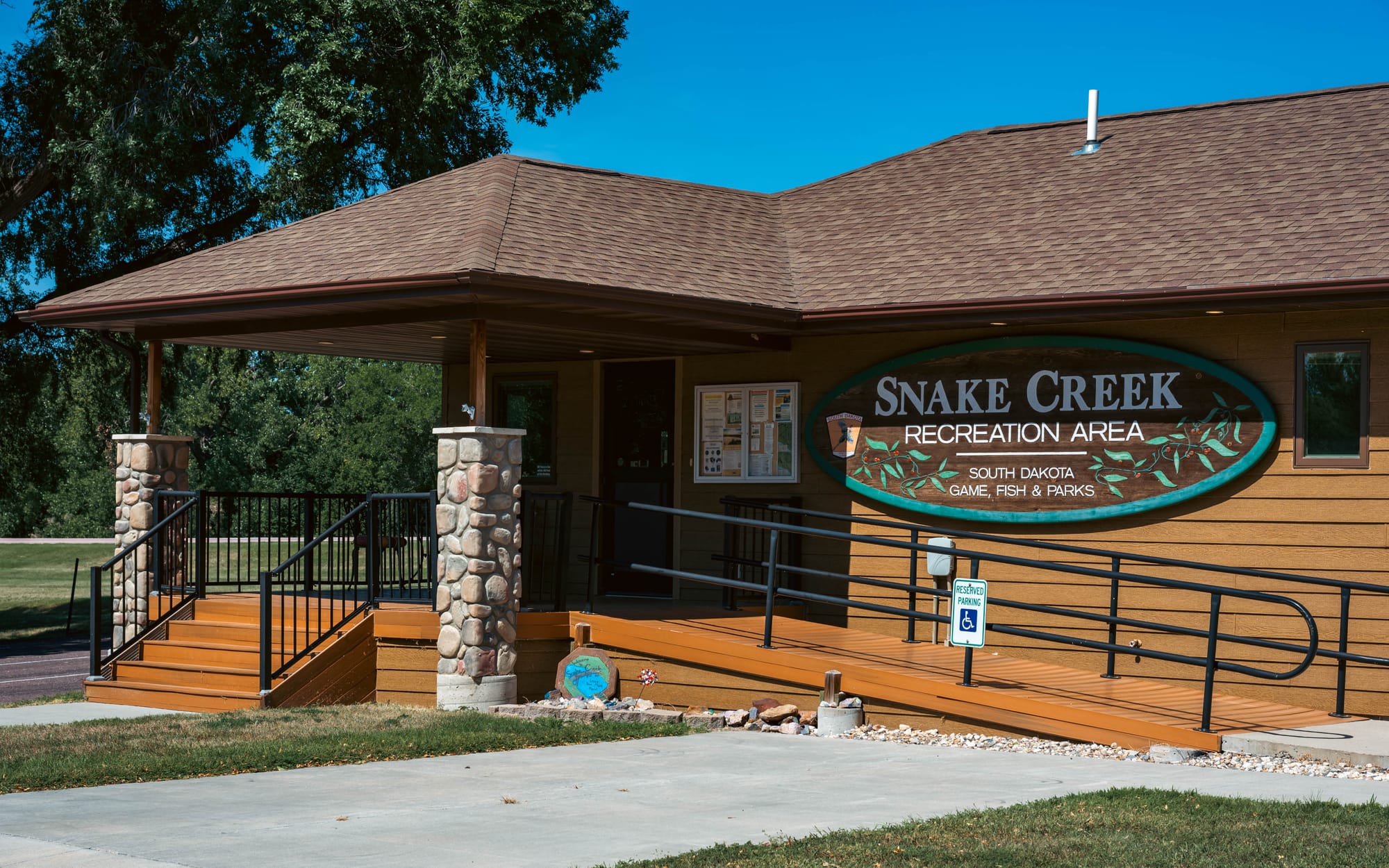
Snake Creek Recreation Area
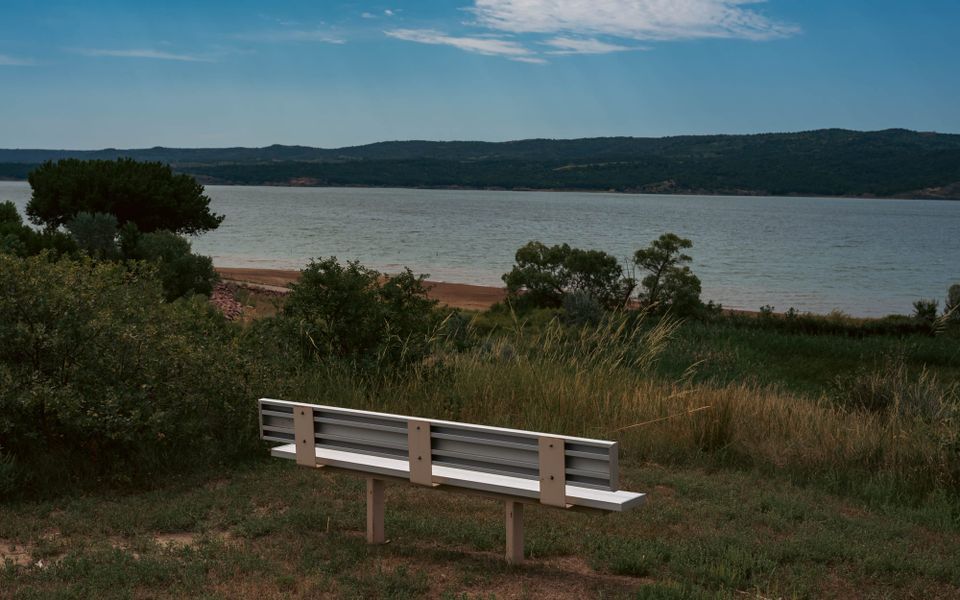
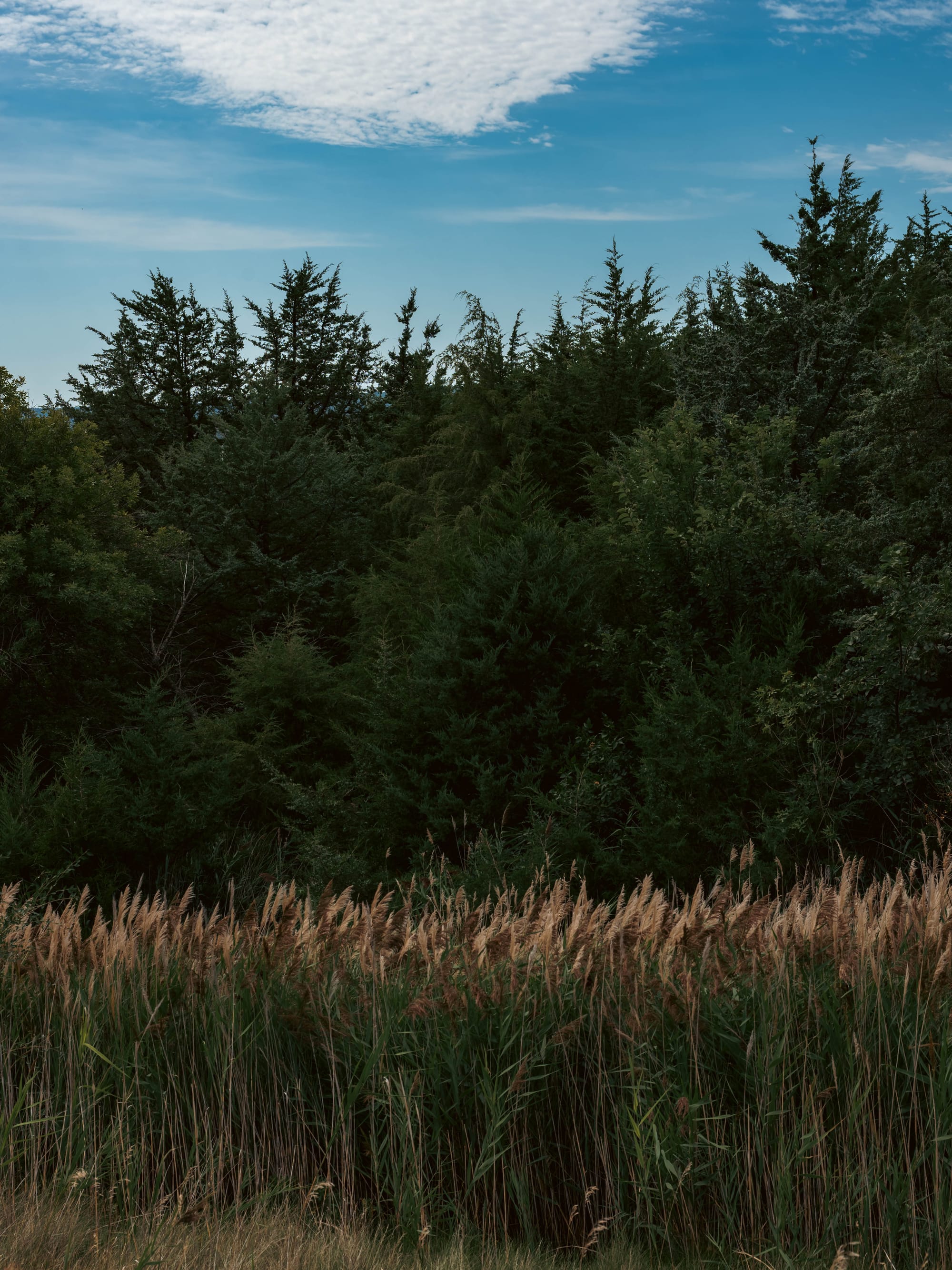
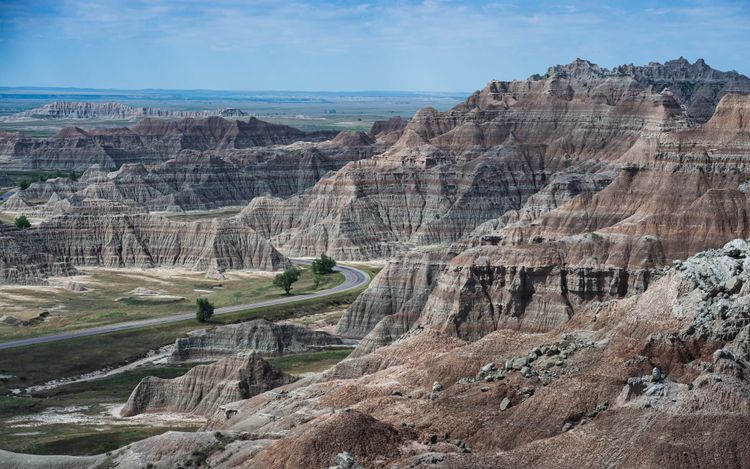
Leaving the Badlands, the drive east across South Dakota opened into a very different landscape. The sharp formations around Cedar Pass gave way to rolling prairie and long stretches of open country, without the mountains I had gotten used to seeing somewhere on the horizon all summer.
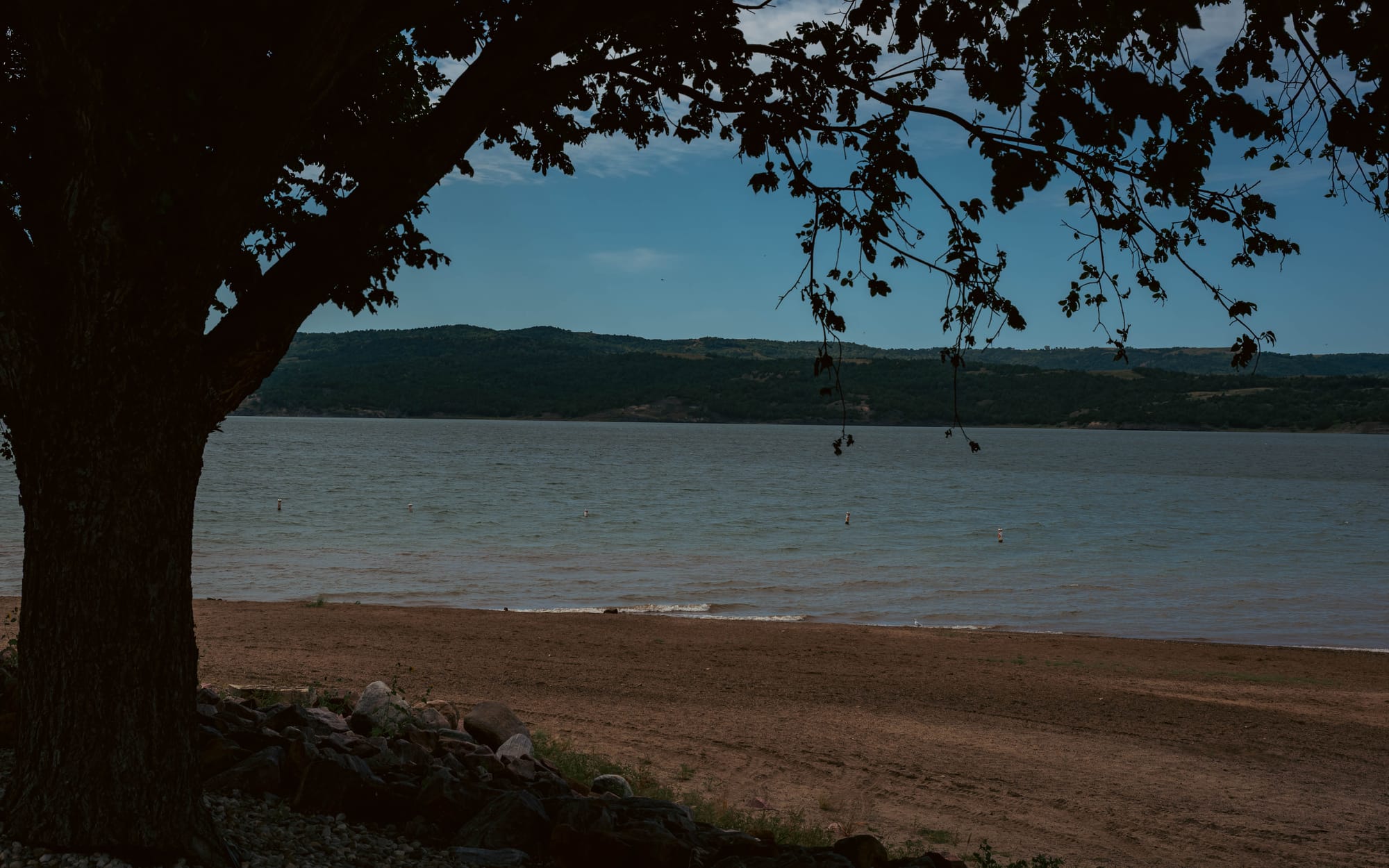
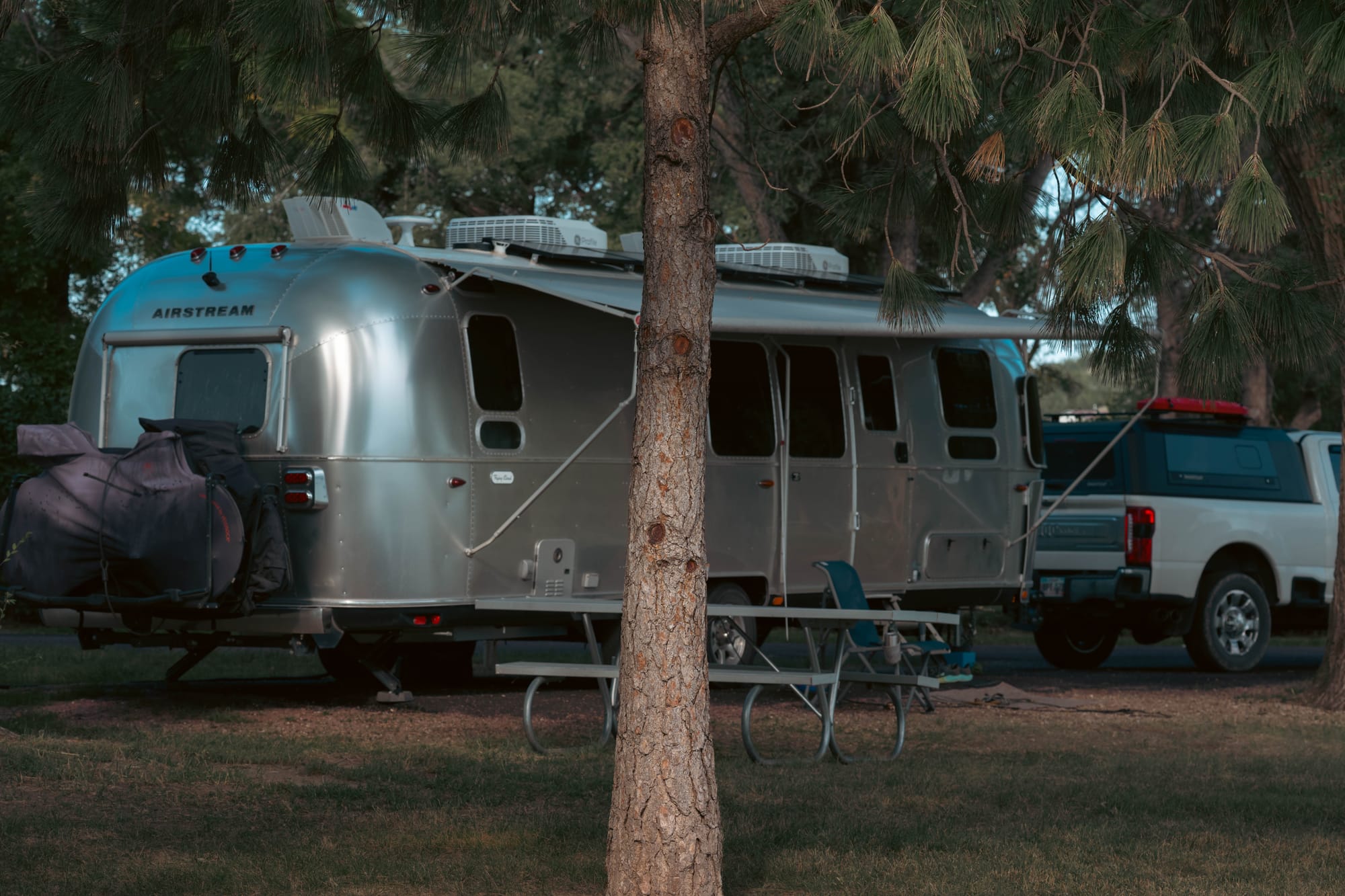
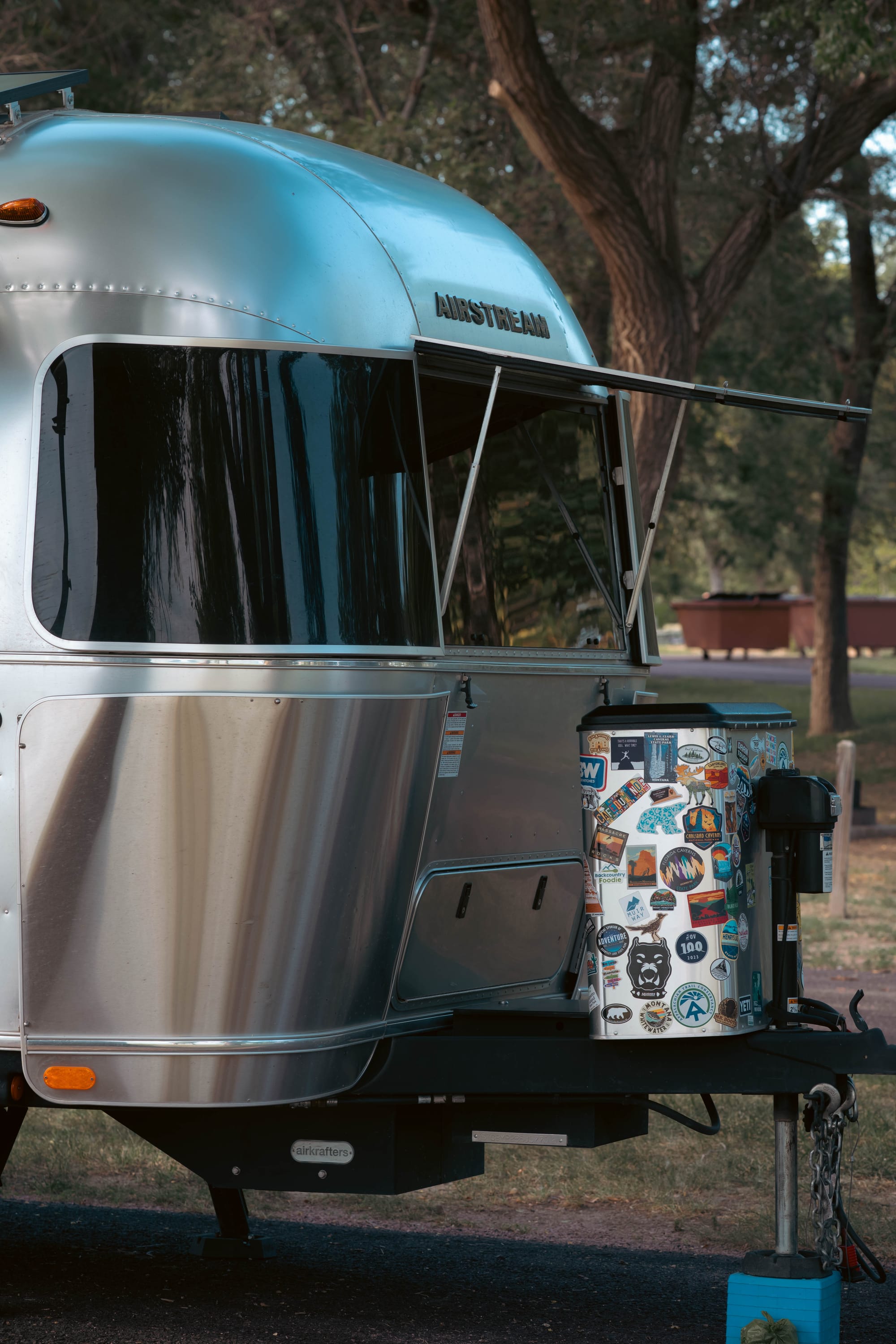
Sam had flown out of Rapid City to Alaska for work, so I was continuing east with the Airstream and the dogs. When I found Snake Creek Recreation Area along the route, the map showed campsites right on the Missouri River. That sounded like a pretty good place to spend three nights.
After several days photographing the Badlands, I had plenty of writing and editing to catch up on. Most of the stay fell into a simple rhythm of working at camp and walking the dogs around a campground that was almost completely empty. For most of my stay, there were only one or two other campers around.
What I hadn't realized was that the water I'd been looking at wasn't quite what I thought it was.
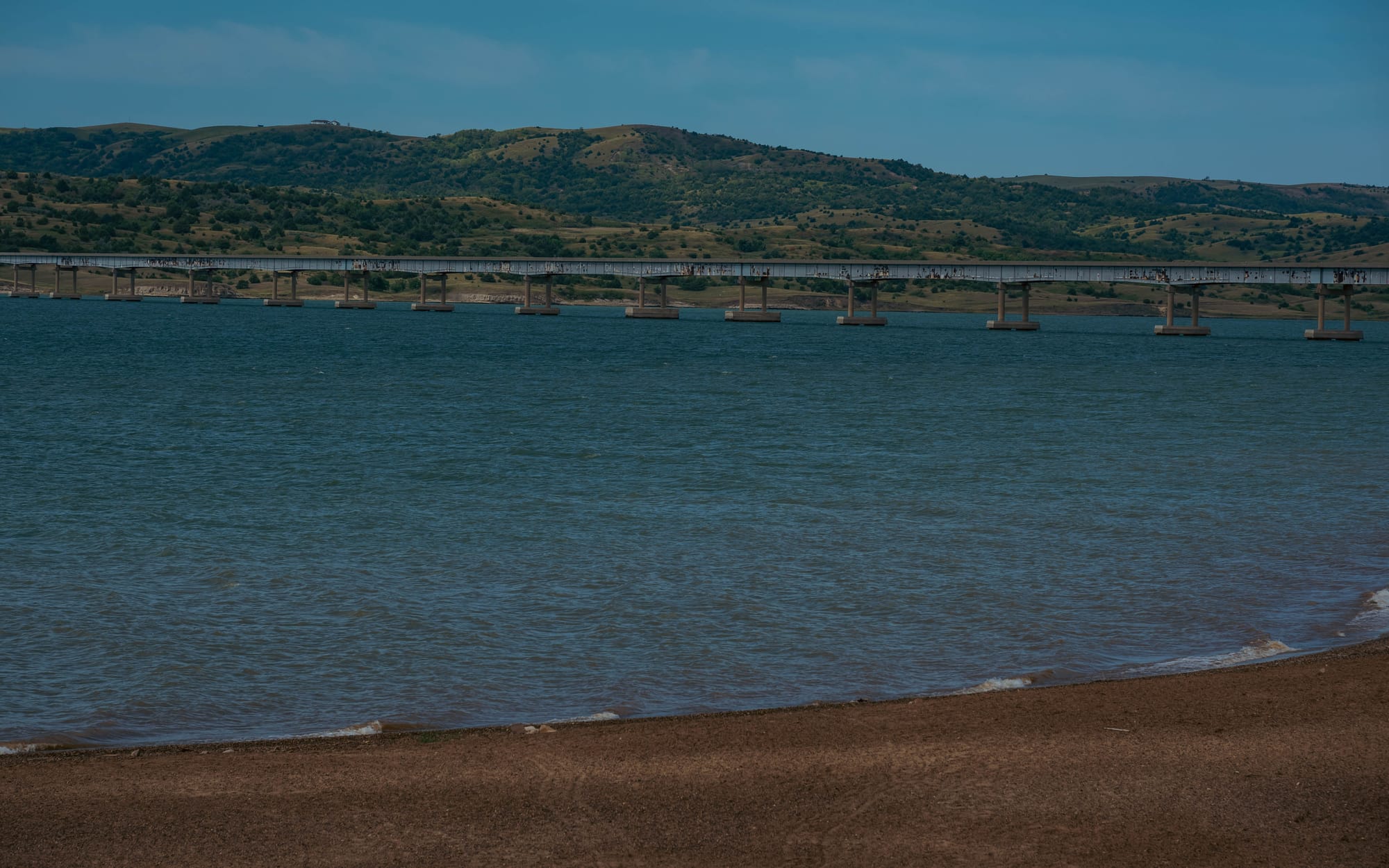
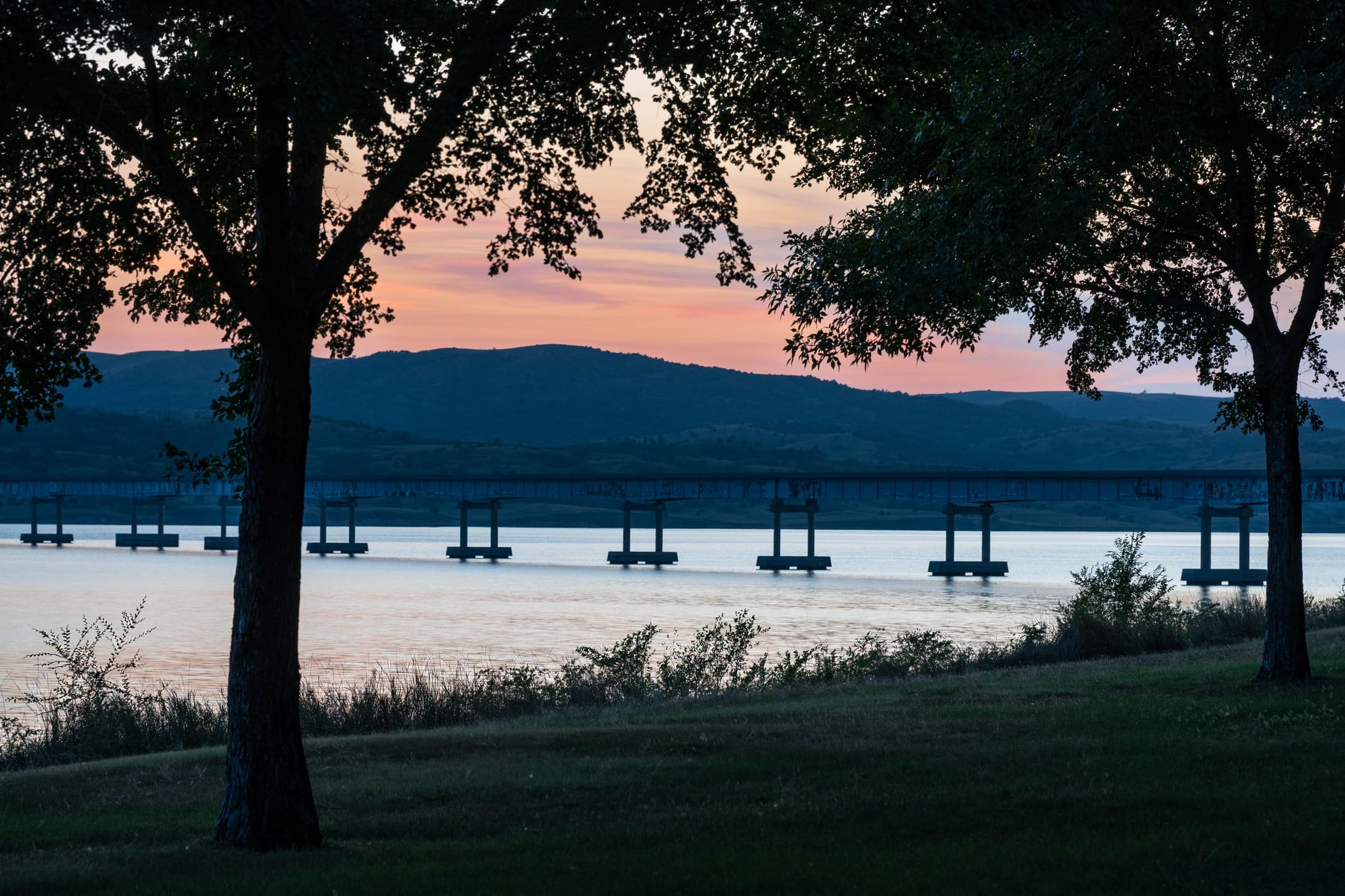
I had booked Snake Creek because I thought it would be cool to camp beside the Missouri. I didn't know Lake Francis Case was a reservoir, or that the stretch of river outside my window was part of a much larger system of dams that had reshaped the Missouri through the Dakotas.
That gave me something to nerd out about while Sam was away.
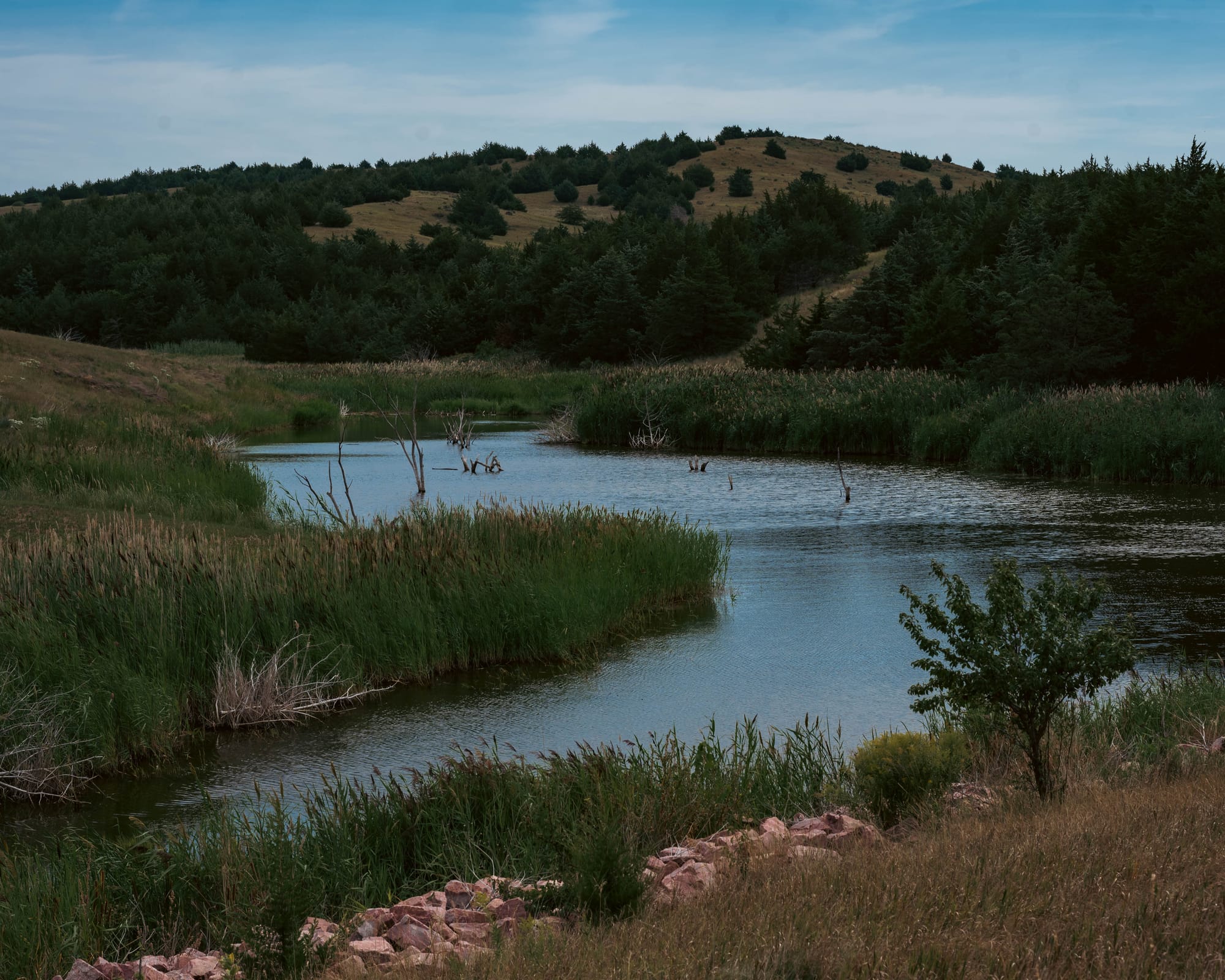
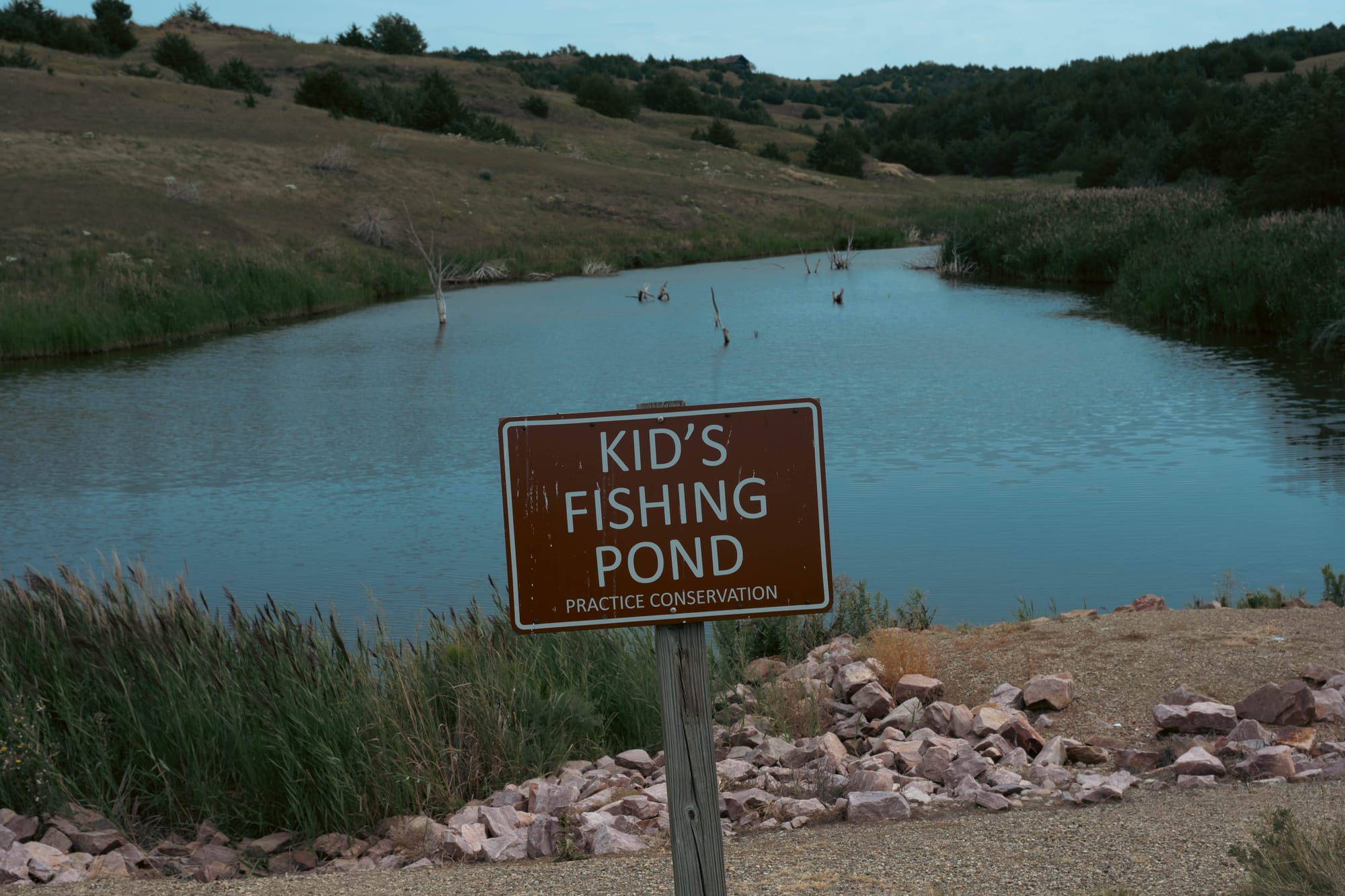
🧭 Lay of the Land
- Location: Platte · South Dakota · 43.3900, -99.1195 · [Google Maps]
- Official site: [Snake Creek Recreation Area]
- Landscape: Reservoir shoreline · prairie
- Our visit: August 2026 · 3 nights · warm days with cool, windy evenings
🏕 Camp Setup
- Site types: Back-in · Pull-through · Electric · Non-electric · Cabins
- Arrival & setup: Easy
- Hookups: ⚡ | 🧻
- Connectivity: 📶 AT&T 🟢 | 📶 Verizon 🟢 | 📶 T-Mobile 🟢 | 📡 Starlink ⟂ | 📶 Park Wi-Fi ⟂
- Facilities: Restrooms · Showers · Boat ramp access
Legend:
🚽 = sewer at site · 🧻 = dump station
🟢 = solid for work · ⚠️ = usable with limits · ❌ = unusable
Park Highlights
Lake Francis Case follows the old Missouri River valley for roughly 107 miles. It was created by Fort Randall Dam, one of six dams built on the Missouri as part of the Pick-Sloan program.
Before those dams, this stretch of the Missouri behaved very differently. The river shifted through multiple channels and sloughs, leaving behind islands, sandbars, and backwaters as its course changed. Seasonal flooding was part of that system.
The Flood Control Act of 1944 and the resulting Pick-Sloan plan set in motion a series of projects intended to manage the Missouri for flood control, hydropower, irrigation, and more. Construction on Fort Randall began after World War II. By the early 1950s, the dam was impounding the river and filling the existing valley behind it.
That water became Lake Francis Case.
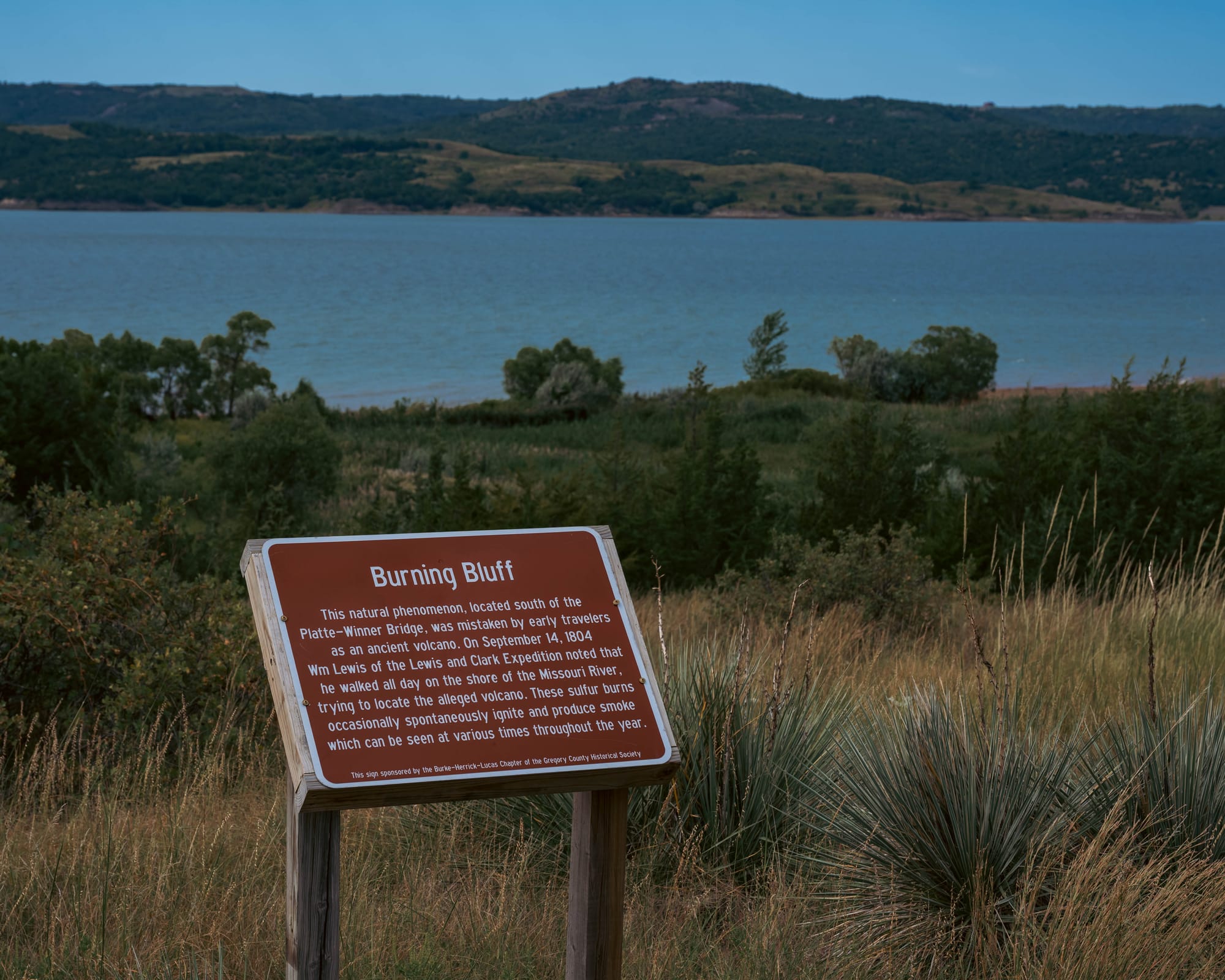
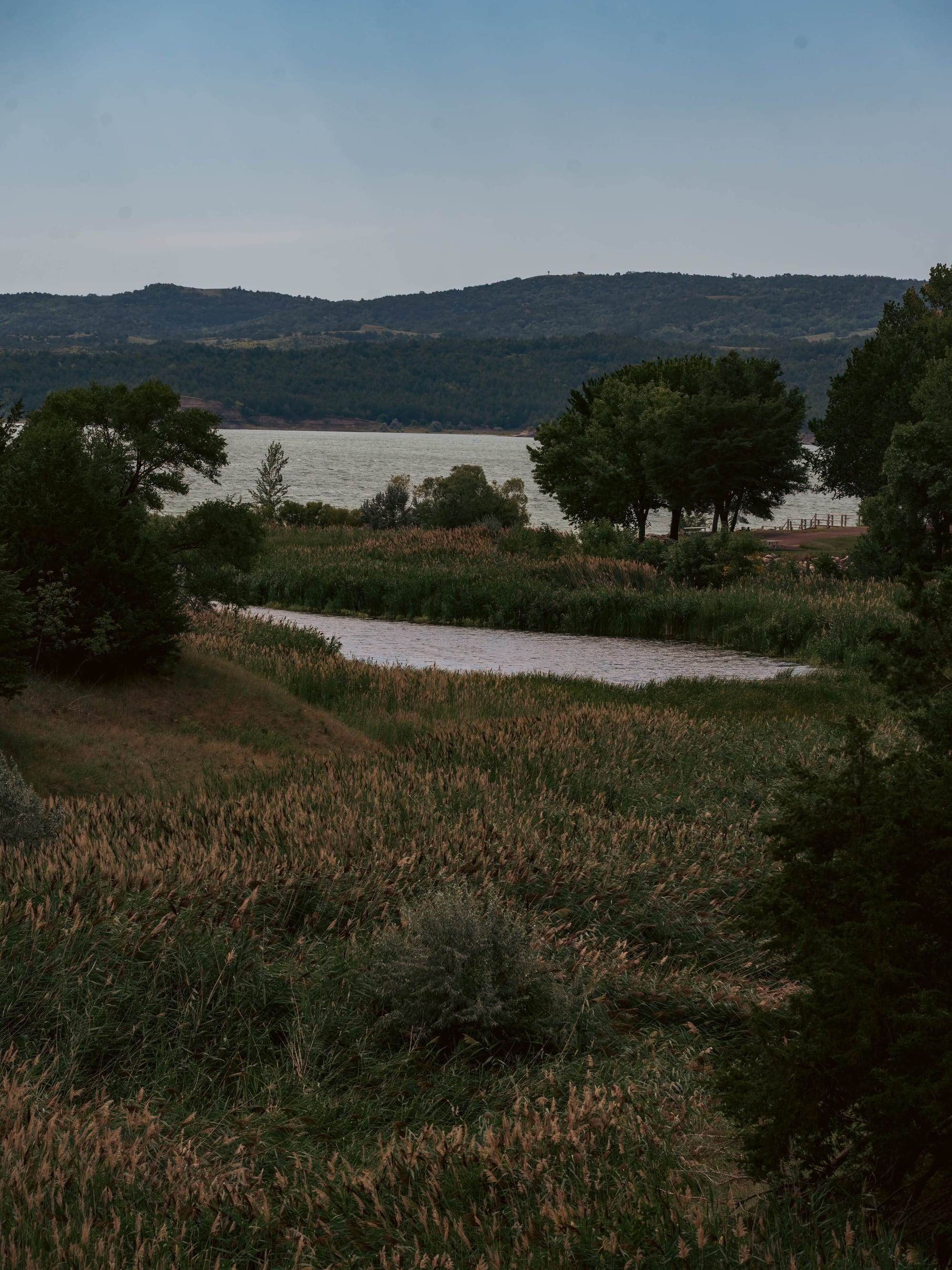
The bluffs, ravines, and rolling plains around Snake Creek are older pieces of the Missouri River landscape. The broad lake between them is not.
Fort Randall was one piece of a much larger transformation. Six main-stem dams and their reservoirs changed long stretches of the Missouri from Montana through the Dakotas, replacing sections of a shifting river and floodplain with the reservoir system that exists today.
That history made the view from camp more interesting. What had looked on the map like a simple campsite beside the Missouri was also a small piece of a much larger story about how the river had been changed.
🚴 On the Ground
- Activities available: ● 🥾 Hiking | ● 🚴 Biking | ● 🐕 Dogs | ● 🚣 Paddling | ● 🎣 Fishing | ○ 🐦 Wildlife / Birding | ● 🏊 Swimming | ● 📸 Photography | ● 🏕️ Camp-centric | ○ 🧗 Climbing
- Trail mileage available: 🥾 0.75 mi | 🚴 ~2 mi | 🚣 ⟂
- Crowd level: Quiet
Legend: ● = available · ○ = not available
⚡ TL;DR
- Park highlight: Waterfront camping along Lake Francis Case
- Best for: Boating, fishing, and quiet campground time
- Skip if: The water isn't enough to keep you occupied, or you don't have a boat
- Worth planning around?: No
Final Thoughts
Snake Creek was never supposed to be a major stop. I needed somewhere to spend a few days moving east, and it turned out to be a good place to do exactly that.
Most of those three days were spent working, walking the dogs, and enjoying a campground that was nearly empty before the weekend. There wasn't much of an itinerary, but there didn't need to be one.
I wouldn't reroute a trip specifically for Snake Creek, especially without plans to spend time on the water.
But I'm glad this was where I stopped.