Arches National Park
Arches kept pulling us back in.
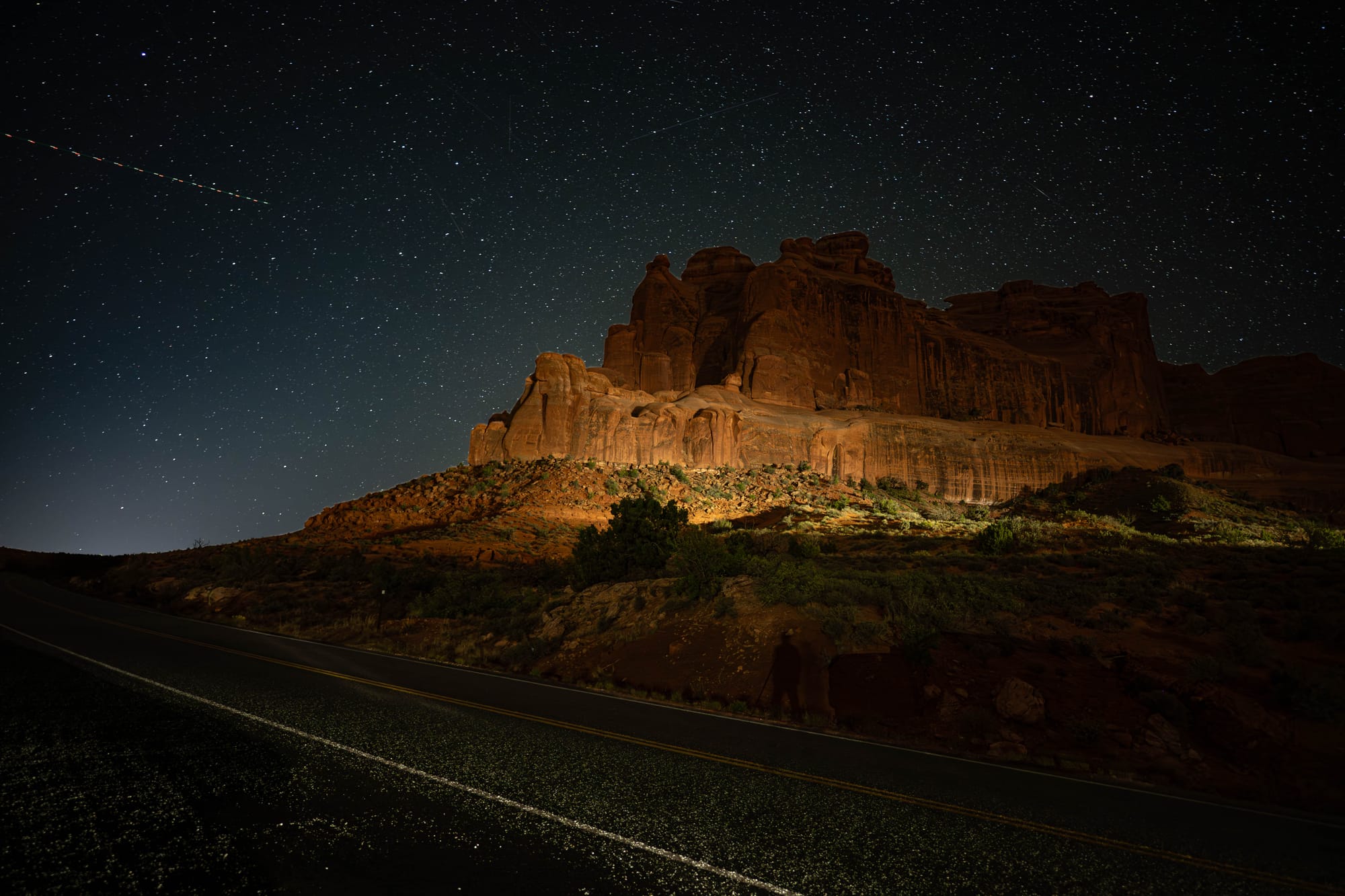
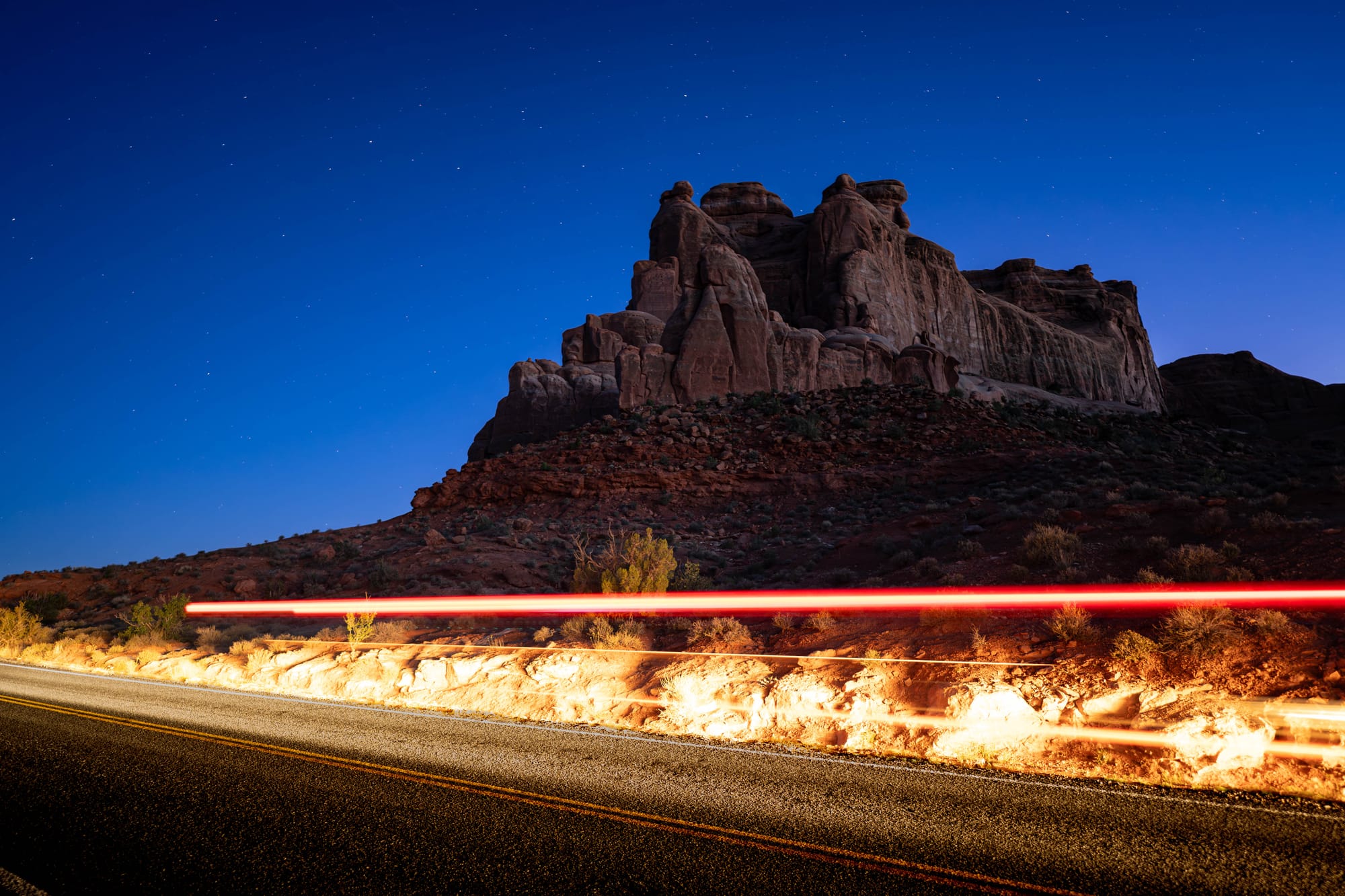
We visited three times during our Moab stay: once after sunset, once before sunrise, and once again with Sam in the evening. That felt like the right way to see it.
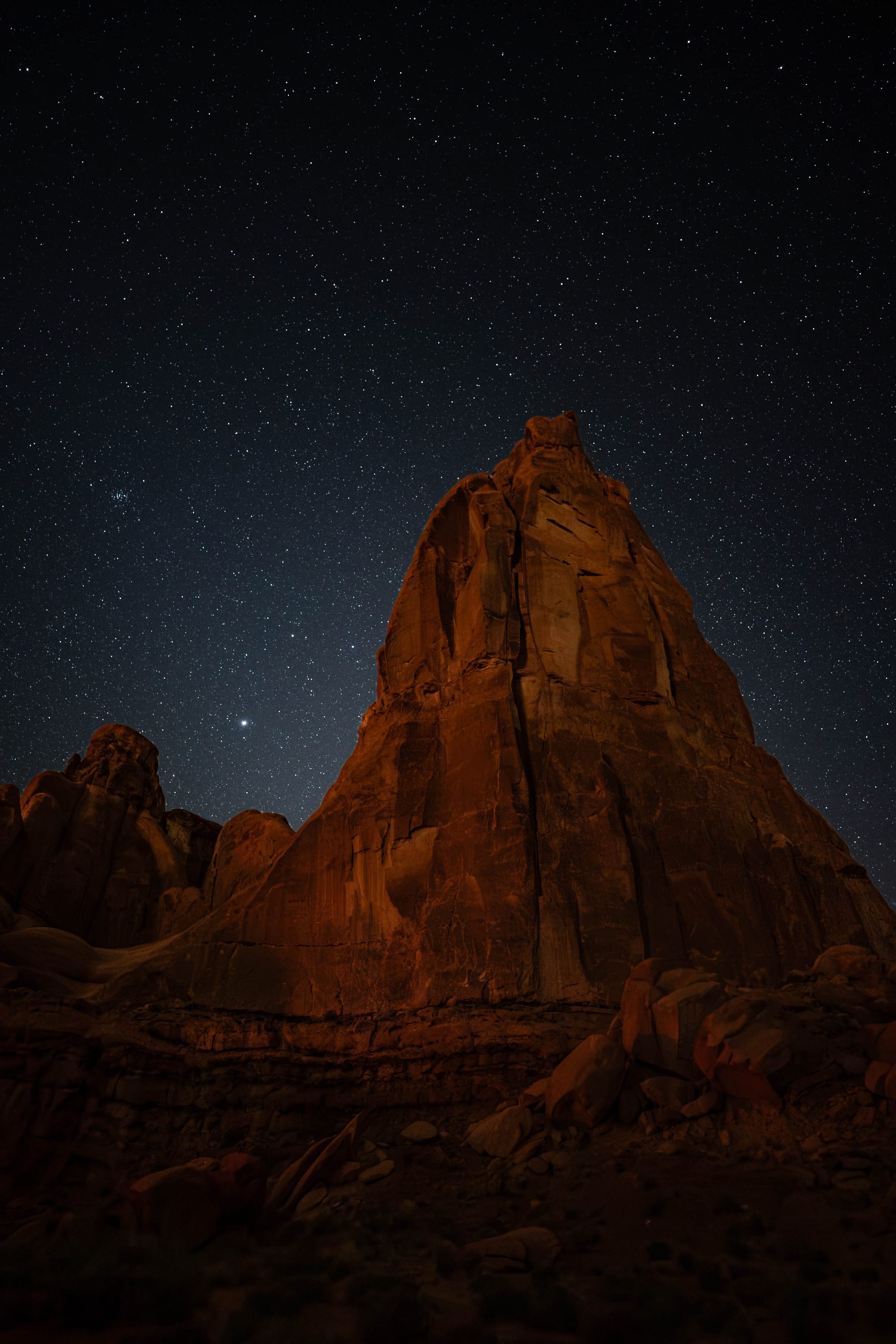
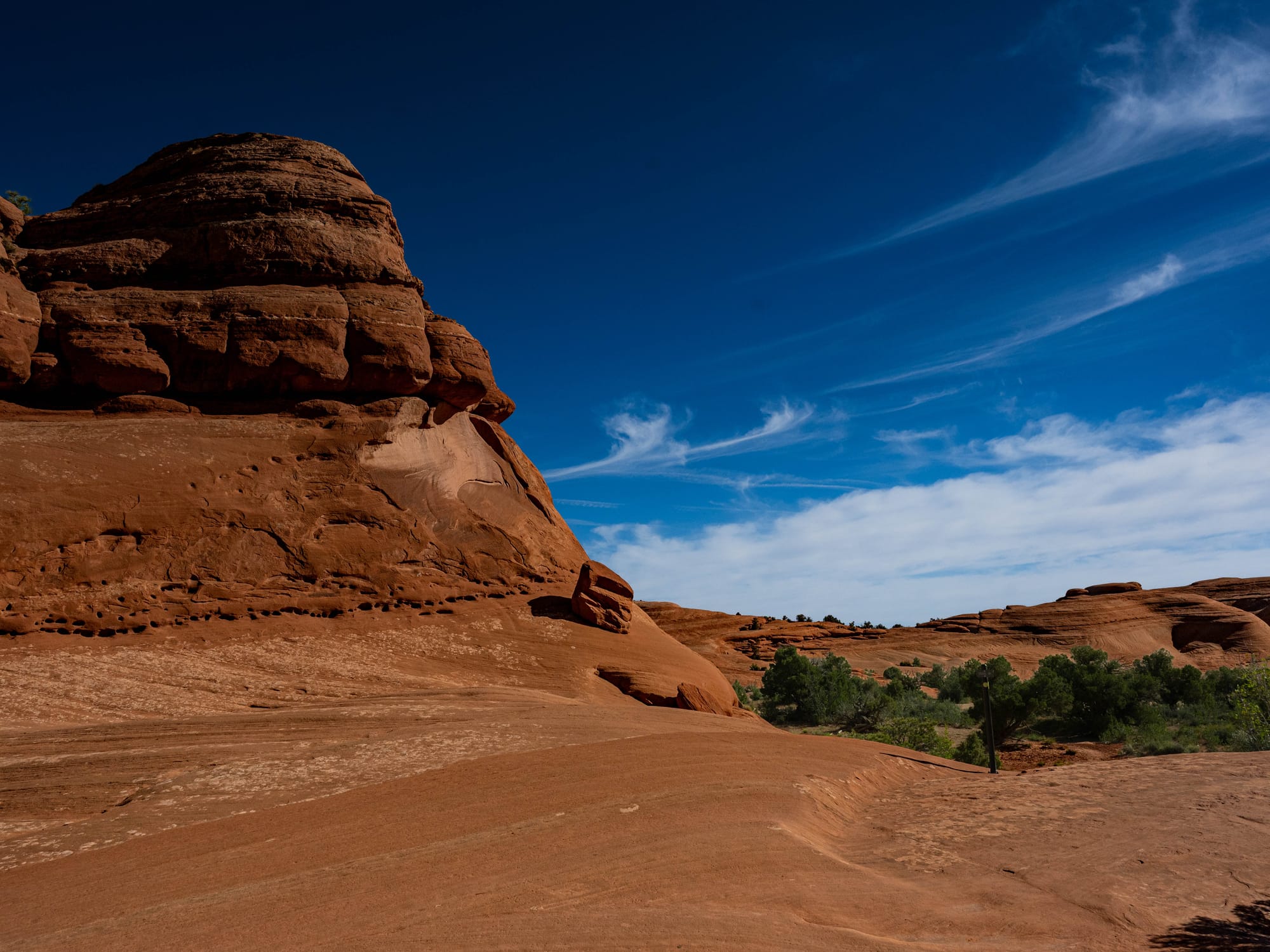
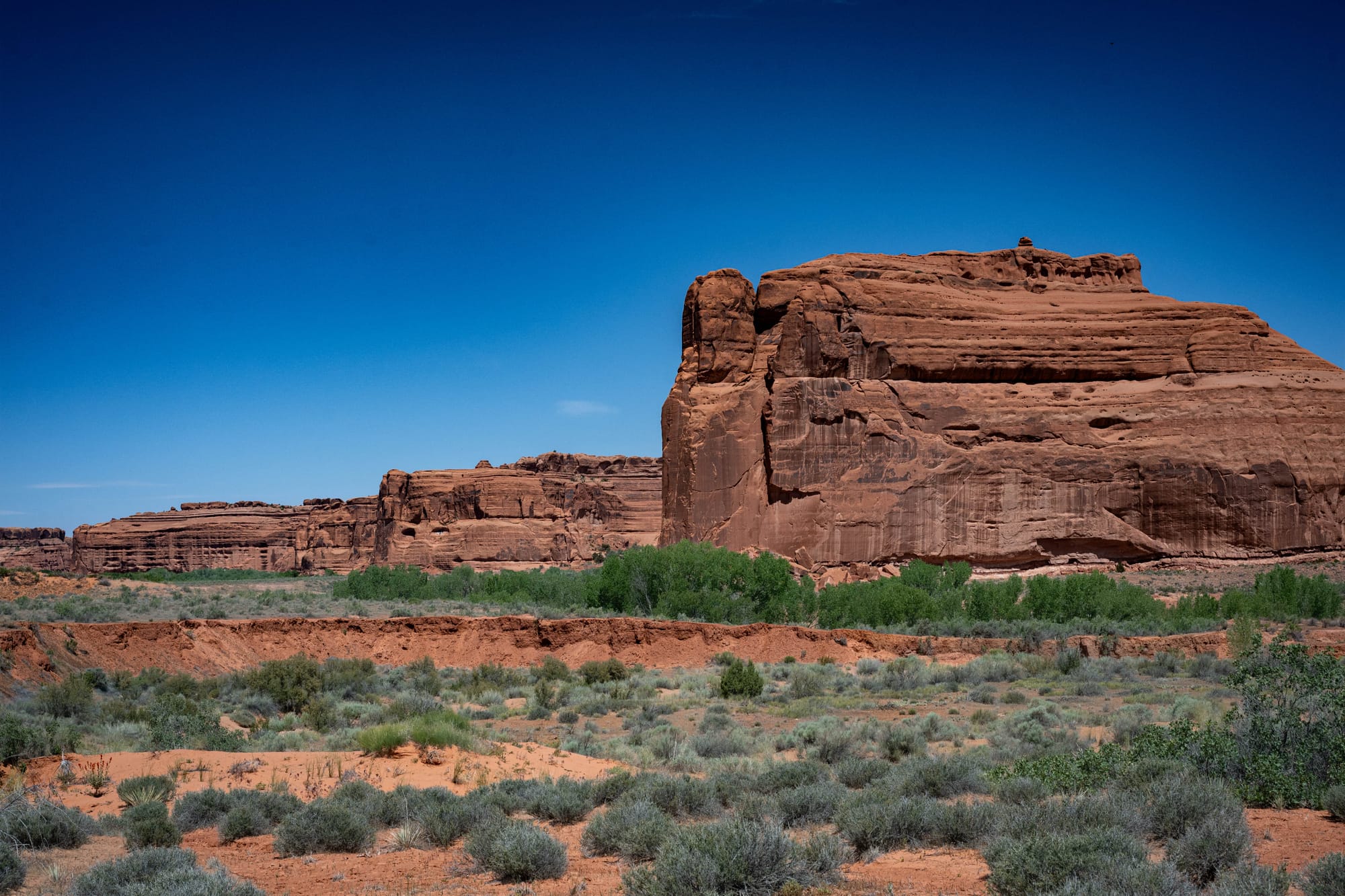
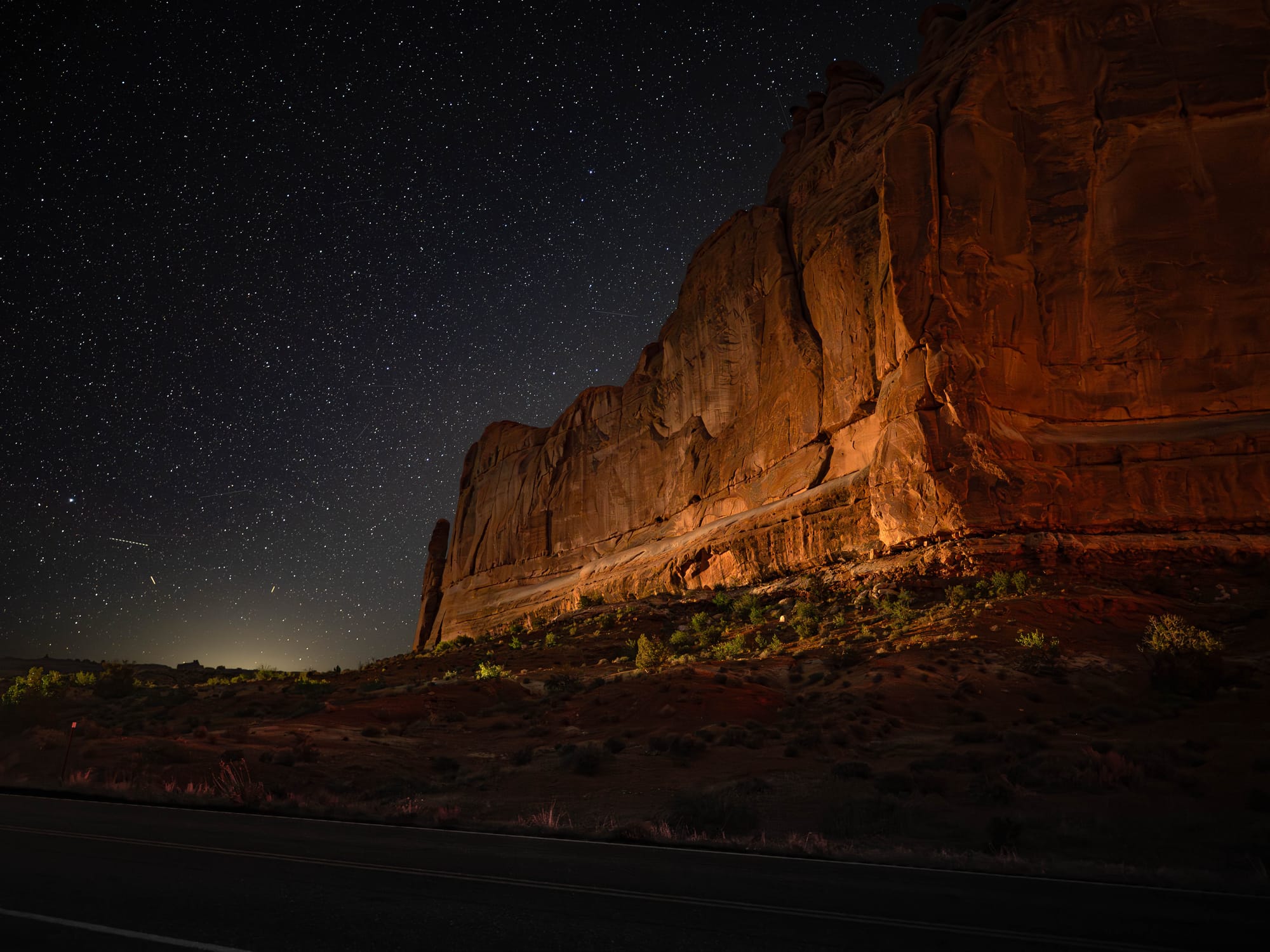
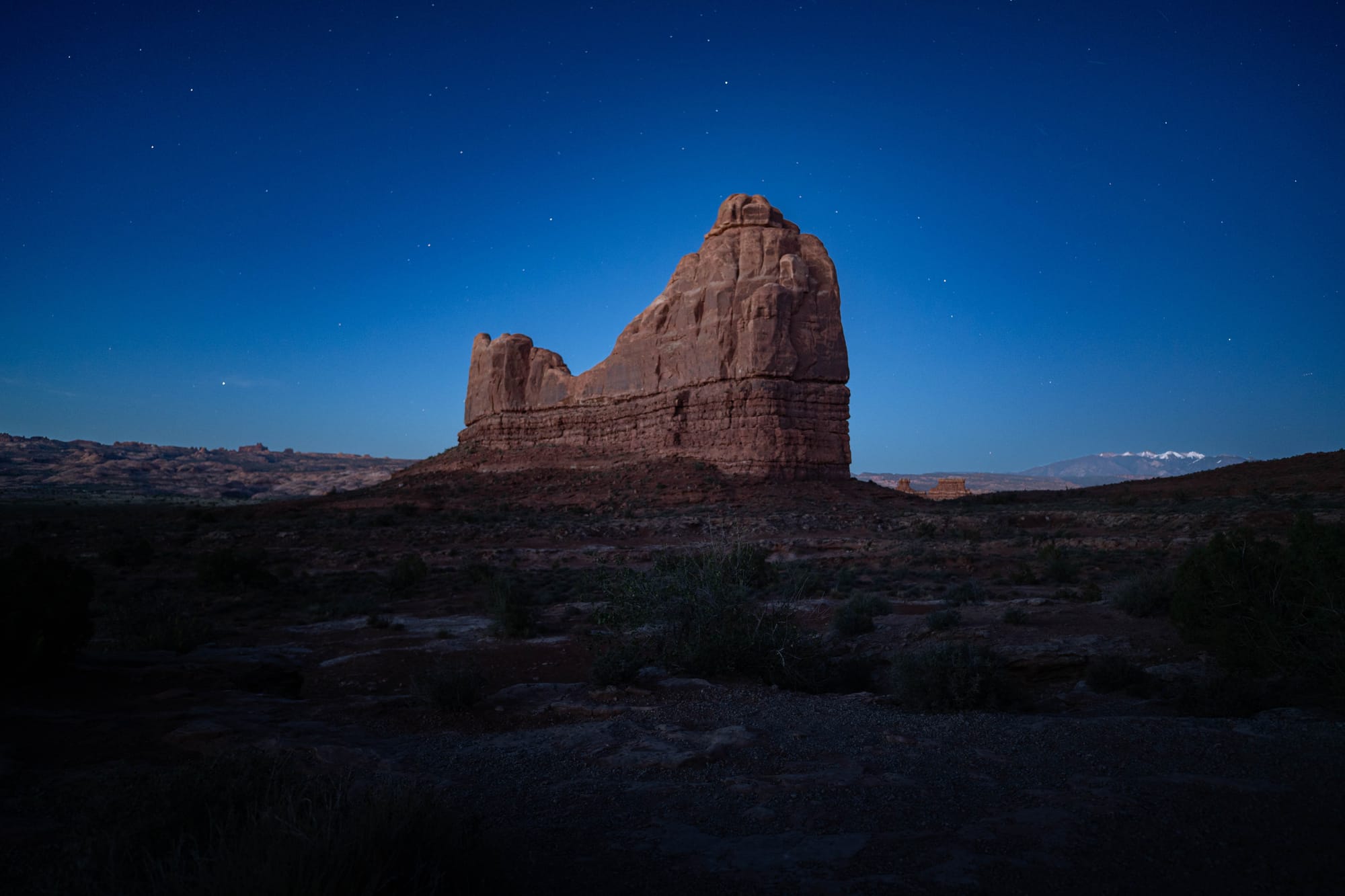
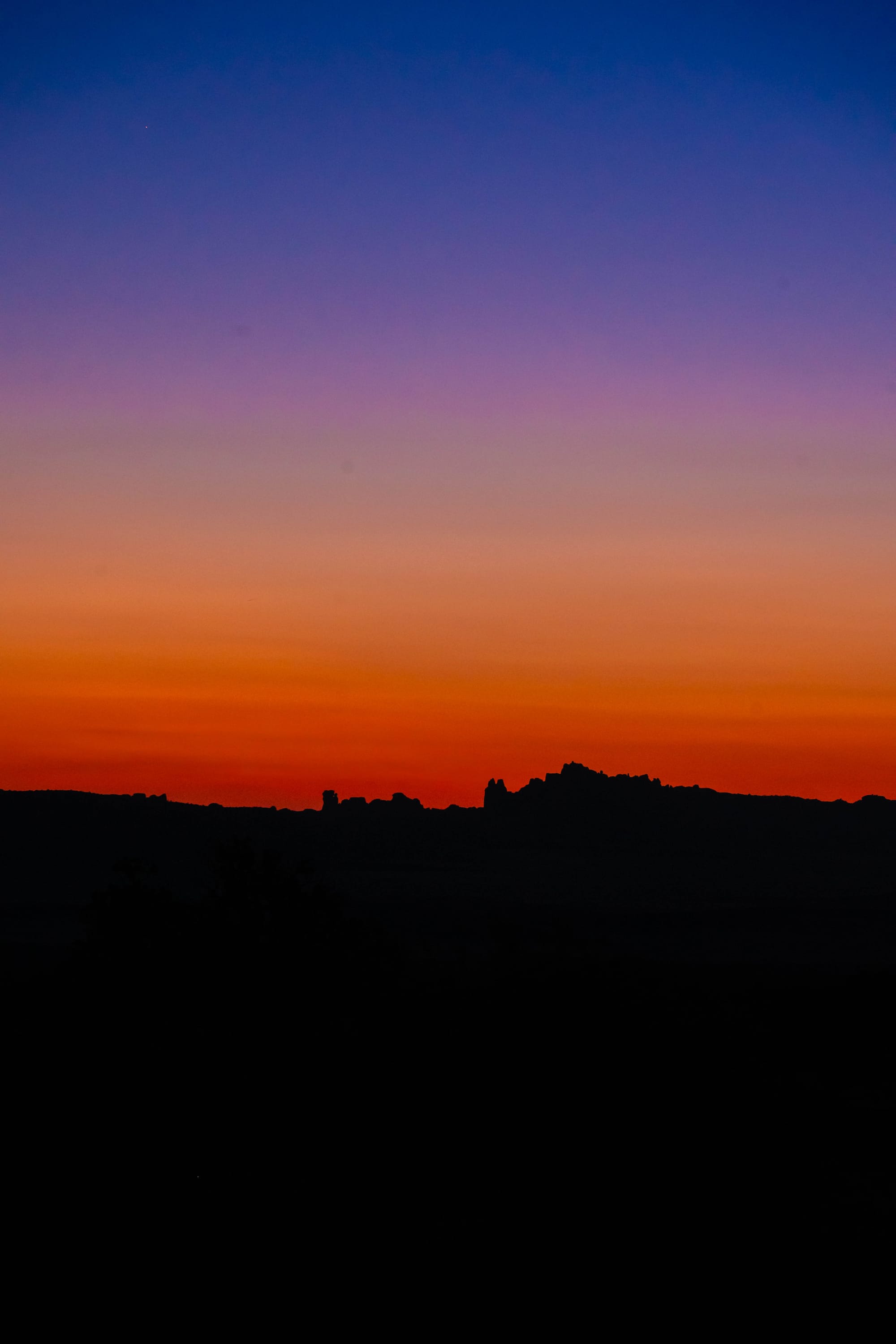
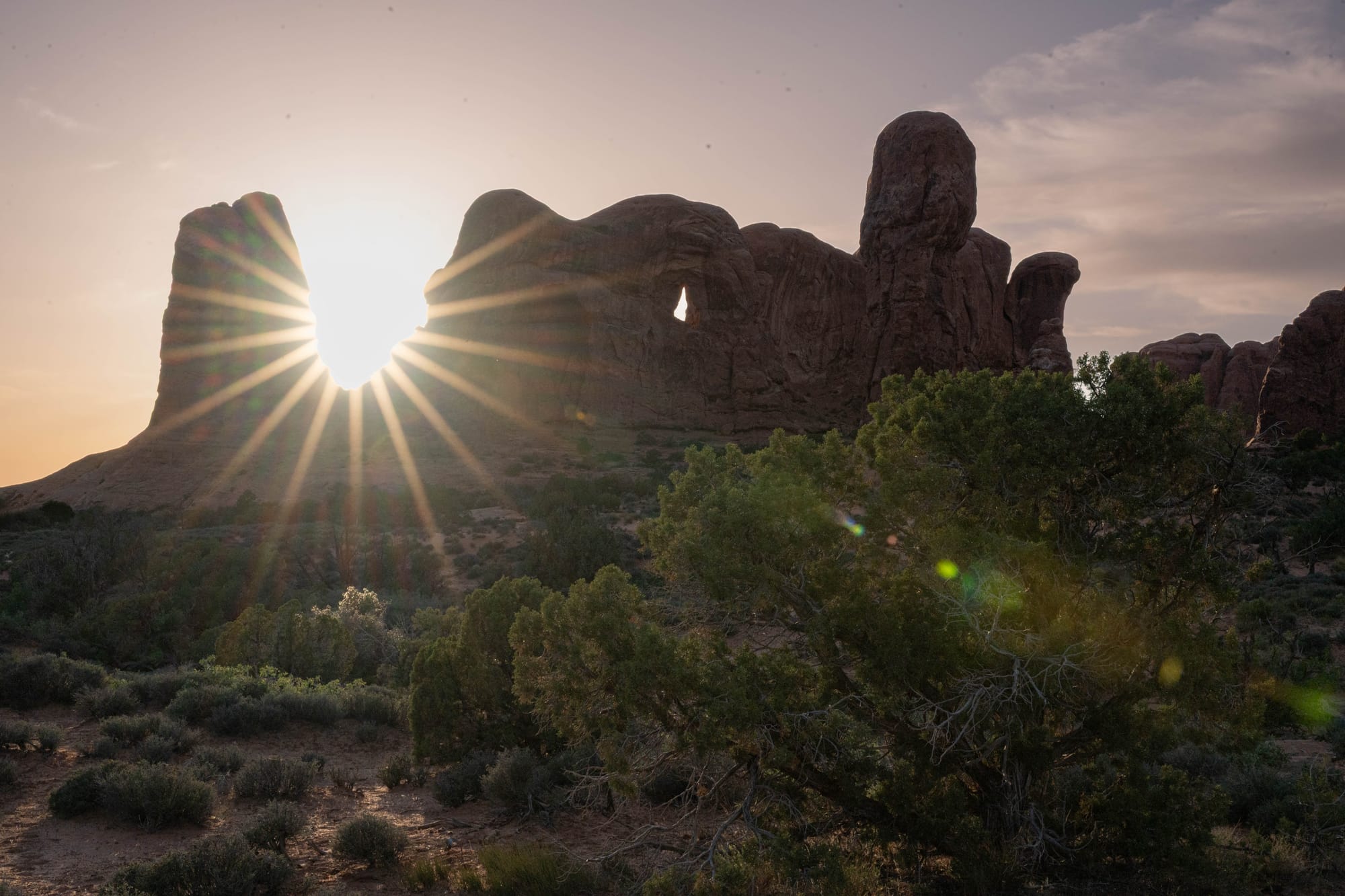
Arches is shaped by light as much as rock. Sunrise, midday, sunset, and darkness all change the same sandstone in different ways. The formations are fixed, but the park never really feels still. The same sandstone that looks quiet in the dark can turn orange, gold, and almost alive when the sun hits just the right.
Arches is crowded, iconic, heavily photographed, and is absolutely worth the visit.
🗺️ The Lay of the Land
- Location: Arches National Park · Moab, Utah · 38.7331, -109.5925 · [Google Maps]
- Official site: Arches National Park
- Landscape: sandstone arches · red rock desert
- Vibe: iconic formations, changing light, and crowded beauty
- Our stay & conditions: May 2026 · 3 visits from Moab · dry, clear, and exposed
Why So Many Arches?
Arches is not just sandstone wearing away into pretty shapes.
The park had the right ingredients: thick sandstone layers, buried salt, fractures, water, ice, wind, gravity, and time. Ancient salt deposits underneath the park shifted under pressure, bending and cracking the rock above. Those cracks gave erosion a place to start.
Over time, narrow sandstone fins formed. Water and ice widened weaknesses in the rock. Softer layers wore away. Openings appeared. Some became arches. Some collapsed. Many are still changing.
That is what makes the park feel so sculptural. Canyonlands shows you the larger system of the Colorado Plateau: rims, rivers, benches, canyons, and distance. Arches brings that same geologic story closer, turning erosion into individual forms you can walk toward, stand beneath, and photograph from ten different angles.
The park protects more than 2,000 documented natural stone arches, along with fins, pinnacles, balanced rocks, windows, and sandstone walls. That number helps explain the density, but it does not quite explain the feeling of the place.
Arches feels like erosion developed a sense of design.
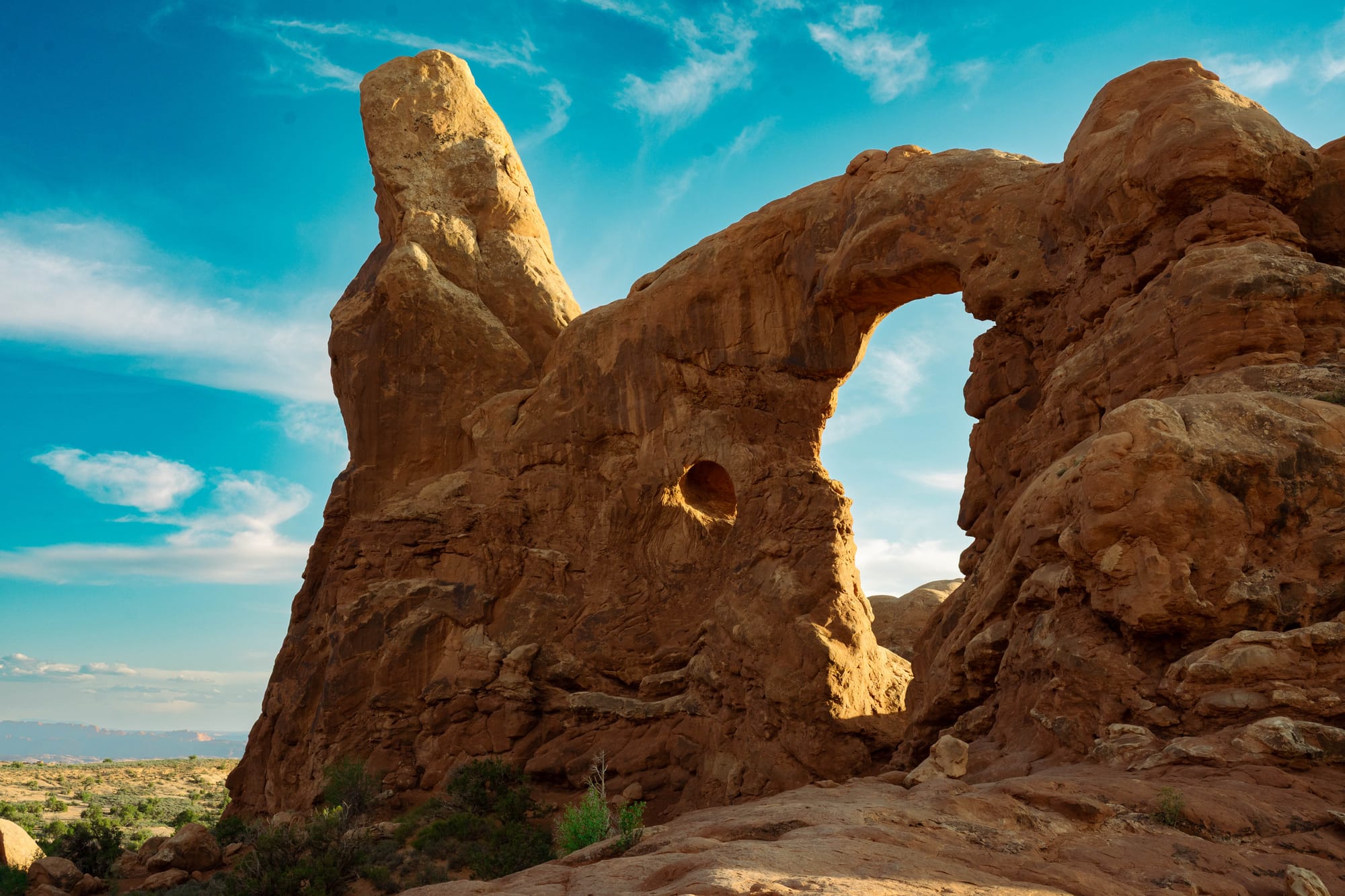
Sunrise Without the Crowd
The road into Arches at 4am was dark and mostly empty. A few headlights moved ahead of me, and as we worked farther into the park, the pattern became clear. One car turned toward Delicate Arch. Then another. Then the few cars behind me followed.
I kept going.
That ended up being the right decision.
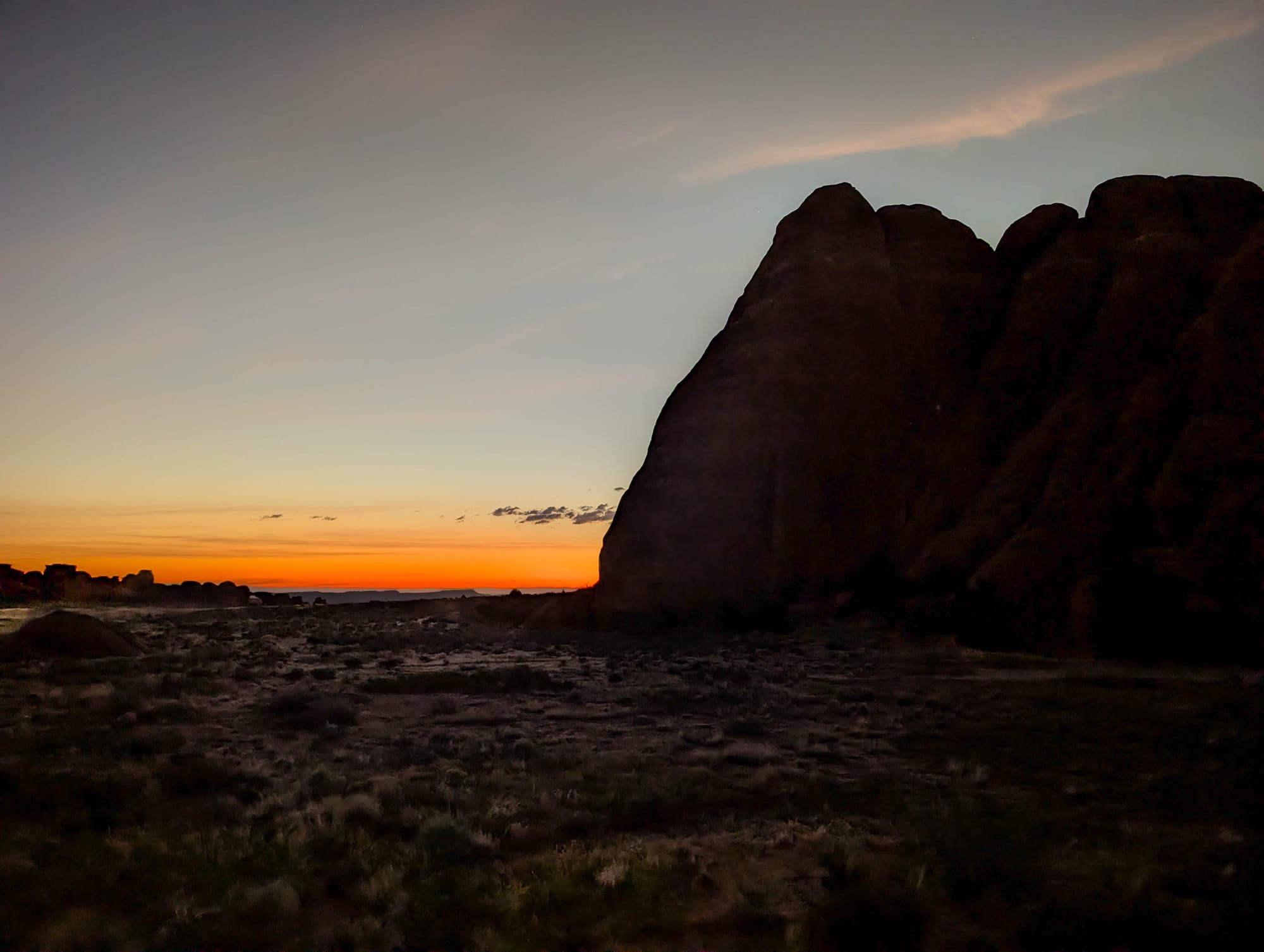
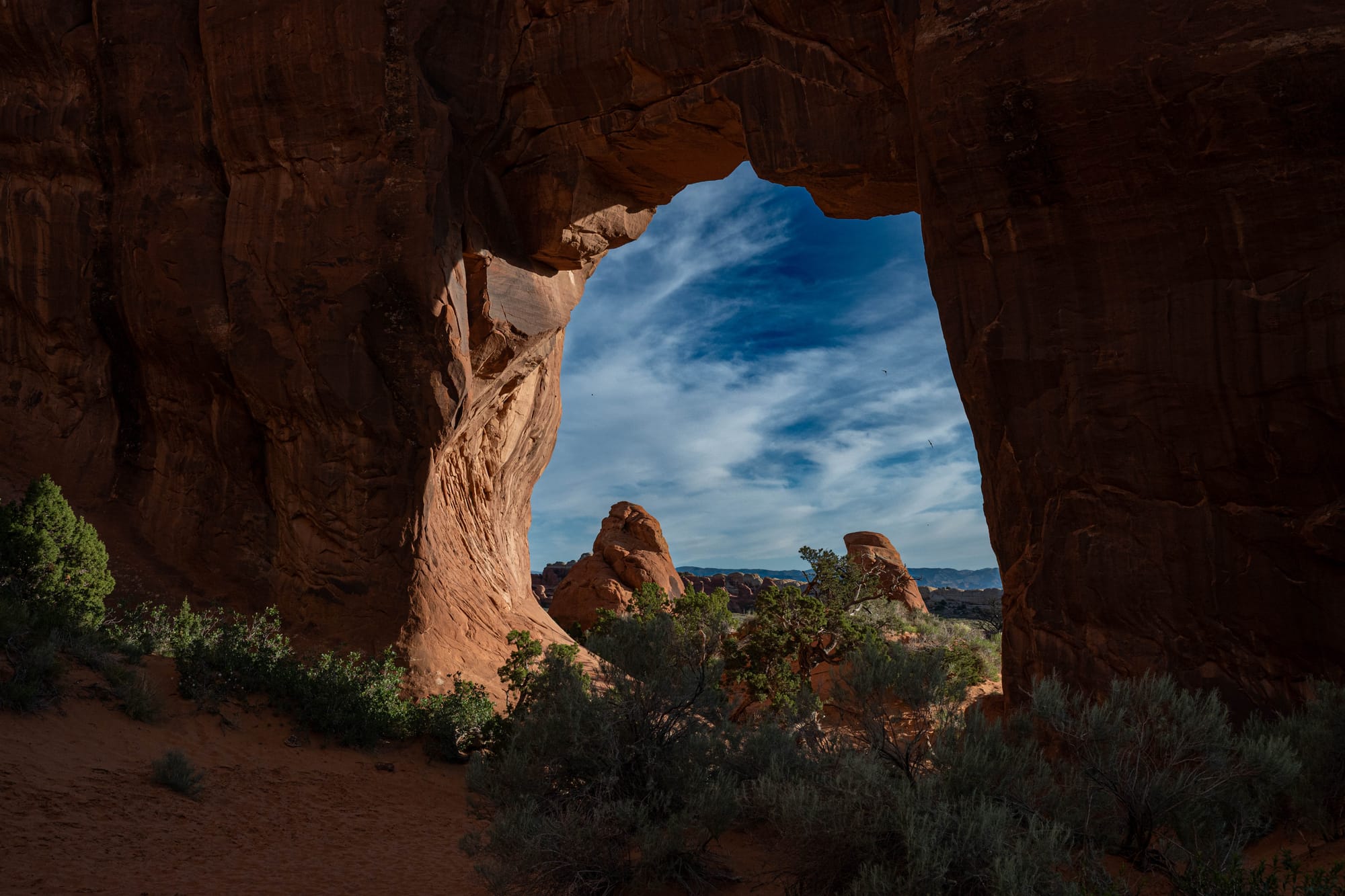
Broken Arch sits farther back in the park, near the Devil’s Garden area, and at that hour it was empty. No voices. No photo line. No one walking into the frame. Just cool air, dark sand, and enough early light to follow the trail.
Broken Arch is not really broken in the way the name suggests. The opening is still intact, but a crack runs through the top. In the half-light before sunrise, that detail was hard to see. The whole formation felt quiet, almost muted.
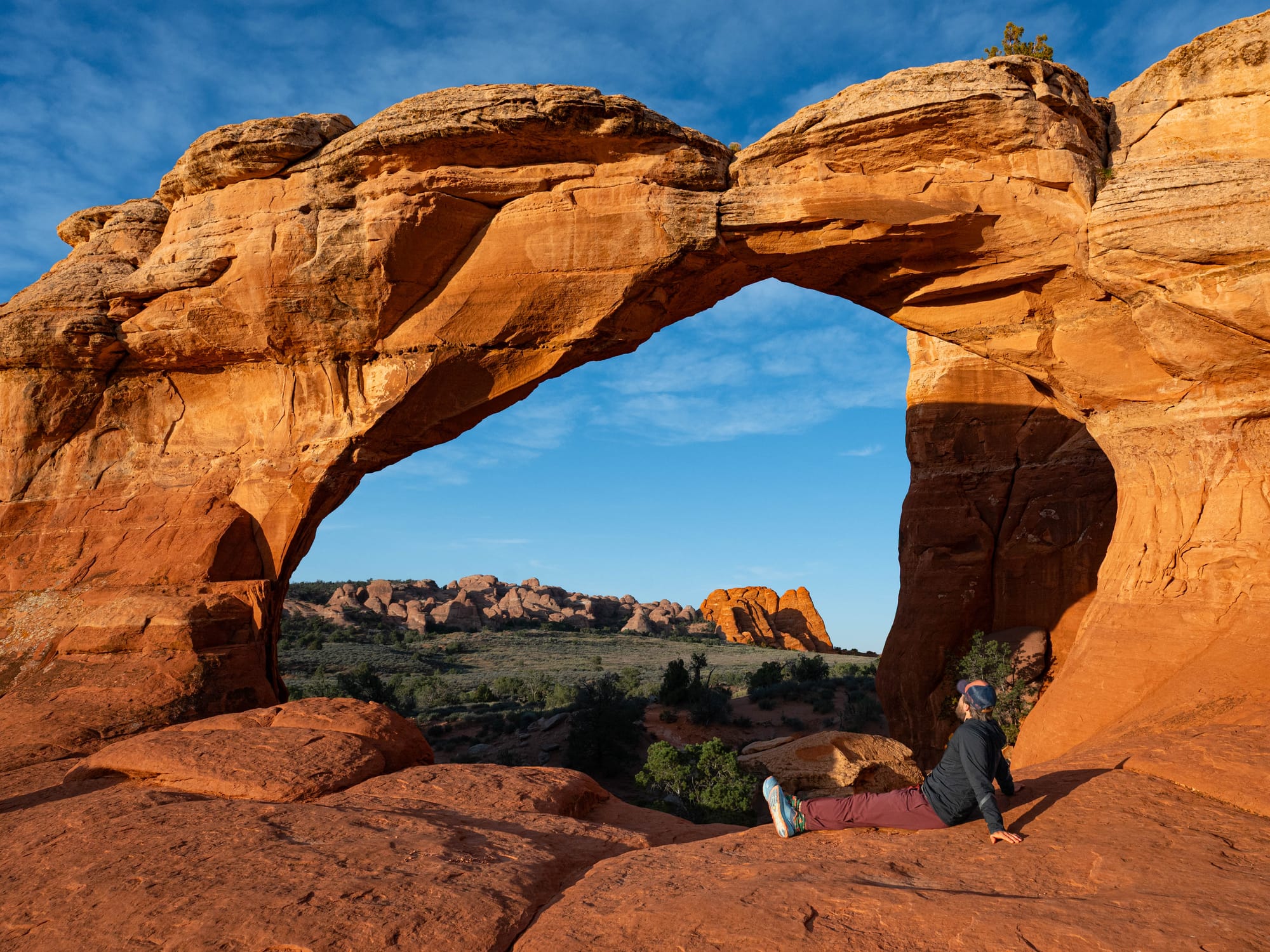
Then the sun started to hit the rock.
At first, the sandstone was flat and gray-red. Then the color began to change. The edges sharpened. The arch separated from the surrounding stone. The nearby walls picked up orange and gold, and it felt less like the sun was lighting the place and more like the rock was waking up.
That was probably my favorite Arches moment.
Not because Broken Arch is the biggest or most famous formation in the park. It was because of the timing. Arches rewards timing more than speed. A quieter arch at the right hour can stay with you longer than the famous one in the middle of a crowd.
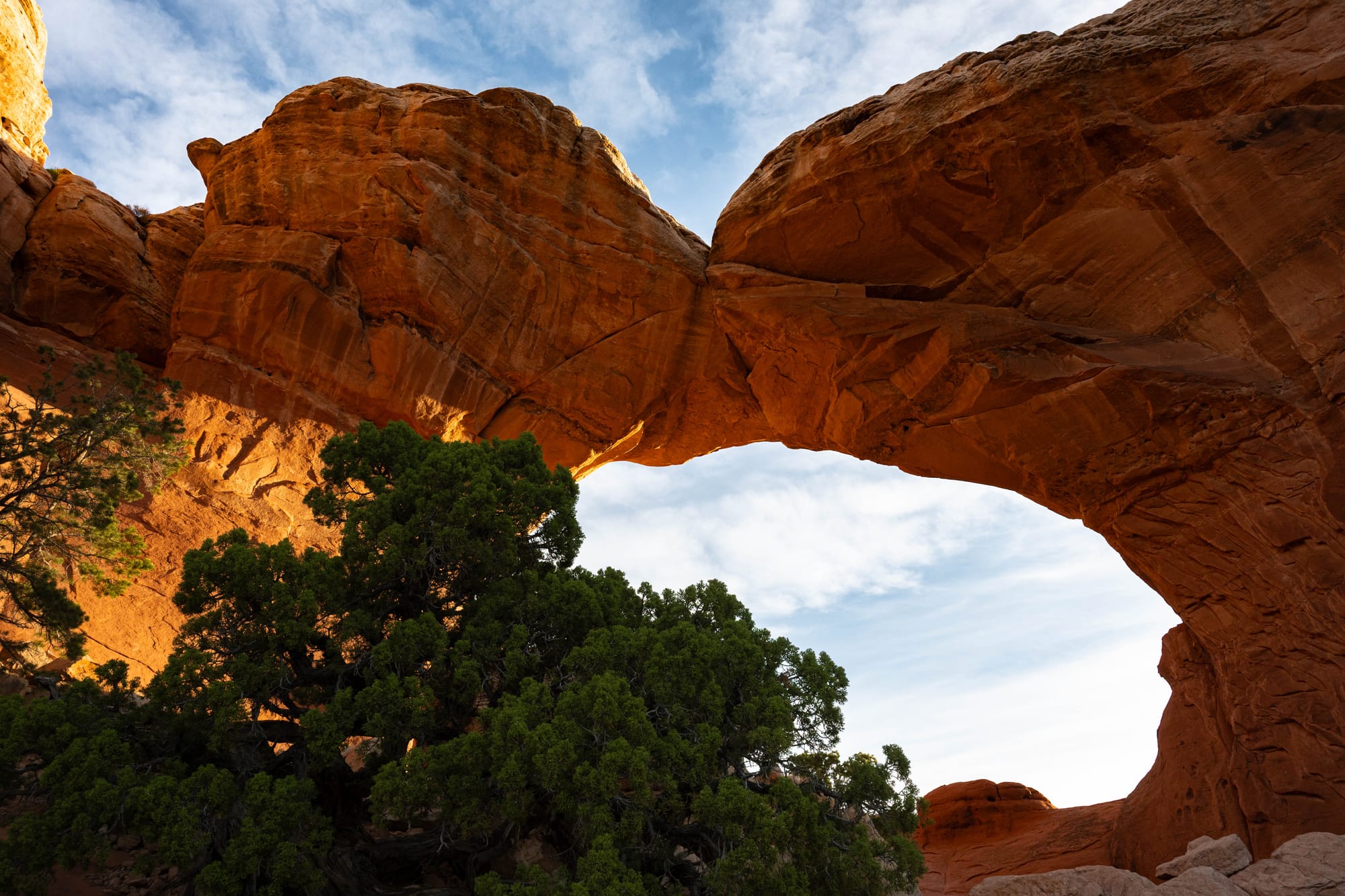
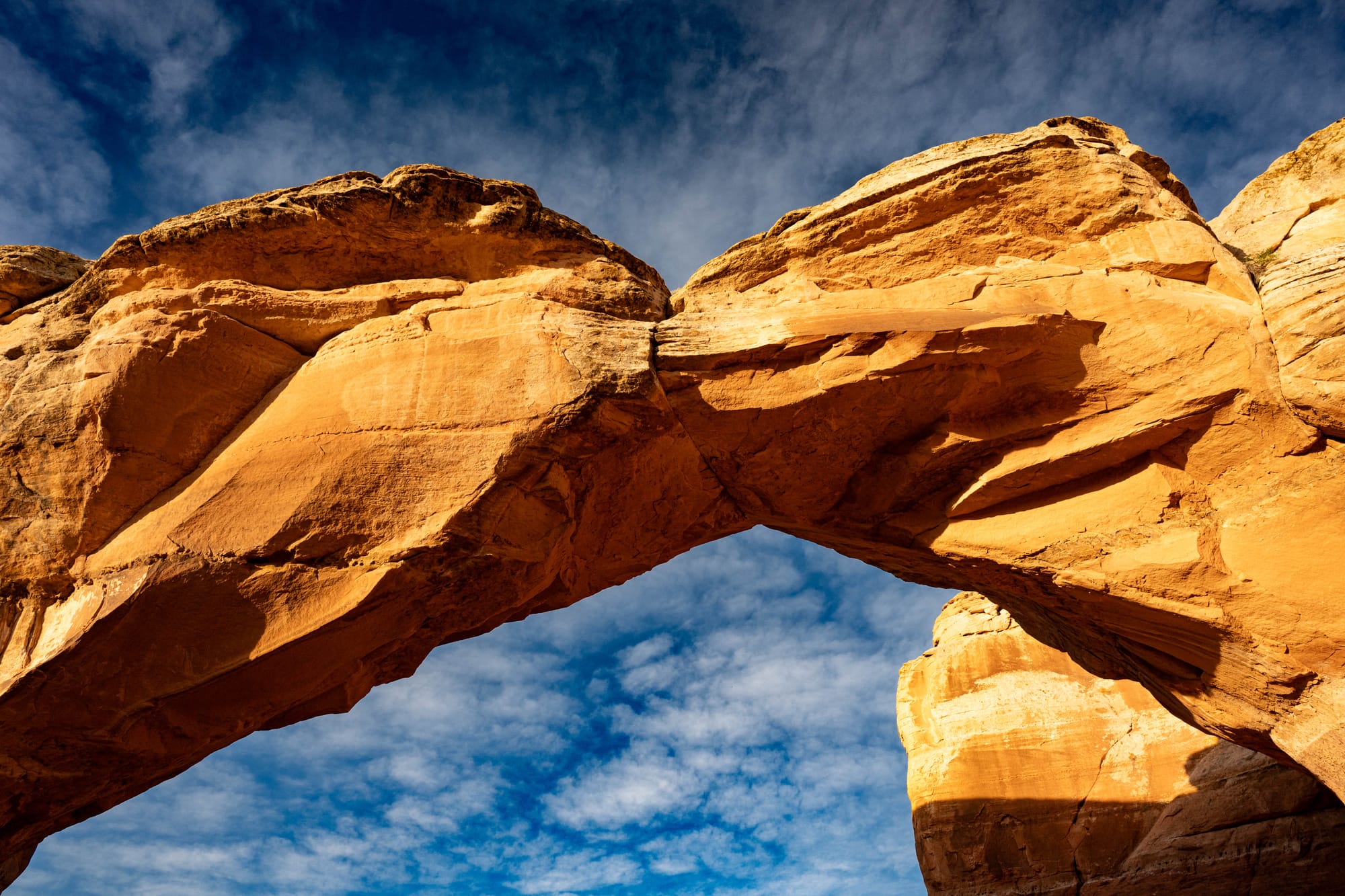
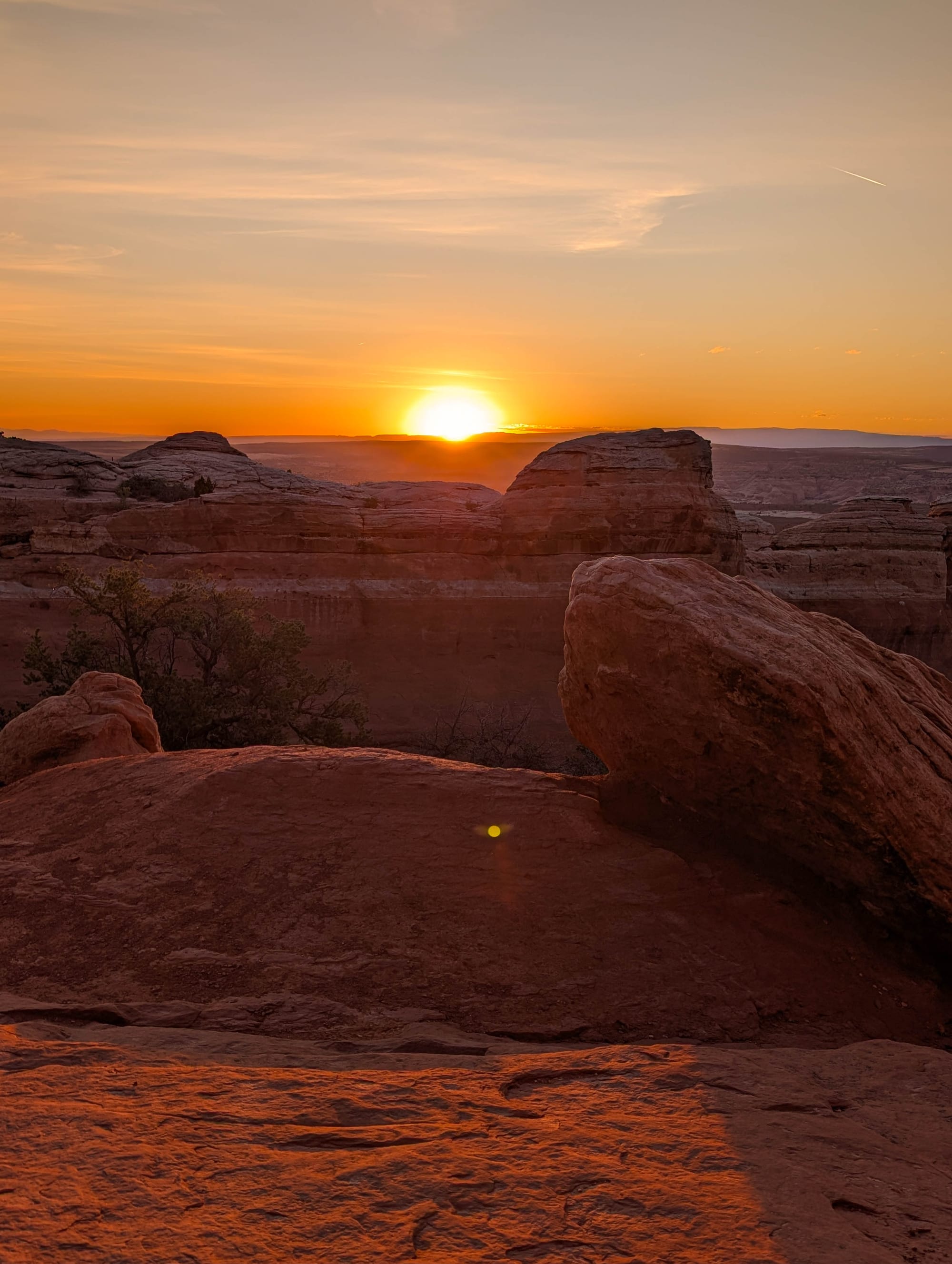
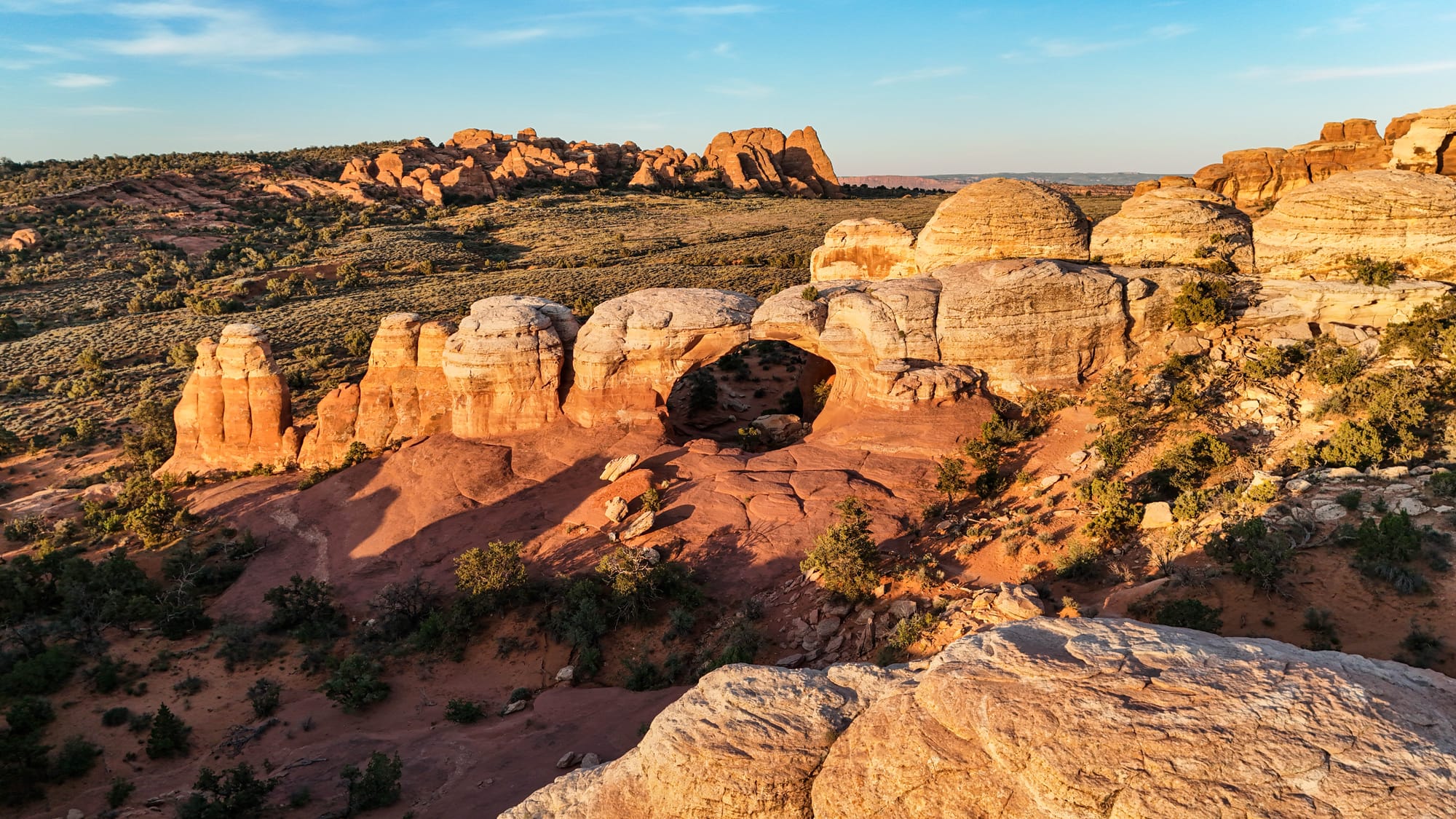
Broken Arch at sunrise
The Famous Ones Still Work
The famous formations in Arches have a harder job.
They have to survive their own reputation.
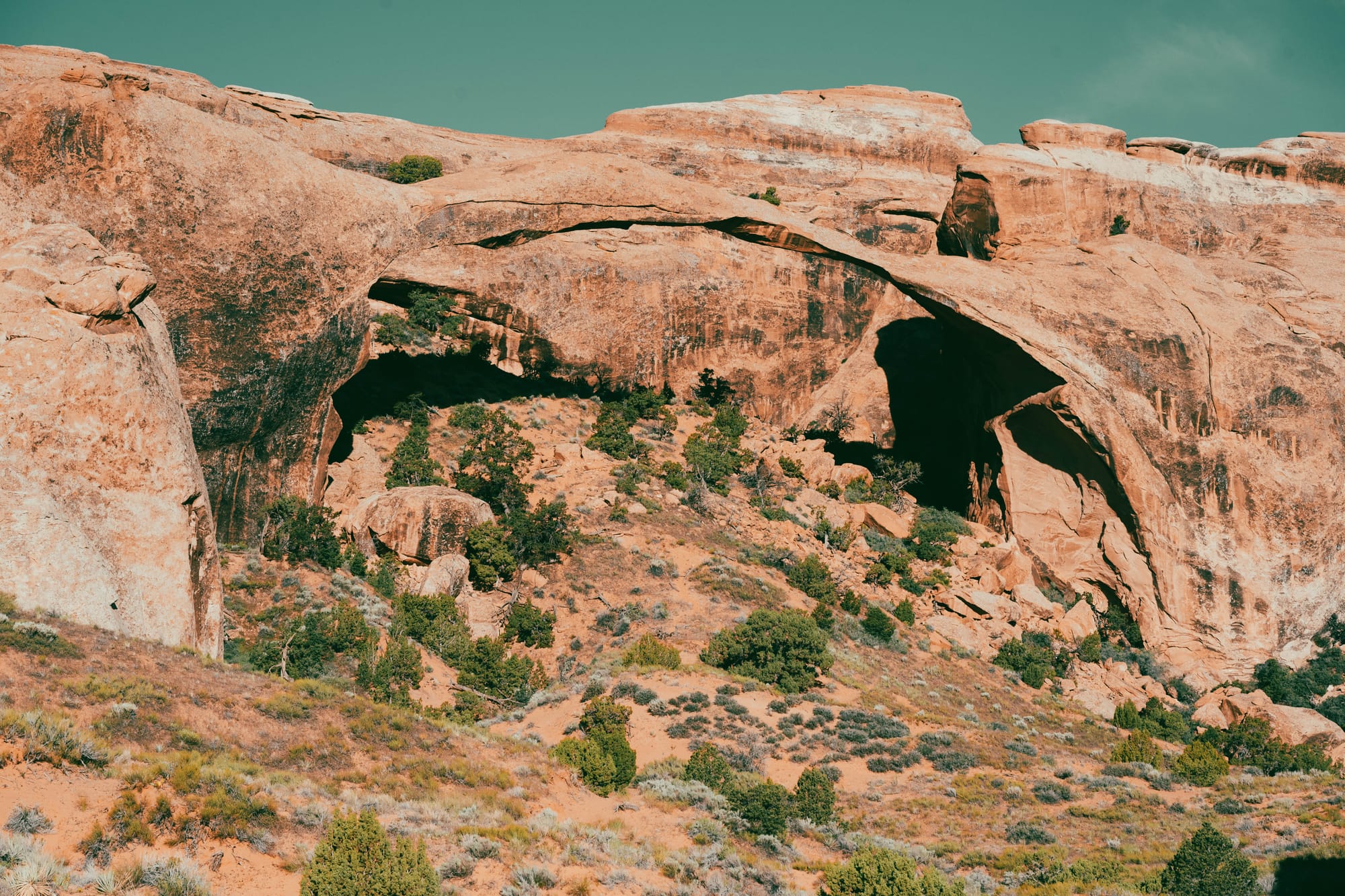
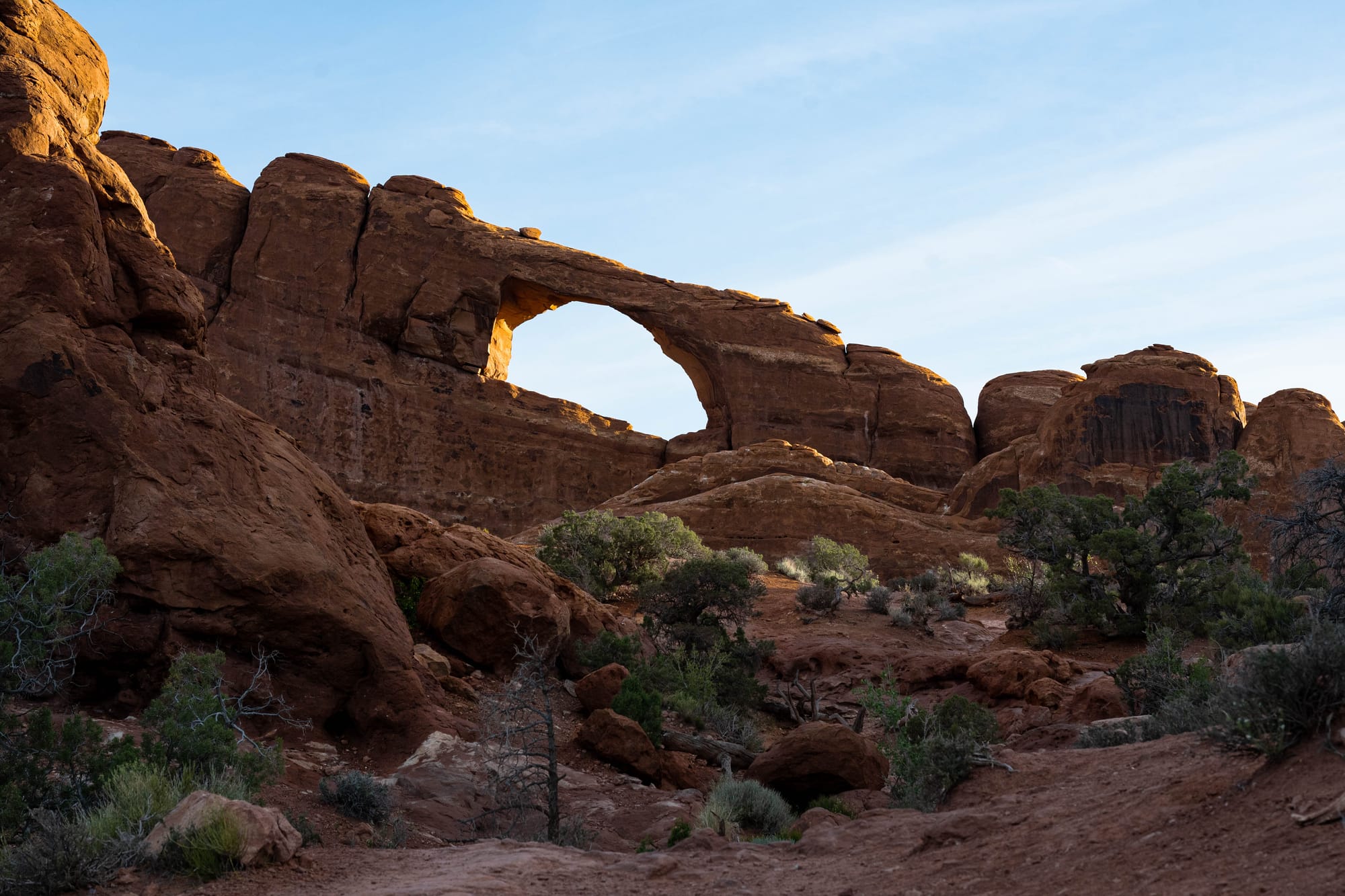
Landscape Arch is one of those places. The span is long, thin, and almost unbelievable in person. It looks less like something that should still be standing and more like a reminder that everything here is temporary. Arches may be made of stone, but the park is not fixed. The same forces that created these openings are still widening cracks, loosening blocks, and pulling pieces down.
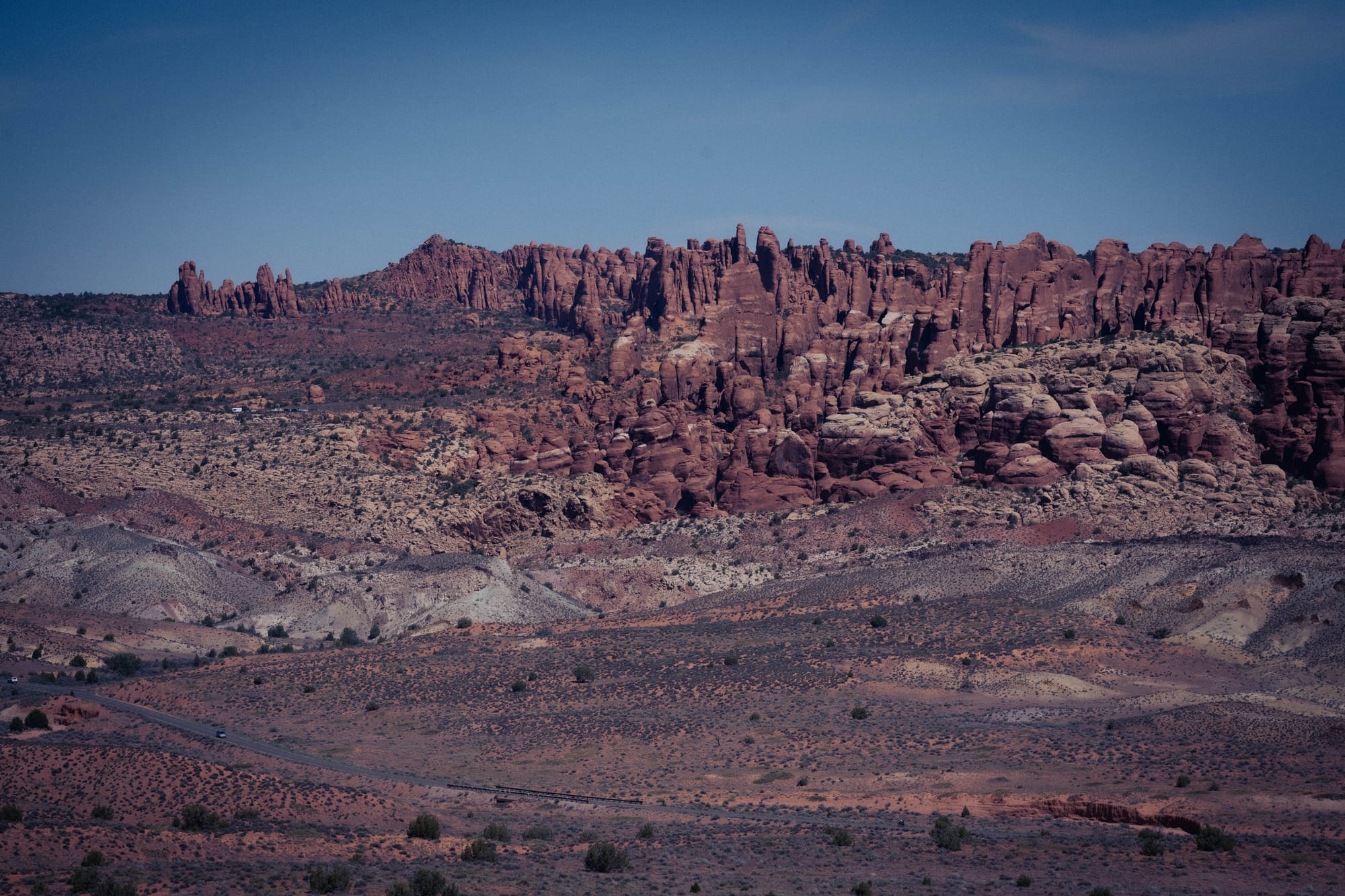
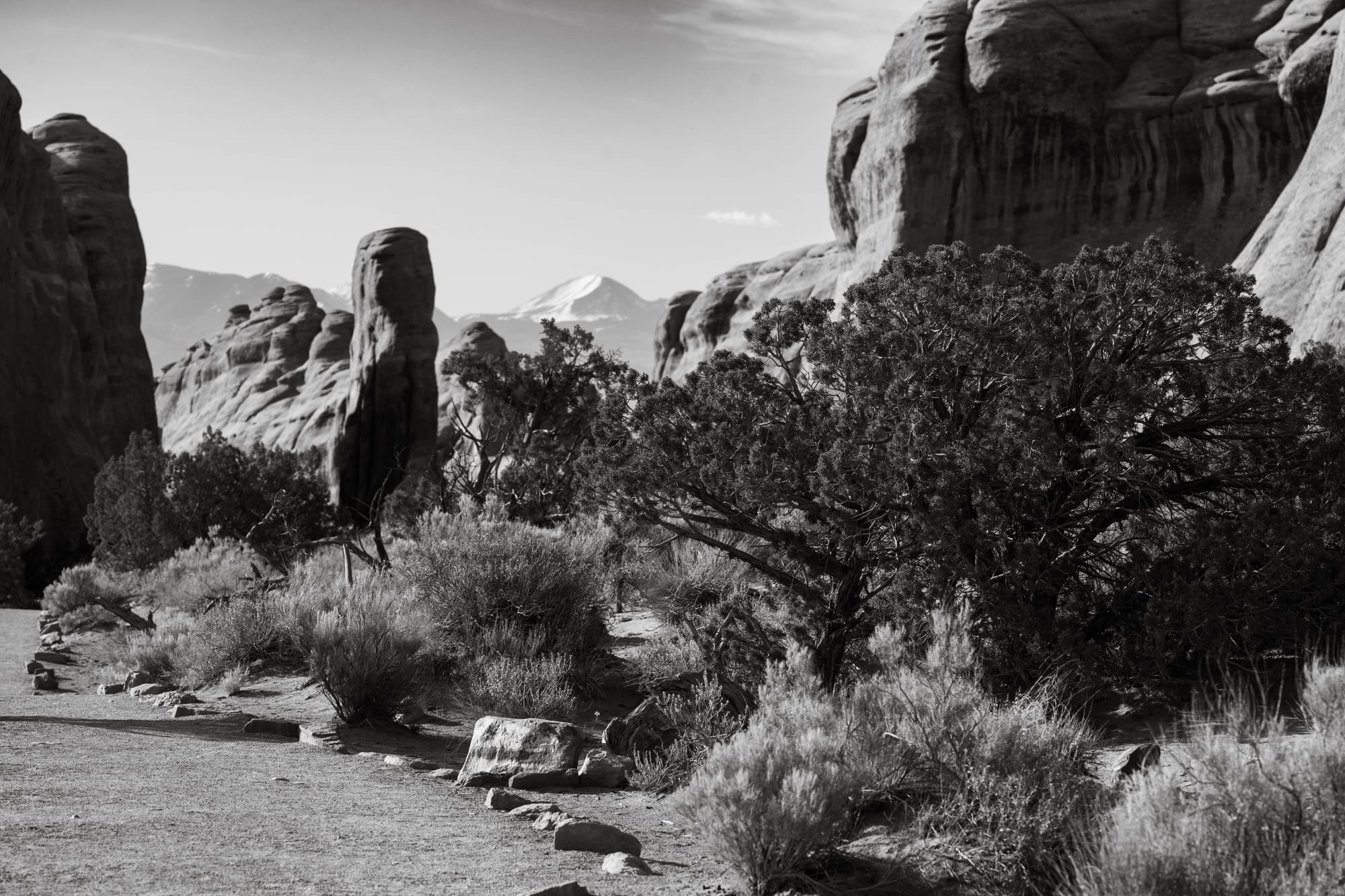
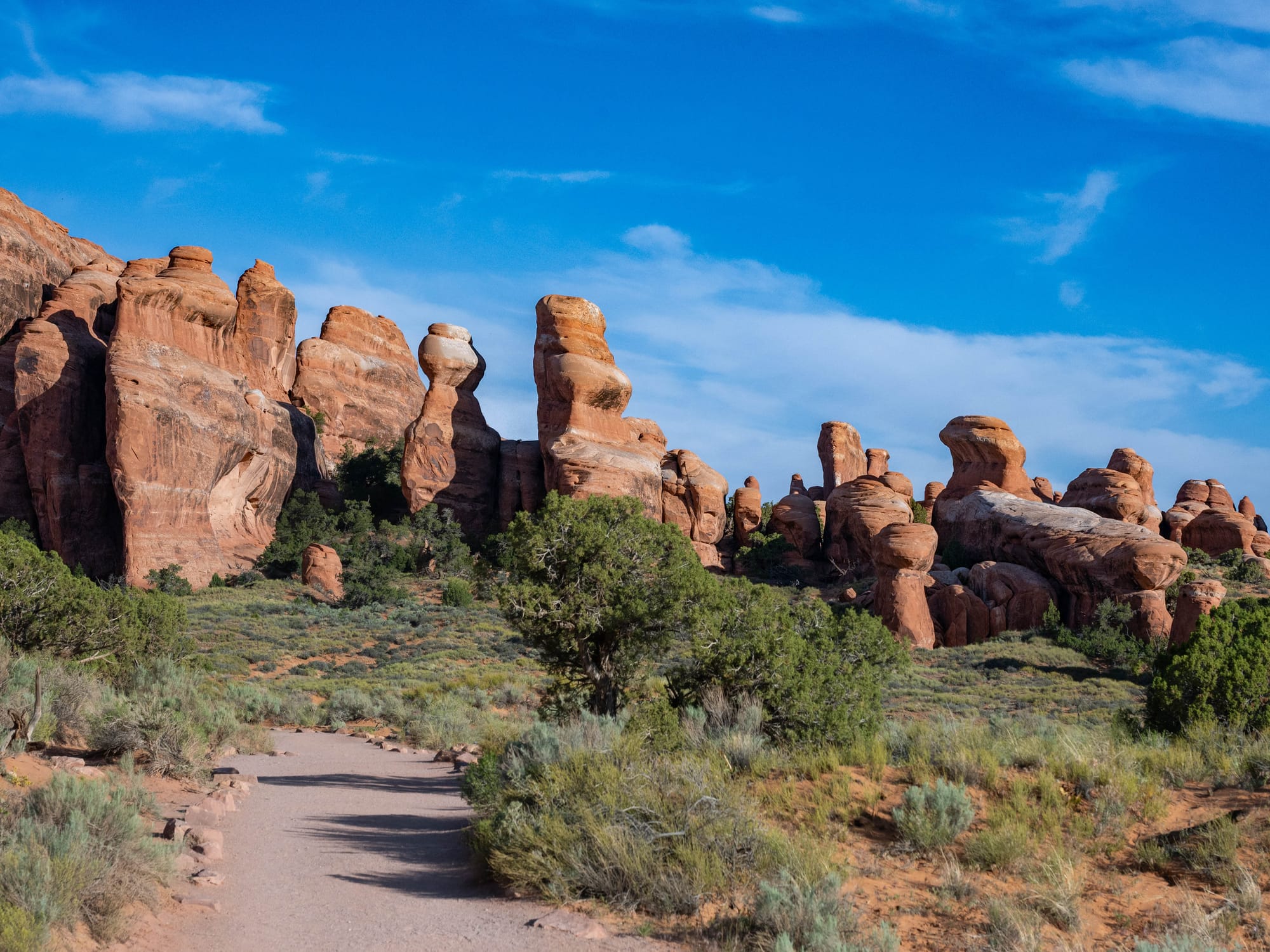
That is part of what makes Devil’s Garden interesting. You can see the process more clearly there: fins, narrow walls, openings, arches, and collapse all living close together. The park stops feeling like a collection of finished objects and starts feeling like a landscape still in progress.
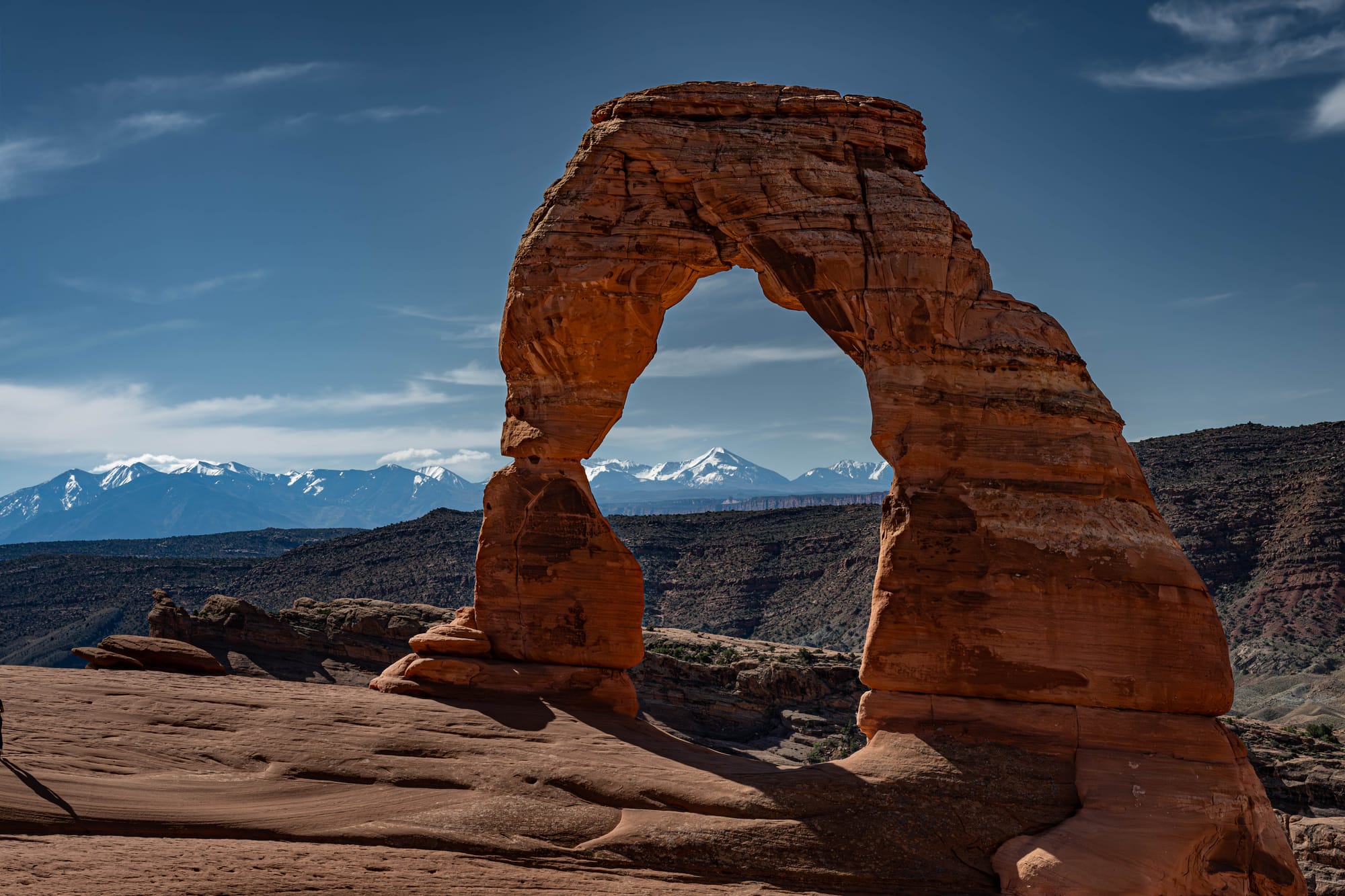
Delicate Arch is different.
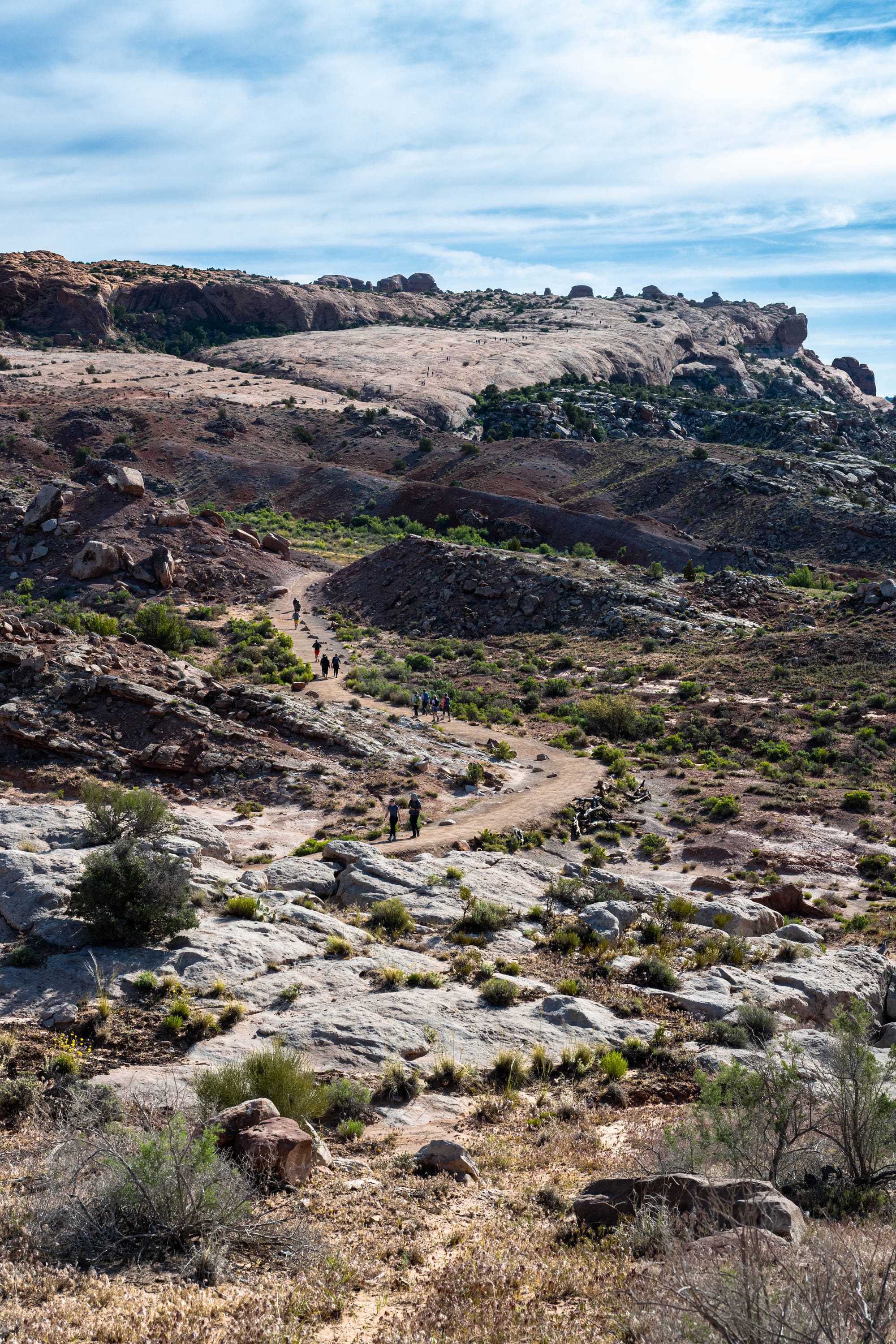
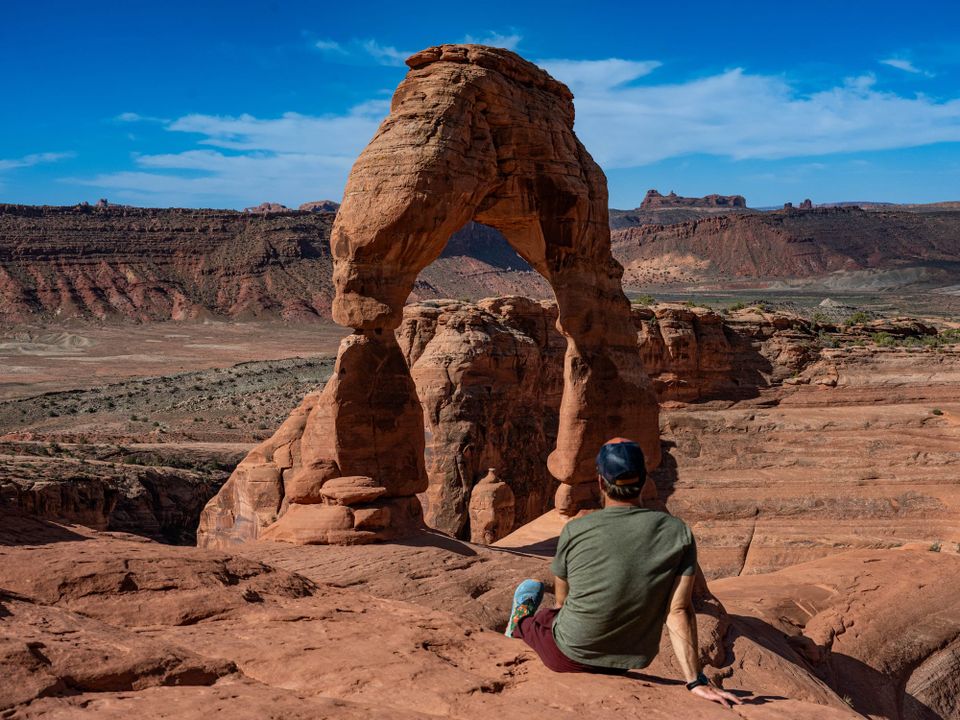
For most of the hike, you cannot see what you are walking toward. The arch stays hidden until the very end. Then the trail rounds the final section, the bowl opens, and there it is: freestanding, balanced, exposed, and somehow exactly as good as its reputation.
After seeing the arch on signs, license plates, and postcards, it would be easy for the real thing to feel overdone.
It does not.
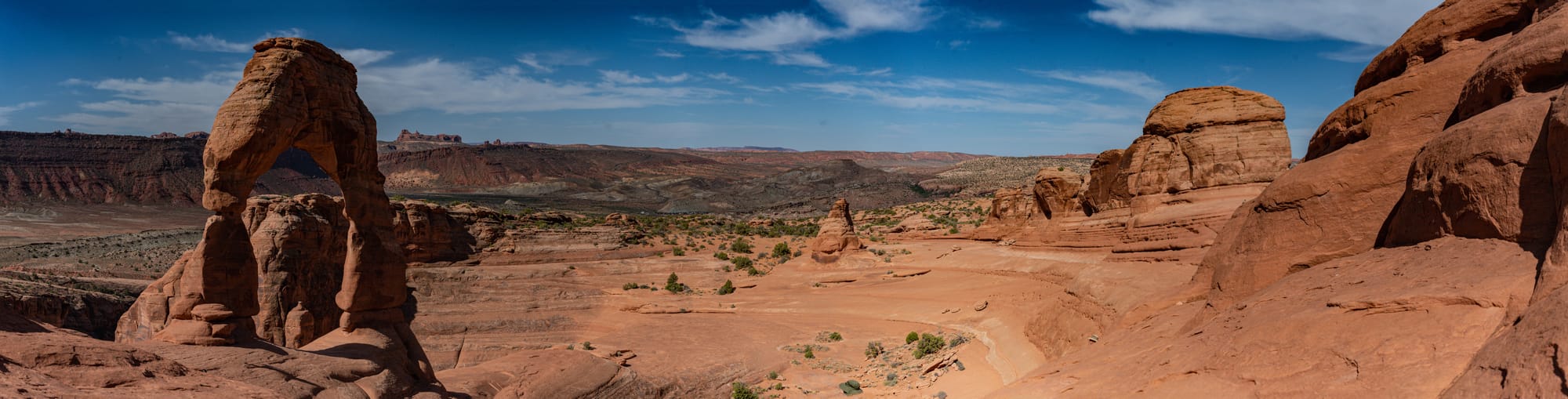
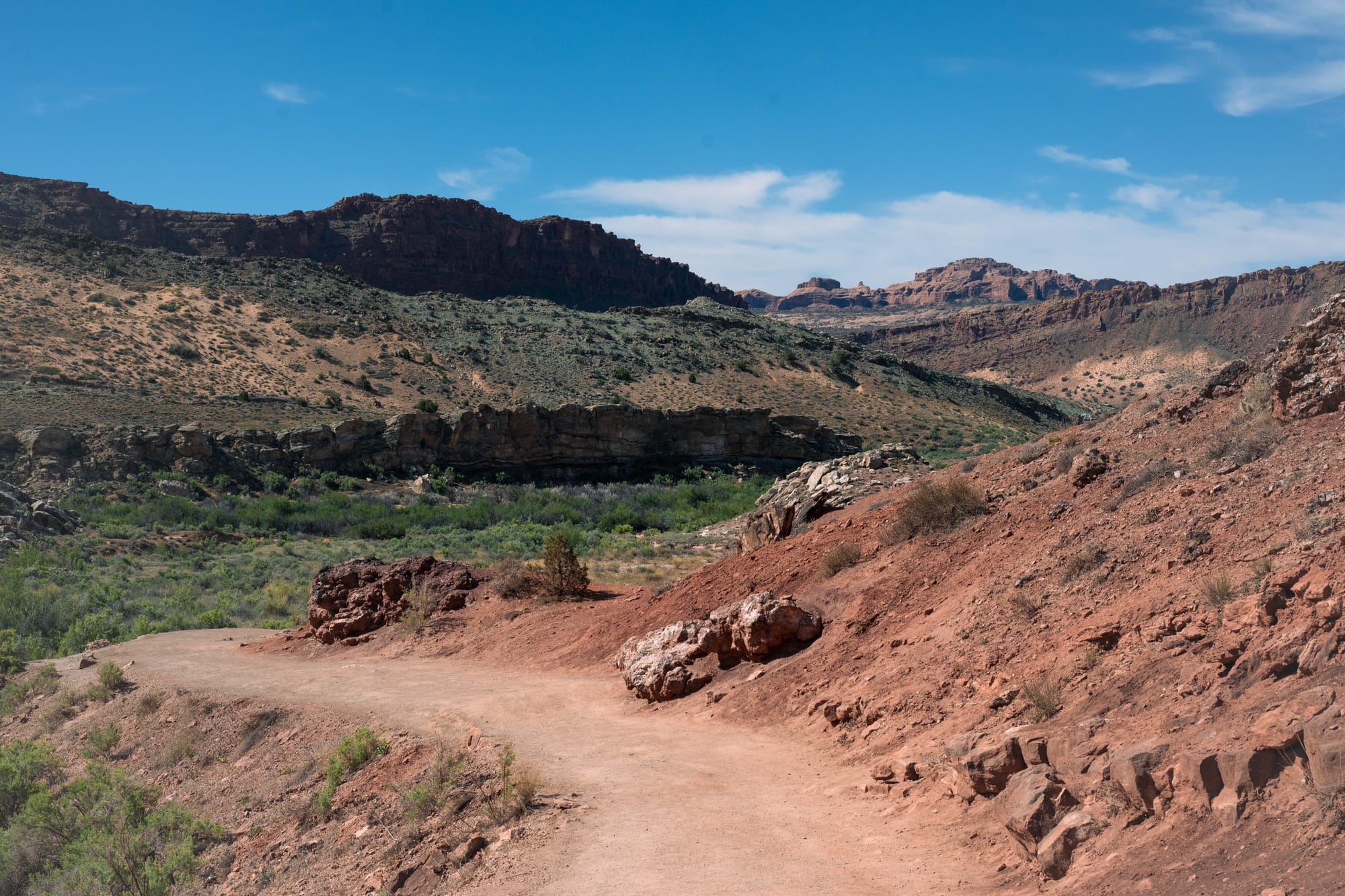
The crowd was real. There were plenty of people at the top, and the trail had a mix of hikers and people who looked like they may not hike much outside of this one famous route. In hotter conditions, that trail would be a very different experience. It is not technically difficult, but it is exposed, and the sun would make it harder fast.
What surprised me was how orderly the scene was at the arch itself. A small line had formed for photos underneath it, and people were patiently taking turns. I skipped the line, climbed a little higher, and set up my tripod from above so I could photograph the arch without making the crowd the subject.
Delicate Arch is famous because the reveal still works. It stands alone in a way that feels both fragile and confident, with the surrounding bowl dropping away behind it.
Arches can be crowded and still be worth it. Those two things are both true.
The Park at Golden Hour
Our last visit to Arches was the one Sam and I did together.
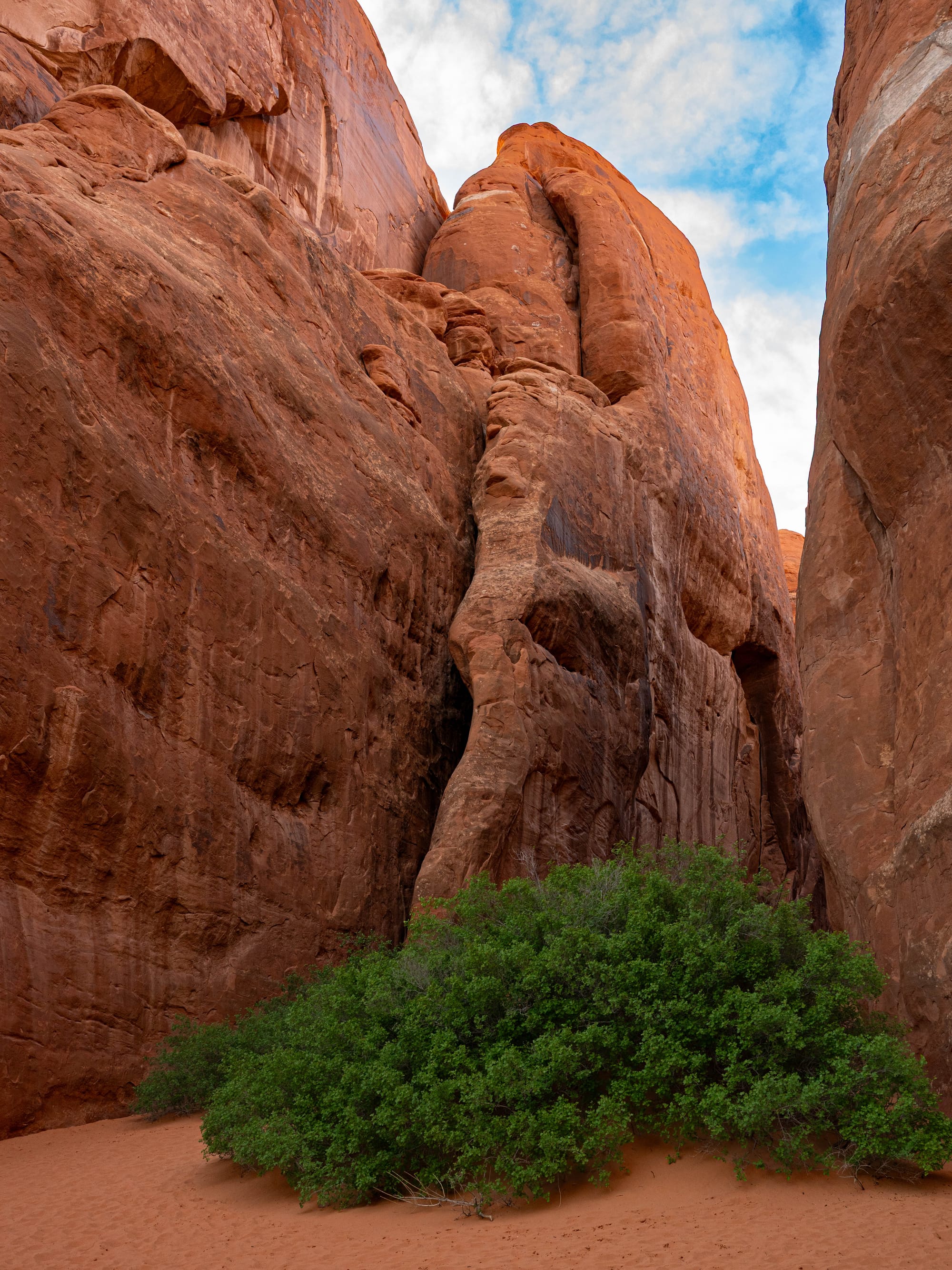
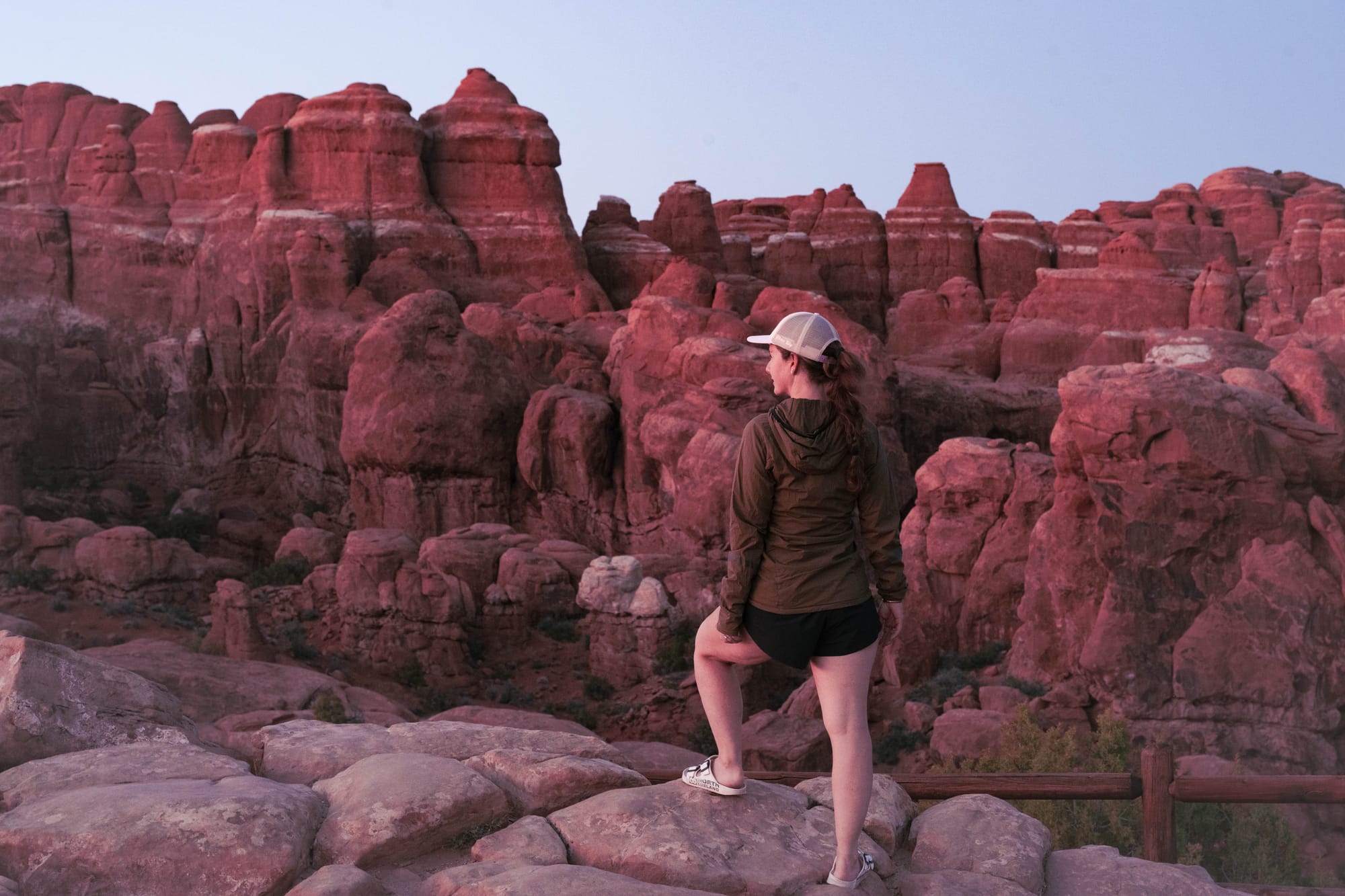
We went in before sunset and moved slower. Park Avenue was first, and it felt like a different kind of introduction. No arch required. Just walls, towers, shadow, and scale.
That section is a good reminder that Arches is not only about openings in rock. Some of the strongest formations are solid: fins, cliffs, balanced shapes, and sandstone corridors that feel almost built.
From there, we went to The Windows.
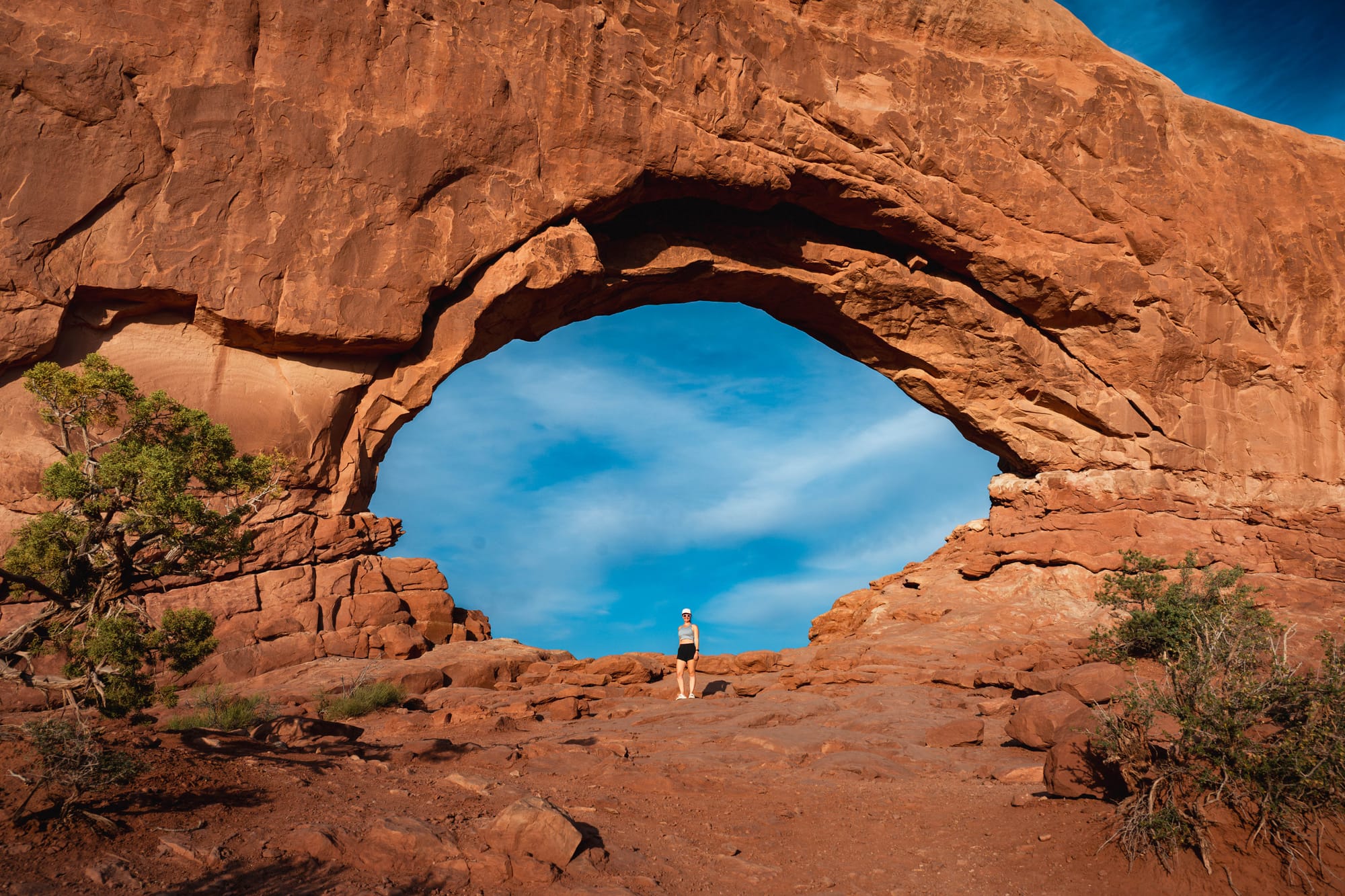
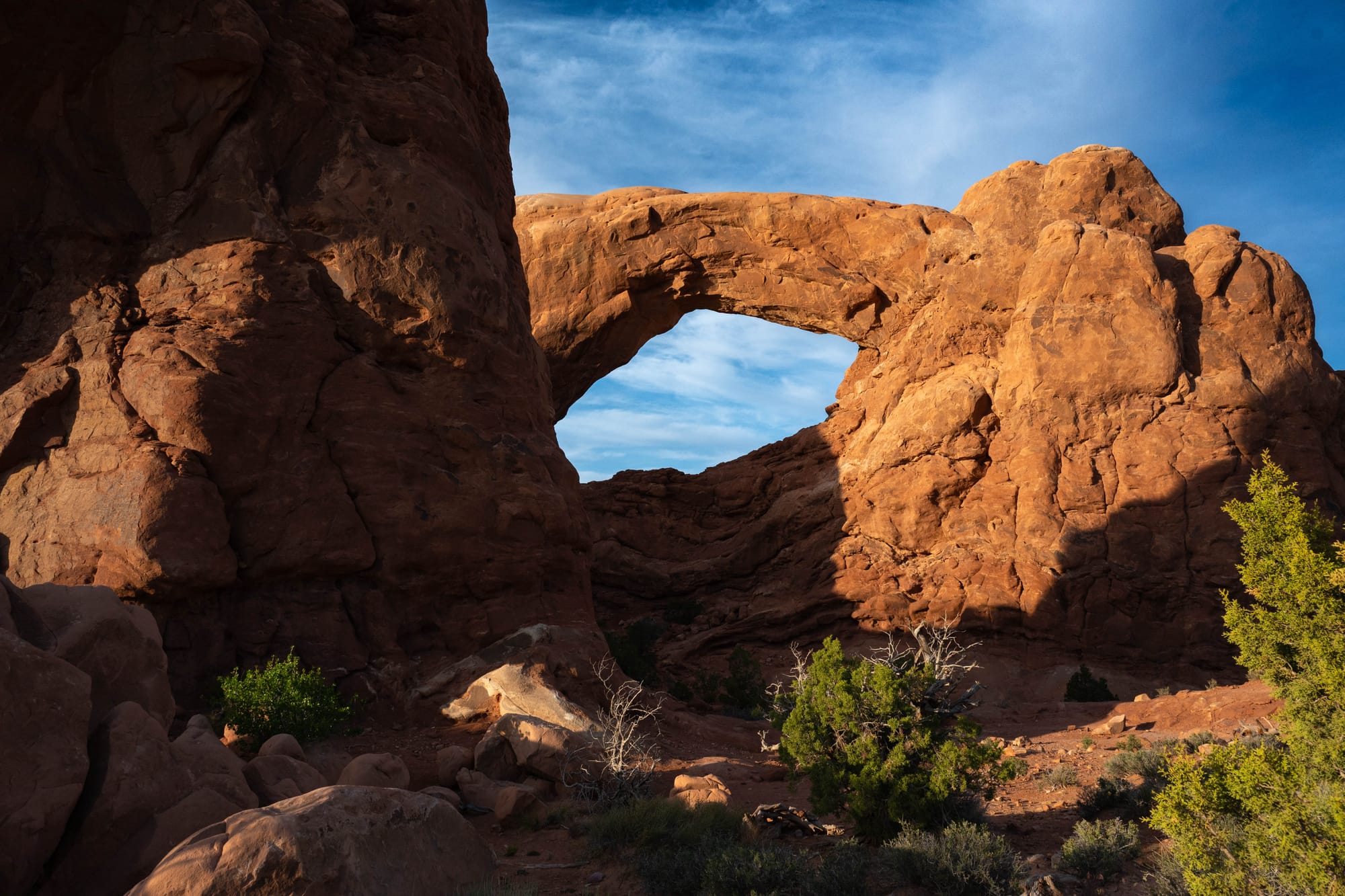
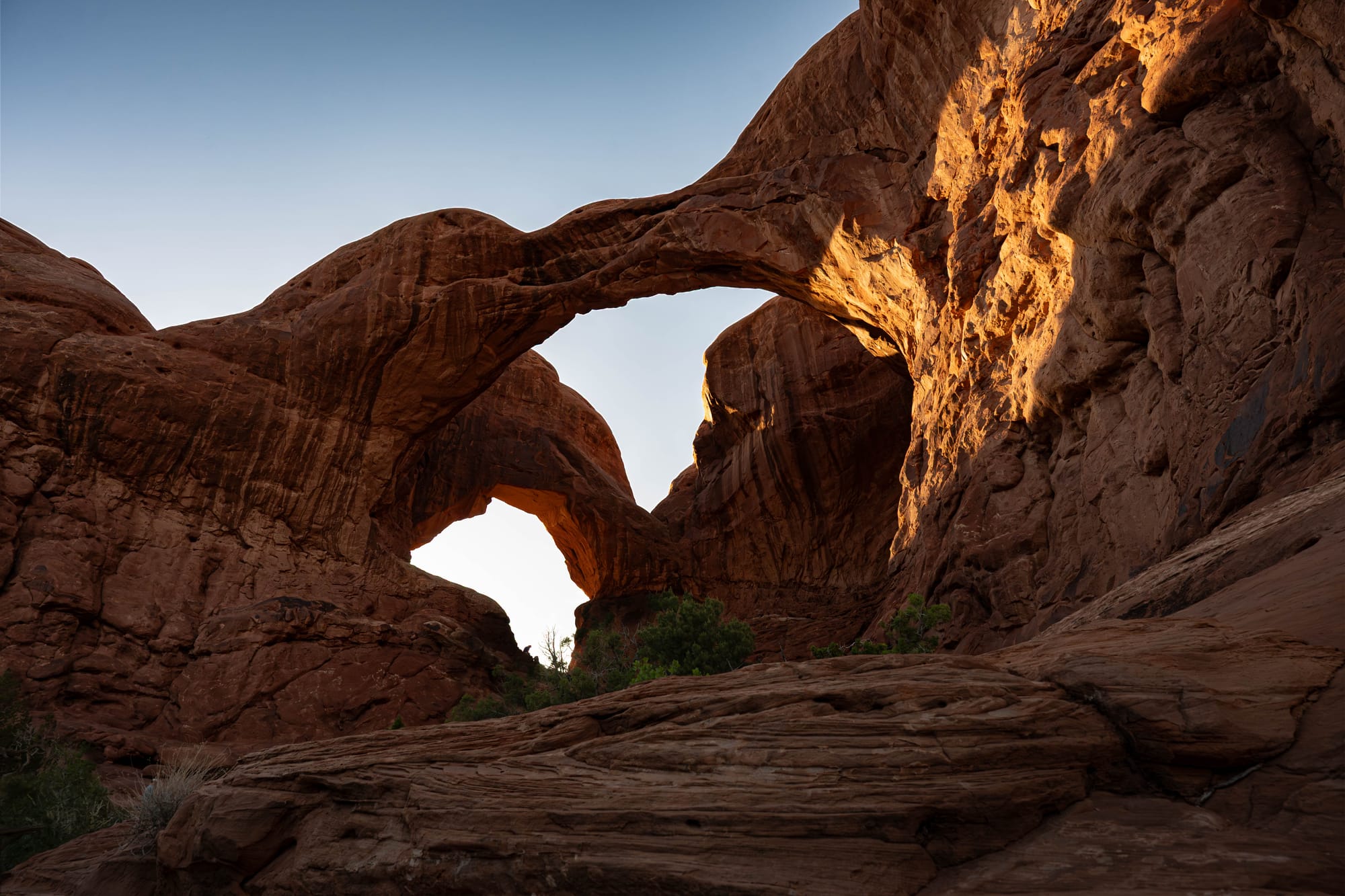
The Windows section is one of the easiest parts of the park to appreciate quickly. North Window, South Window, and Double Arch are close enough to explore without a long hike, but the formations are massive enough to hold your attention.
This was the right place to watch the day finish.
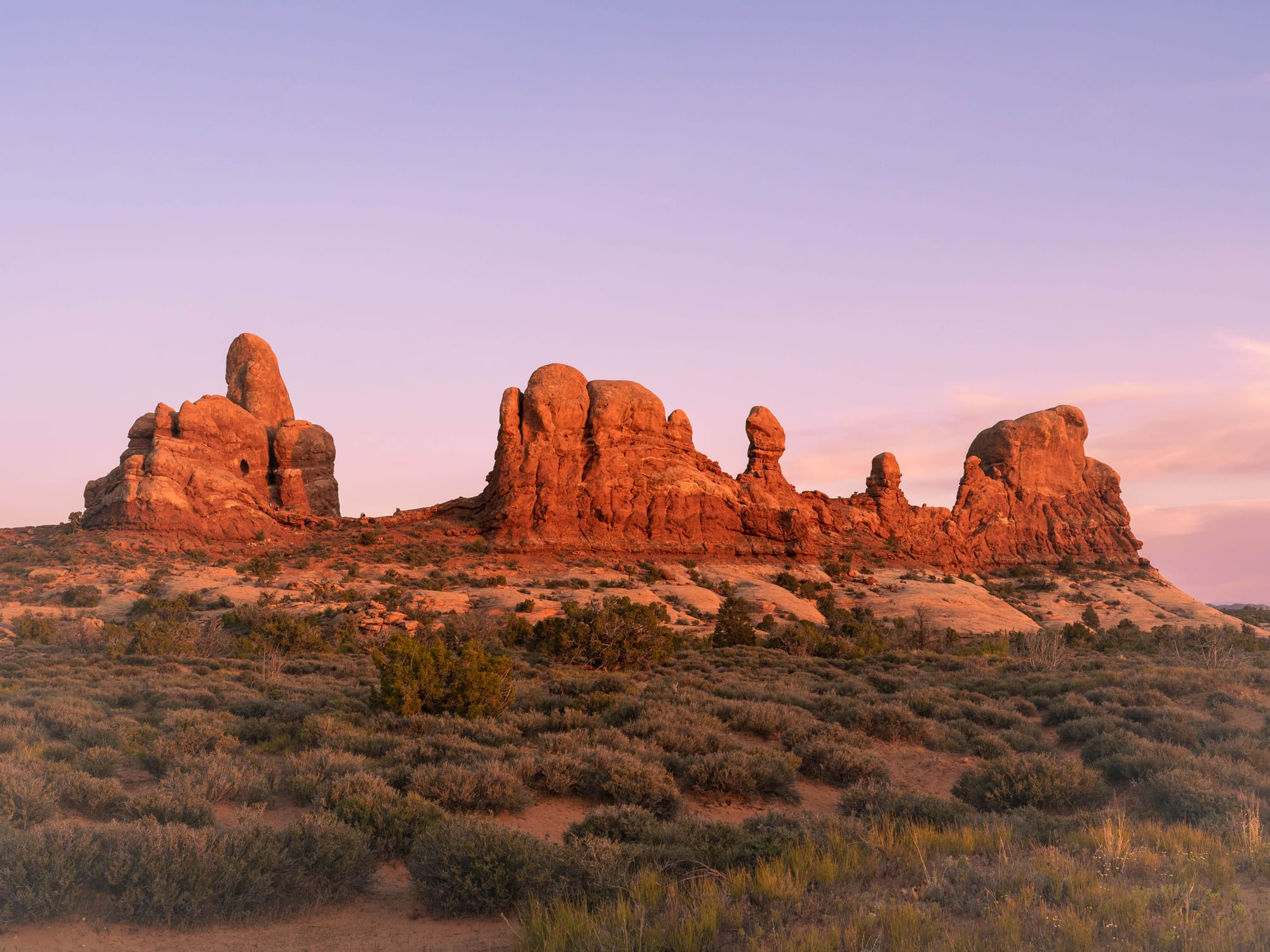
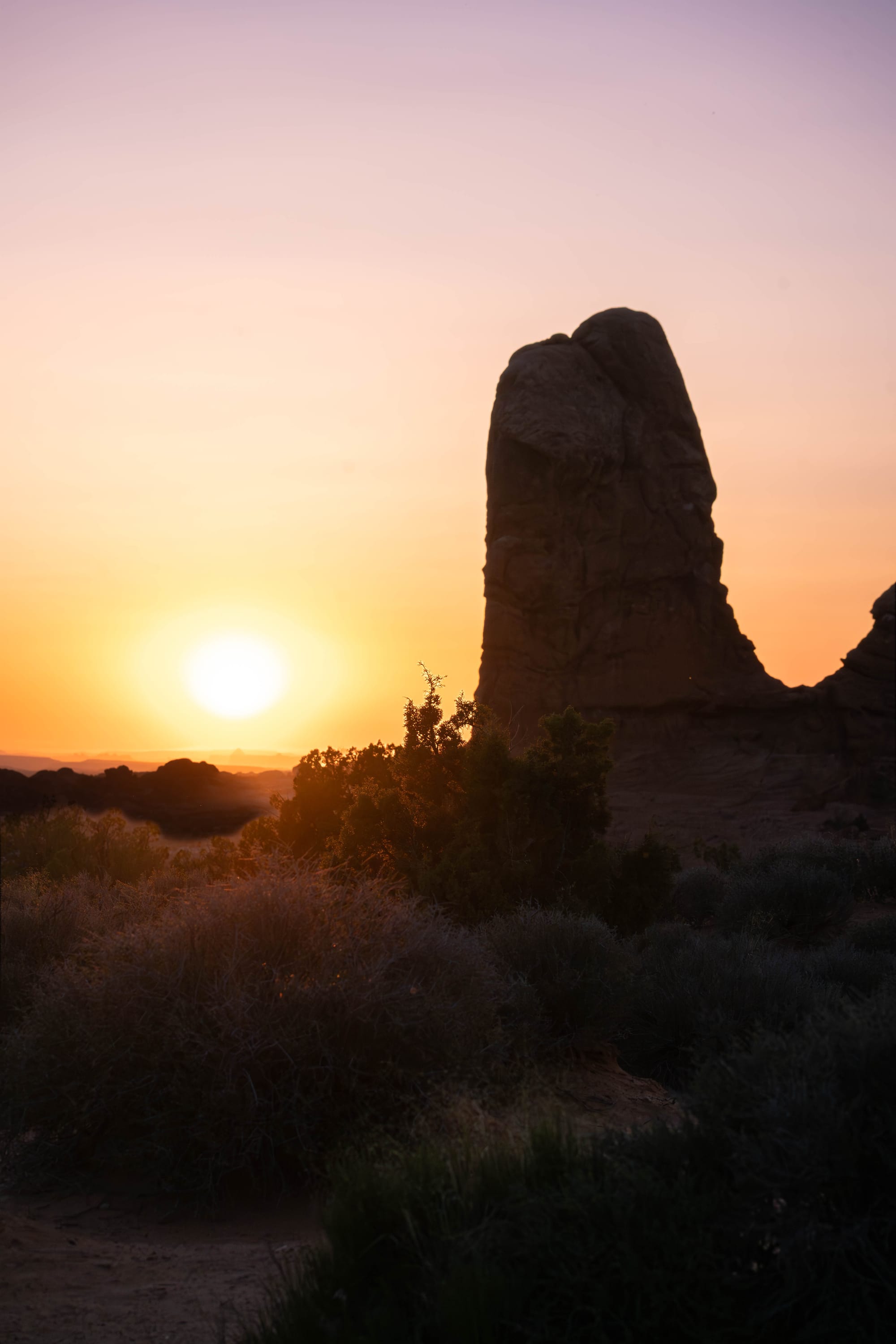
Evening light gave the area more depth. The rock kept shifting color as the sun dropped. Elephant Butte caught the last light nearby. Double Arch felt less like a stop and more like a room carved out of stone.
That was the version of Arches I was glad Sam got to see.
Not the rushed version. Not the checklist version. Just enough walking, enough waiting, and enough light to let the formations change in front of us.
Abbey’s Arches
During our Moab stay, we stopped at the local bookstore and I picked up Desert Solitaire by Edward Abbey.
It was the right book to buy there.
Abbey worked as a seasonal ranger at Arches in the 1950s, when it was still Arches National Monument. His book comes out of that experience, before the park became what it is now: paved roads, heavy visitation, crowded trailheads, and icons known around the world.
I have been enjoying the book, especially the way Abbey wrestles with industrial tourism. He was suspicious of making wild places too convenient, too road-bound, and too easy to consume from inside a car.
That tension is hard to ignore in Arches.
It would be too easy to read Abbey and pretend we are above the problem. We drove the roads. We used the pullouts. We parked at the trailheads. We benefited from the same access he worried about.
But that is what made the book land harder.
Arches is beautiful enough to draw people in, and fragile enough to make you wonder what our presence costs. The roads make sunrise at Broken Arch possible. They also bring crowds to Delicate Arch. The overlooks let more people see the park. They also change how the park is experienced.
There is no clean answer in that.
There is only the responsibility to notice the tension and move through the place with a little more care.
⚡ TL;DR
- Park highlight: Broken Arch at sunrise and Delicate Arch finally revealing itself at the end of the trail
- Best for: Iconic formations, sunrise and sunset photography, short hikes, and red rock geology
- Skip if: You don't like rocks
- Worth planning around?: Yes
Final Takeaways
Arches is one of those parks that is easy to think you already understand.
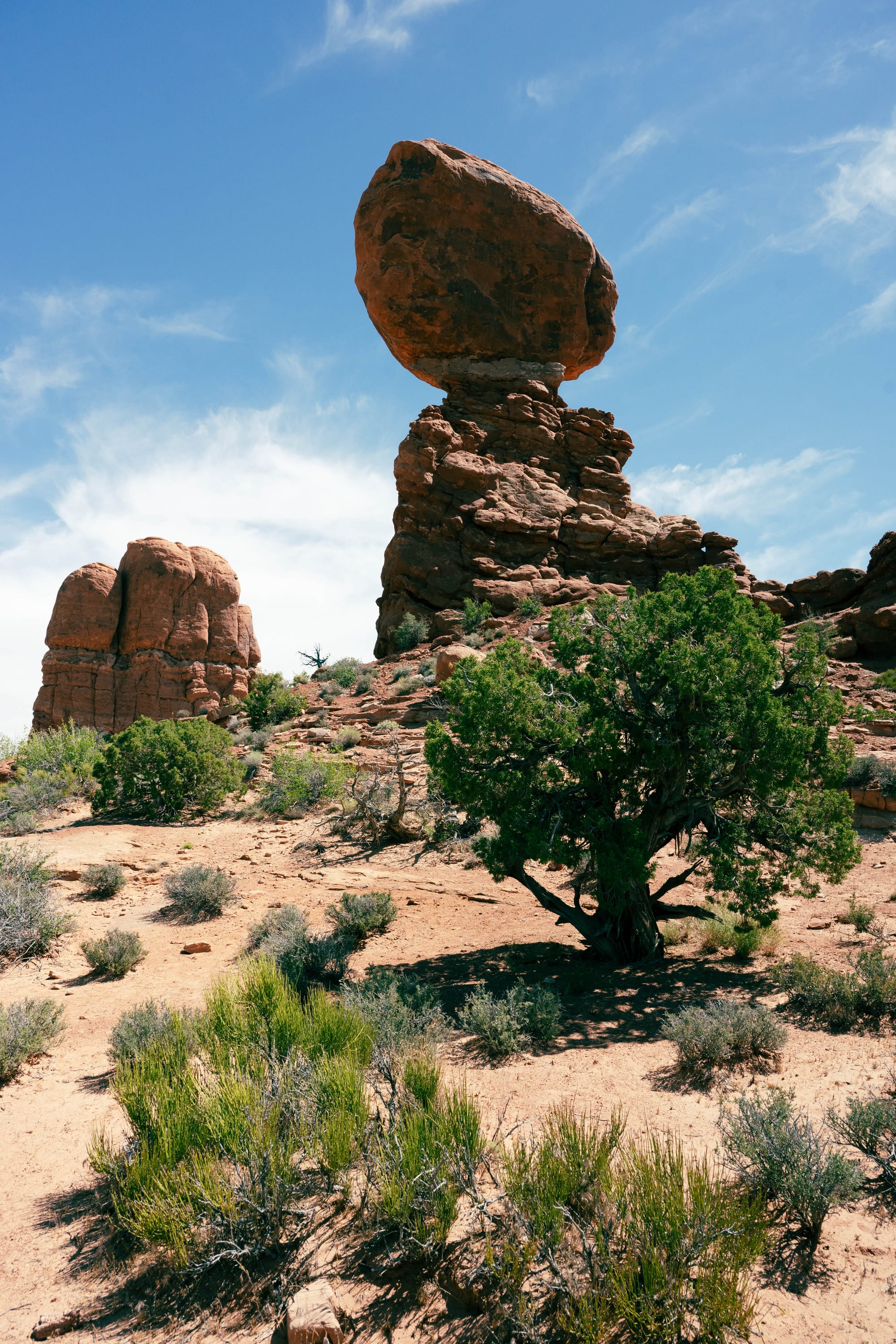
The photos are everywhere. Delicate Arch is on license plates, postcards, and guidebooks. The Windows, Balanced Rock, Park Avenue, and Devil’s Garden all have that familiar red rock look before you even arrive.
But the park still works in person.
It works because the light keeps changing. It works because some formations stay hidden until the last turn. It works because the same arch can feel completely different before sunrise, in the middle of the day, and near sunset.
We saw enough to understand why Arches is famous, but not enough to feel finished with it.
Sam still needs to see Delicate Arch. I want more time for night sky and star photography. We would both like to do longer hikes, spend more time in Devil’s Garden, and eventually explore Fiery Furnace. There is too much here to treat one busy day, or even three separate visits, as complete.
Arches is crowded, famous, and photographed constantly.
It is also still better in person than it has any right to be.