Collegiate West | Four Days Above Treeline
Collegiate West began as a five-day hike for three people.
By the second morning, the plan changed.
Slow struggled through the first day with stomach problems, little appetite, and declining energy. We still covered close to 15 miles, but by 5 a.m. the following morning, it was clear that continuing north was not the right decision for him.
He turned back toward Route 50 and began working his way toward a clinic and a hostel.
The diagnosis later confirmed giardiasis.
Steady and I continued north without him. Rather than maintain the original 14- to 15-mile pace, we decided to cover the rest of the route in three larger days.
So our trek along the Collegiate West became a four-day hike.
🧭 Lay of the Land
- Location: Western Sawatch Range, Colorado
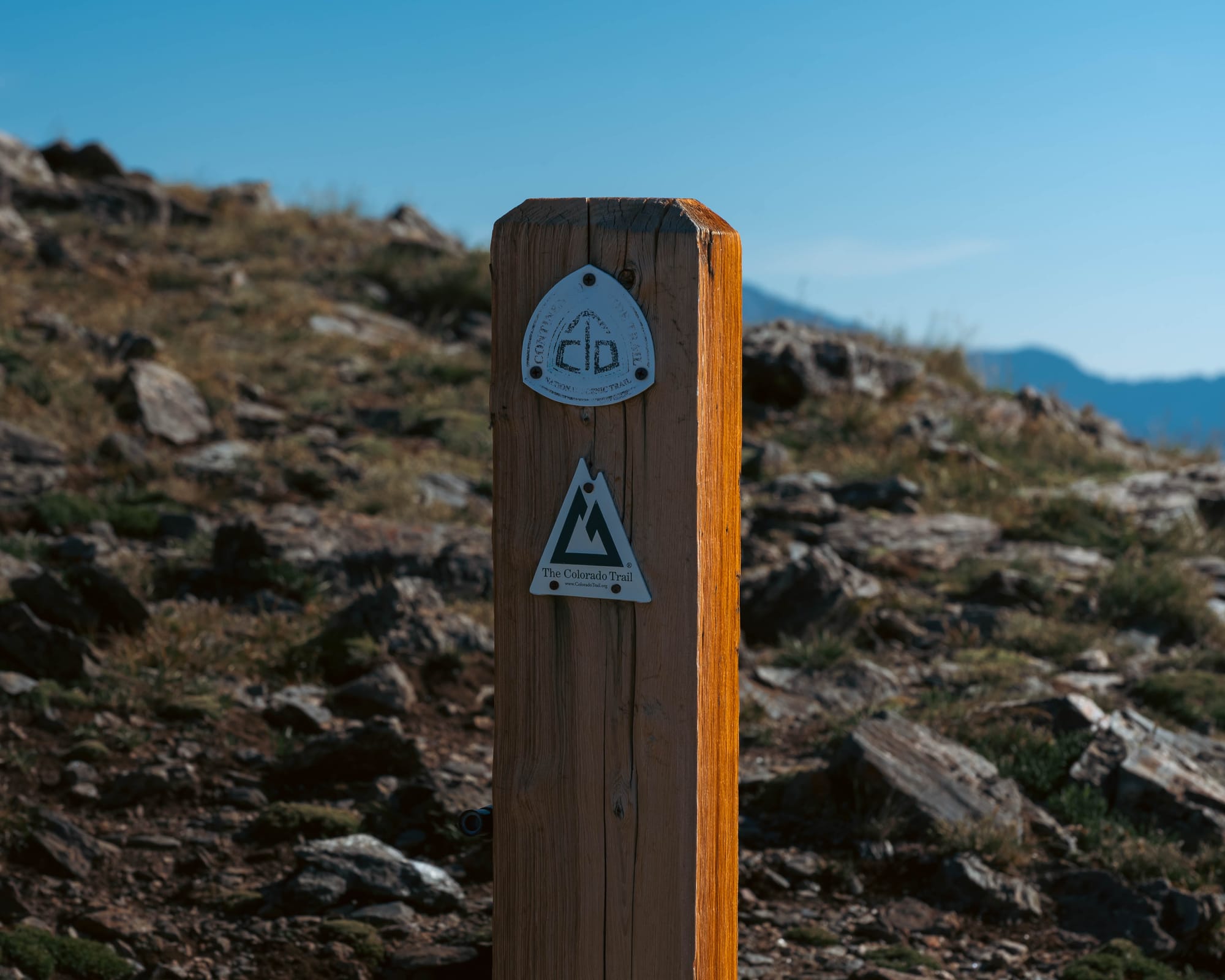
- Route: Collegiate West · Continental Divide Trail
- Direction: Northbound
- Recorded distance: 78.71 miles
- Elevation gained: 17,415 feet
- Recorded moving time: 30:13:08
- Time on trail: 4 days
- Dates: July 31–August 3, 2026
The Western Side of the Sawatch
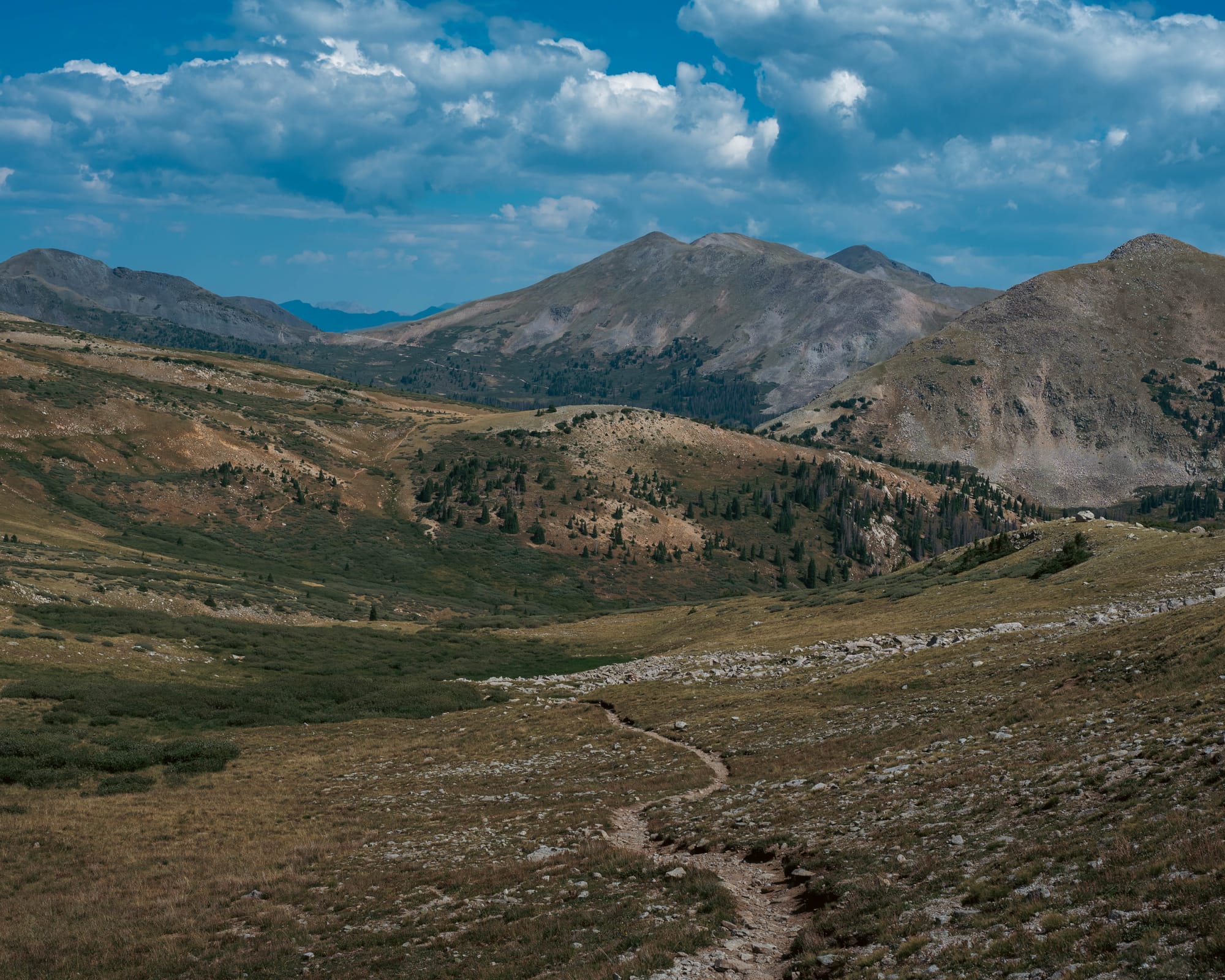
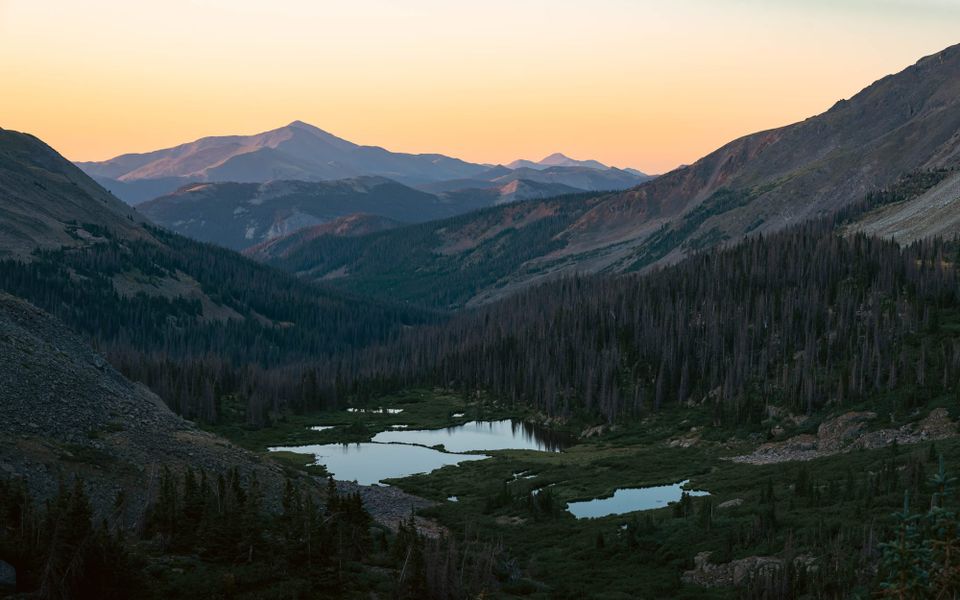
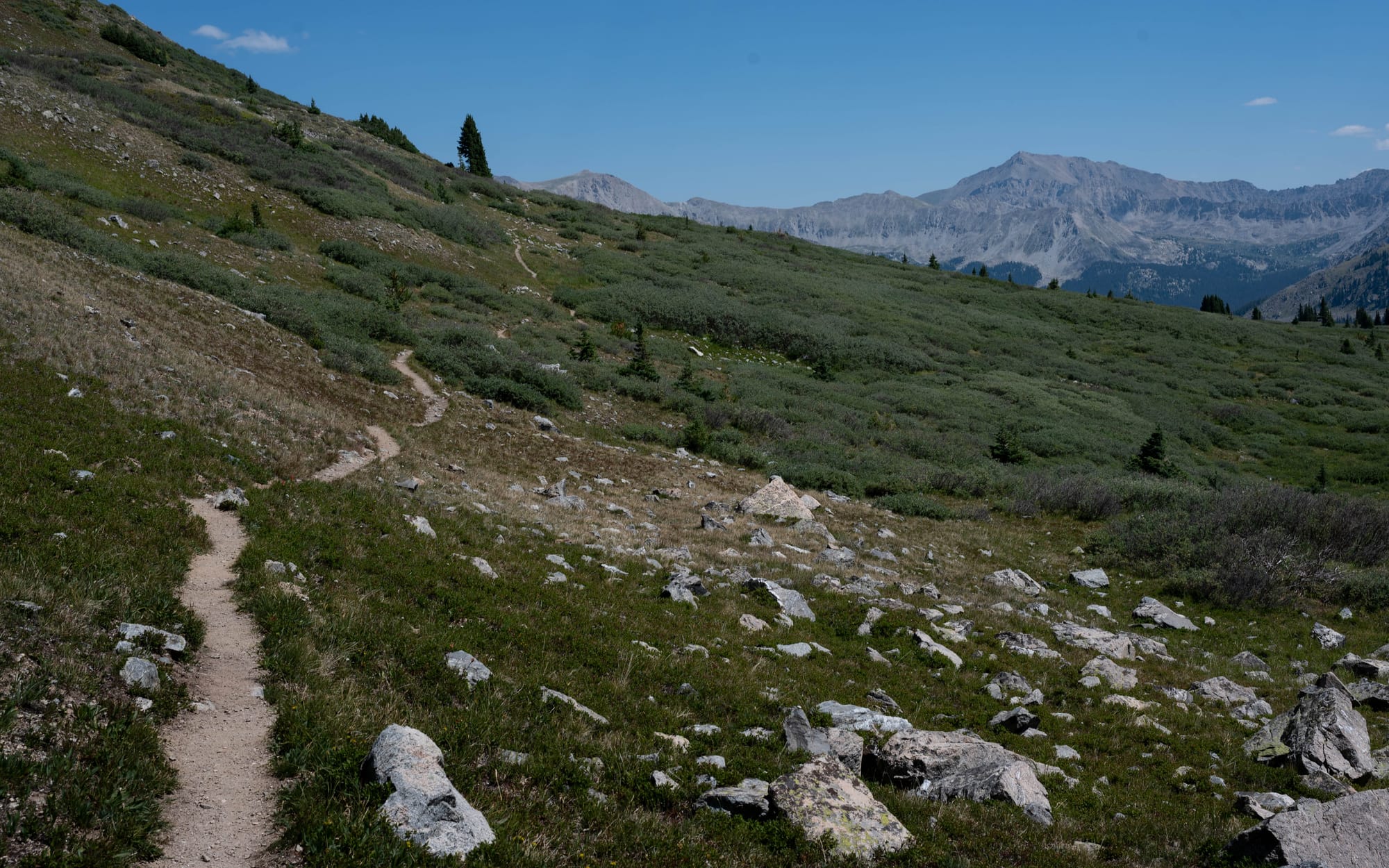
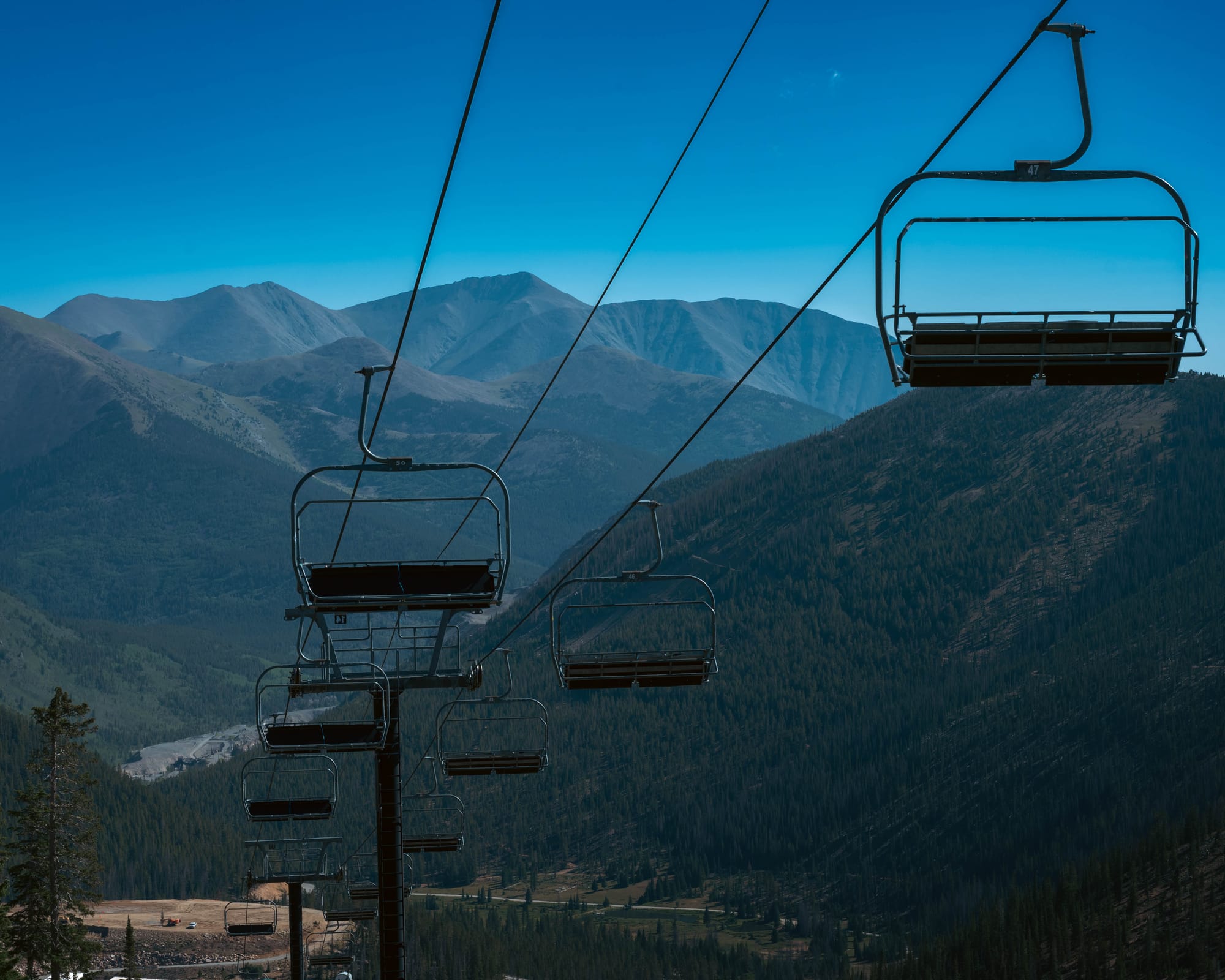
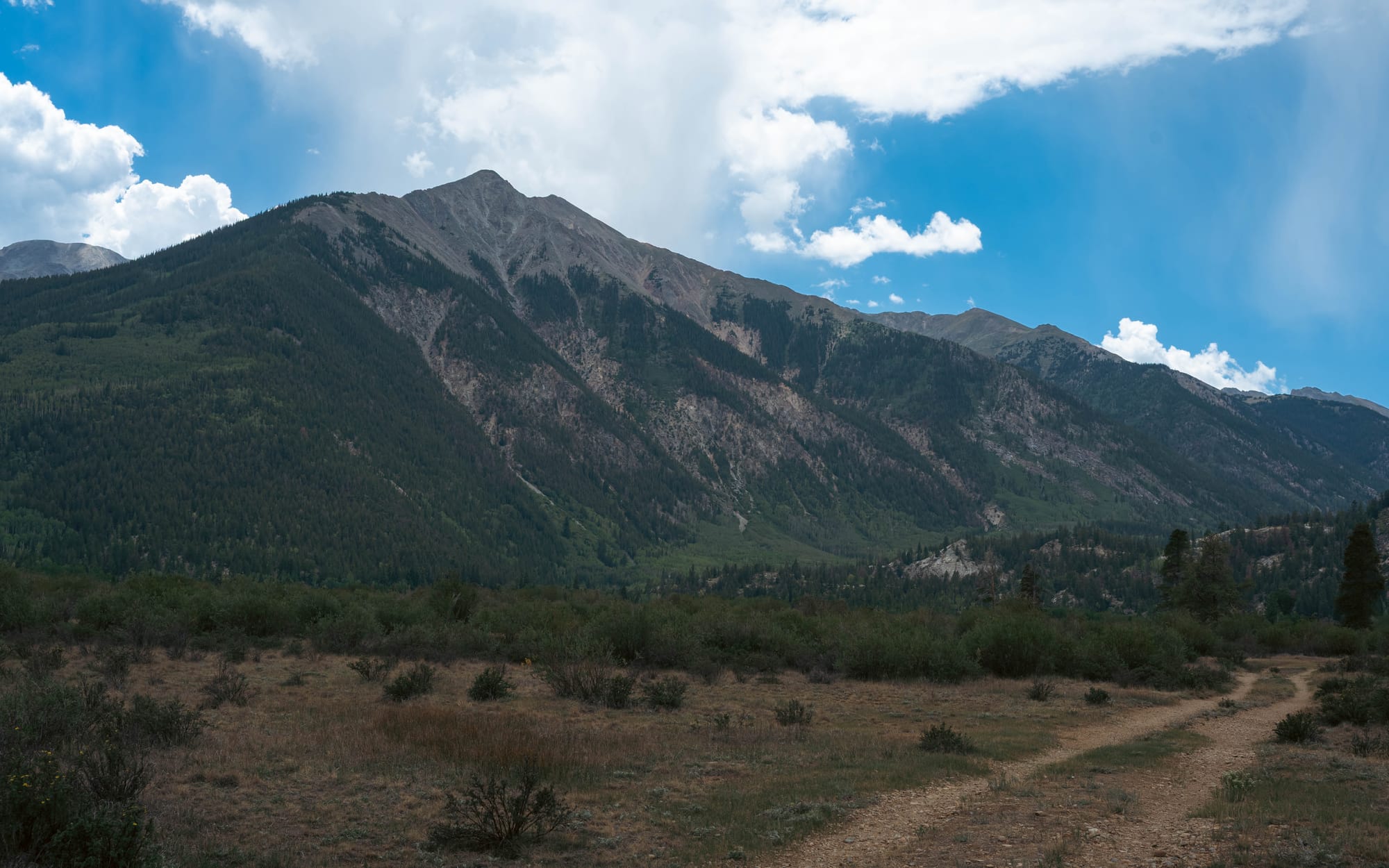
Collegiate West follows the Continental Divide Trail along the higher western side of the Sawatch Range.
The route runs through five segments and includes the Alpine Tunnel corridor, Tincup Pass Road, Cottonwood Pass, Lake Ann Pass, and Hope Pass. Much of it stays near the divide, with long sections above treeline and fewer protected camps than Collegiate East.
The terrain opened almost immediately.
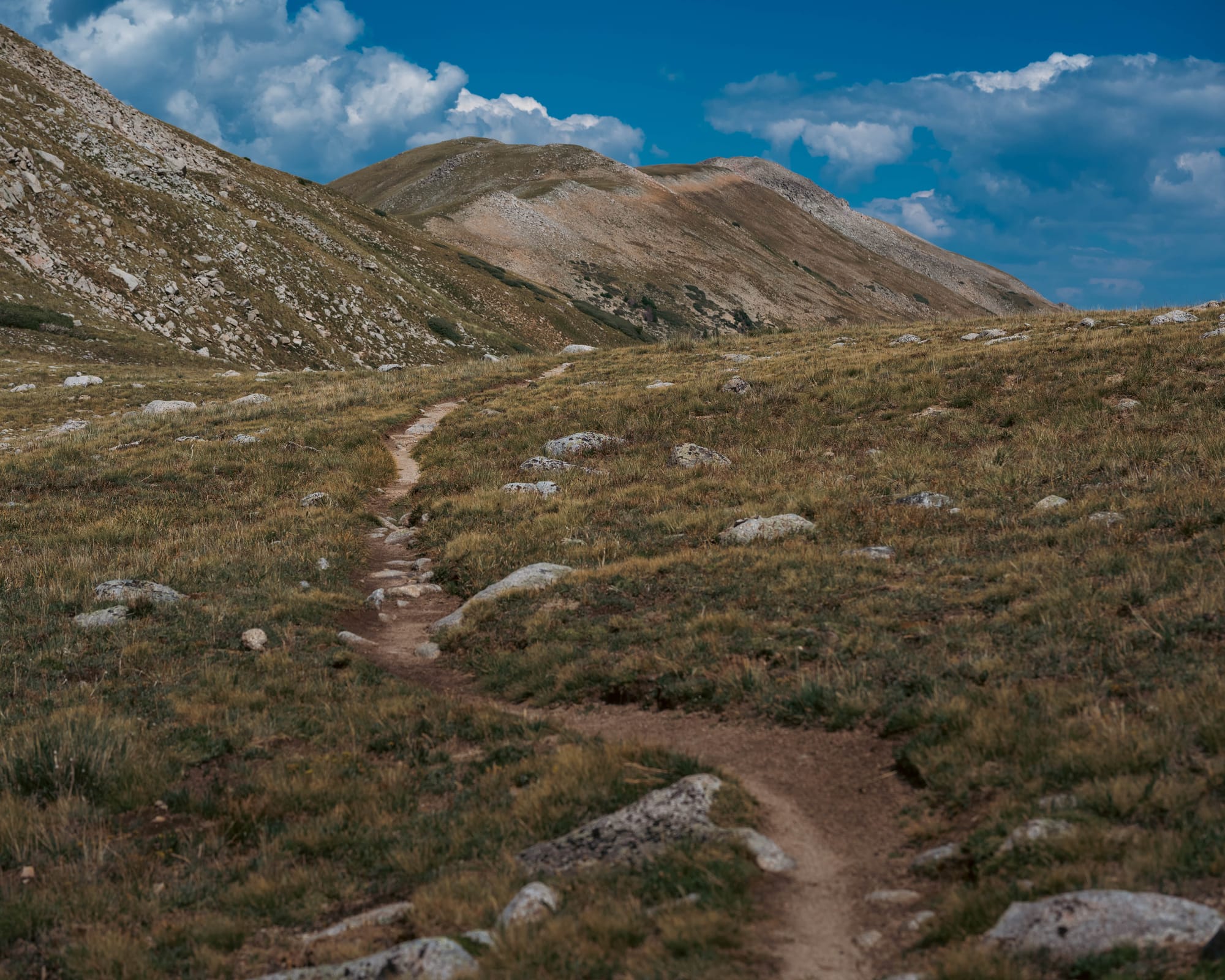
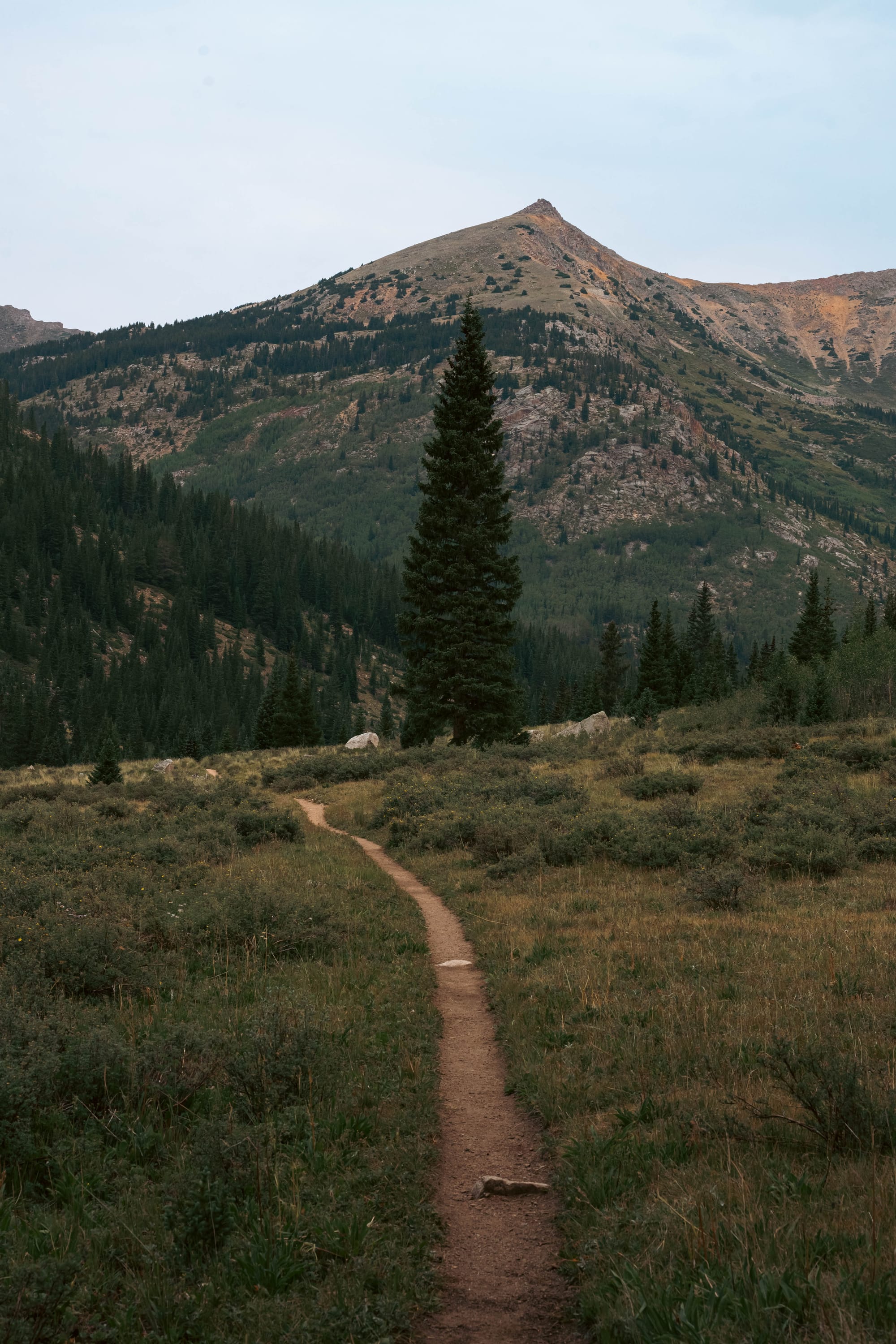
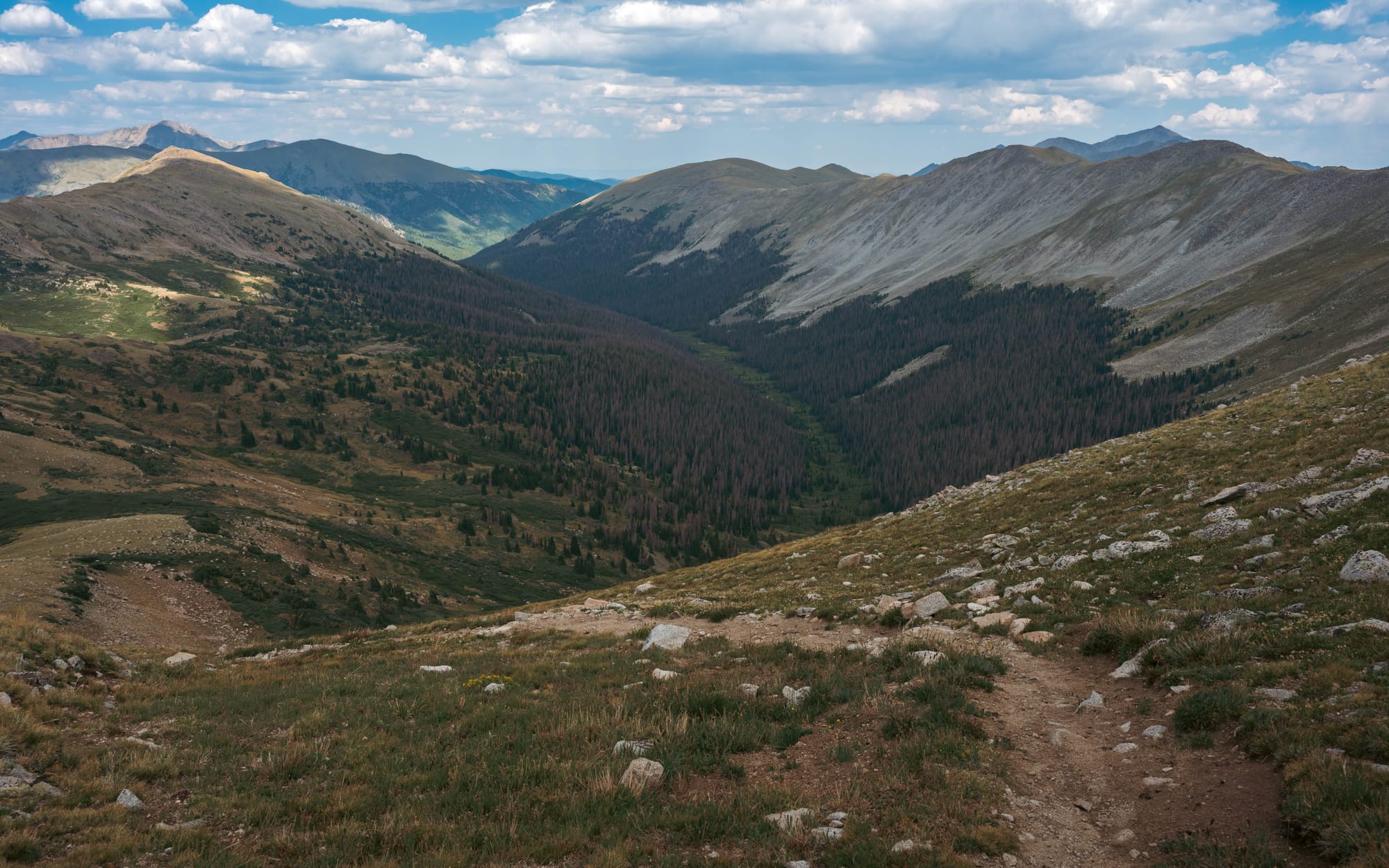
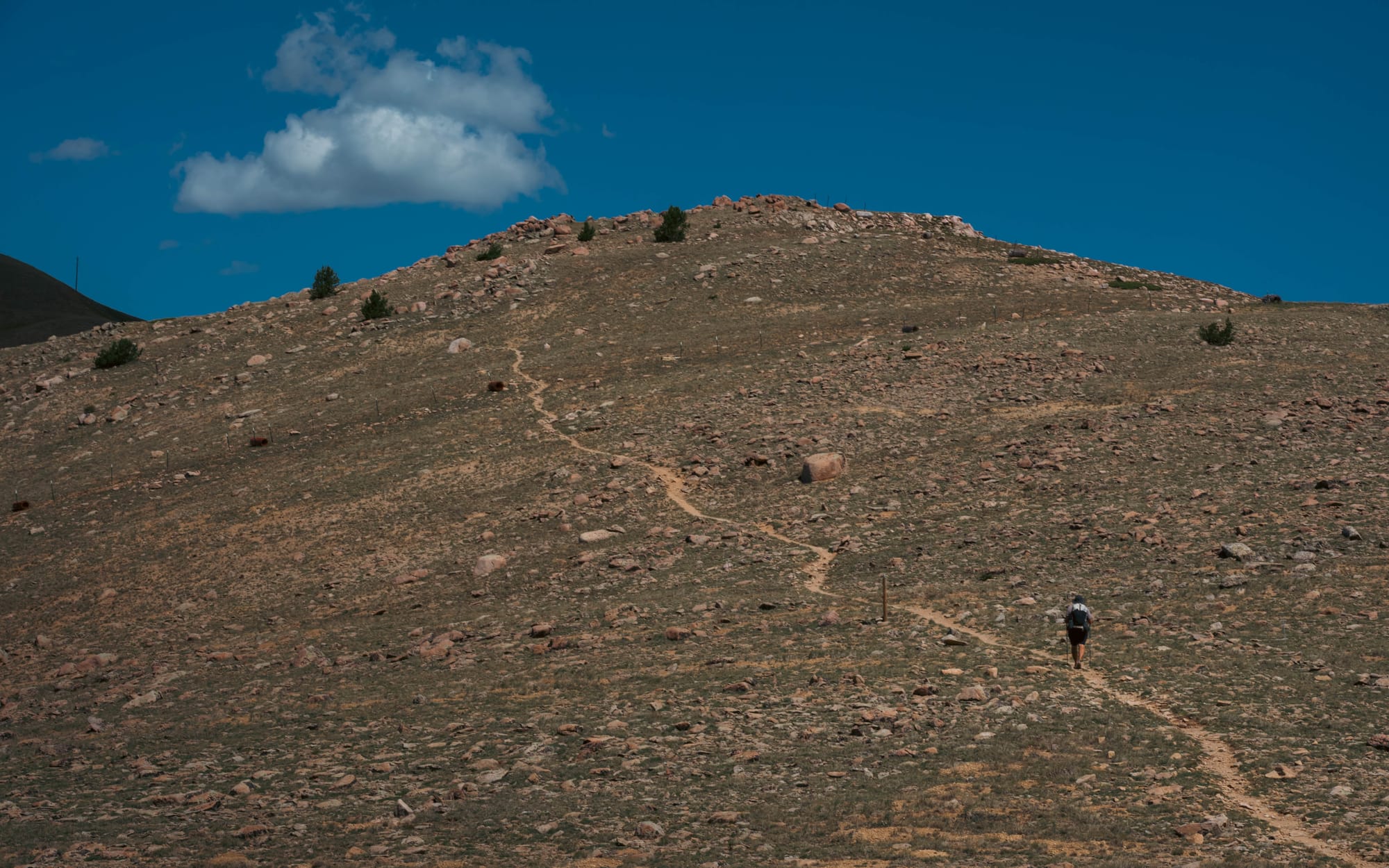
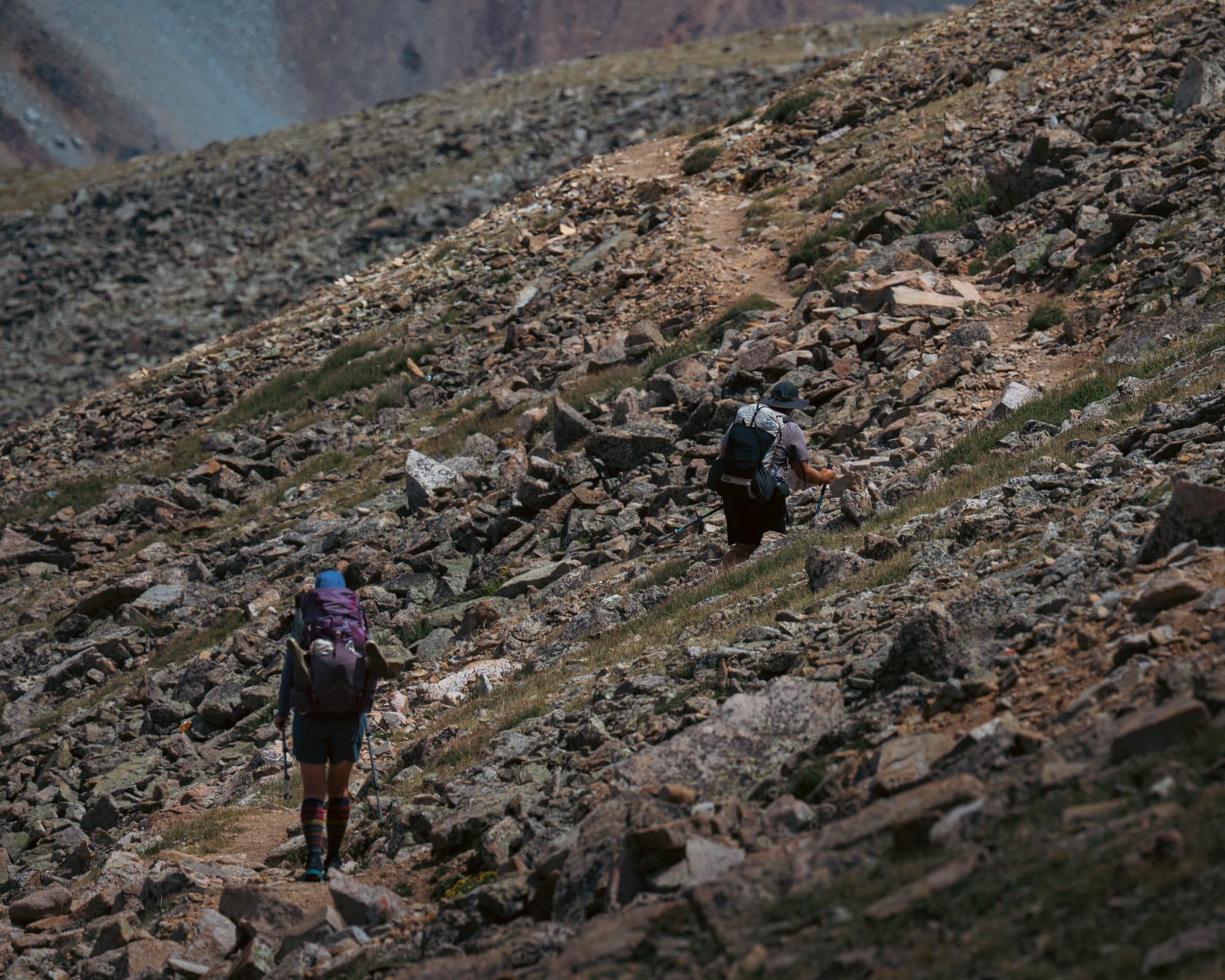
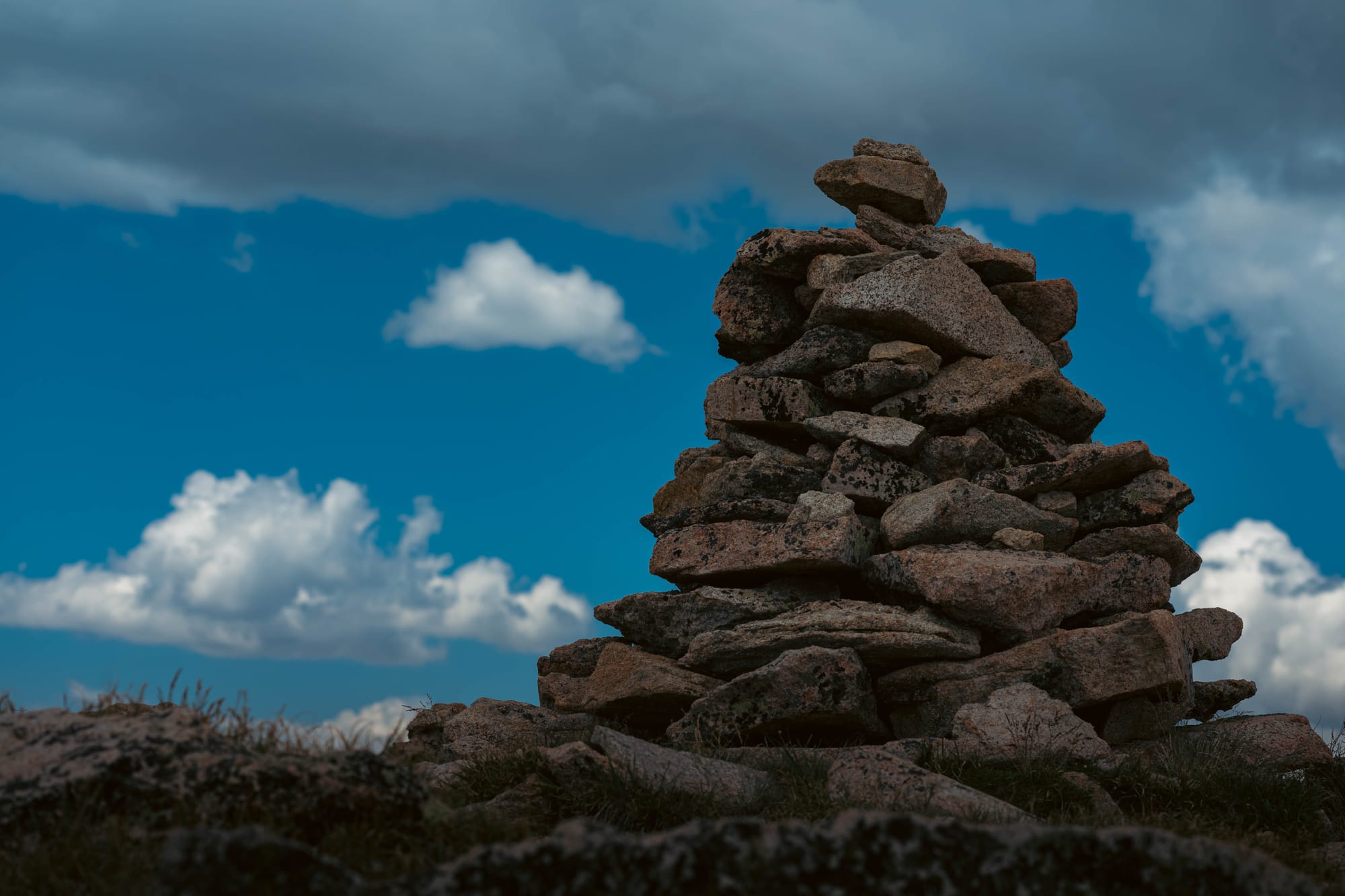
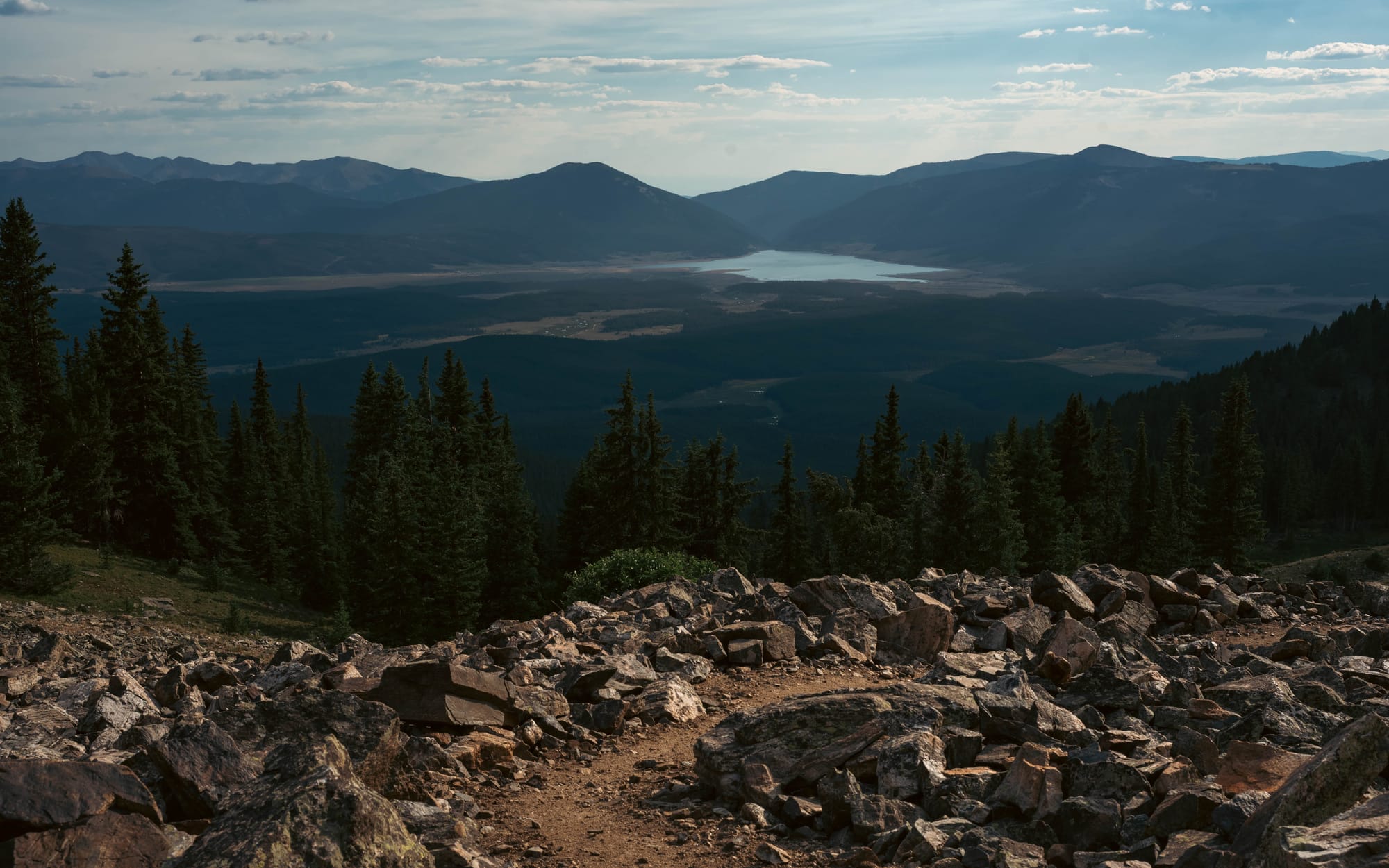
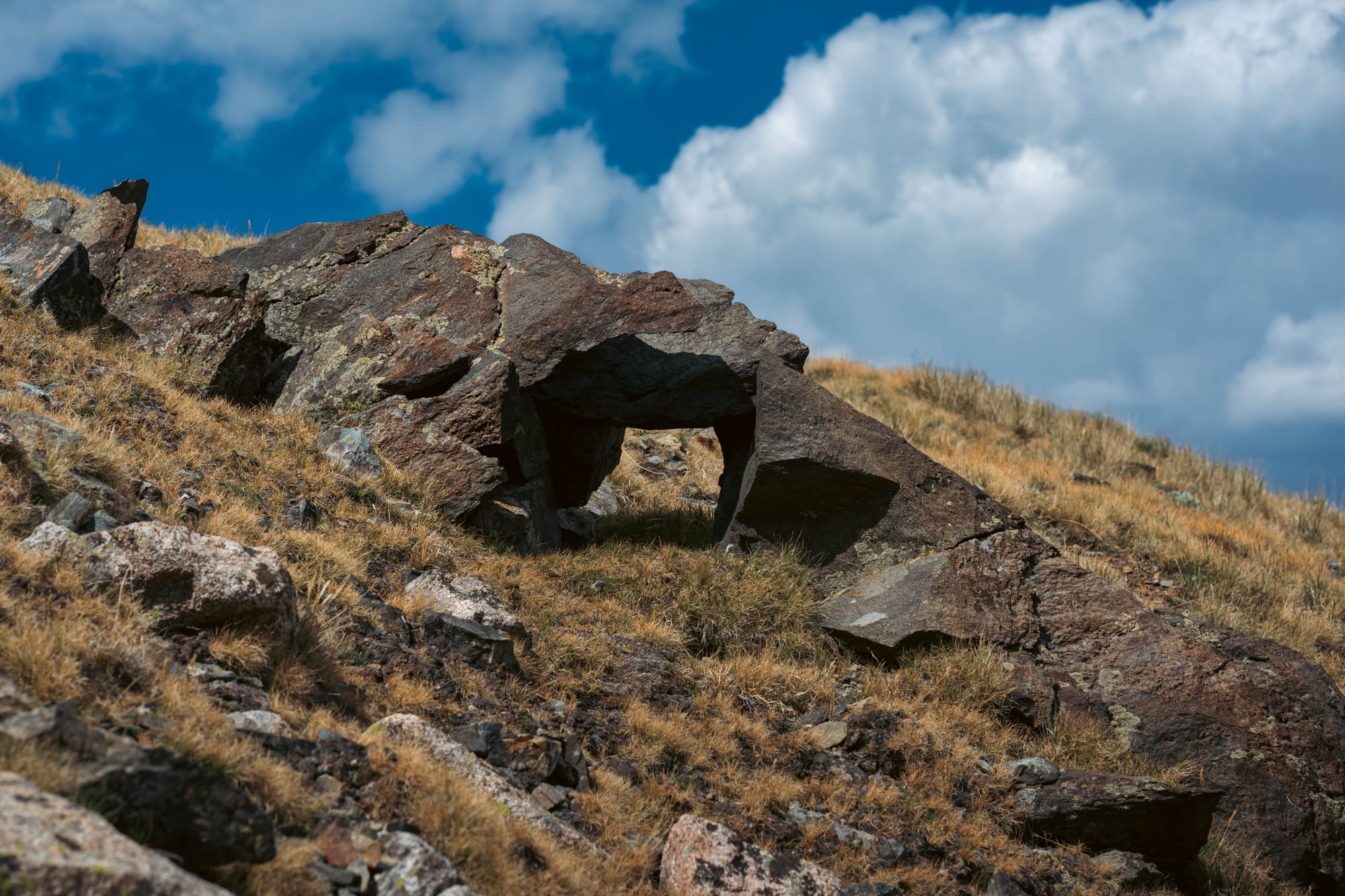
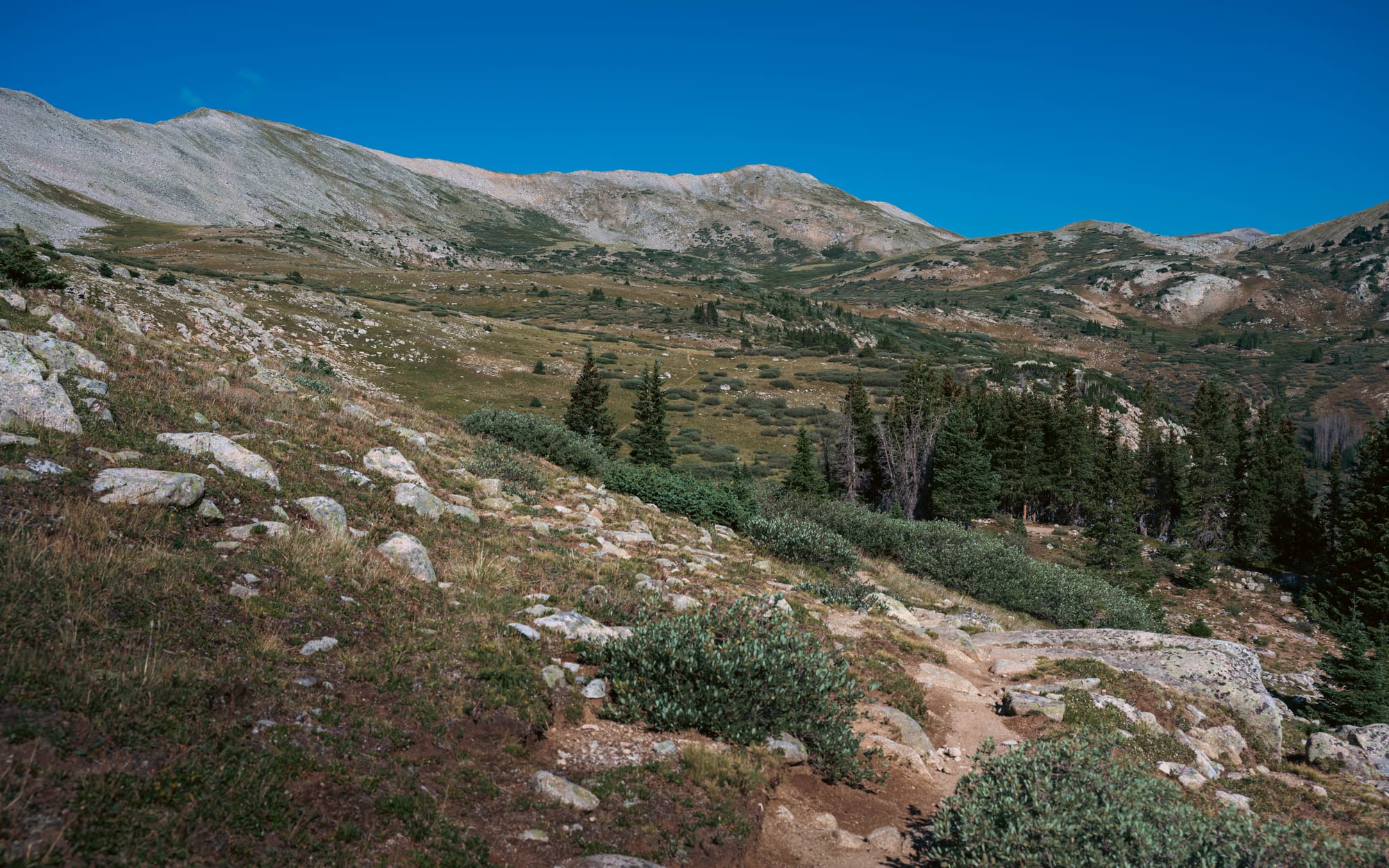
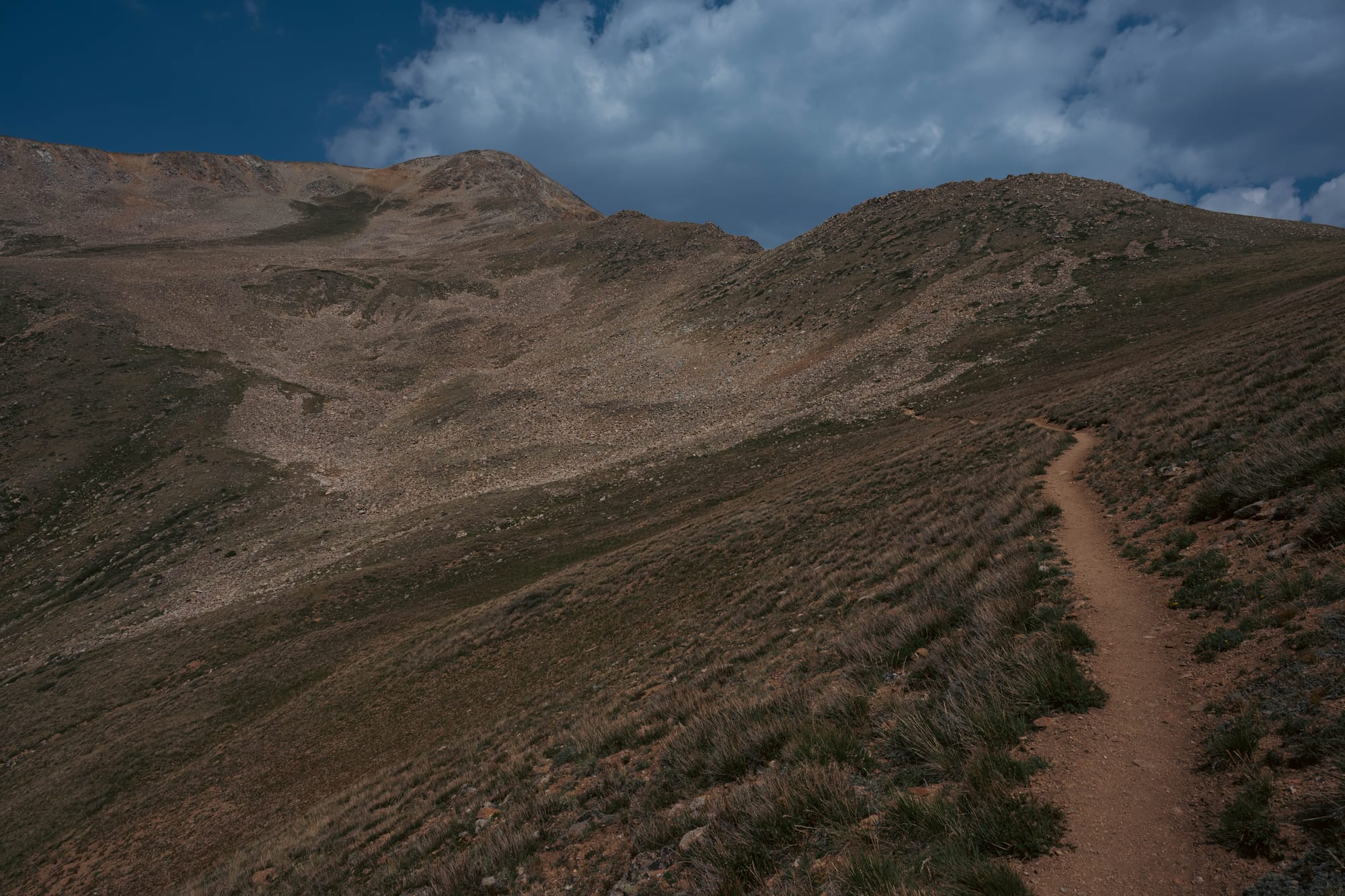
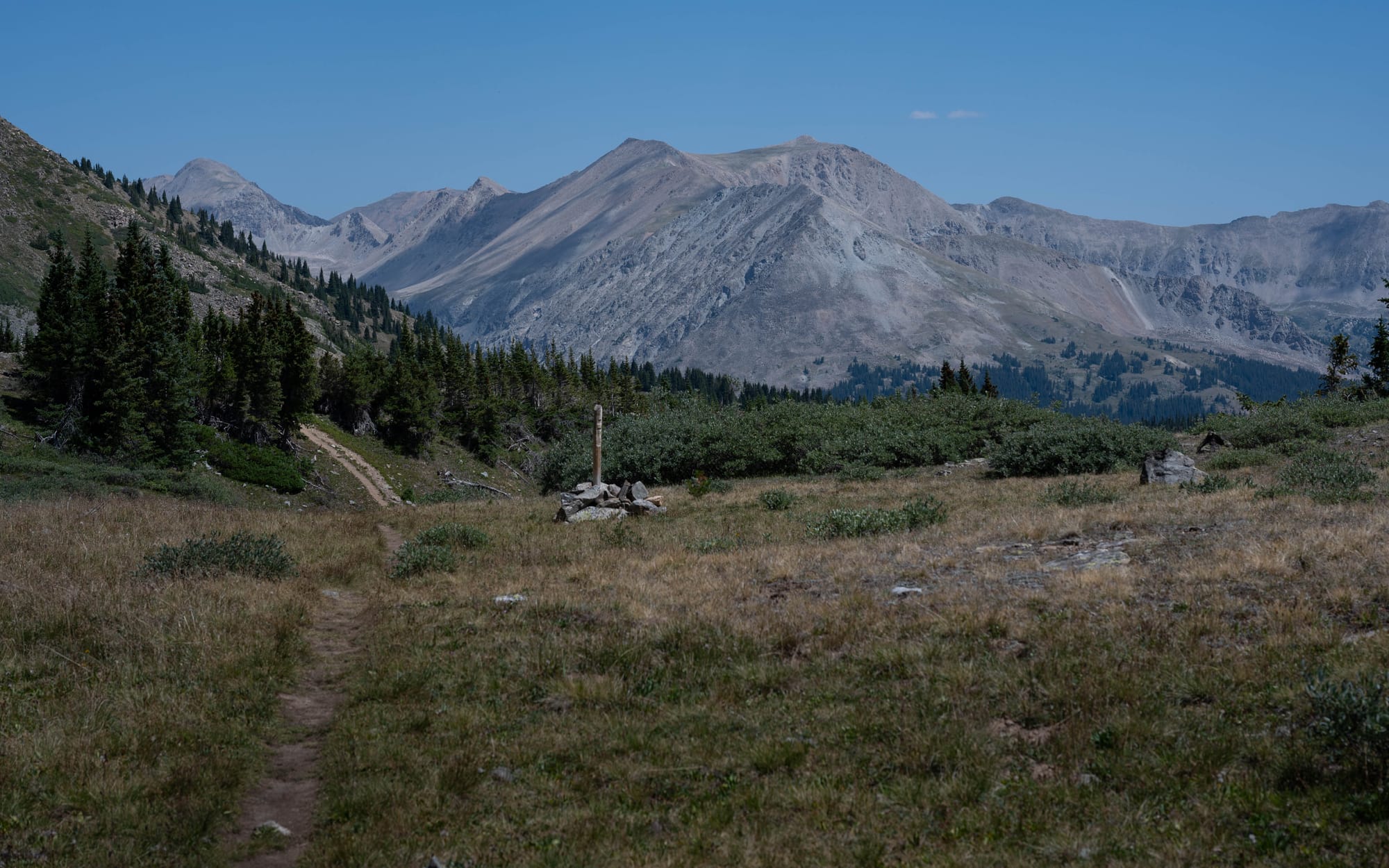
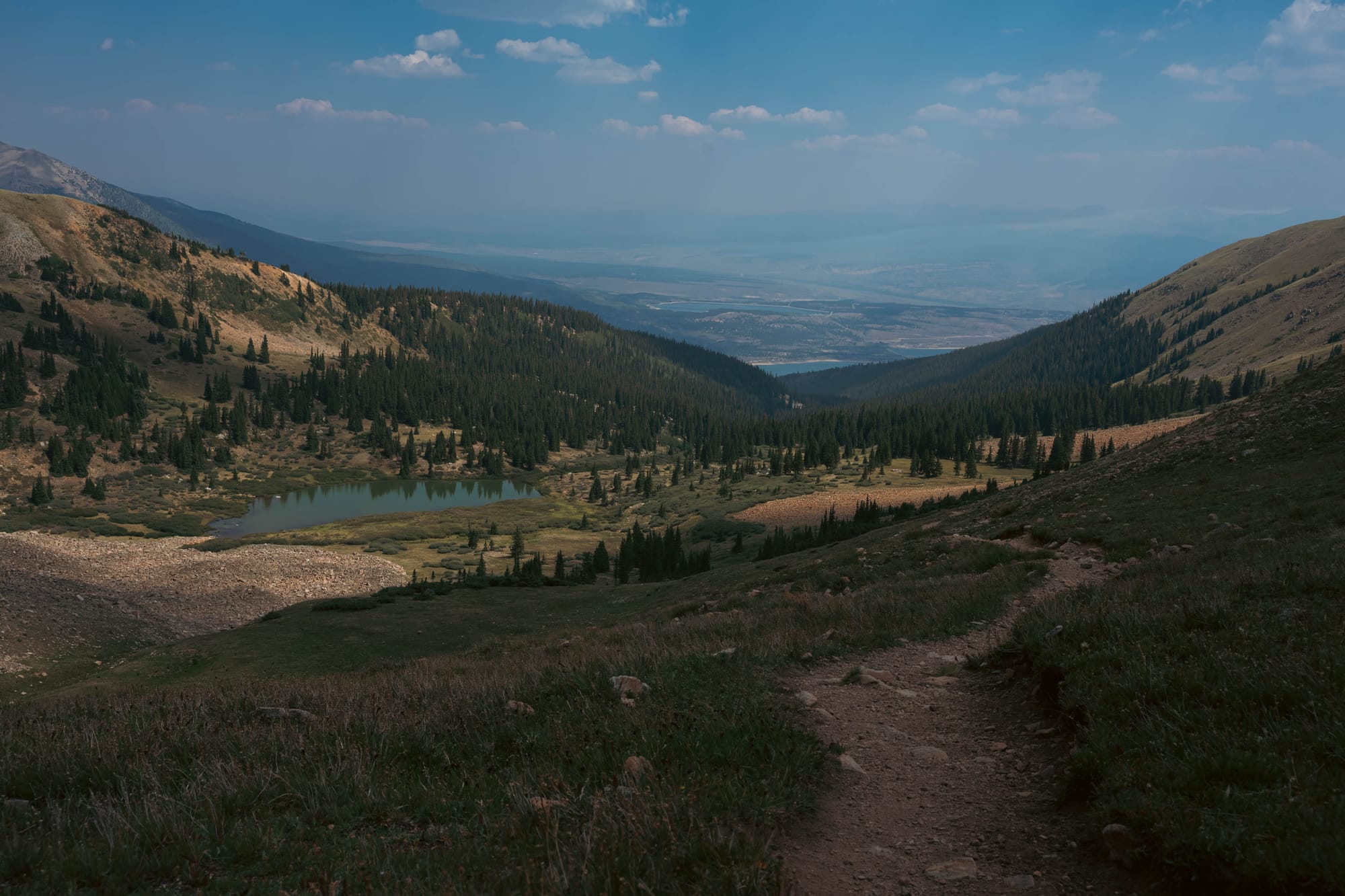
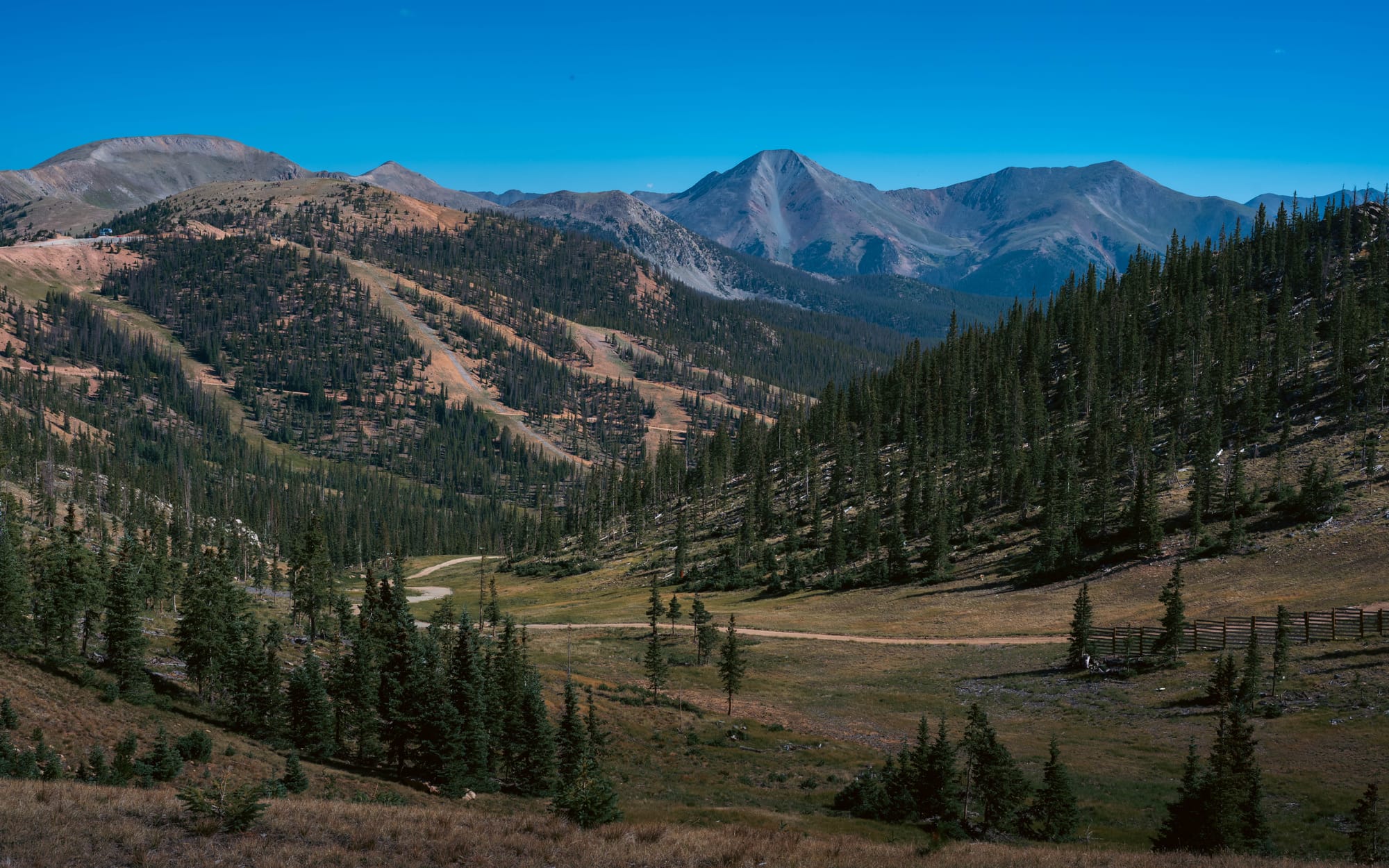
Instead of moving through enclosed forest, we crossed broad basins and climbed toward passes that were visible well before we reached them. The trail frequently showed us where we had come from and where we still needed to go.
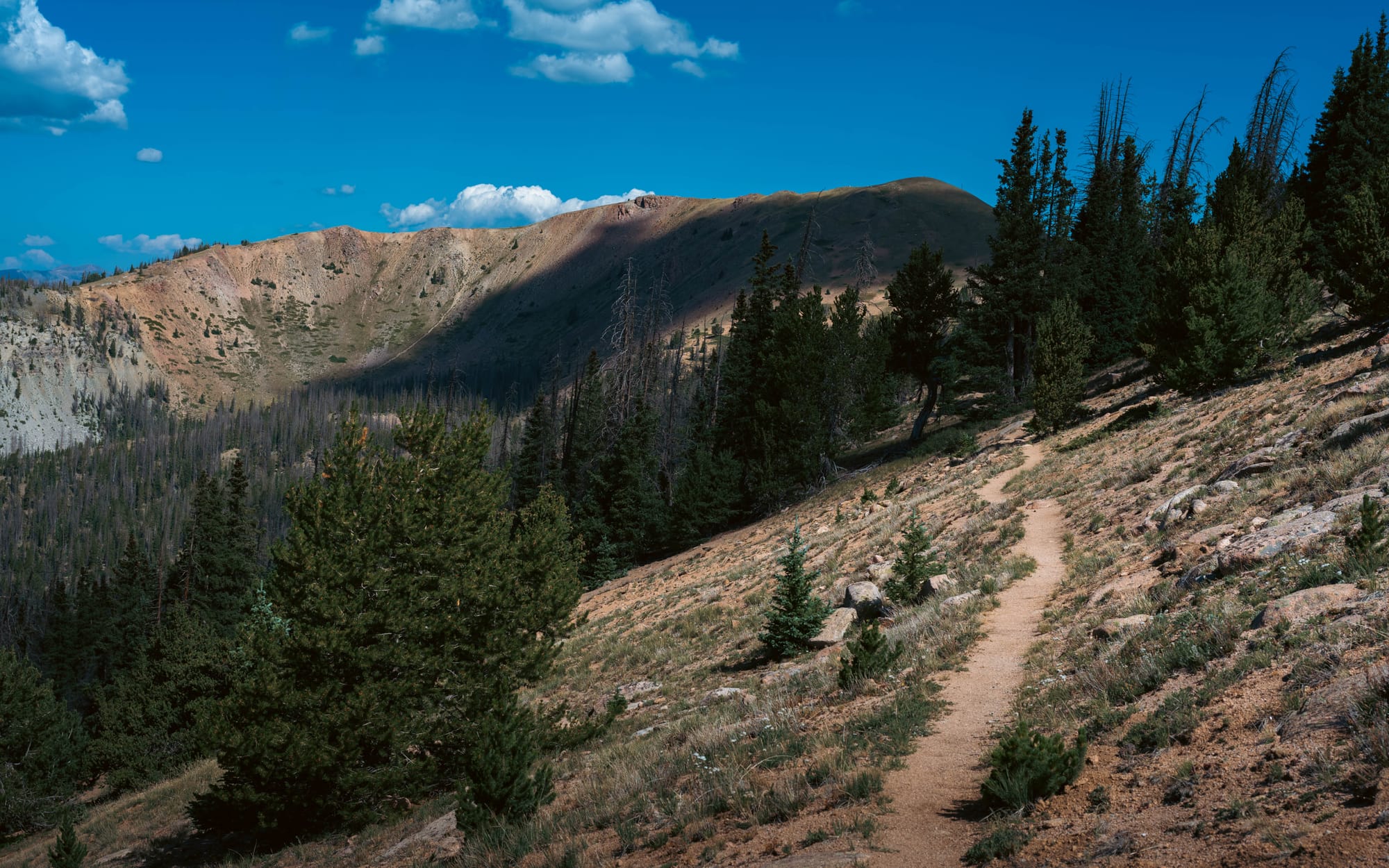
Earlier starts became more important. There was little shade above treeline, and the morning hours gave us cooler temperatures before the sun reached the open slopes.
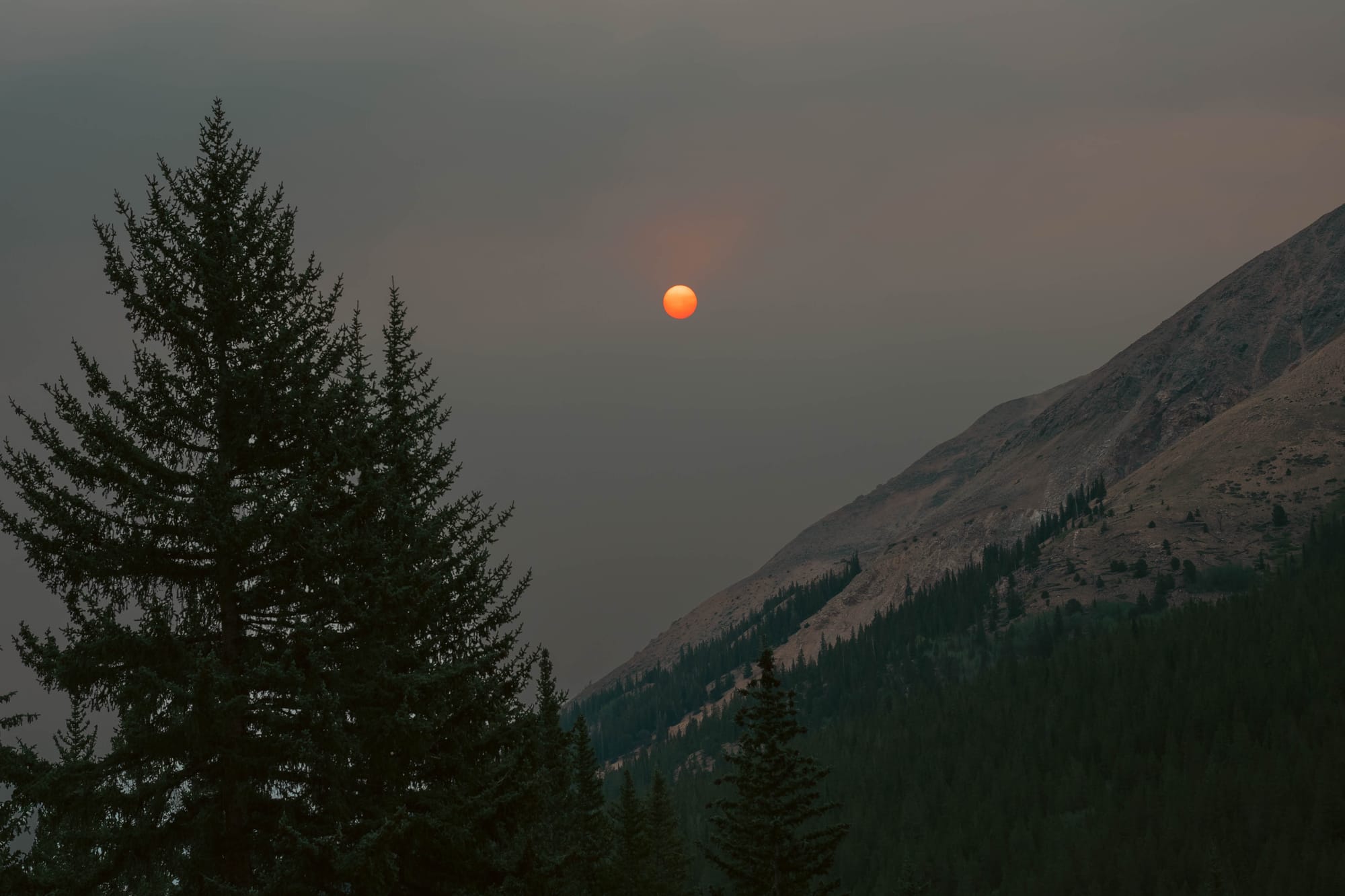
The weather cooperated. We had dry days, clear mornings, and enough afternoon cloud cover to reduce the heat without bringing storms.
After wet days on the East, the difference was appreciated.
When Twenty Mile Days Became the Practical Choice
Our first day covered 14.66 miles and 3,284 feet of climbing.
Once Slow turned back the following morning, Steady and I adjusted the schedule. We expected to cover approximately 20 miles per day and finish in three more days.
We often reached usable ground and water after 14 or 15 miles, but that happened by 12 - 1 in the afternoon. Stopping would have meant giving up much of the hiking day.
Continuing usually meant climbing another pass and moving into the next basin before finding water and flat ground again.
We continued.
Day two reached 22 miles with 5,302 feet of climbing. Day three grew to 24.37 miles with 5,597 feet.
Those were bigger days than planned, but the terrain made them worthwhile. Each climb changed the view, and each pass led into a different basin.
The mileage was demanding without feeling repetitive and the West rewarded the effort.
Life Above Treeline
The early West miles passed through the Monarch Pass and Alpine Tunnel side of the route before continuing toward Tincup Pass Road and Cottonwood Pass.
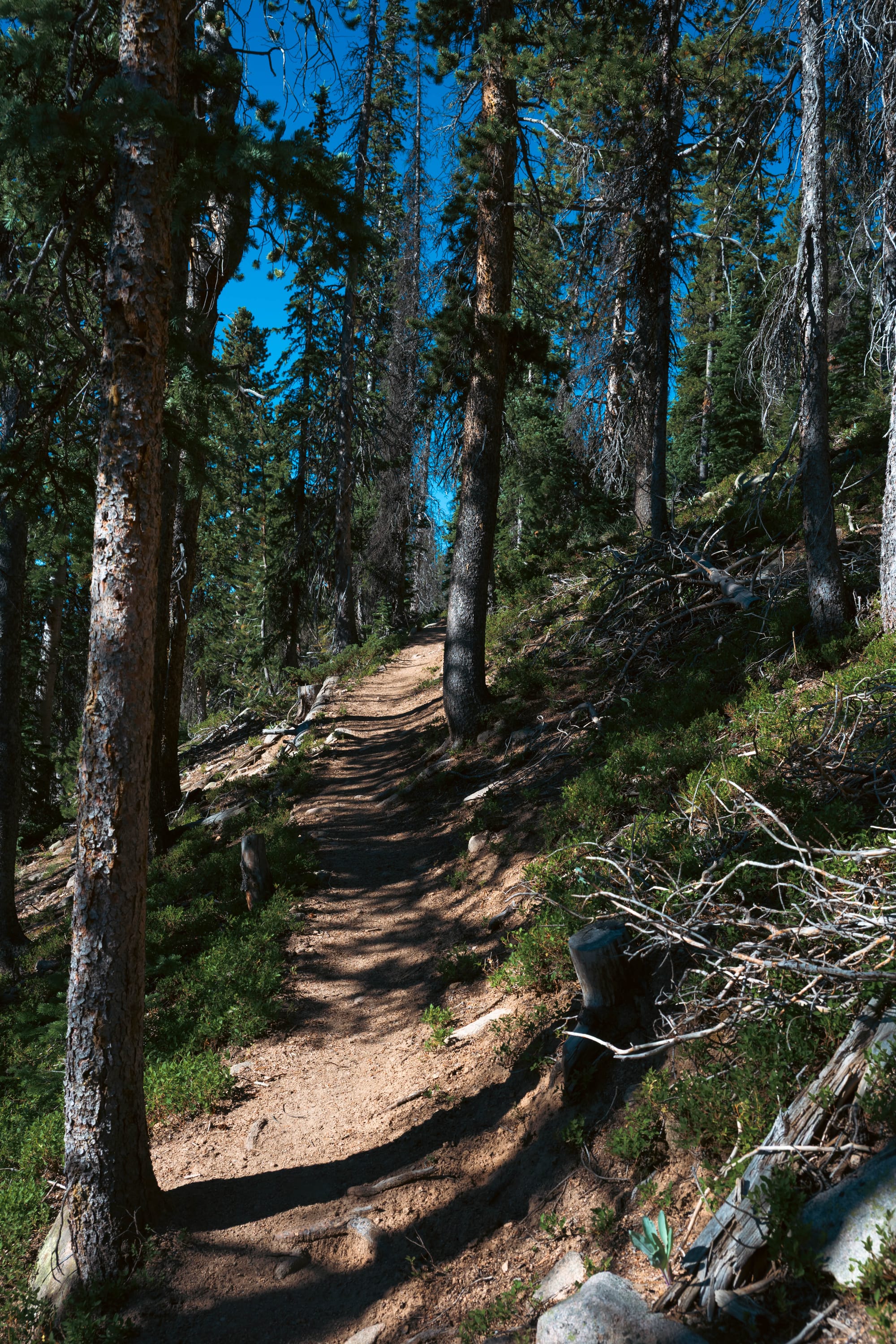
Some sections still followed old mining and logging corridors, while newer trail work carried the route closer to the divide. The Colorado Trail Foundation has continued moving parts of Collegiate West away from old roads and onto single-track trail.
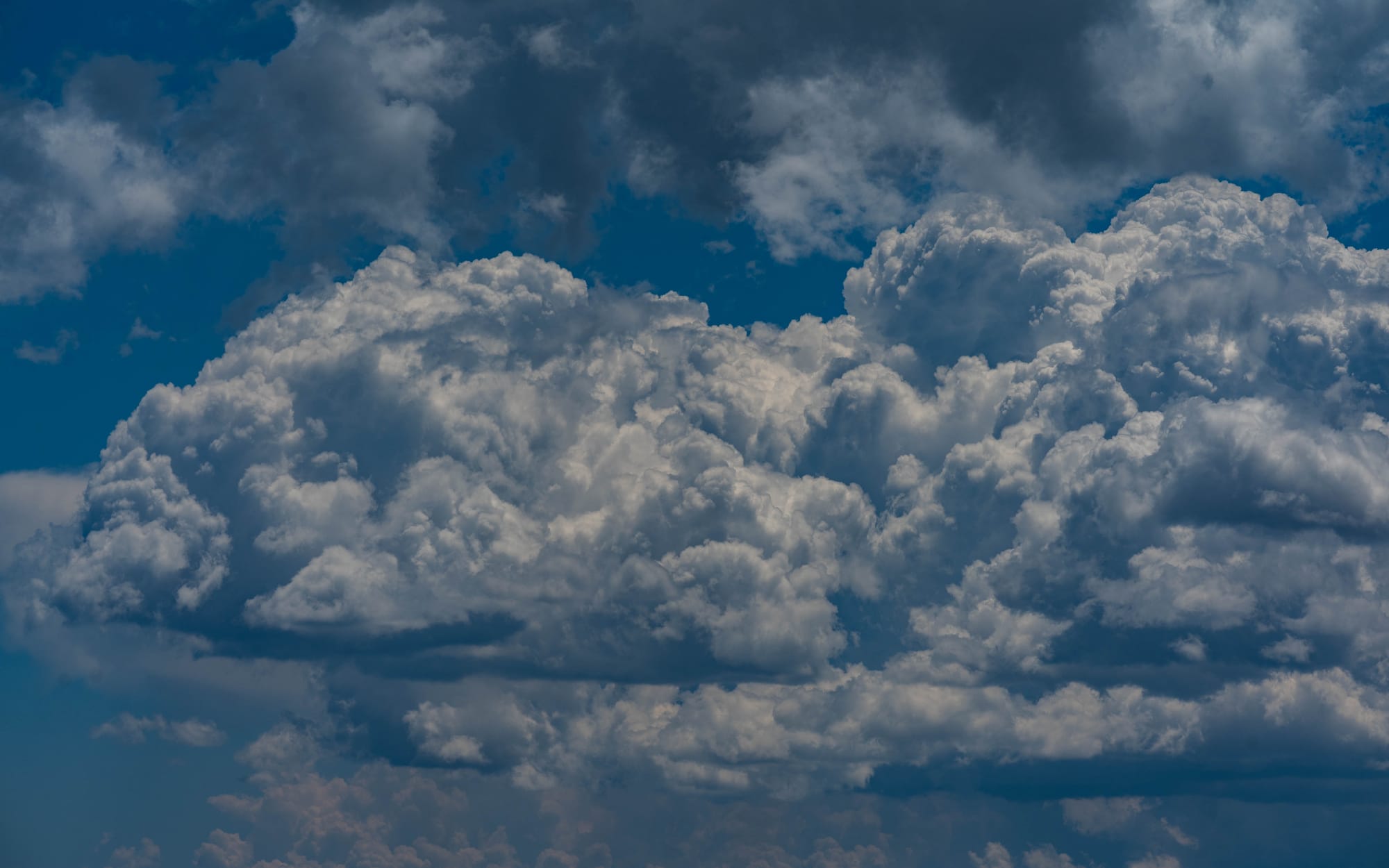
The landscape carried signs of that history without becoming a history tour. Old routes, broad grades, and the Alpine Tunnel corridor showed how people had crossed these mountains before the modern Colorado Trail existed.
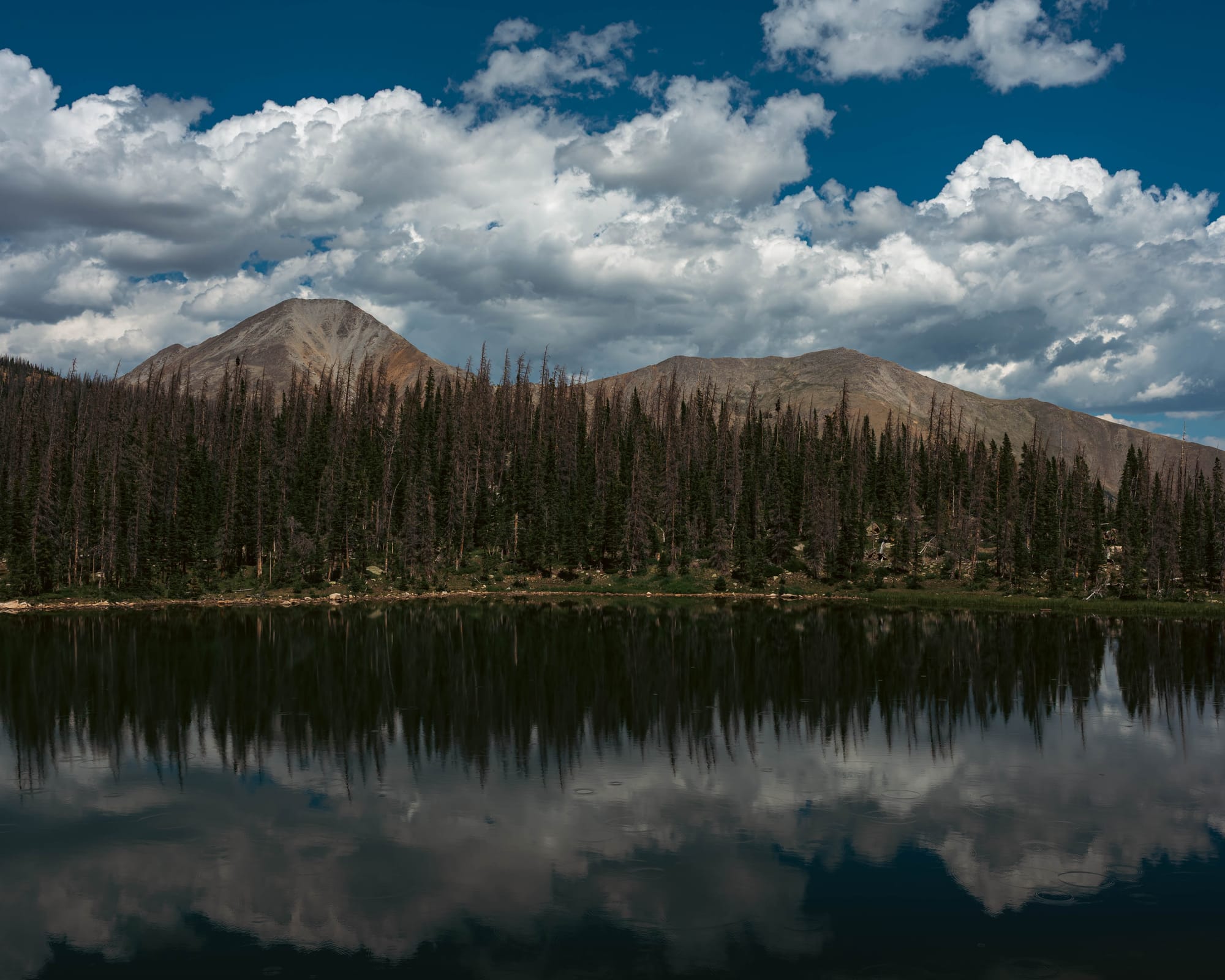
The Sawatch Range contains one of the country’s largest concentrations of fourteeners, and the Collegiate Peaks Wilderness includes eight of them. The wilderness also has one of the highest average elevations of any wilderness area in the Lower 48.
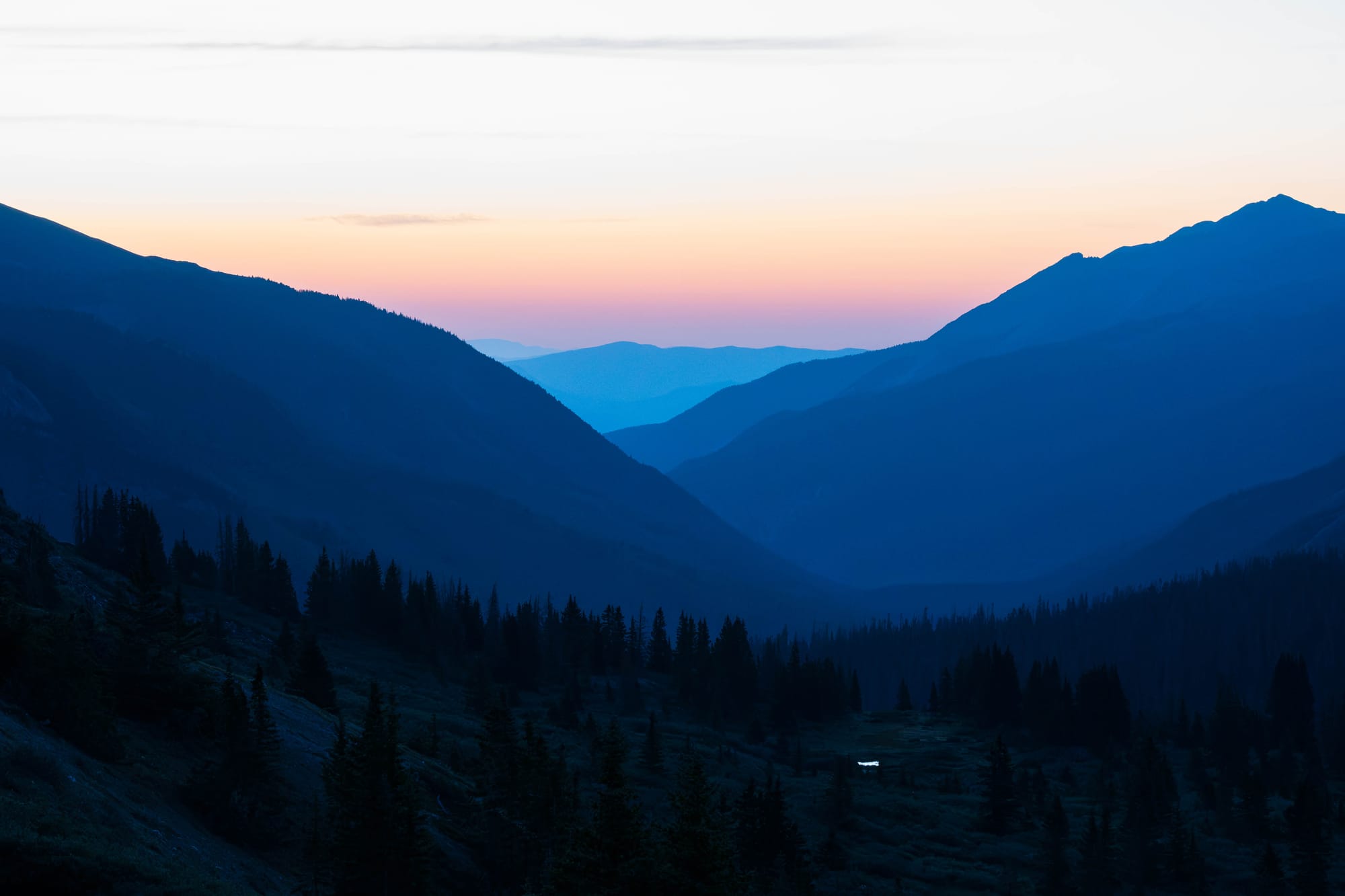
All four nights on the West were spent near or above 12,000 feet.
🎒 On the Trail
- Daily mileage: 14.66–24.37 miles
- Average mileage: 19.68 miles
- Highest climbing day: 5,597 feet
- Camping: High basins and sites near 12,000 feet
- Weather: Dry · sunny mornings · occasional afternoon cloud cover
- Wildlife: Moose · elk · deer · marmots · pika · weasel · coyote
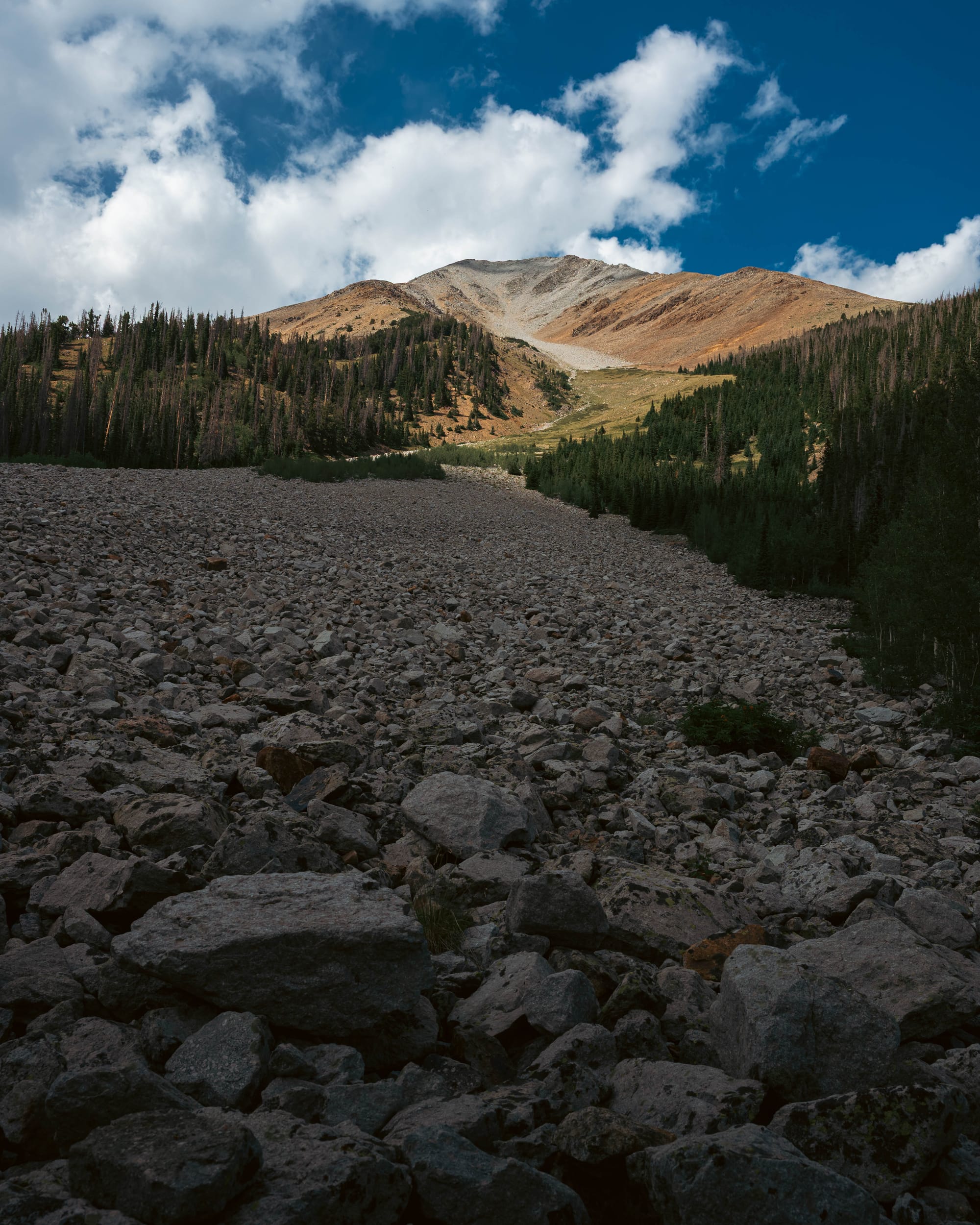
- Trail character: Alpine bowls · exposed ridges · high passes · long views
Better Camps
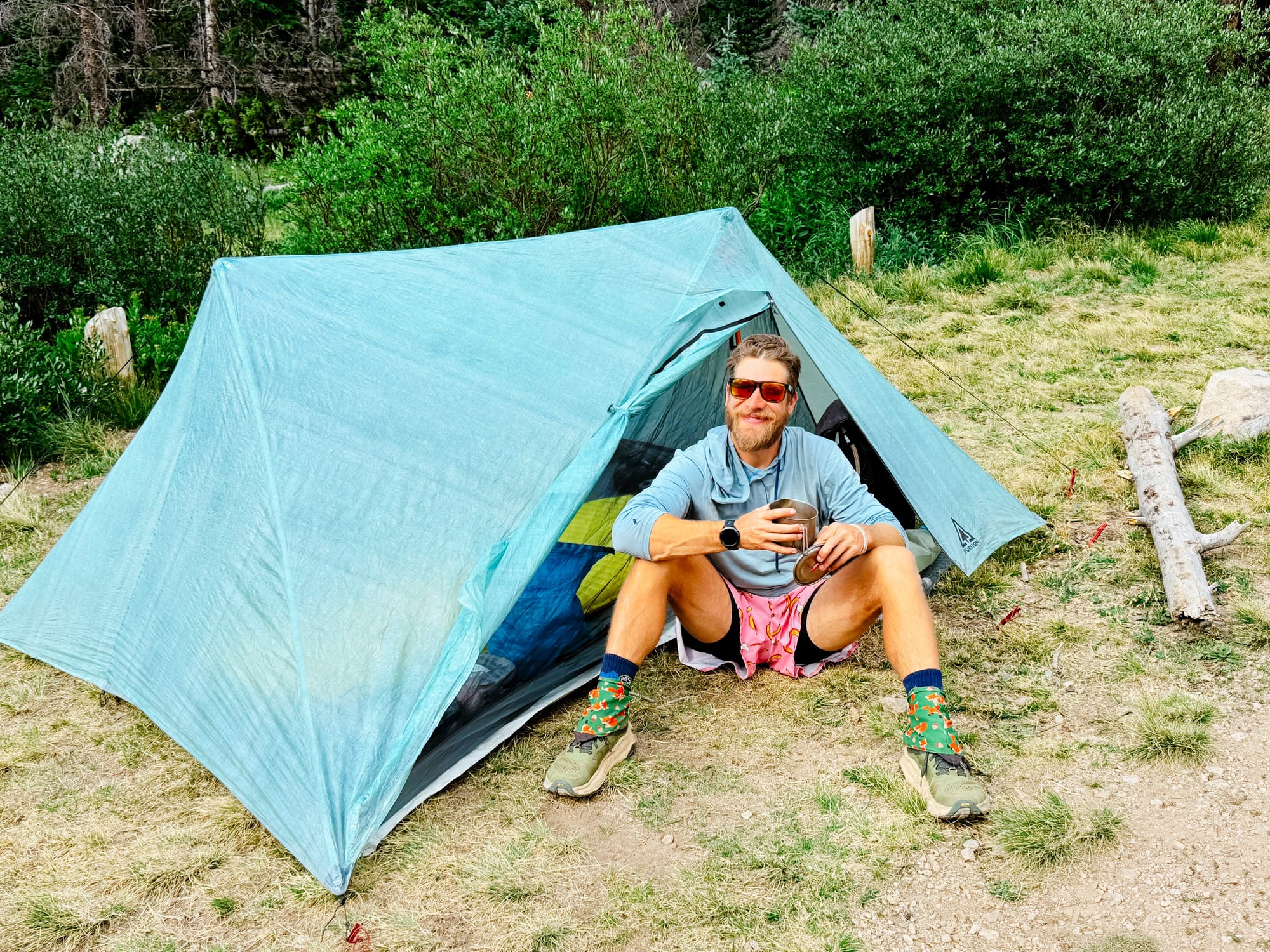
Our camps on Collegiate West were significantly better than those on the East.
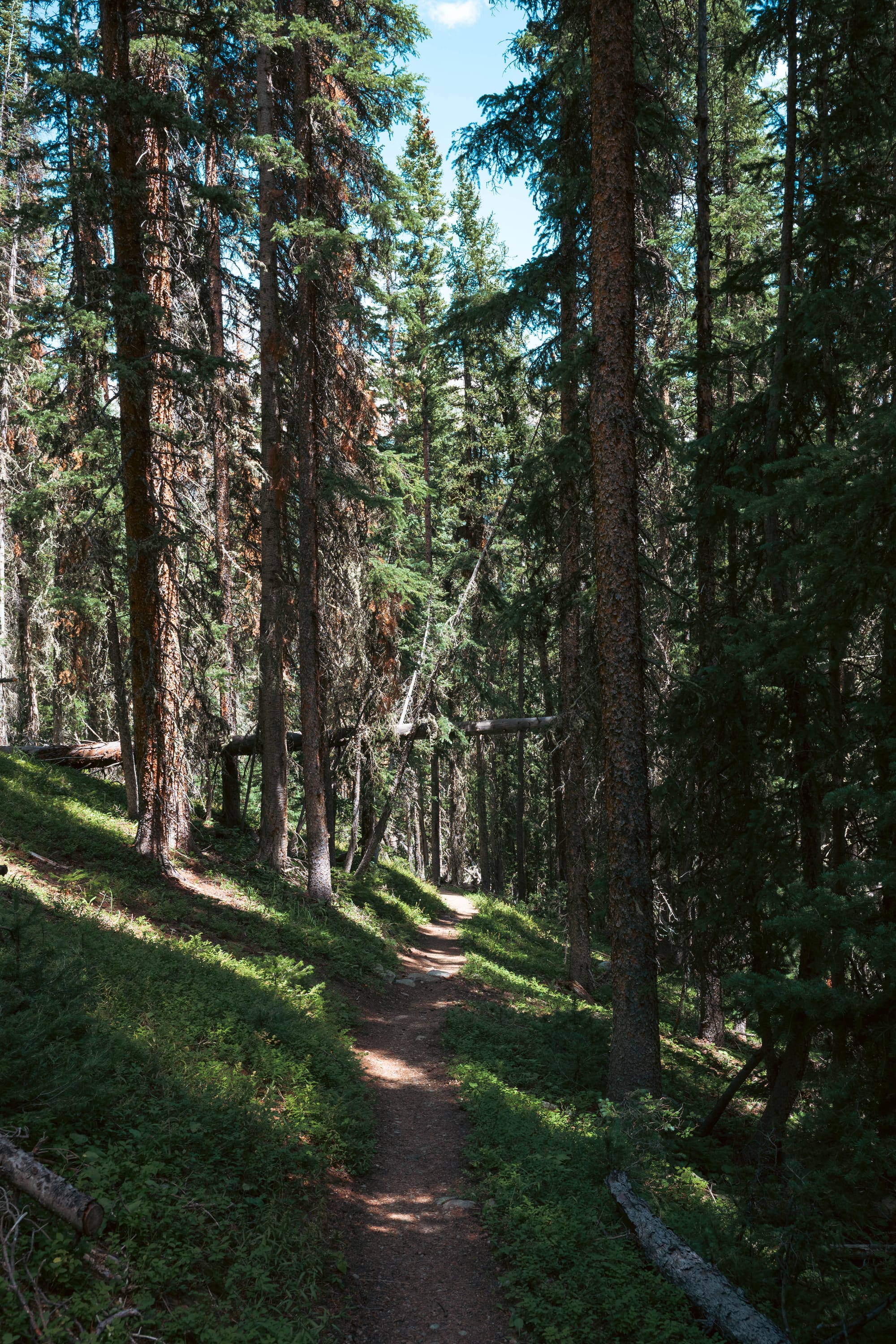
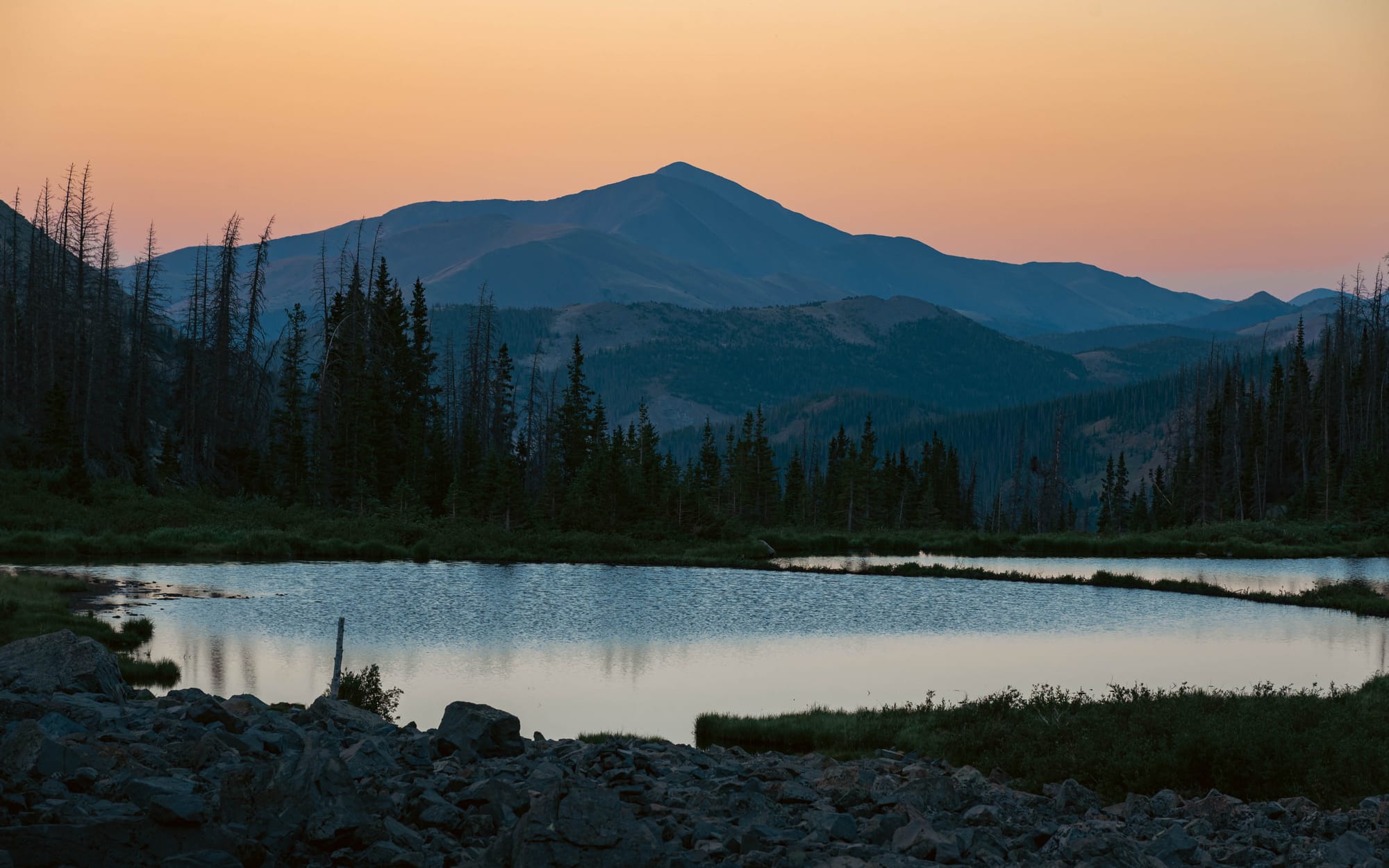
They were more exposed, but they came with open views, evening light, and clear mornings. Instead of sleeping beneath a closed canopy, we camped inside the landscape we had spent the day crossing.
The main inconvenience was condensation.
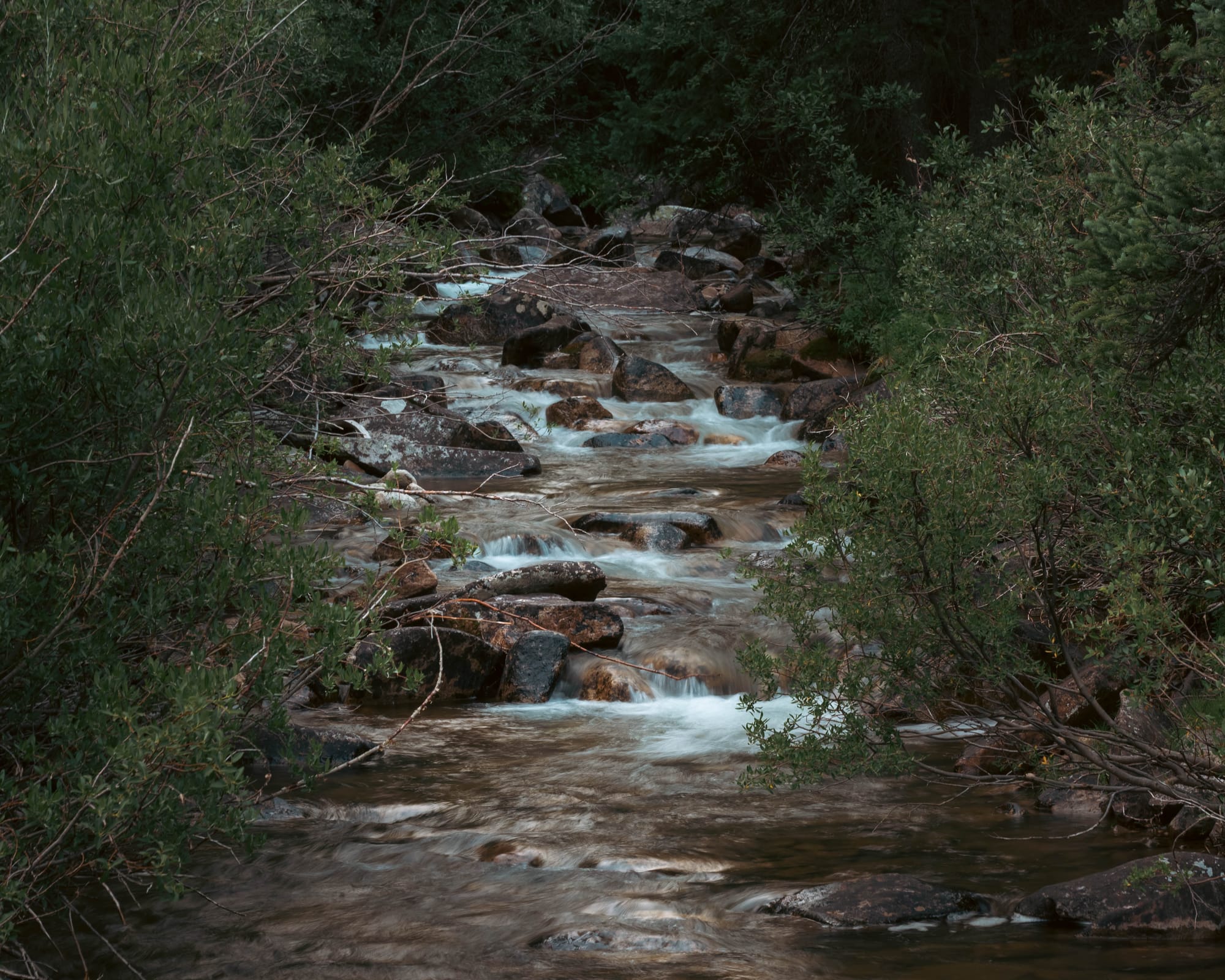
Our first two camps were near creeks or streams. Cold nights, nearby water, and high elevation left condensation inside the tents, so the familiar routine followed us onto the West: stop, unpack, dry, repack, continue.
The lack of forest also meant fewer automatic camping options. Flat ground, water, and protection did not always appear together. That scarcity was part of what pushed the longer days.
When we found a good site, it was worth the extra distance.
Wildlife on the West
The wildlife changed along with the terrain.
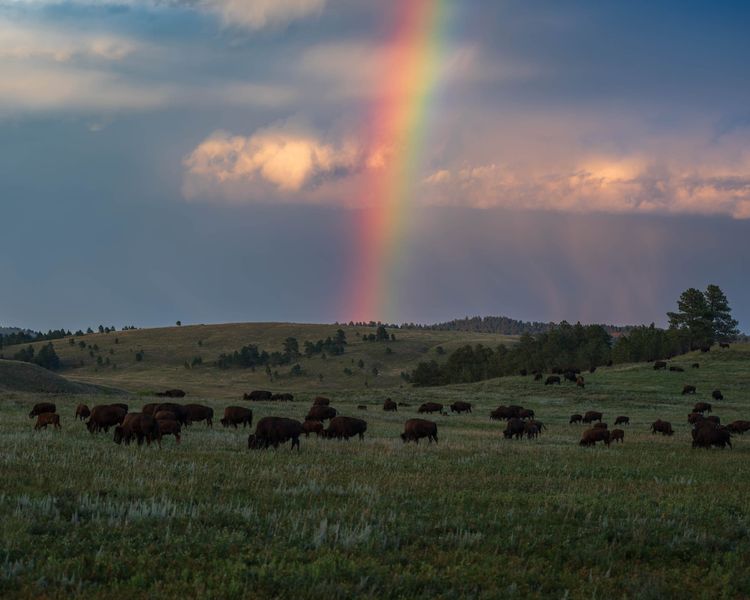
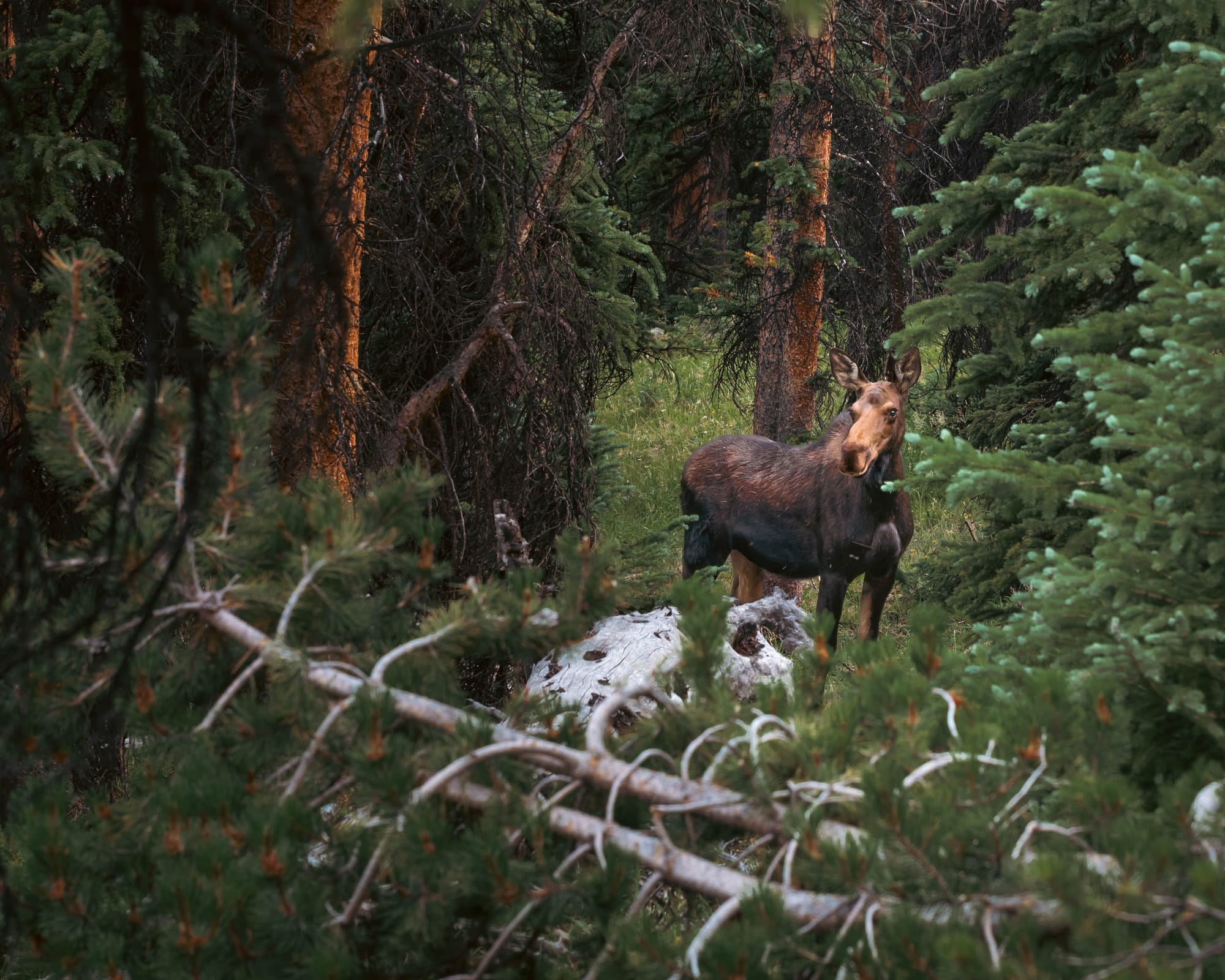
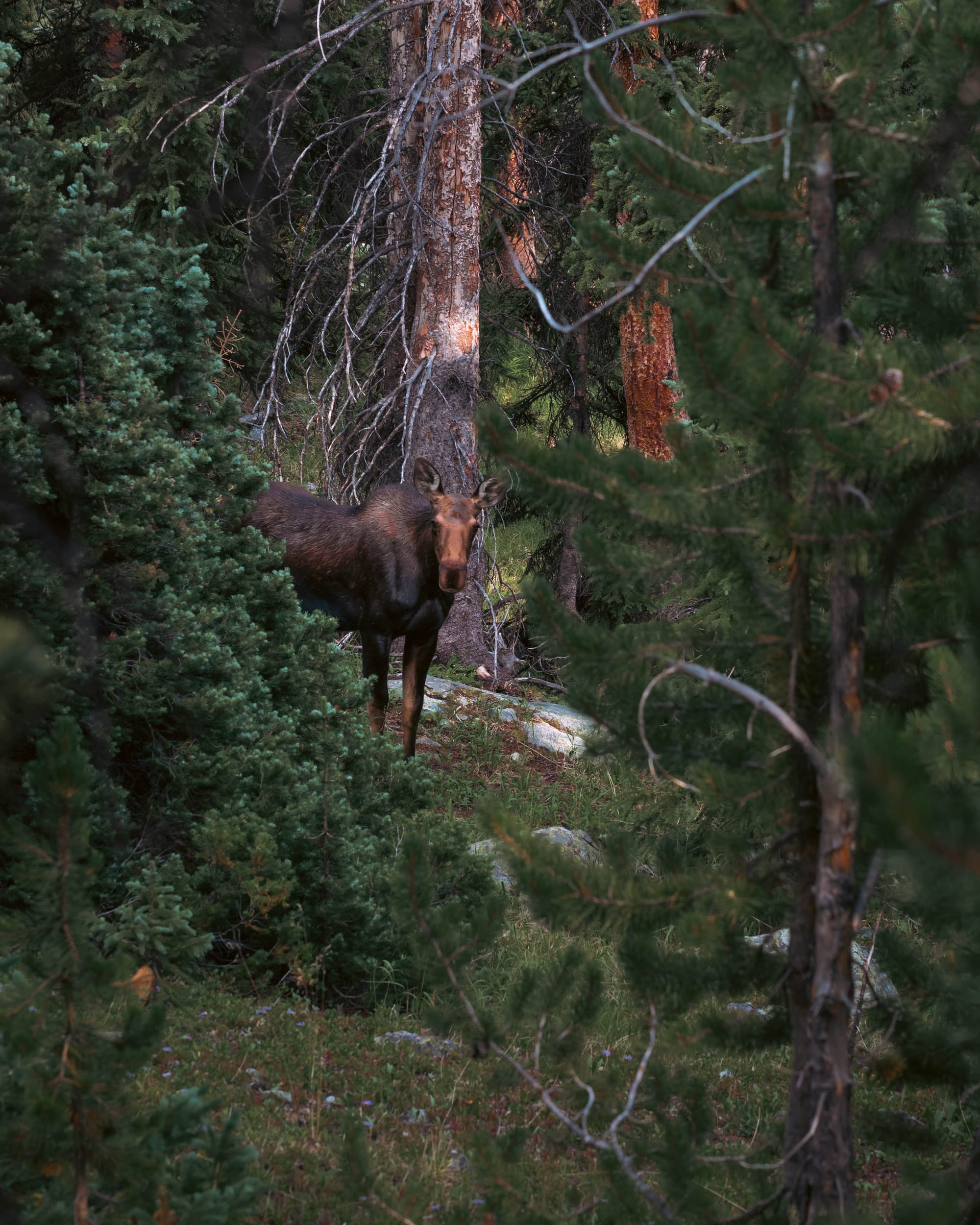
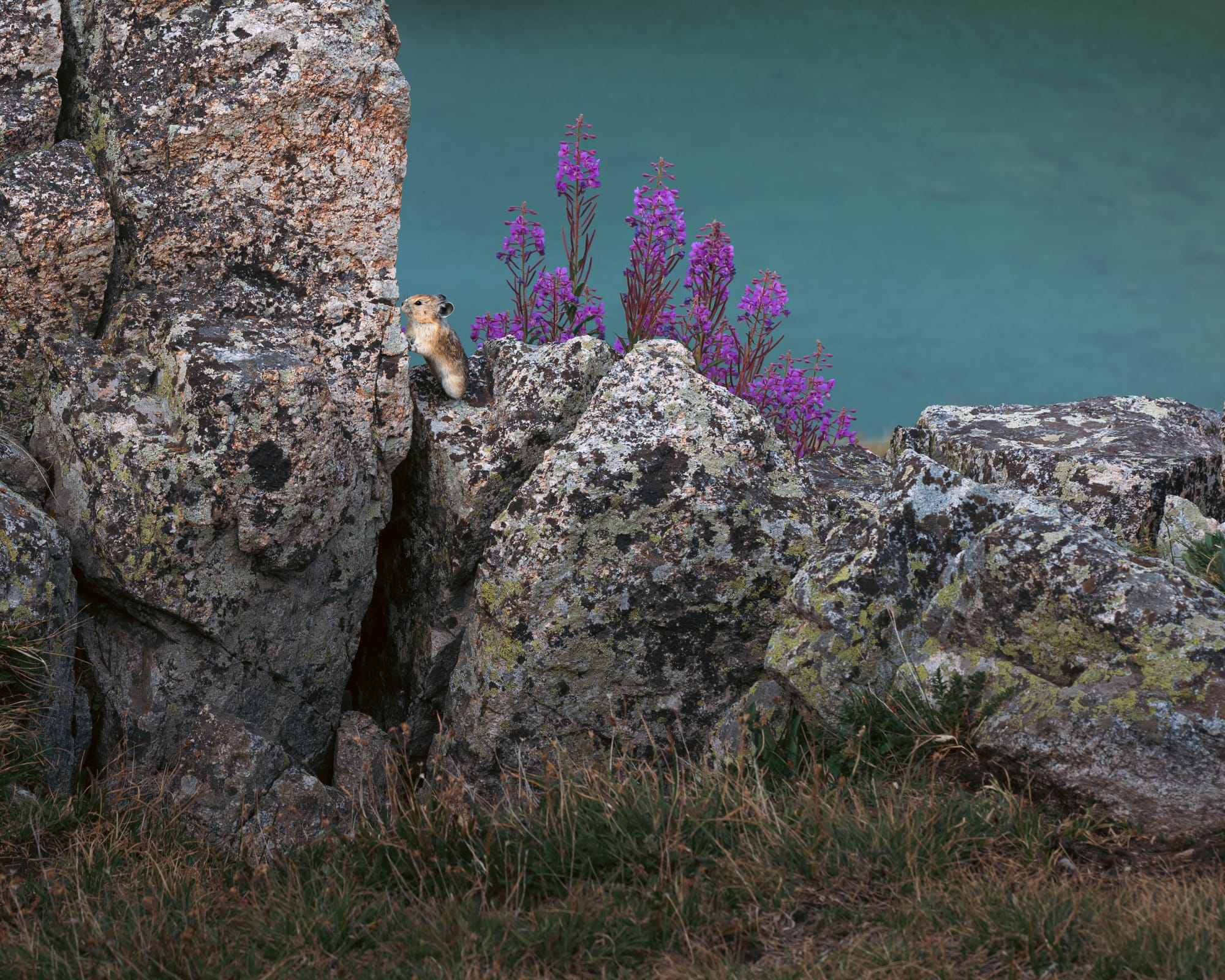
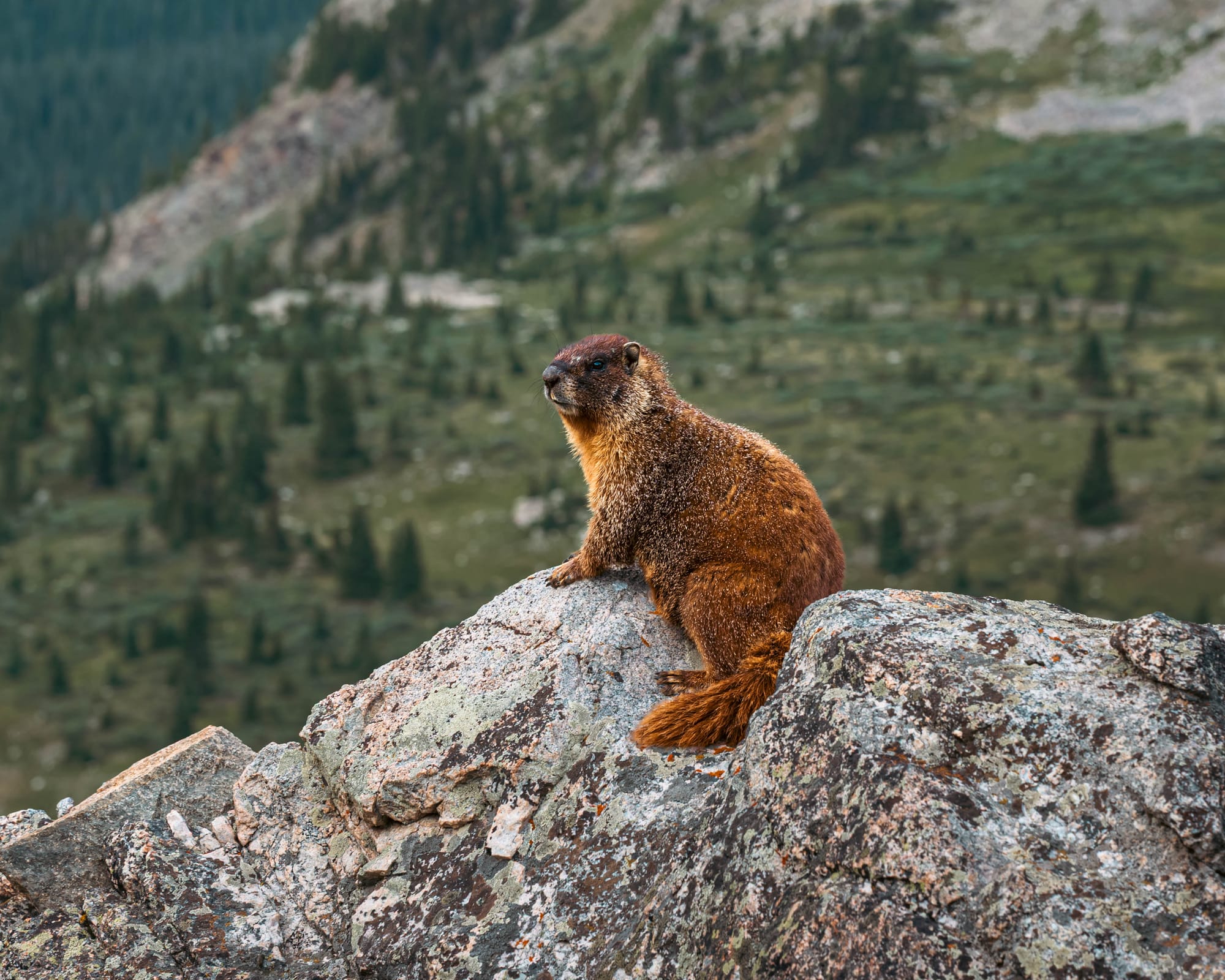
Over four days, we saw eight moose, four deer, two elk, a weasel, marmots, and pika.
Then Steady noticed an animal approximately 100 yards away in a copse of bushes.
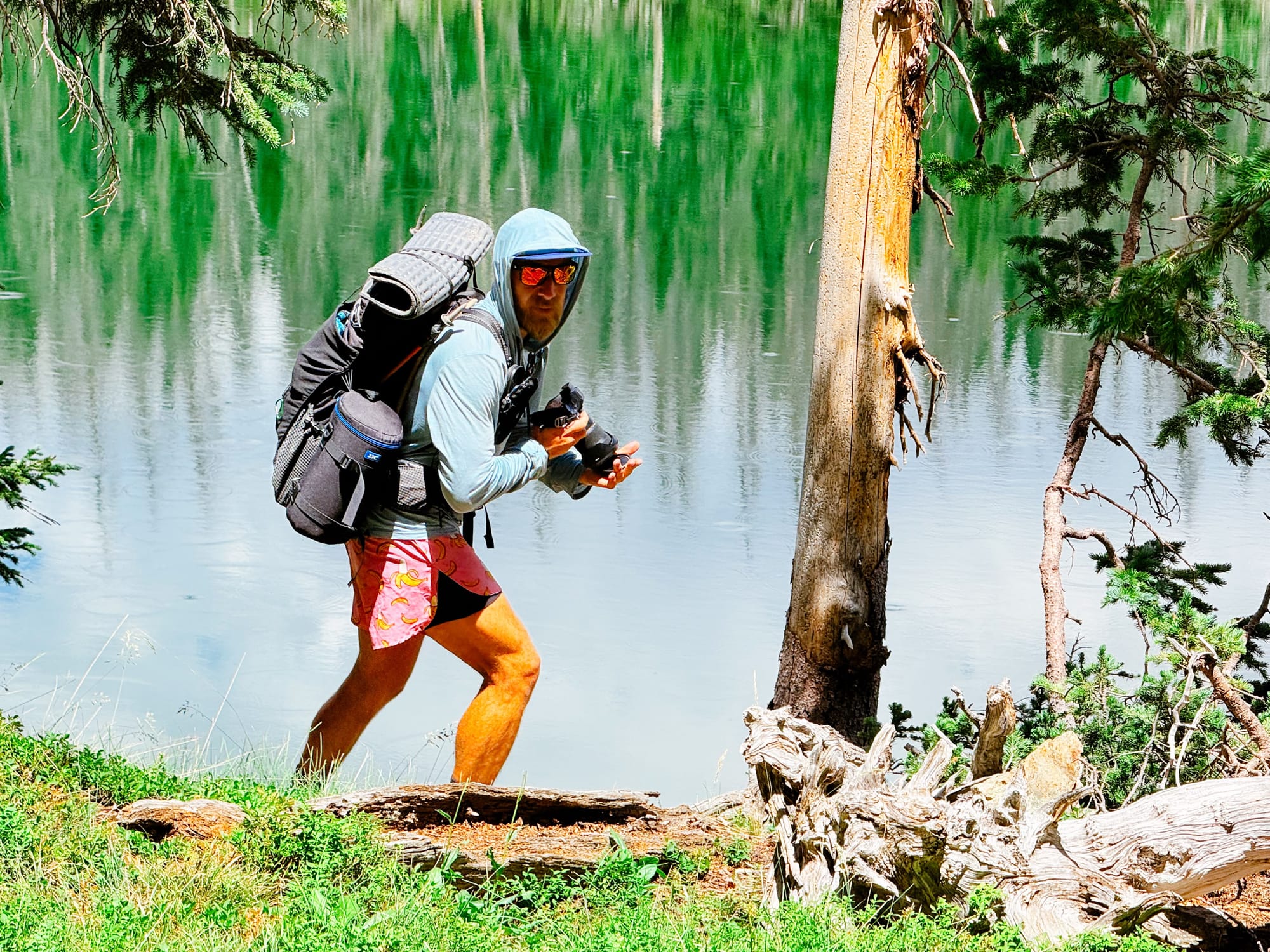
At first I thought it might be a fox. I used the Nikon and 100–400mm lens to get a better look.
It was a coyote.
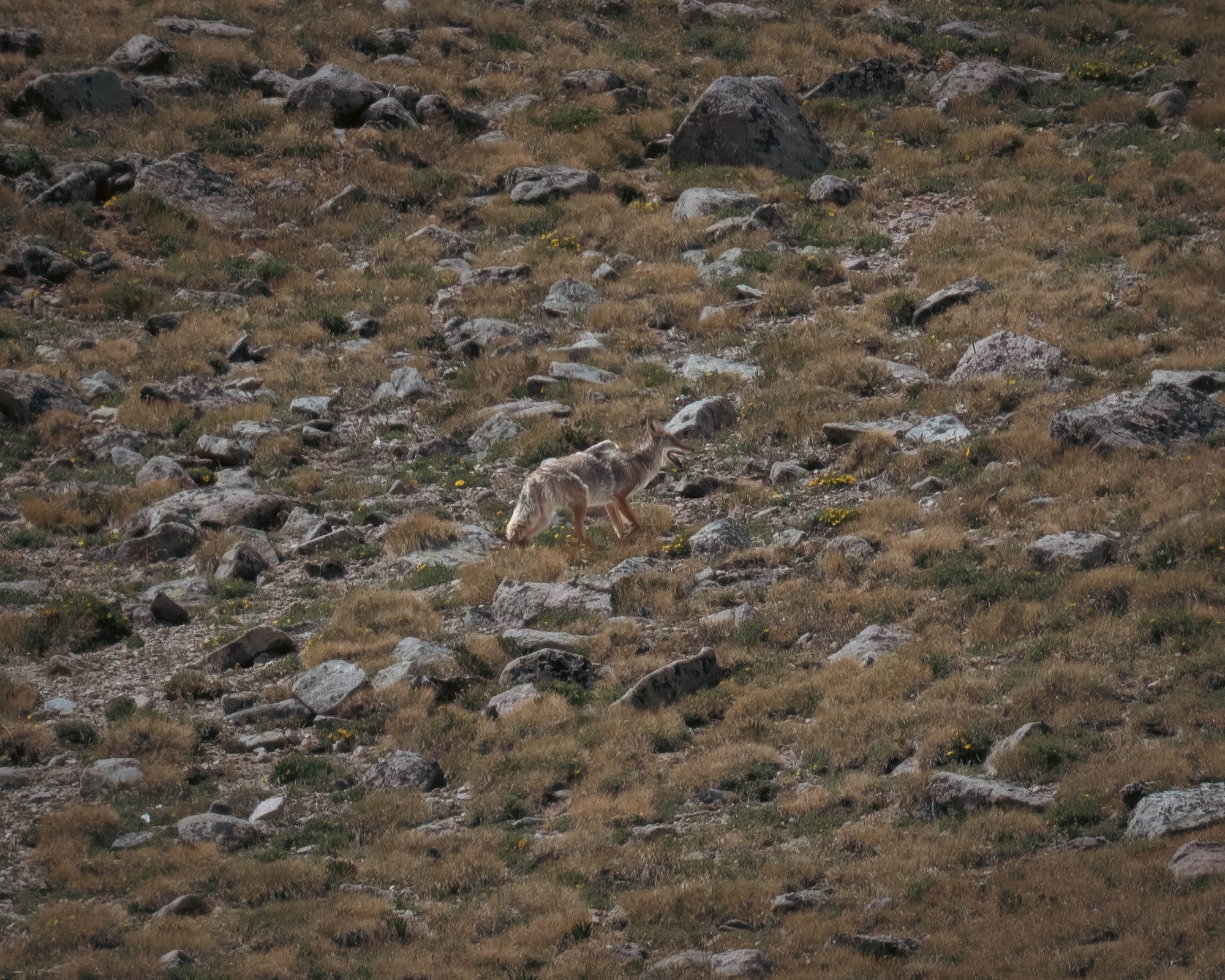
It had noticed us but did not run. It moved slowly out of the bushes, climbed along the ridge, and eventually crossed over the pass and disappeared from view.
It was the first coyote I had seen in the wild while hiking. Colorado now has an established population throughout the Continental Divide, but seeing one on foot in the middle of an open afternoon still felt improbable.
The long lens had justified its place in the sidecar.
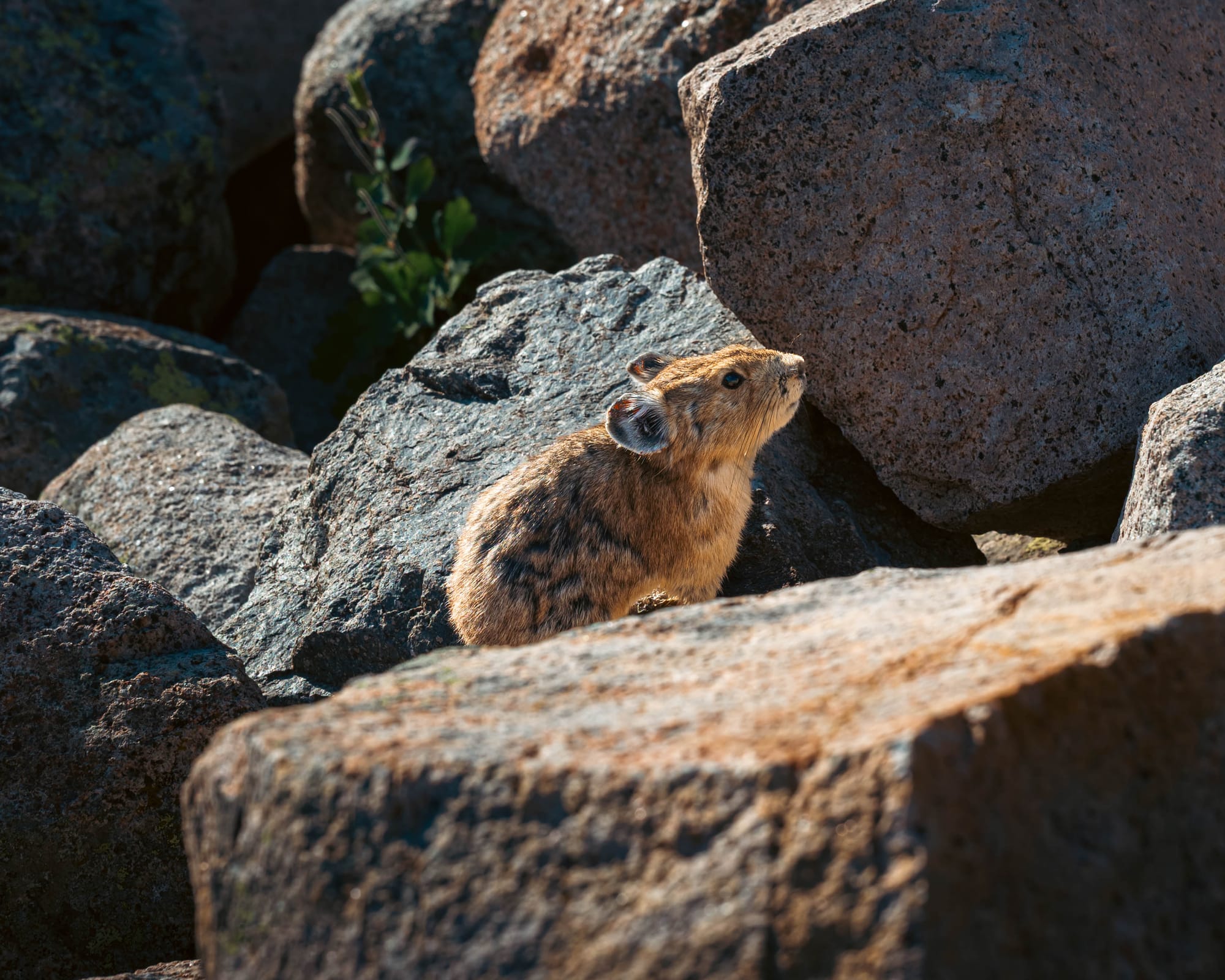
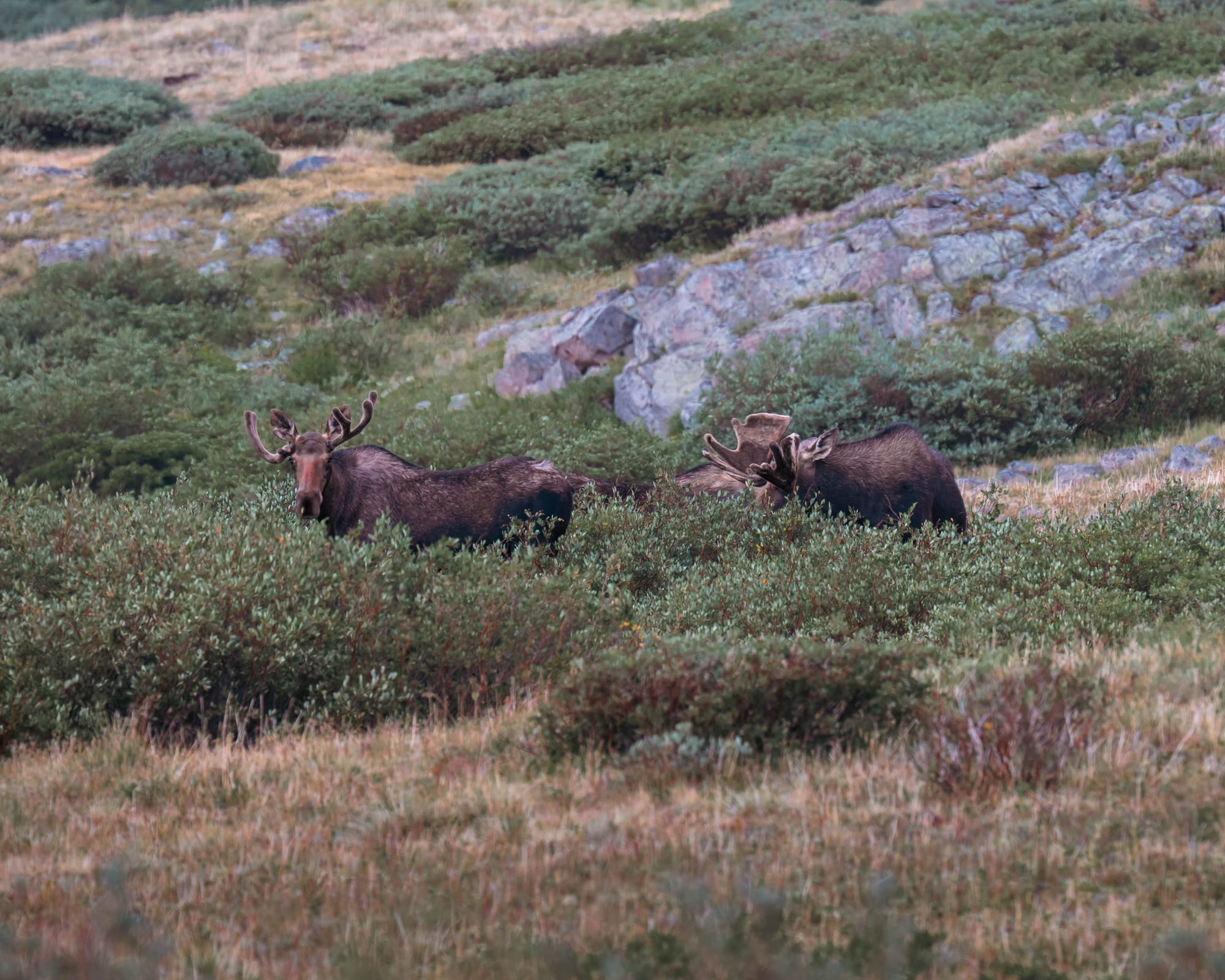
Cottonwood Pass
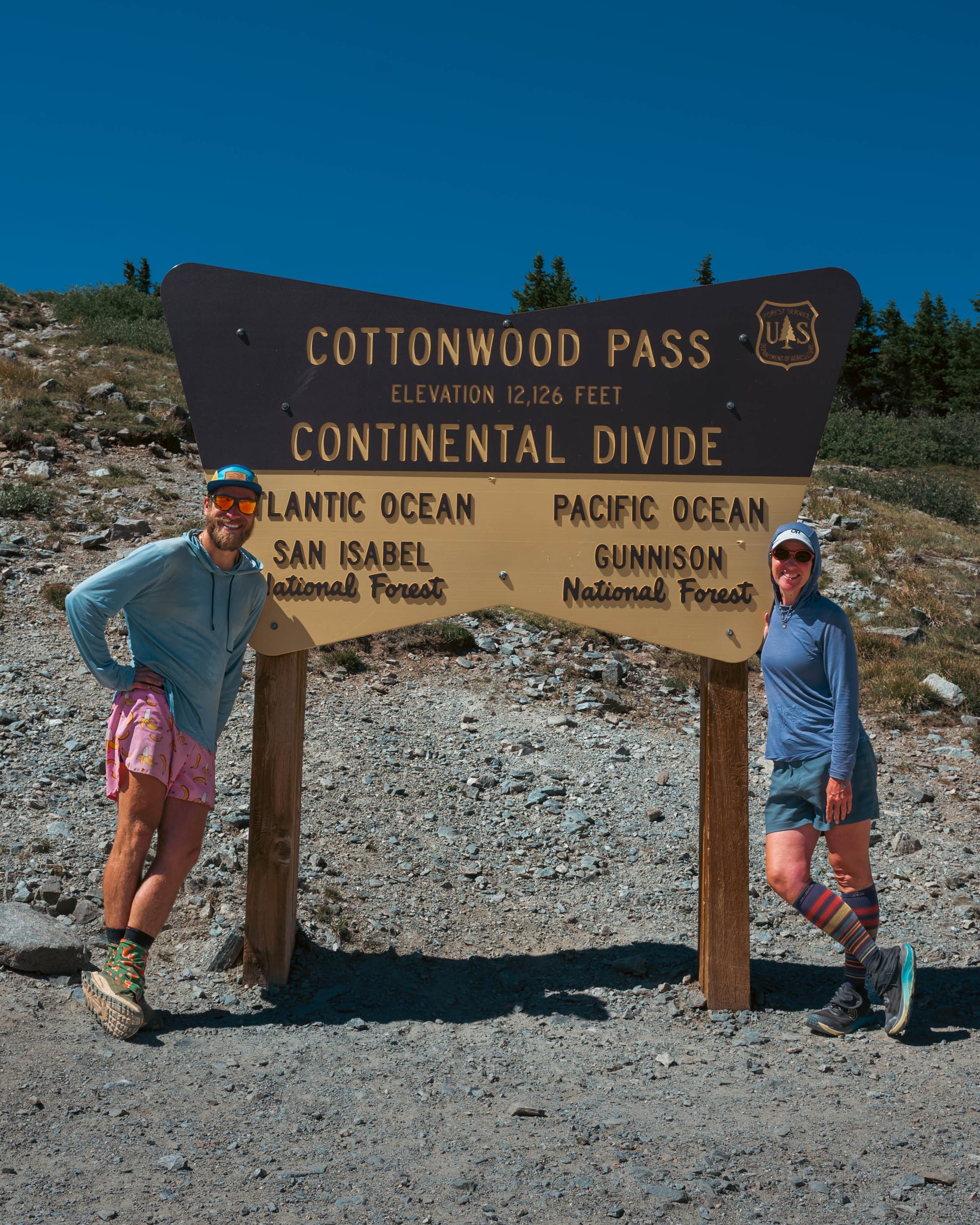
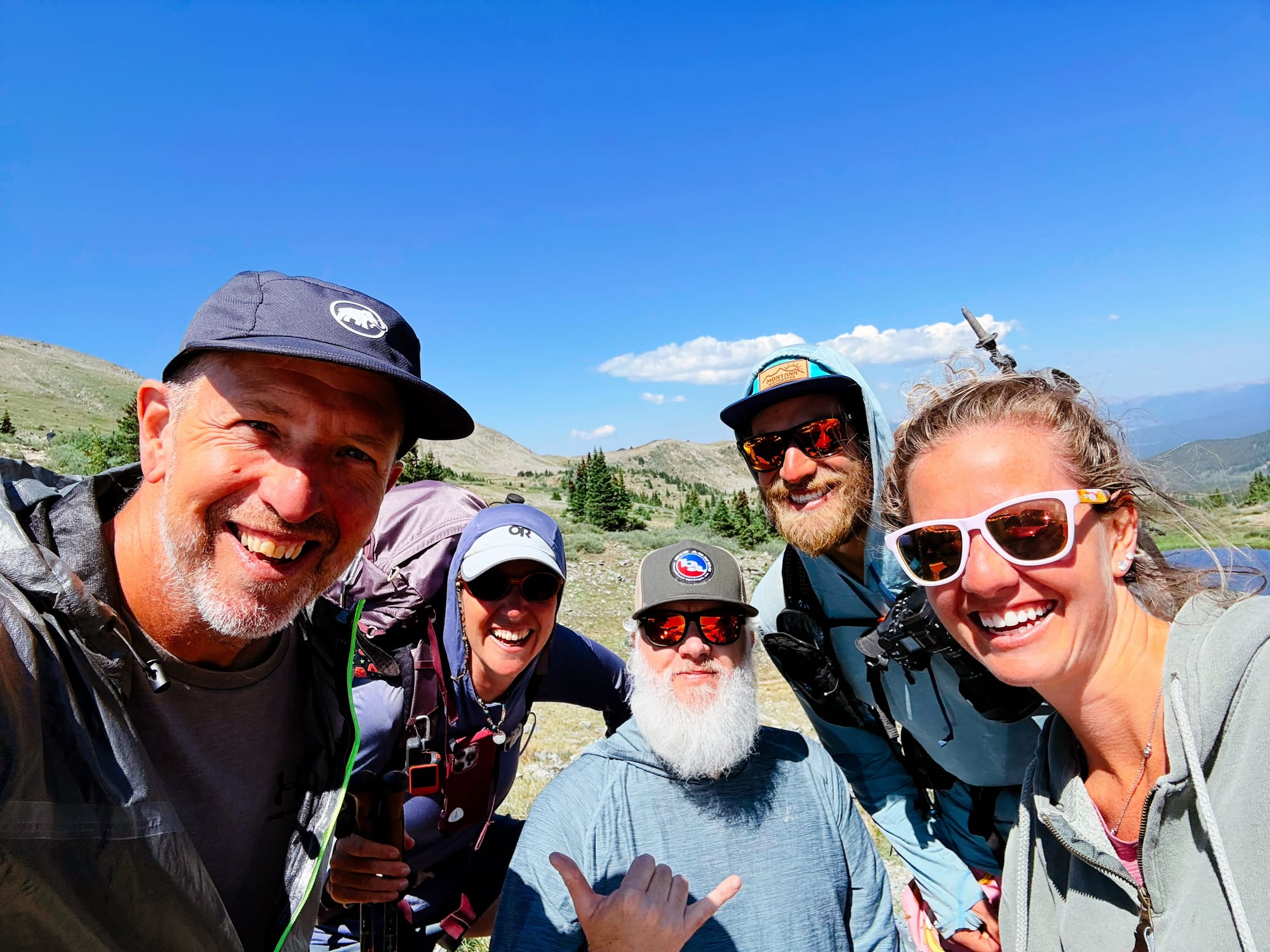
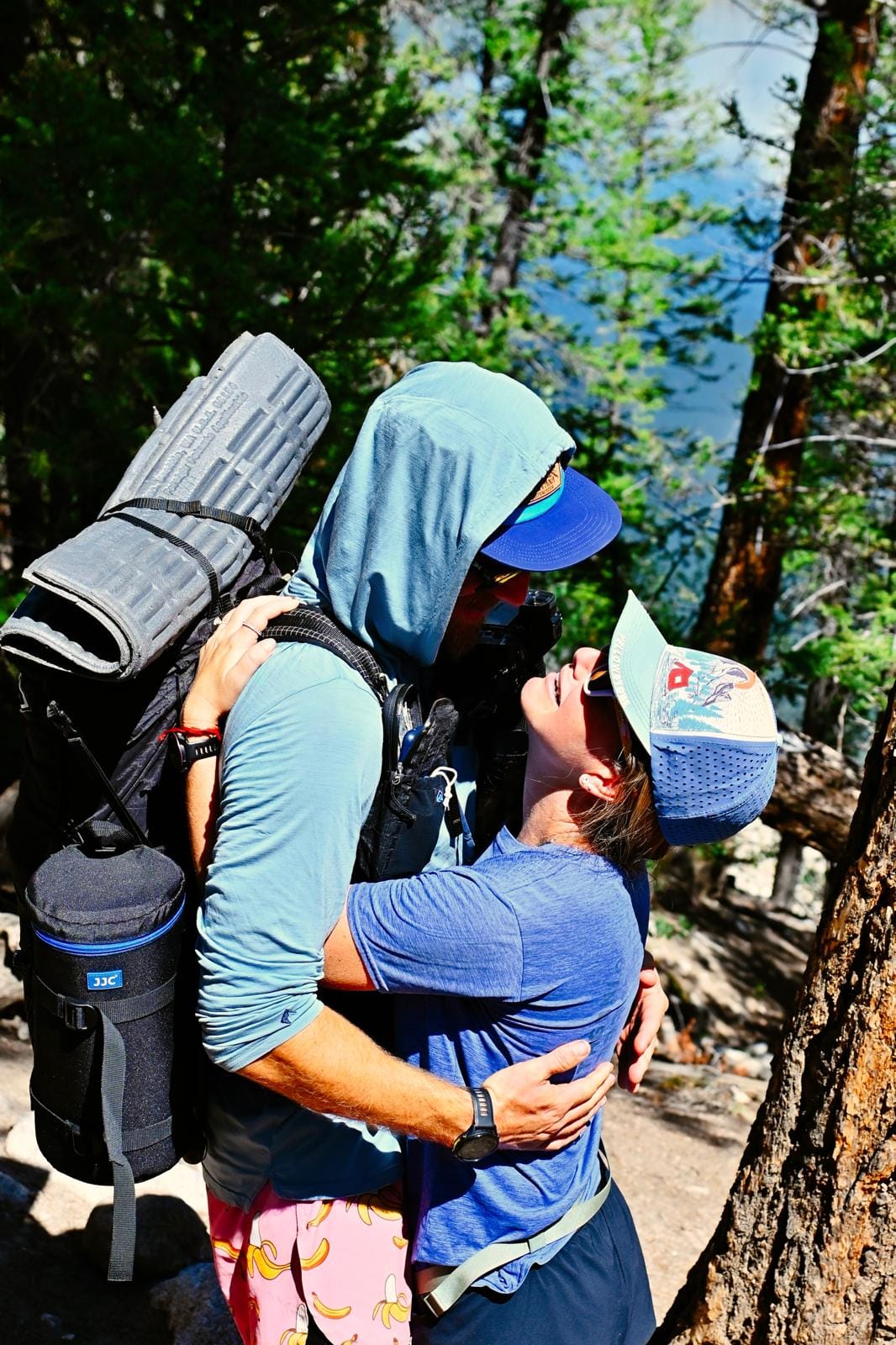
Sam, Slow, and Iron Mike surprised us with trail magic at Cottonwood Pass.
Slow had made it out safely and received treatment and unexpectedly met Iron Mike at the Salida hostel. Seeing all three of them at the pass was a welcome surprise.
It also gave me a chance to lighten the pack.
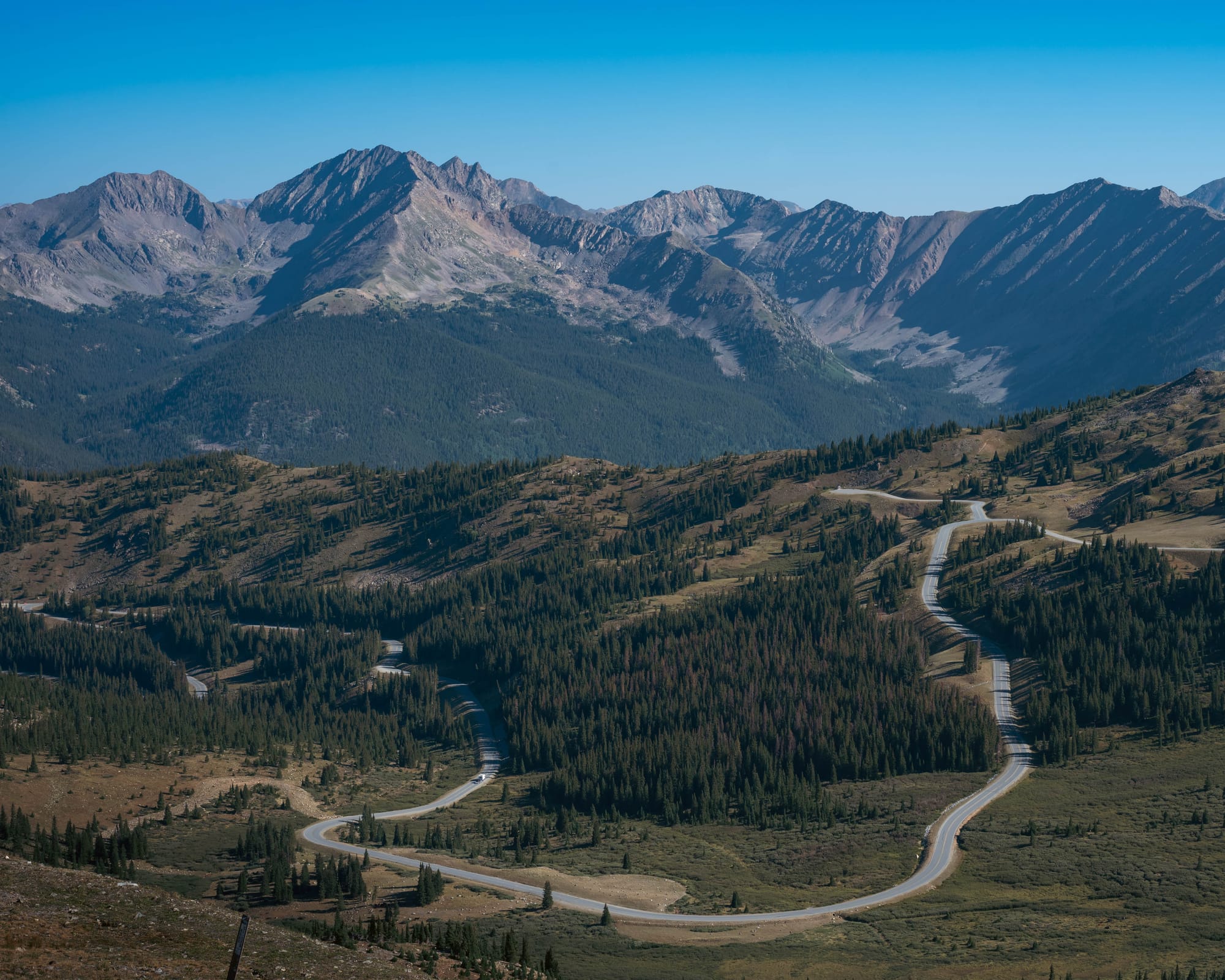
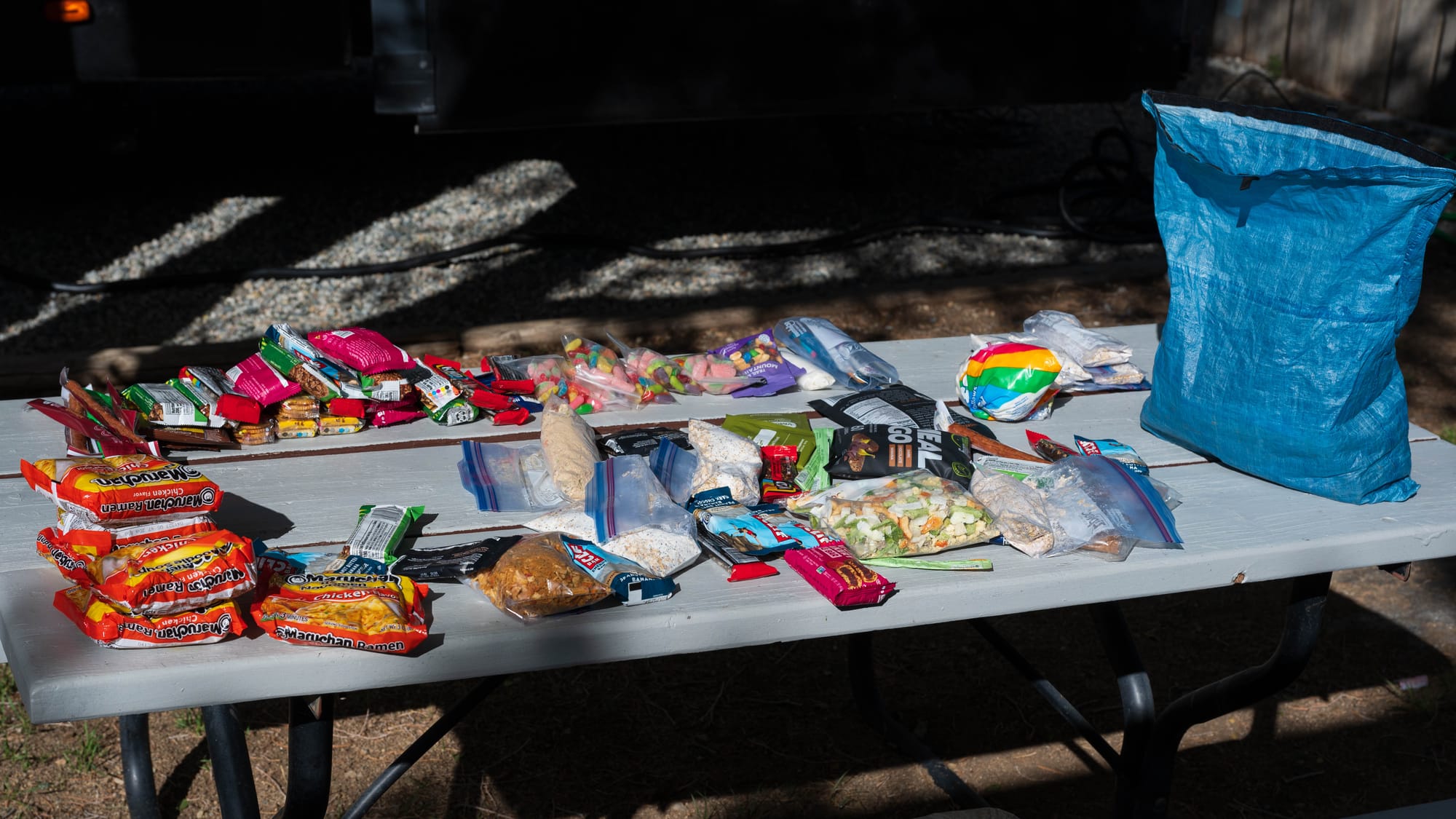
With roughly 35 miles remaining, I left the sidecar with Sam. The 100–400mm lens, DJI Mini 4 Pro, spare batteries, and extra food came out of the pack.
I kept the Nikon Z6 III and 24–120mm lens.
The difference was immediate. The pack sat better, the climbing felt easier, and I no longer had the external weight pulling against one side.
We saw additional moose afterward that would have been easier to photograph with the long lens, but I had already captured some solid wildlife images.
Giving up the extra reach was worth the weight savings.
Lake Ann Pass
Our longest day carried us north toward Lake Ann Pass.
By then we had already covered several major climbs, but the final approach still required attention. The trail climbed through increasingly open terrain before crossing the pass and dropping toward Lake Ann.
It was late in a 24-mile day, and the distance was starting to register.
The descent revealed the basin below.
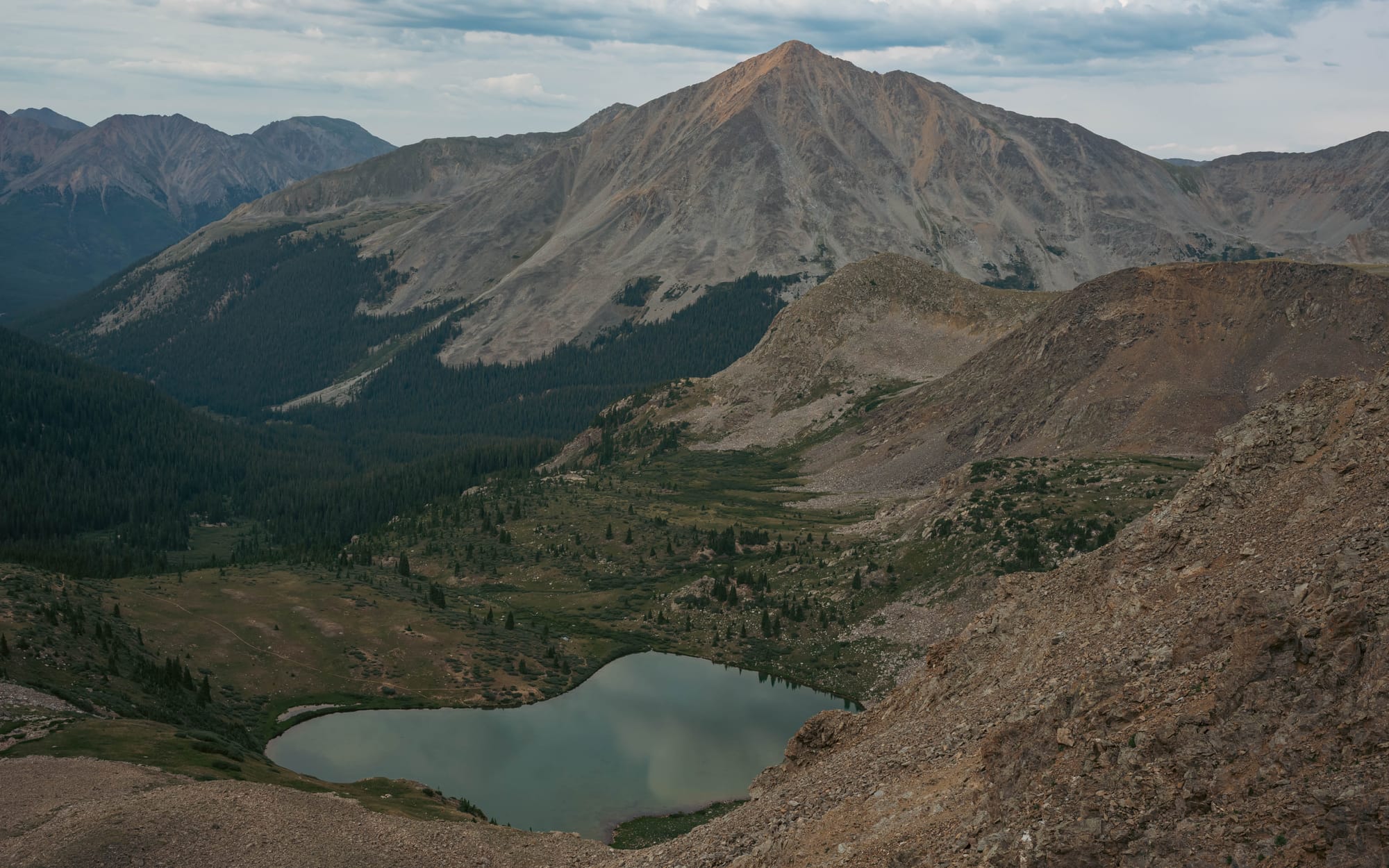
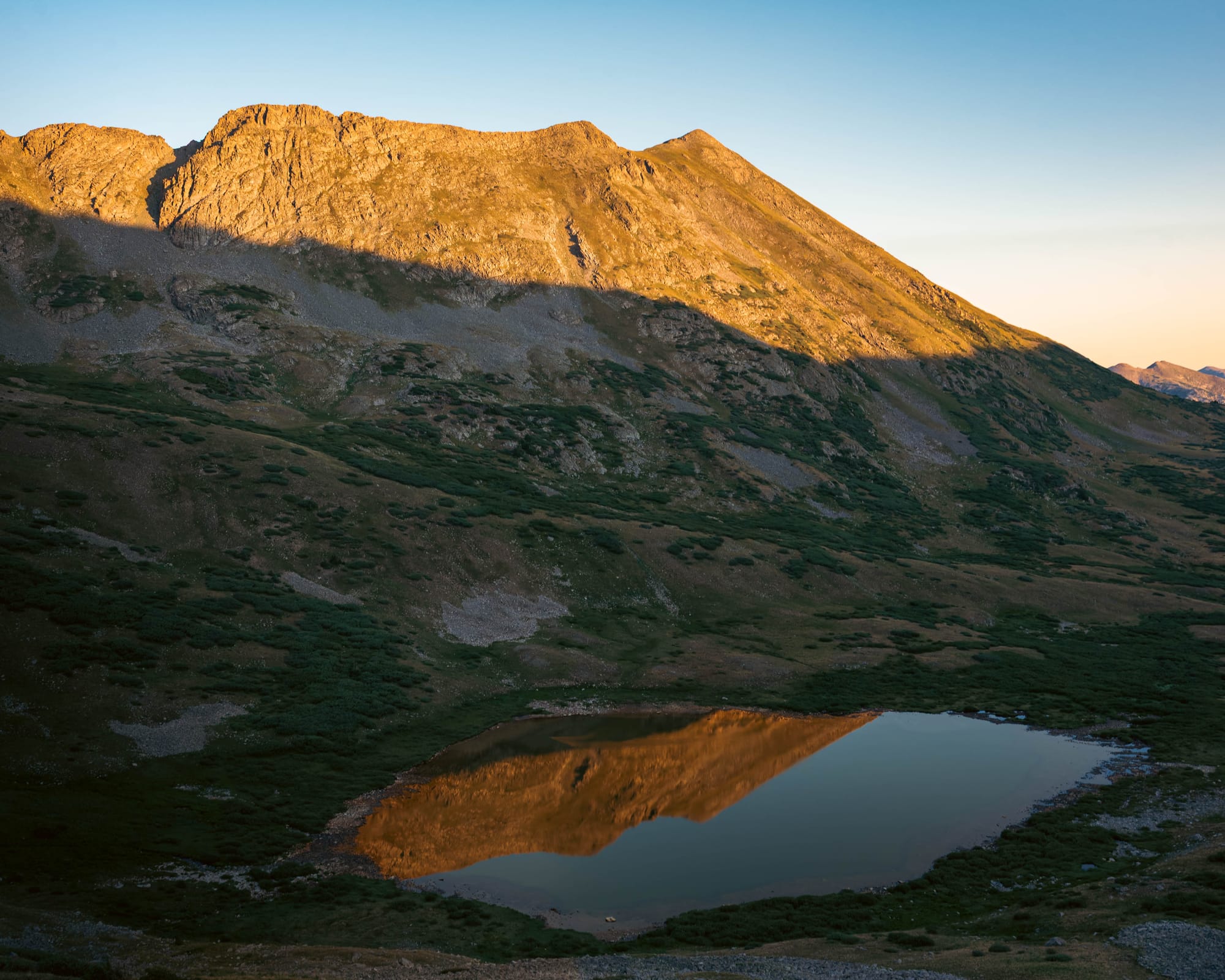
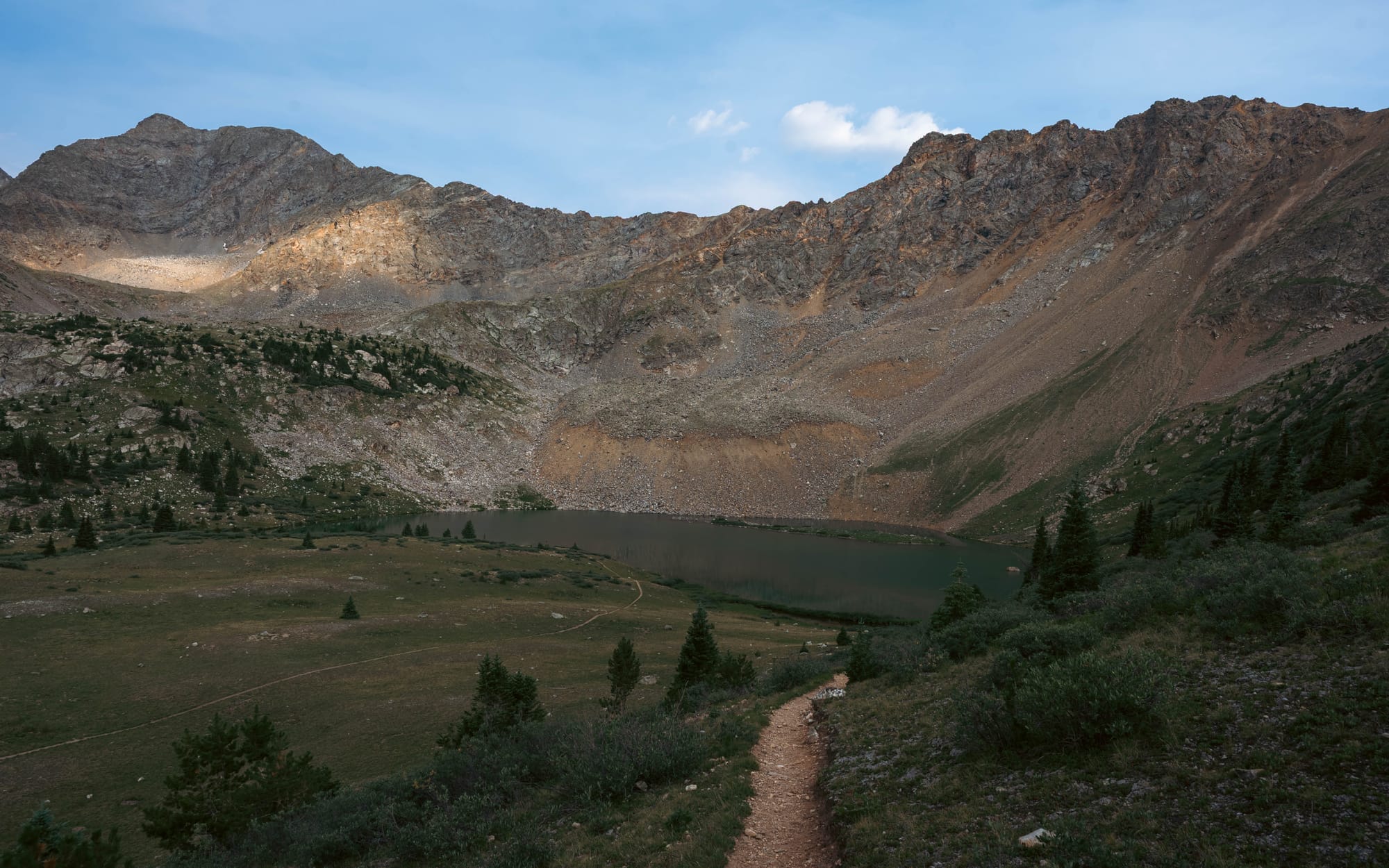
Lake Ann sat beneath steep alpine slopes, surrounded by open mountain terrain. There were no trees blocking the horizon and no developed features interrupting the setting.
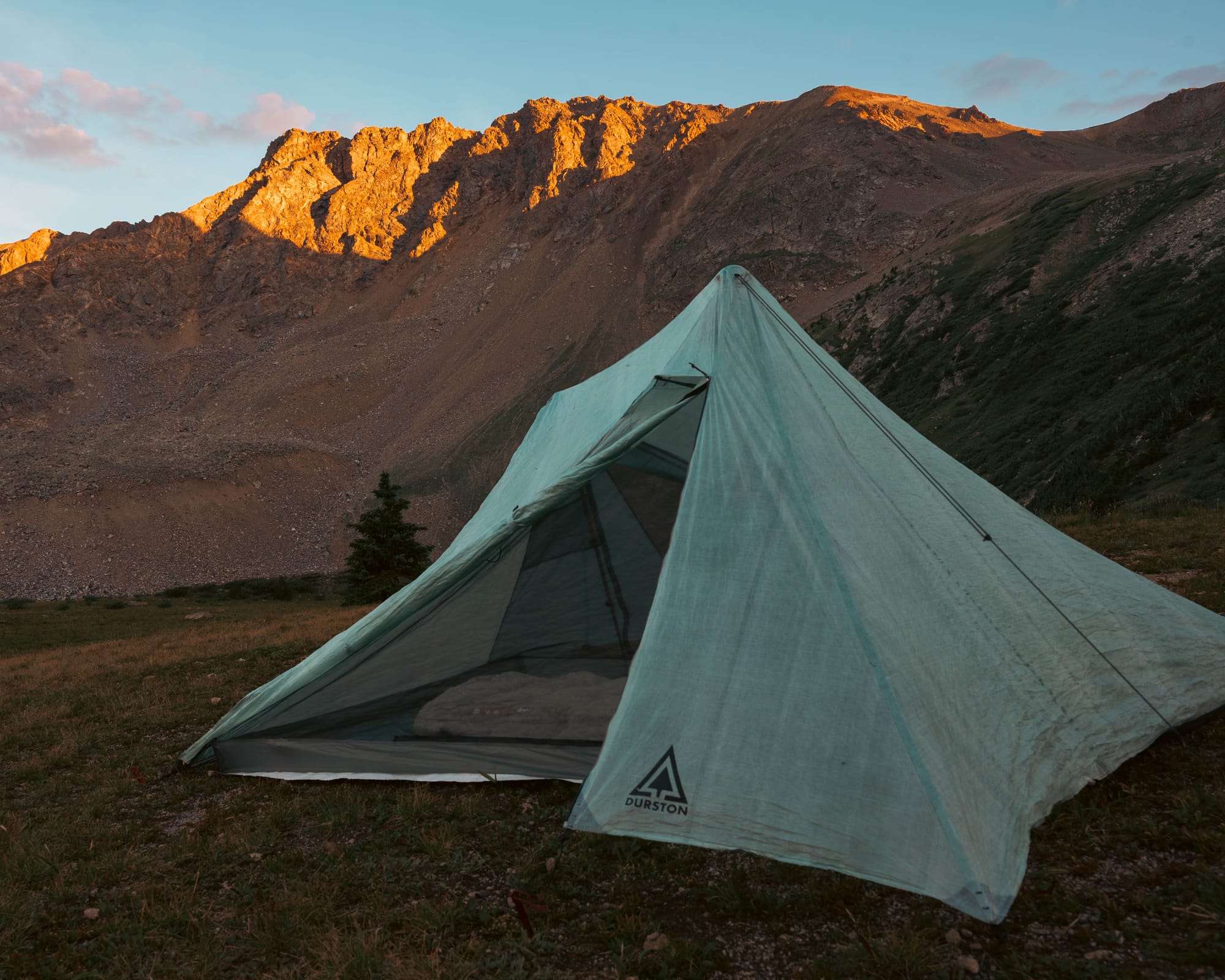
We found a campsite above the lake, far enough from the shoreline to avoid the heavier condensation from the previous nights.
It was one of the most spectacular places I have ever camped.
The lake, basin, and surrounding peaks remained visible from camp. We had evening light, an open sky, and the first morning light without needing to leave the tents and search for a view.
After 24.37 miles and 5,597 feet of climbing, we had arrived somewhere that justified the distance.
Lake Ann was not simply the best campsite of the Collegiate Loop. It belongs near the top of the list across all of my backpacking trips.
Hope Pass
The final morning began with approximately nine miles of mostly descending trail.
Then we reached the climb toward Hope Pass.
Hope Pass was the hardest climb of the final day and one of the biggest challenges of the route. Our legs already carried three days of larger mileage, and the approach gained steadily at over 1,000 feet of ascent per mile for 2.2 miles.
The lighter pack helped, but the climb still required a fair bit of effort.
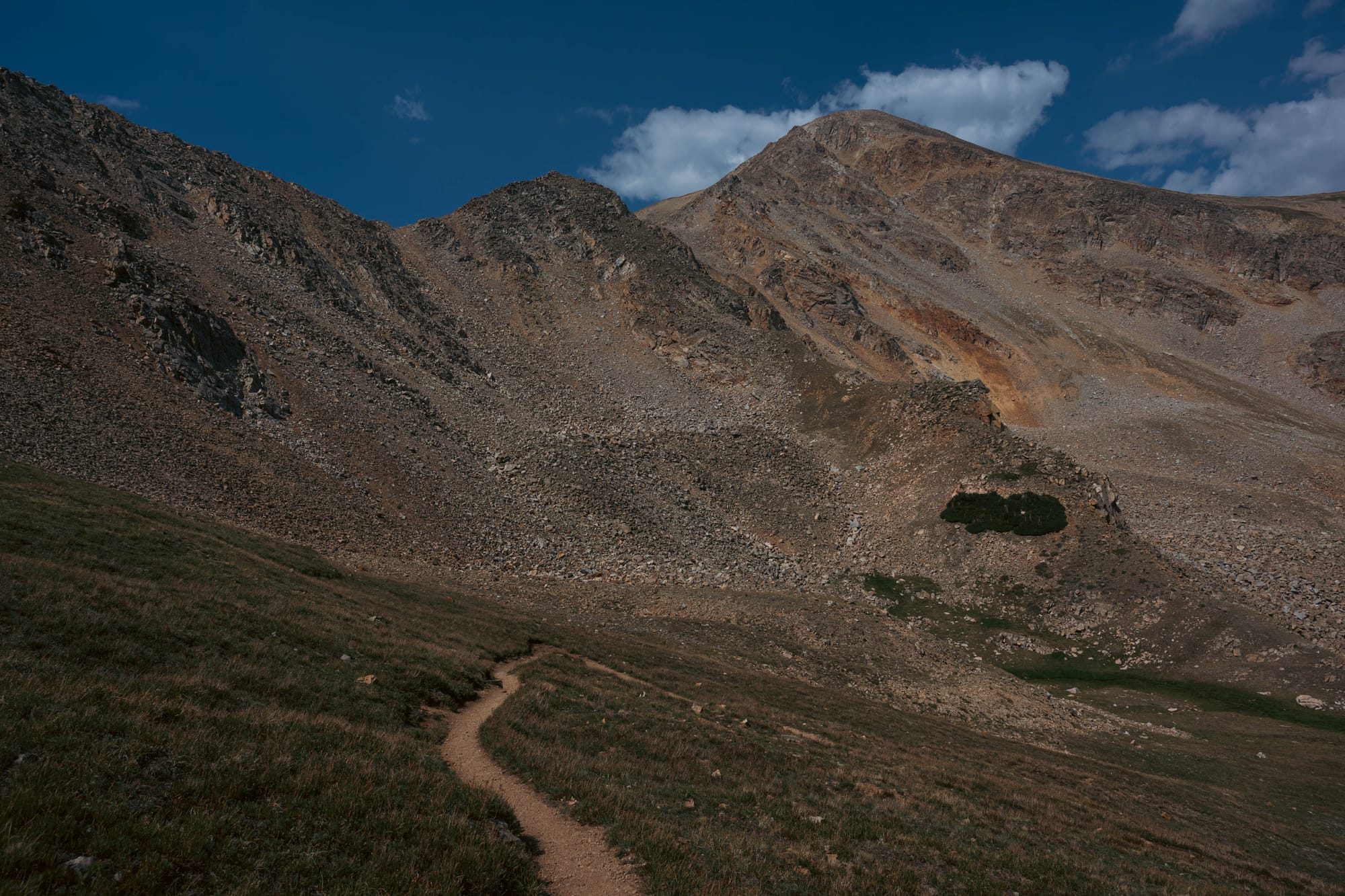
We moved upward slowly and reached the pass without needing to force the pace. From the top, the route dropped toward the northern Collegiate junction and the Twin Lakes basin.
Hope Pass and Lake Ann are two of the recognized highlights of Collegiate West, and both came at the end of the section when fatigue was highest.
They were also the strongest finish the route could have provided.
We reached Twin Lakes after 17.68 miles and 3,232 feet of climbing.
West by the Numbers
Finishing in four days did not feel rushed.
The larger mileage made the West more challenging, but it also made the experience more satisfying. We adjusted after Slow left, accepted the longer days, and found that the terrain continued to reward us for moving through it.
| Day | Distance | Elevation gain | Moving time |
|---|---|---|---|
| Day 6 | 14.66 mi | 3,284 ft | 5:43:12 |
| Day 7 | 22.00 mi | 5,302 ft | 8:29:31 |
| Day 8 | 24.37 mi | 5,597 ft | 9:15:39 |
| Day 9 | 17.68 mi | 3,232 ft | 6:44:46 |
| Total | 78.71 mi | 17,415 ft | 30:13:08 |
⚡ TL;DR
- Trail highlight: High alpine basins, exposed passes, exceptional camps, and frequent wildlife
- Best for: Strong backpackers who prefer open terrain and sustained mountain views
- Hardest part: Reaching practical camps often required crossing another pass late in the day
- Would I hike it again?: Yes
Final Takeaway
Collegiate East and Collegiate West were presented as two alternatives through the same mountain range.
In practice, there was no comparison.
The East was competent, challenging forest trail.
Collegiate West was top-tier backpacking.
The higher mileage made it physically demanding, but the terrain continued to reward the effort. The route had better camps, more wildlife, stronger views, and far more variety than Collegiate East.
I took roughly 400 photographs during five days on the East. I took more than 1,200 during four days on the West.
I would hike Collegiate West again and recommend it as a standalone trip. I would also recommend it to Colorado Trail hikers choosing between the two Collegiate alignments.
The full loop was still a worthwhile trip. It brought me back onto a long trail with Slow and Steady, tested what Steady and I could accomplish, produced some stunning wildlife photographs, and ended with one of the best camps I have had anywhere.