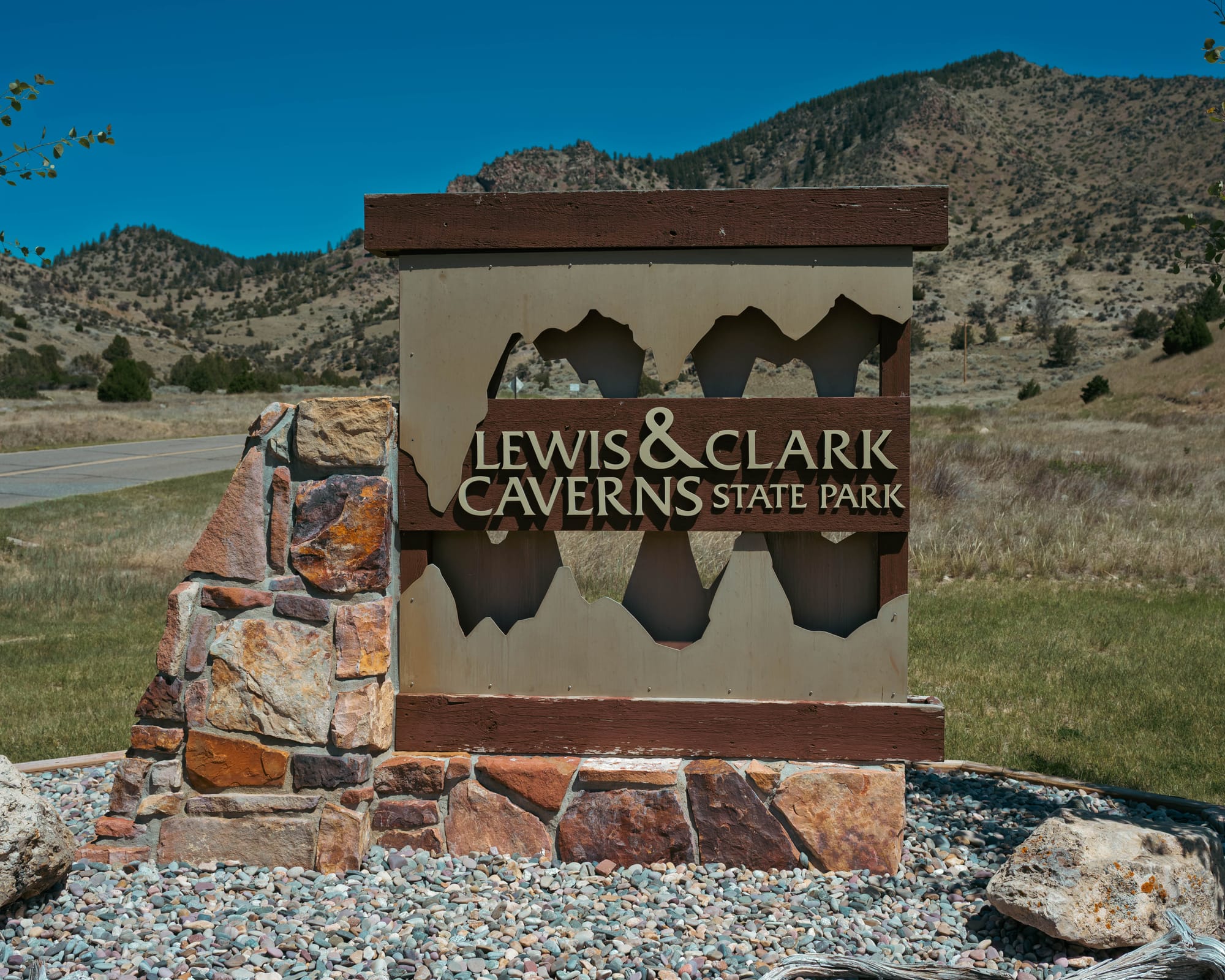
Lewis & Clark Caverns State Park
Lewis & Clark Caverns came at the end of a complicated travel week.
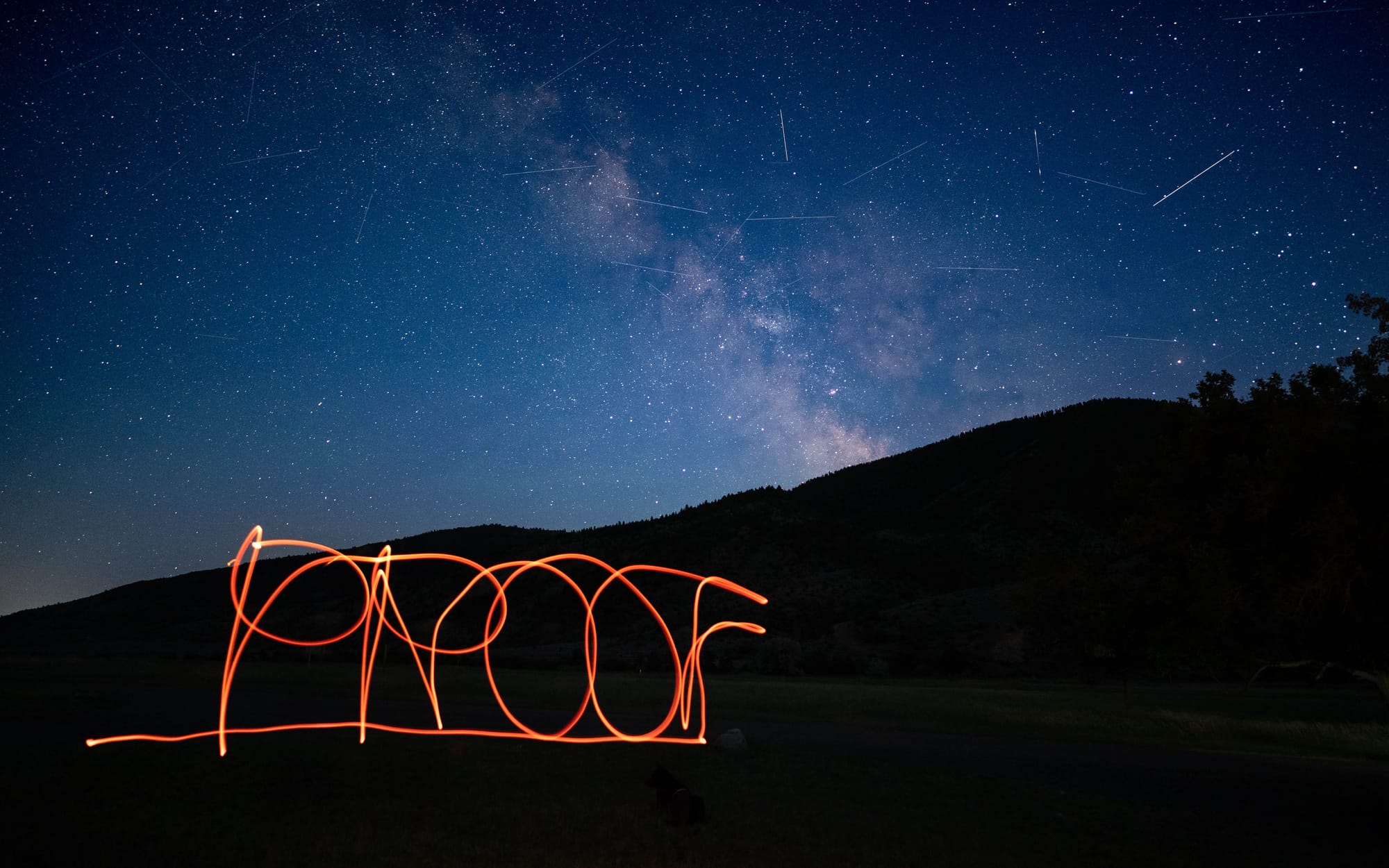
Sam flew out of Bozeman for work while we were still in Gardiner. I picked up Proof, and we moved the Airstream to the state park before returning to Bozeman a few days later for Sam and Proof’s girlfriend.
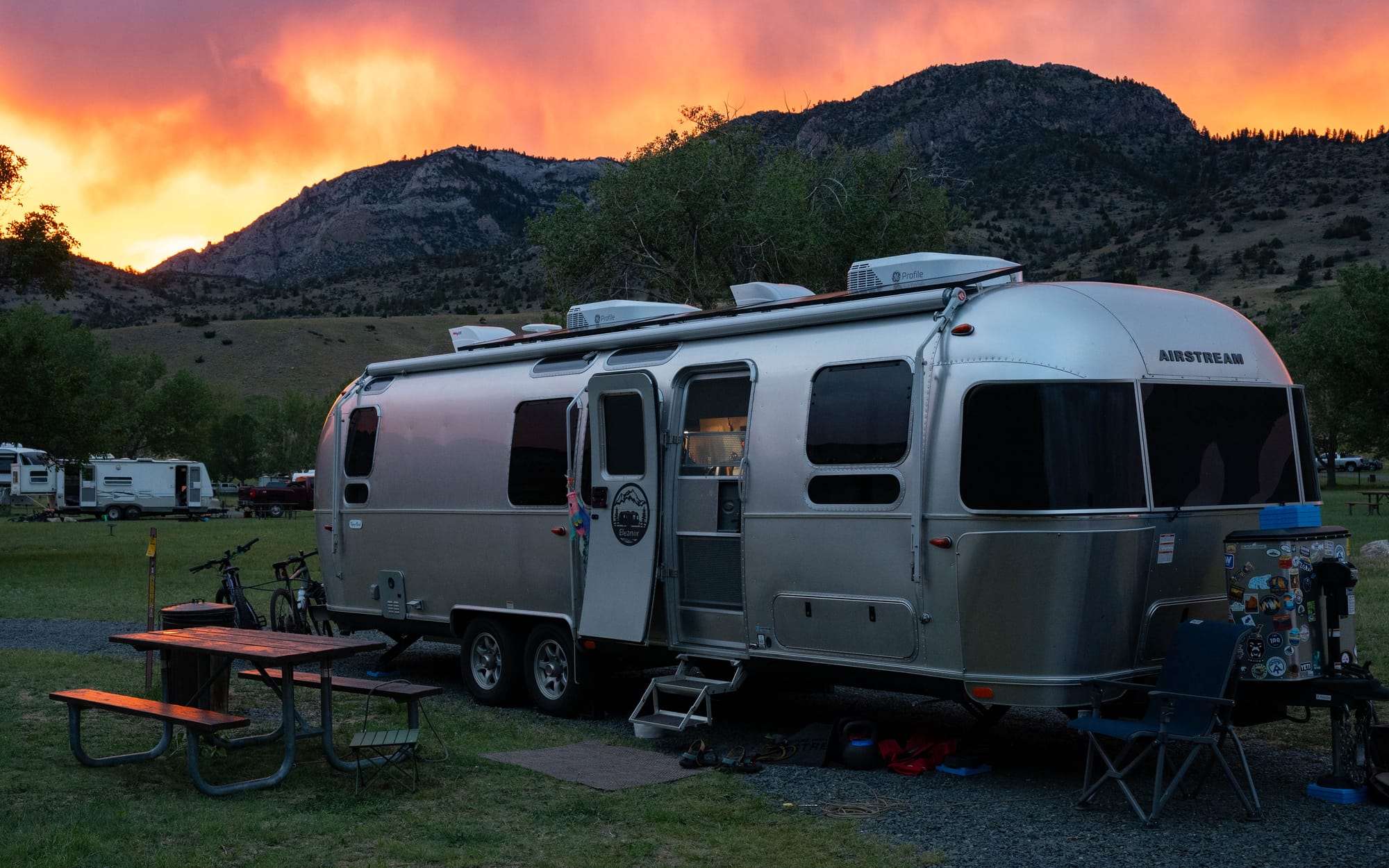
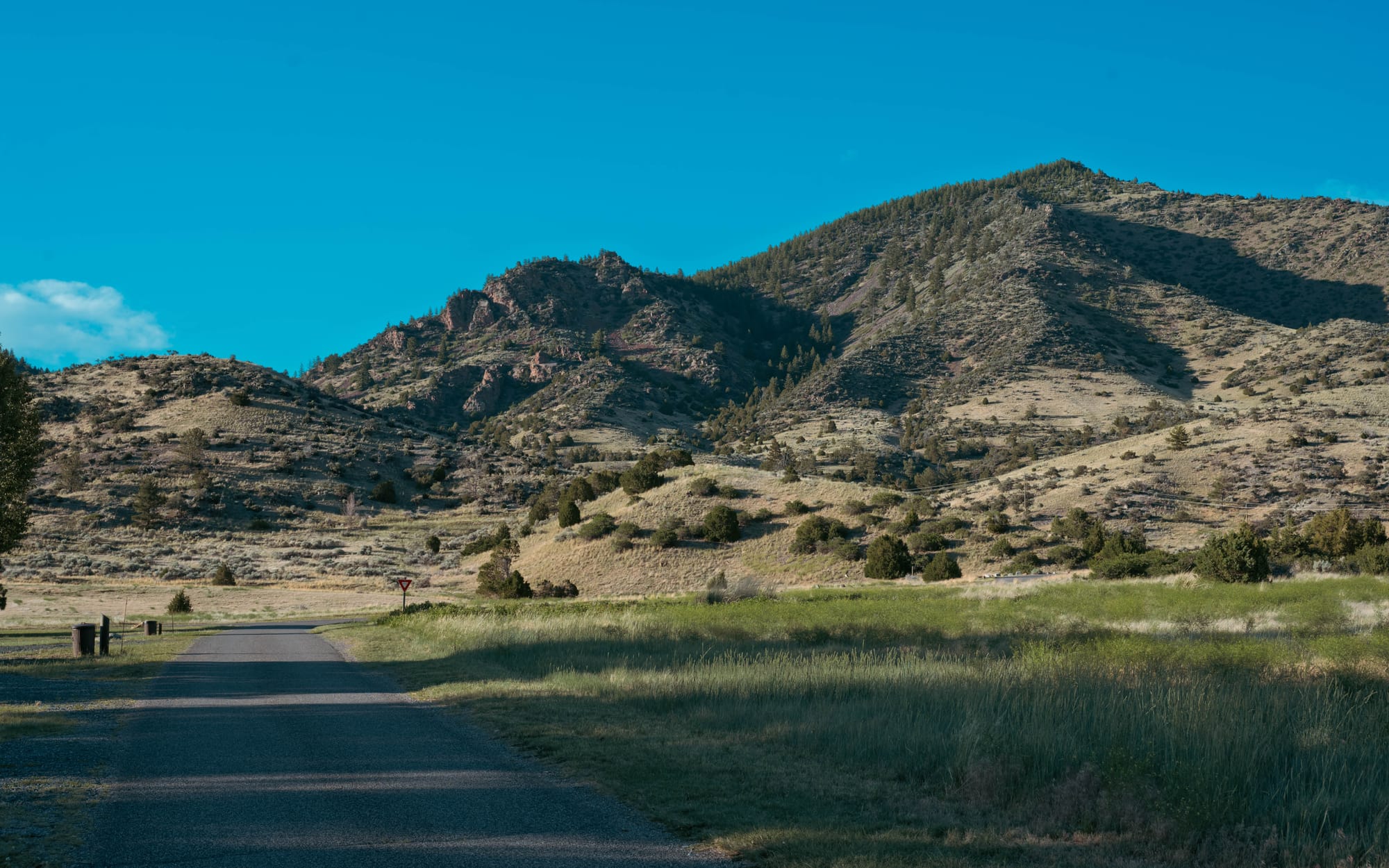
Toasty afternoons kept the Airstream’s air conditioning busy, and the open hills offered little shade.
Proof and I rode bikes from the campground toward the upper cave area and back one morning. The road gains roughly 1,000 feet over 3.5 miles between the lower park and the cavern area, and in the mid-90s heat there was nowhere to hide from it. Going down was fast and fun.
Most of the rest of the stay moved at a slower pace.
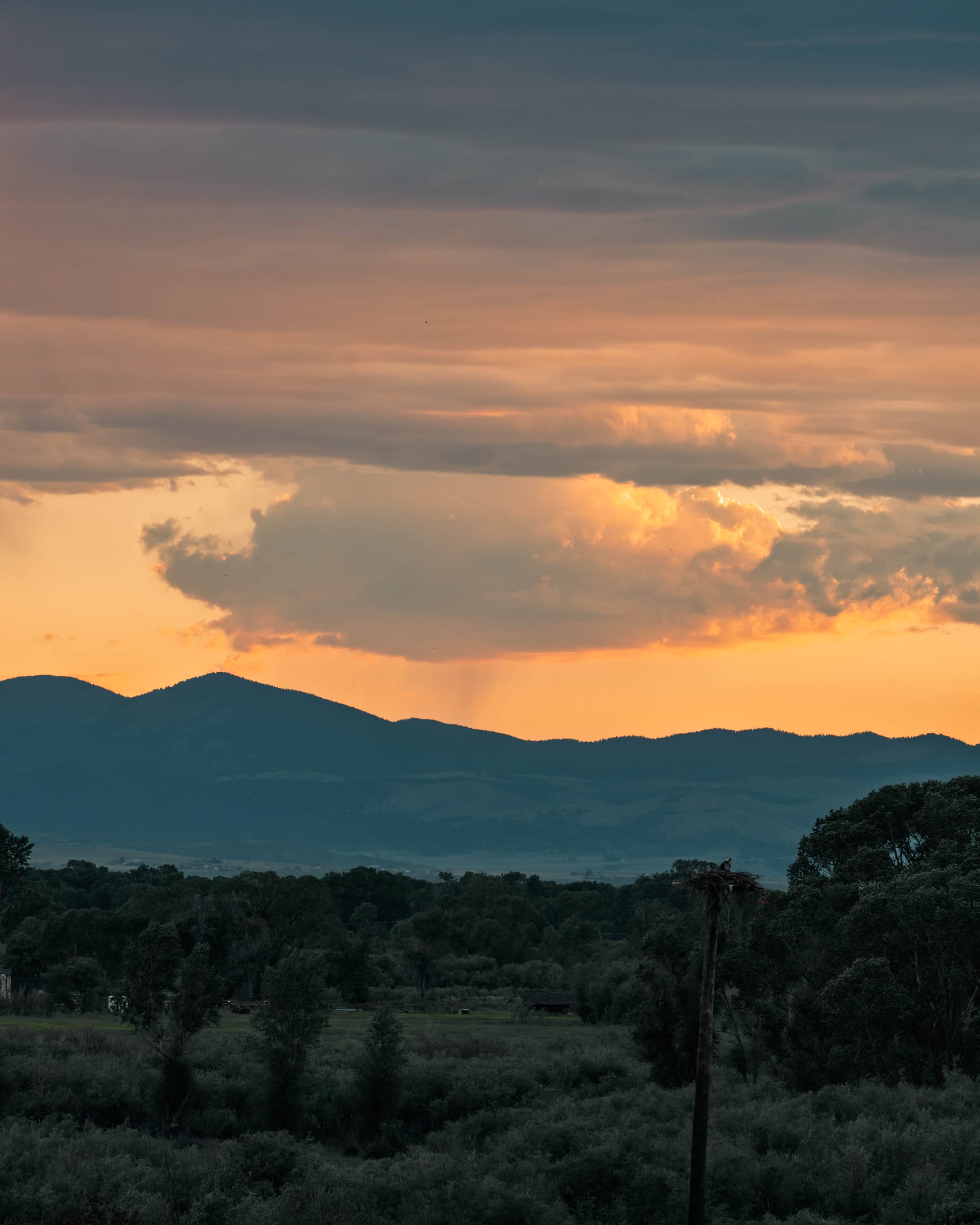
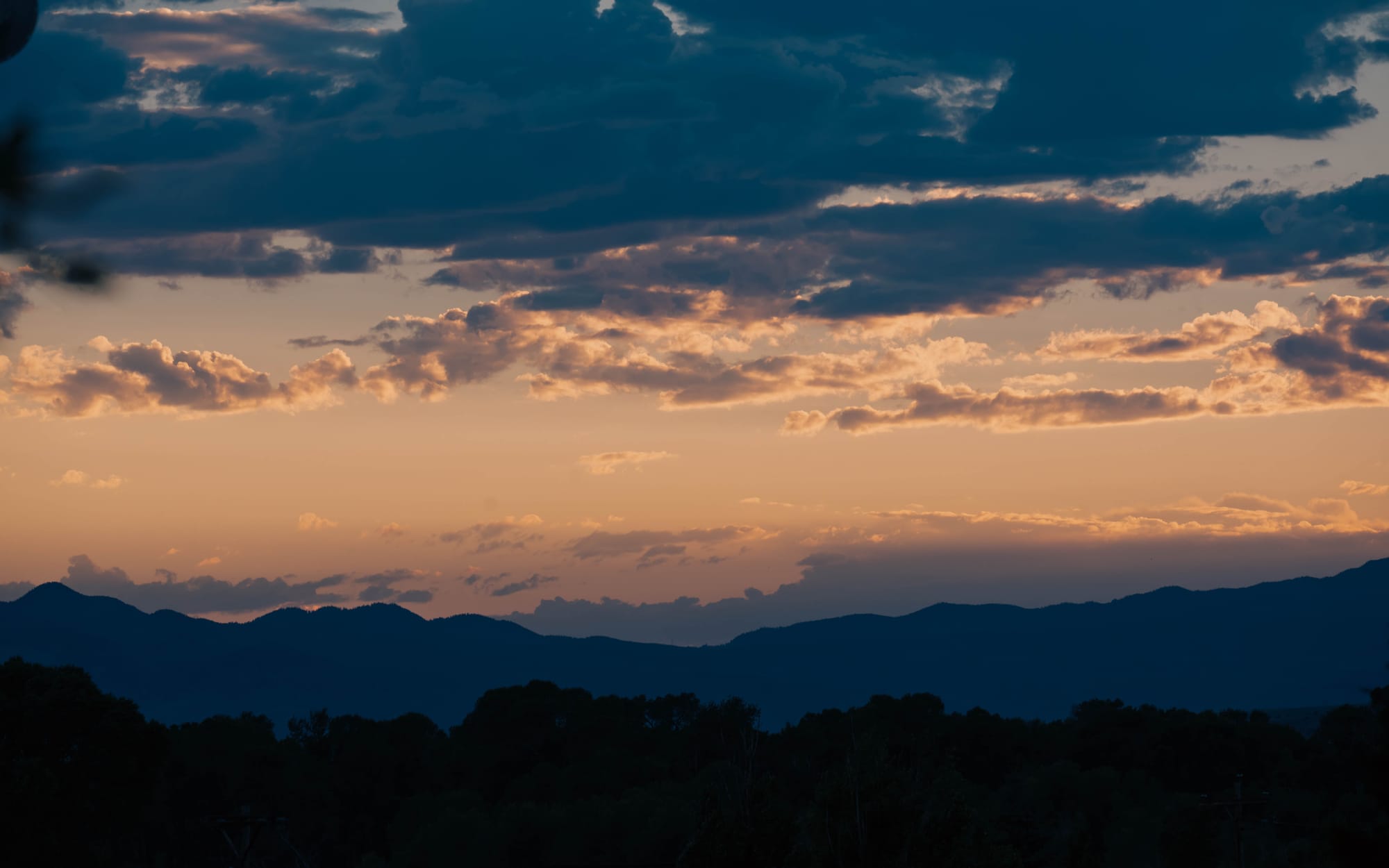
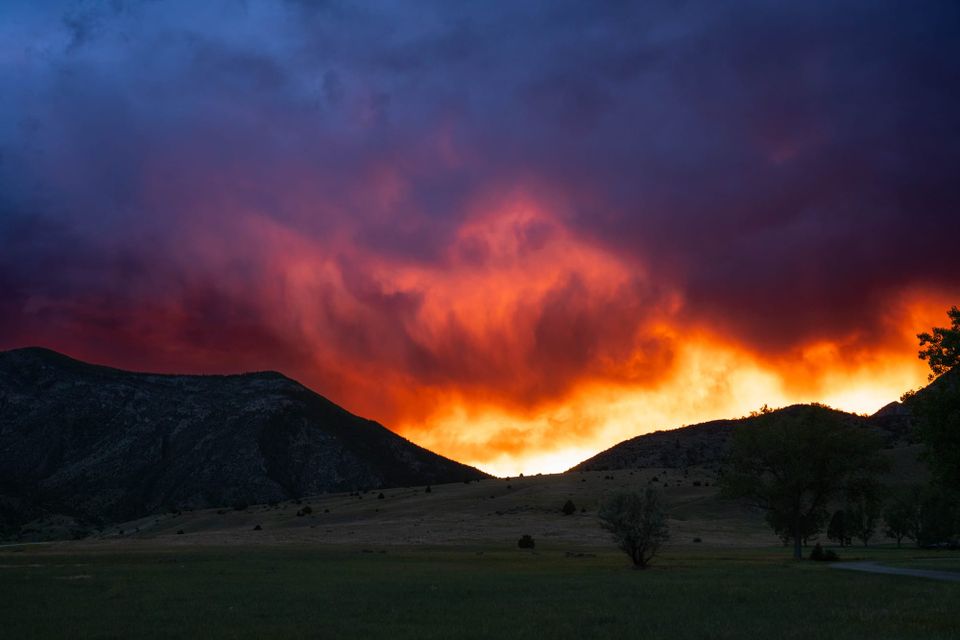
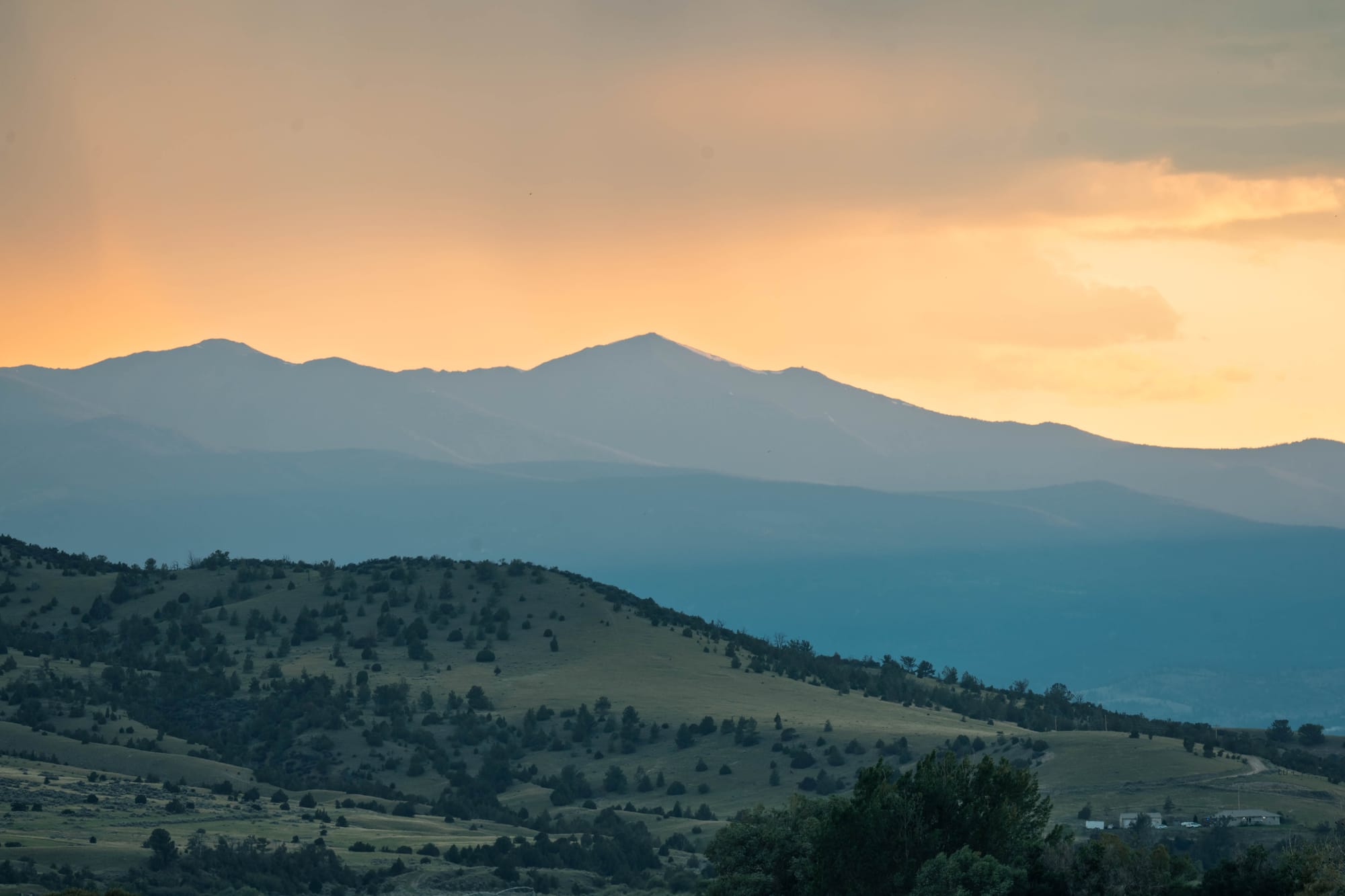
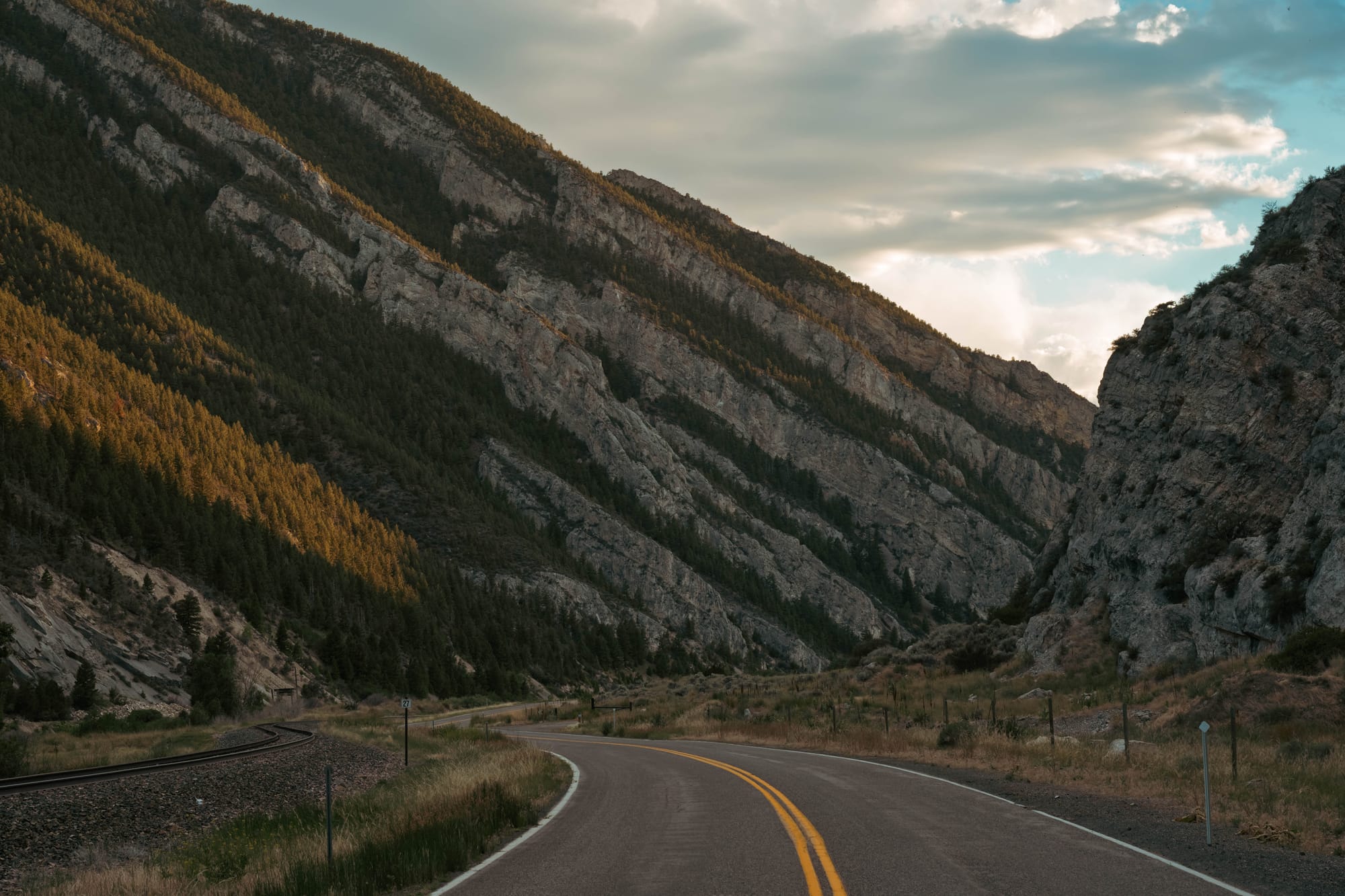
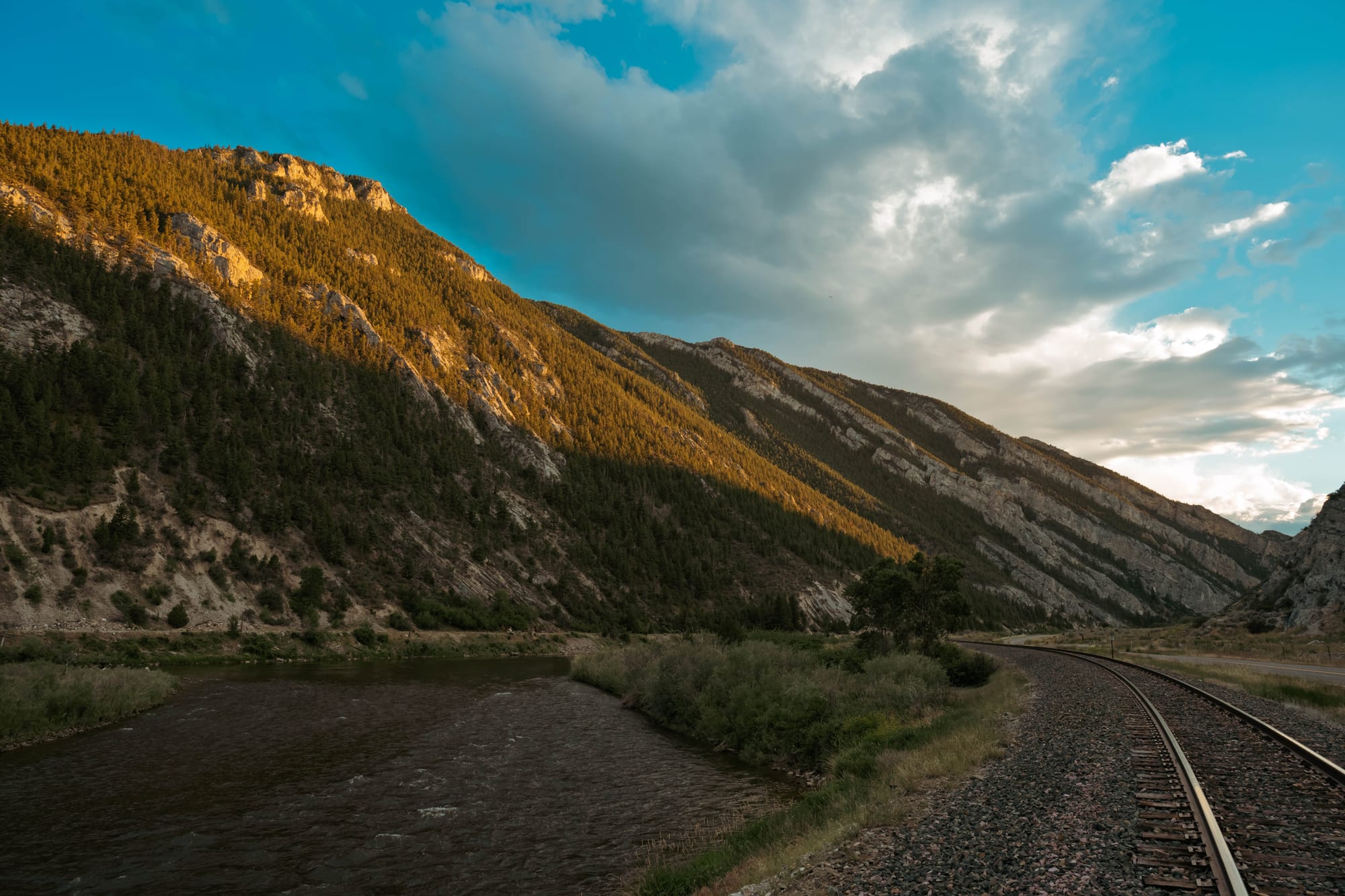
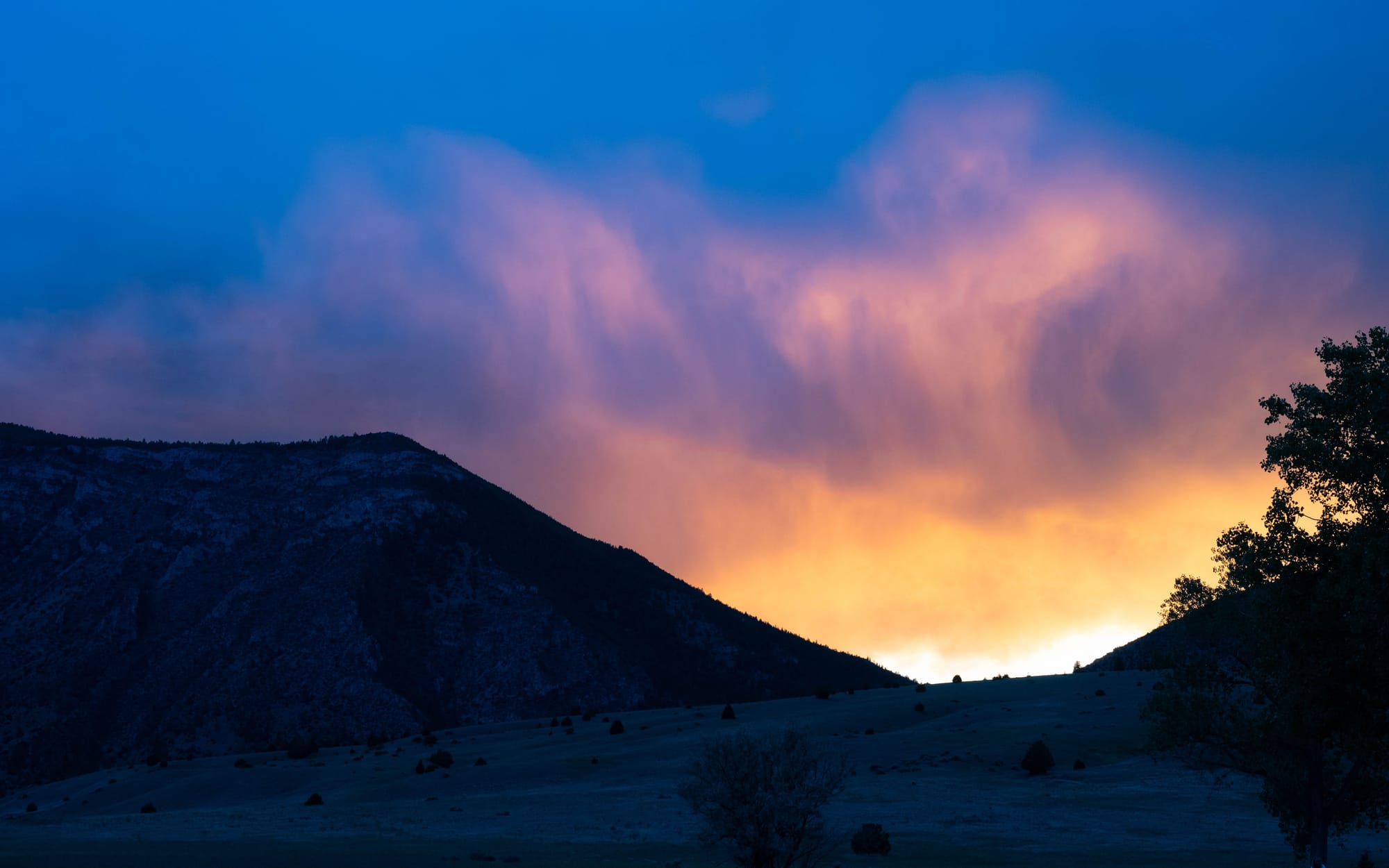
We spent an afternoon sitting in the Jefferson River, drove the valley at sunset, and made a trip into Bozeman for barbecue and a brewery.
Akela added a stressful detour when her nose suddenly swelled and she scratched it badly enough to open the skin. A vet in Three Forks treated her with a steroid and antibiotic, and she spent the rest of the stay in a cone looking far more inconvenienced than distressed. She healed quickly and was back to normal soon after, but for several days she became the park’s most recognizable camper.
The cave was the reason we came.
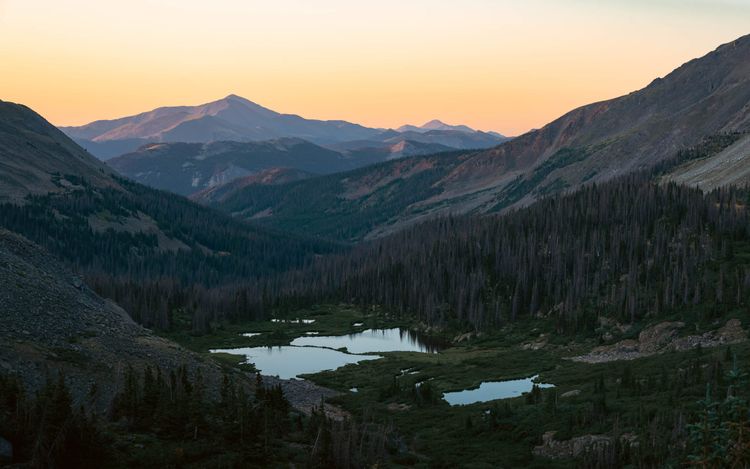
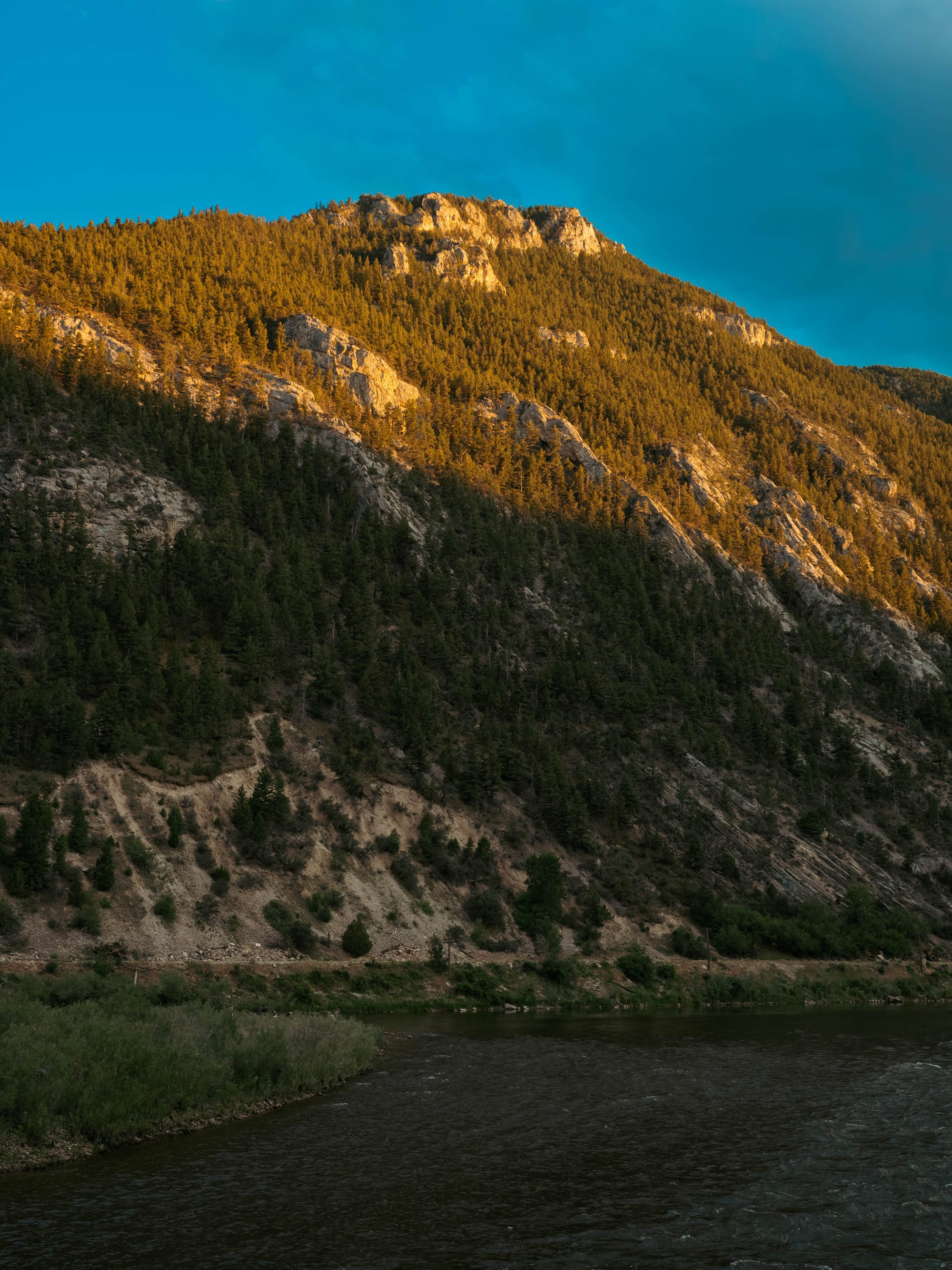
The surrounding landscape gave us more to remember than we expected.
🗺️ The Lay of the Land
- Location: Whitehall, Montana · 45.8384, -111.8687 · [Google Maps]
- Official site: Lewis & Clark Caverns State Park
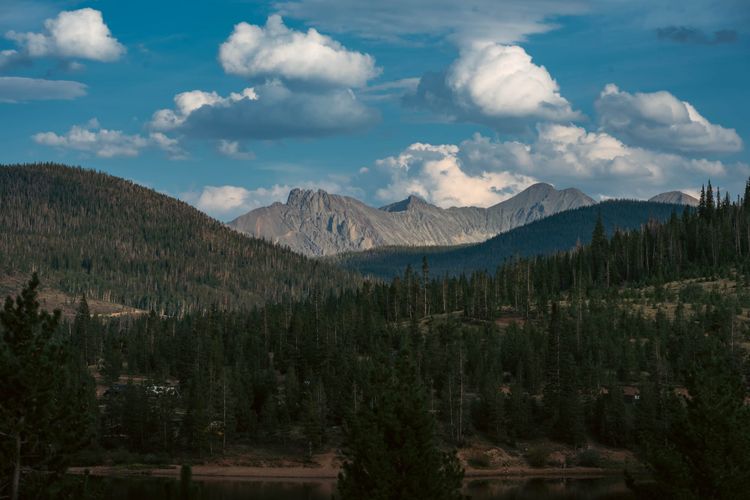
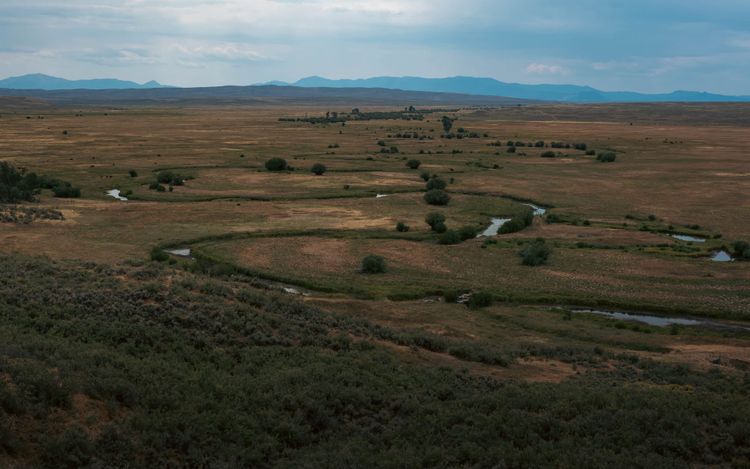
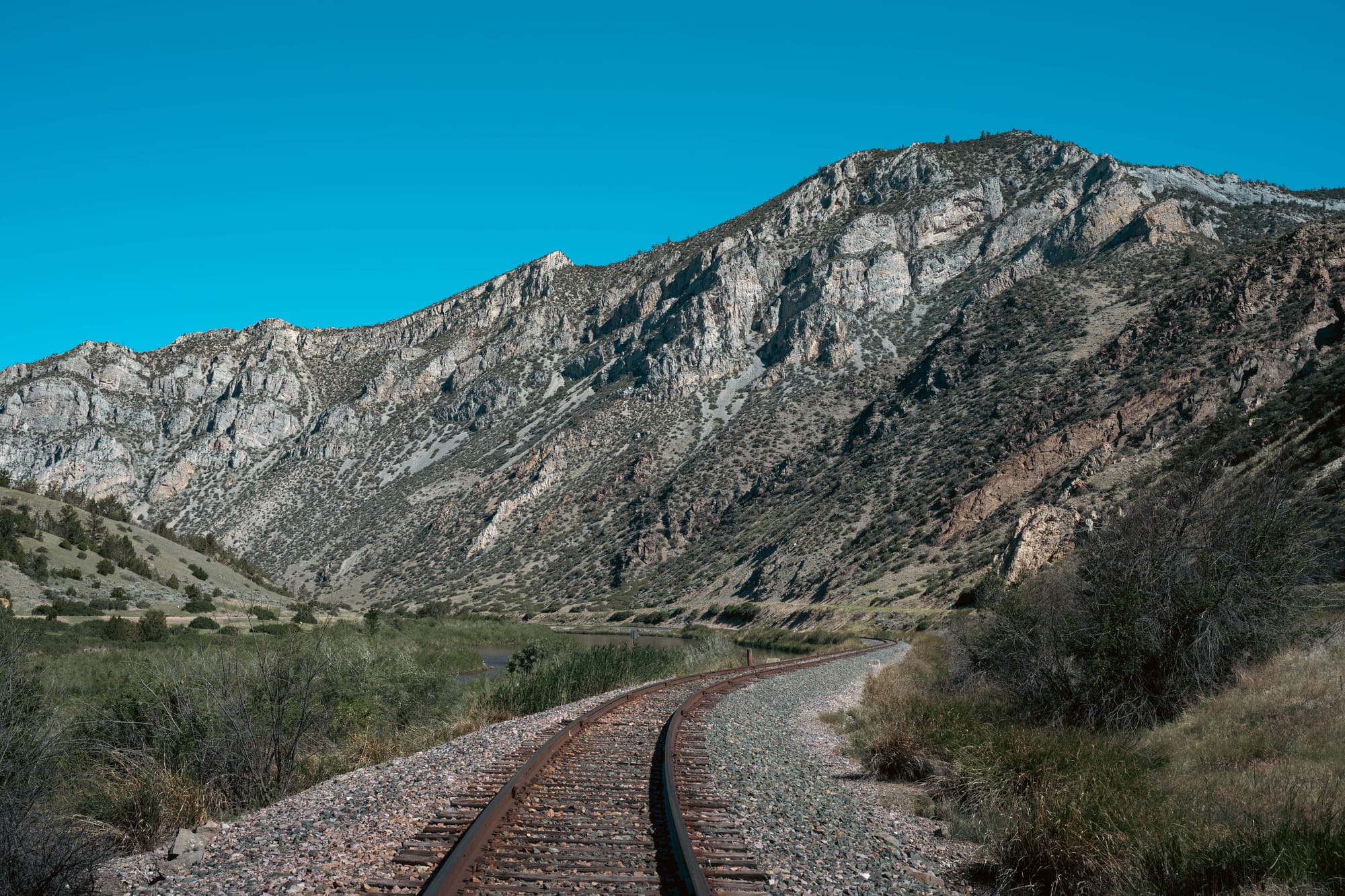
- Landscape: exposed limestone hills · dry grassland · Jefferson River valley · underground caverns
- Vibe: hot and open aboveground, cool and intricate below, with more trail access than the cave-focused name suggests
- Our stay & conditions: July 7–12, 2026 · 5 nights · sunny and exposed with afternoon temperatures in the mid-90s
🏕️ Camp Setup
- Site types: RV sites · tent sites · cabins · hiker/bike-packing sites
- Arrival & setup: Easy
- Hookups: ⚡ | 🧻
- Connectivity: 📶 AT&T ❌ | 📶 Verizon ❌ | 📶 T-Mobile ❌ | 📡 Starlink 🟢 | 📶 Park Wi-Fi ⟂
- Facilities: Restrooms · Paid Showers · Potable water · Playground
Legend:
🚽 = sewer at site · 🧻 = dump station
🟢 = solid for work · ⚠️ = usable with limits · ❌ = unusable
Park Highlights
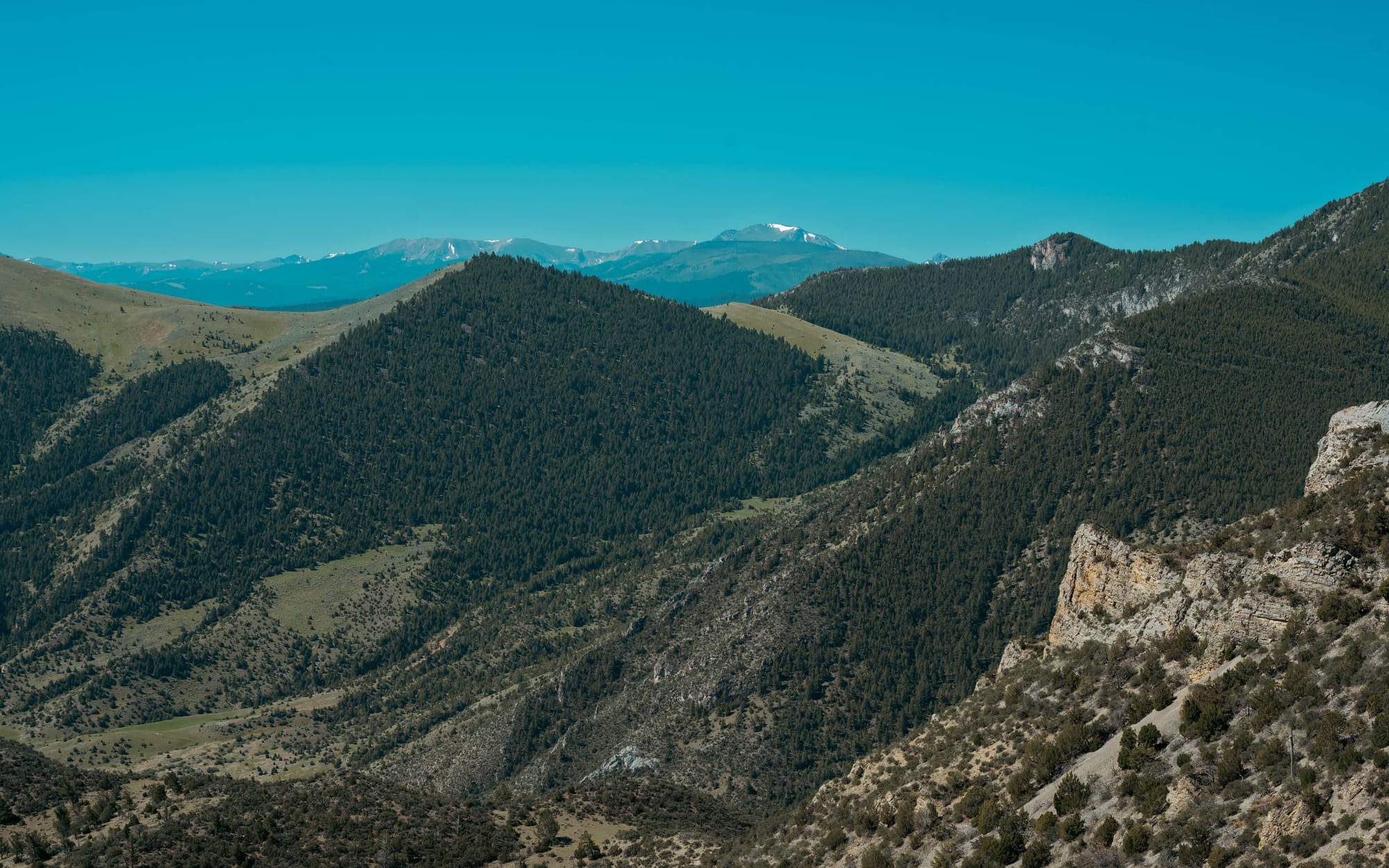
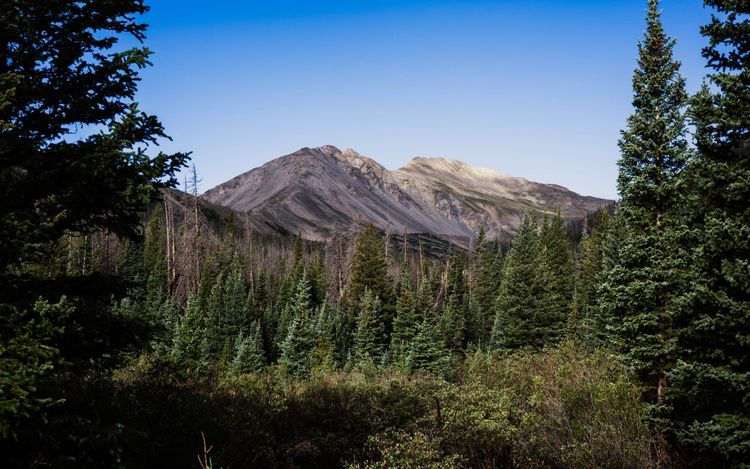
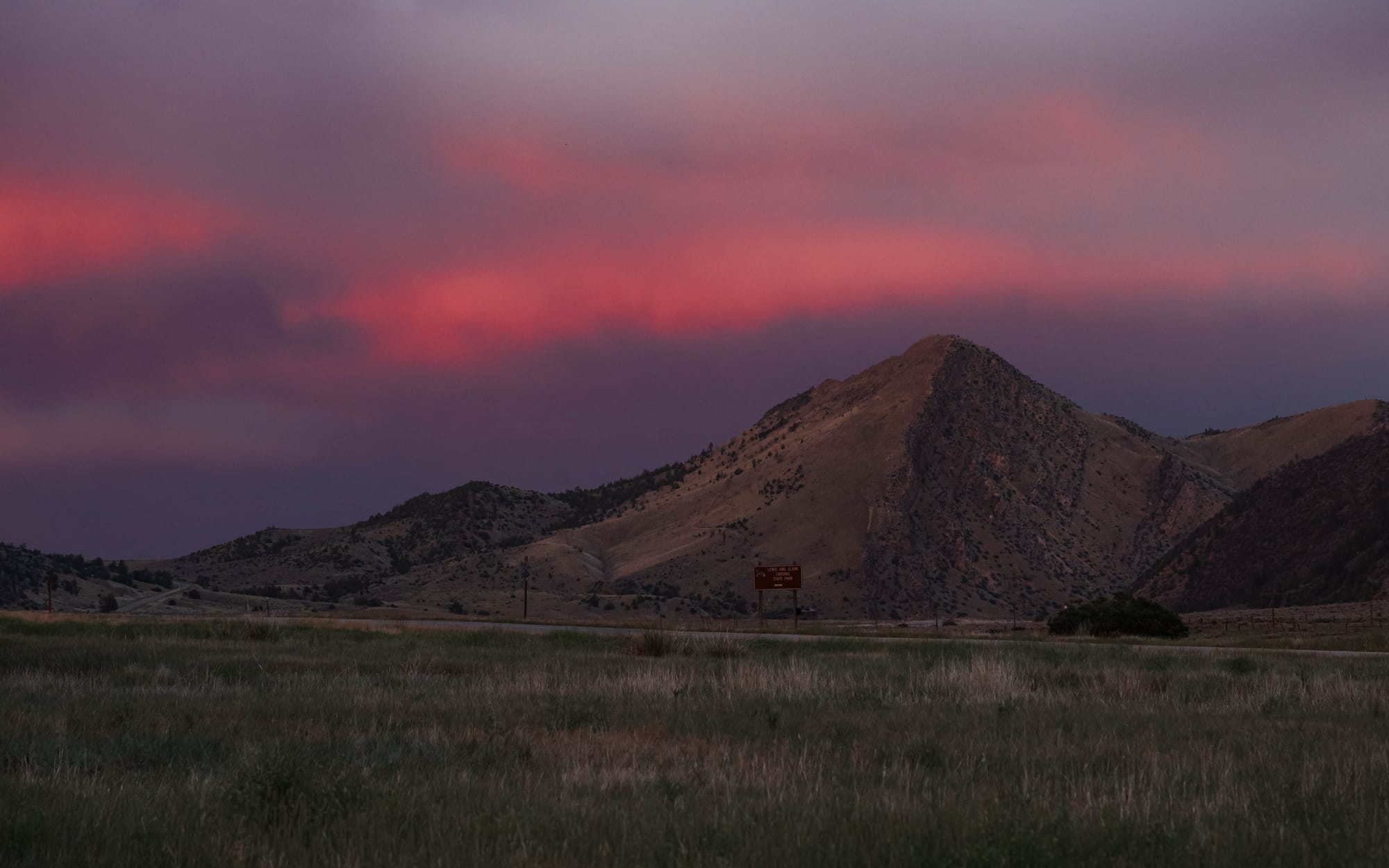
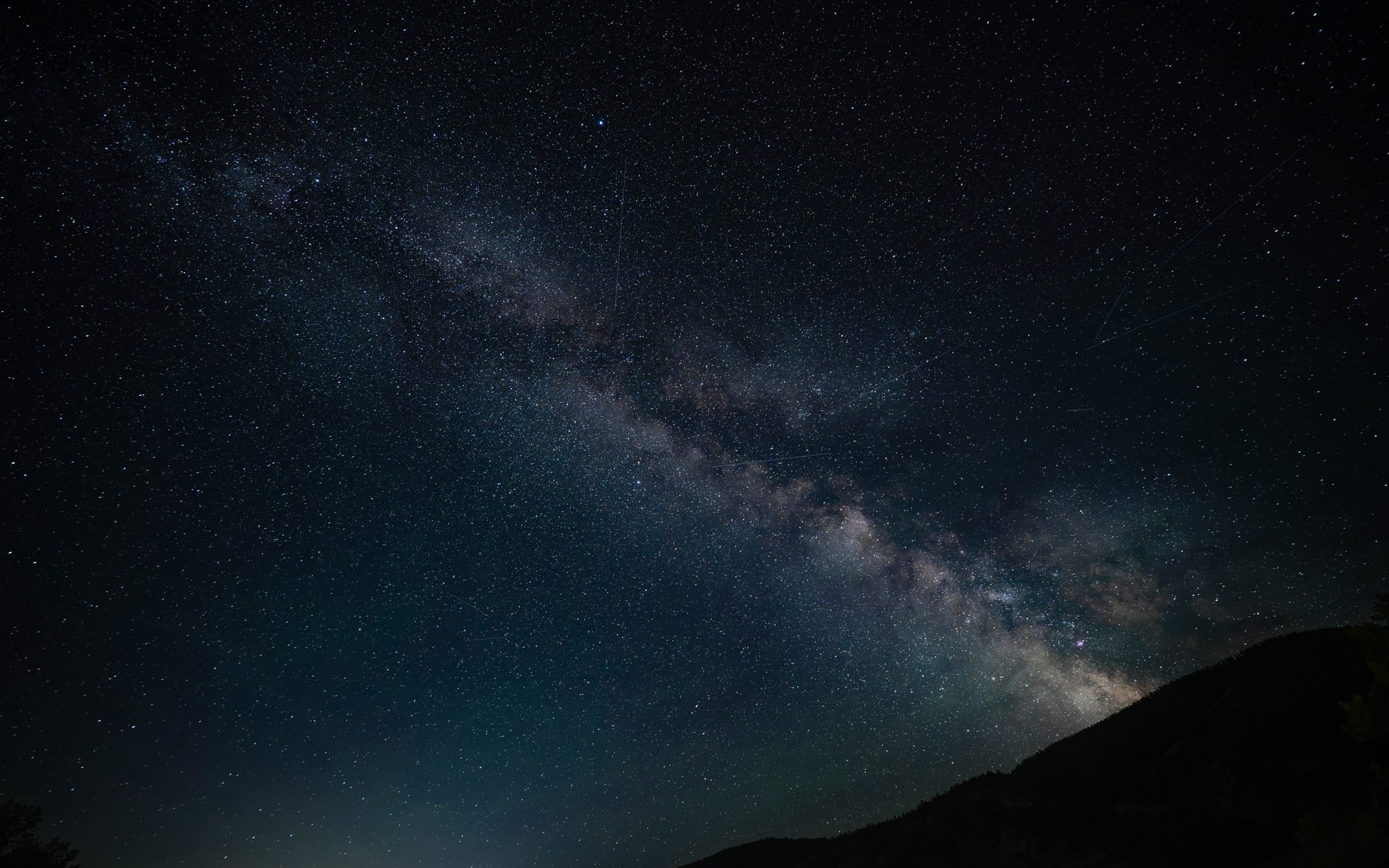
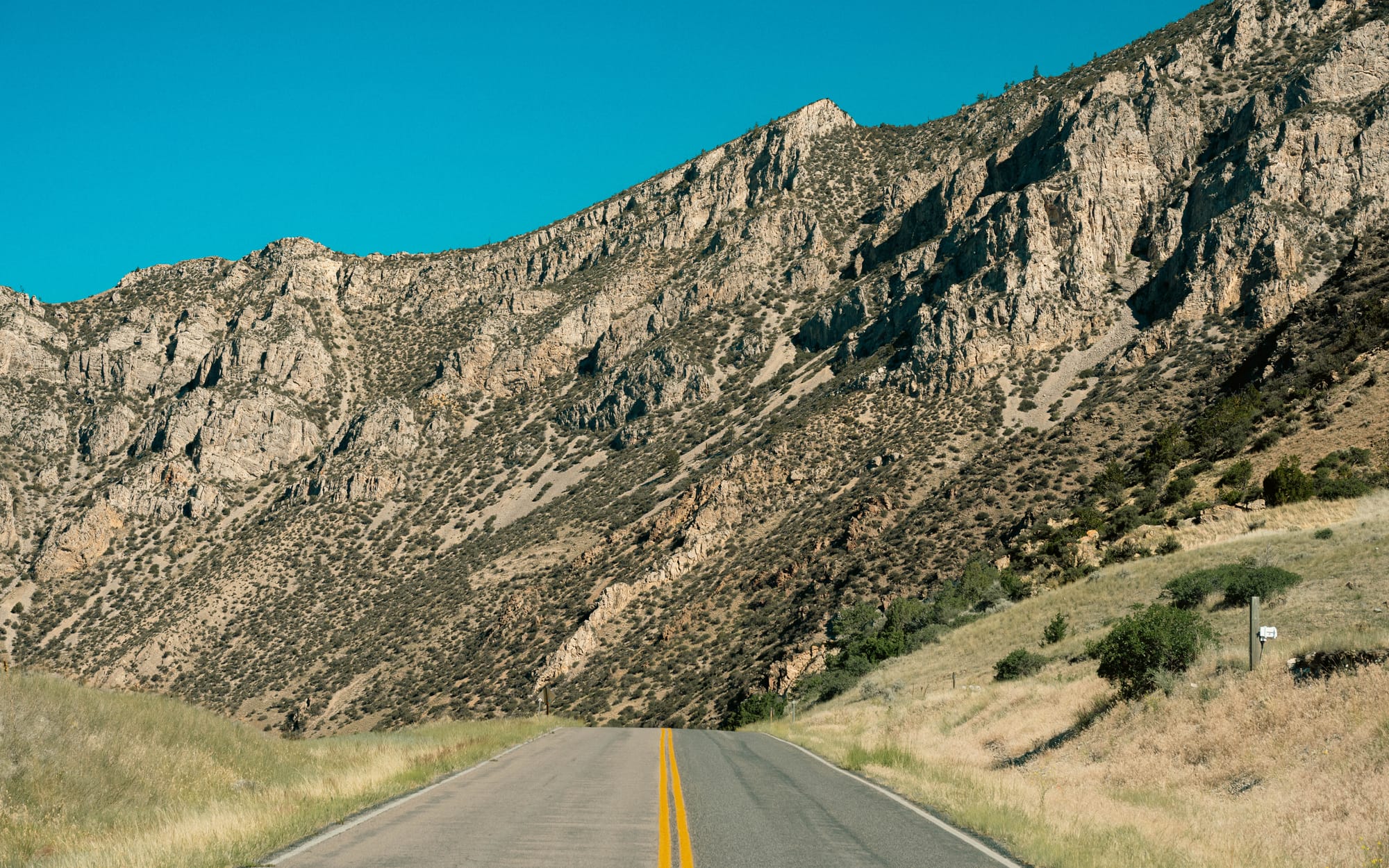
Lewis & Clark Caverns sits above the Jefferson River Valley, where open grassland climbs into exposed limestone hills. From the campground, there is little to suggest what lies inside the mountain.
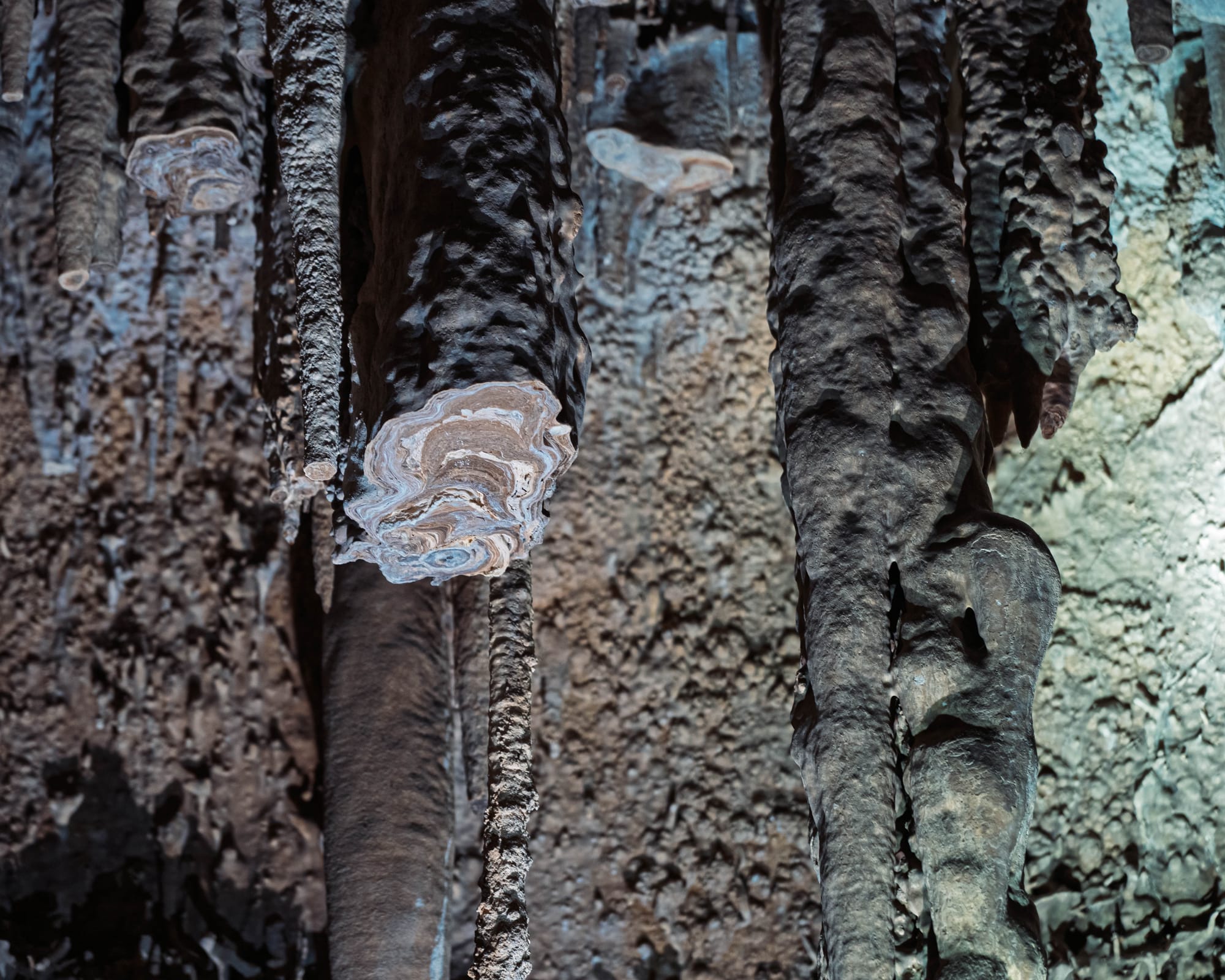
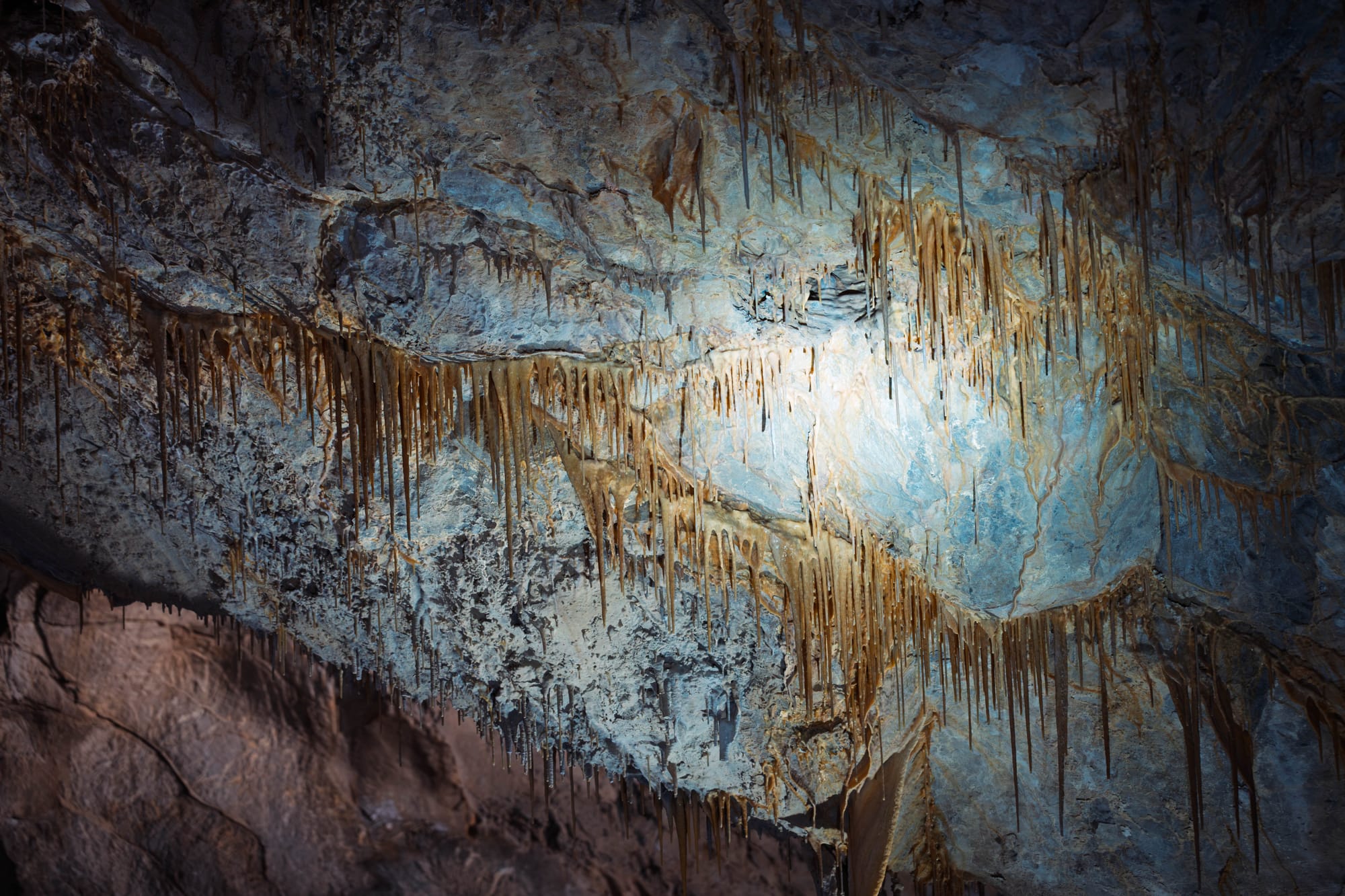
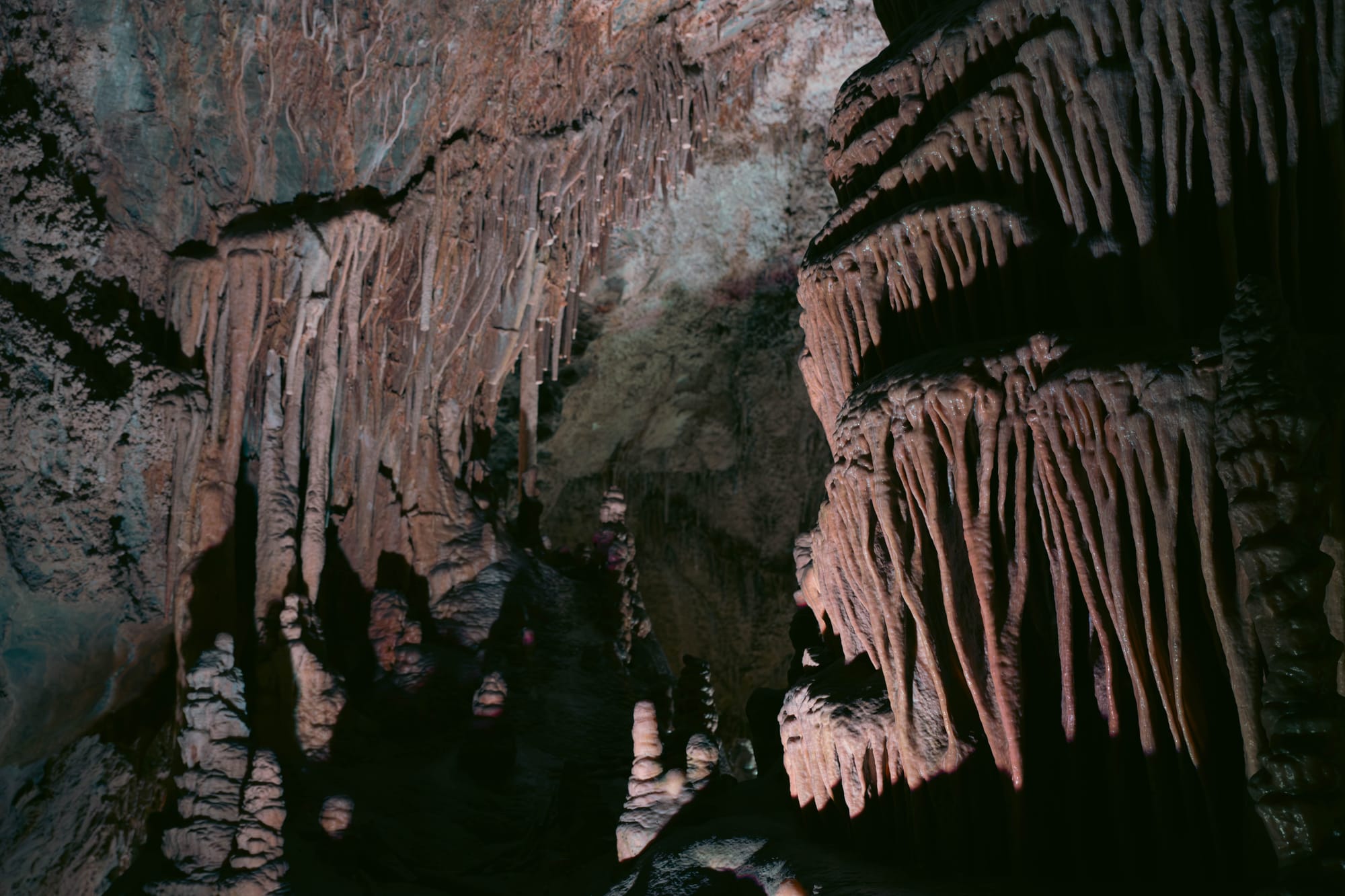
The caverns formed within Madison Limestone, deposited hundreds of millions of years ago when this region sat beneath a shallow sea. Groundwater later moved through fractures in the rock, dissolving the limestone and slowly enlarging those openings into passages and chambers.
We had already visited limestone caves in Florida and New Mexico, under landscapes that could hardly have been more different. Florida Caverns sat beneath humid forest. Carlsbad opened below the Chihuahuan Desert. Here, the same basic process was hidden inside a dry Montana mountainside.
The human history is less straightforward.
Native people lived, traveled, hunted, and gathered throughout this region long before Euro-American settlers documented the cave. Park interpretation also includes stories of a “smoking mountain.” In cold weather, warm vapor escaping from the cavern entrance can rise above the hillside like smoke. Native people likely recognized that something unusual was happening inside the mountain, though there is no clear evidence they entered the cave.
Dan Morrison of nearby Whitehall began exploring and promoting the cave in the 1890s, eventually leading early tours through what became known as Morrison Cave.
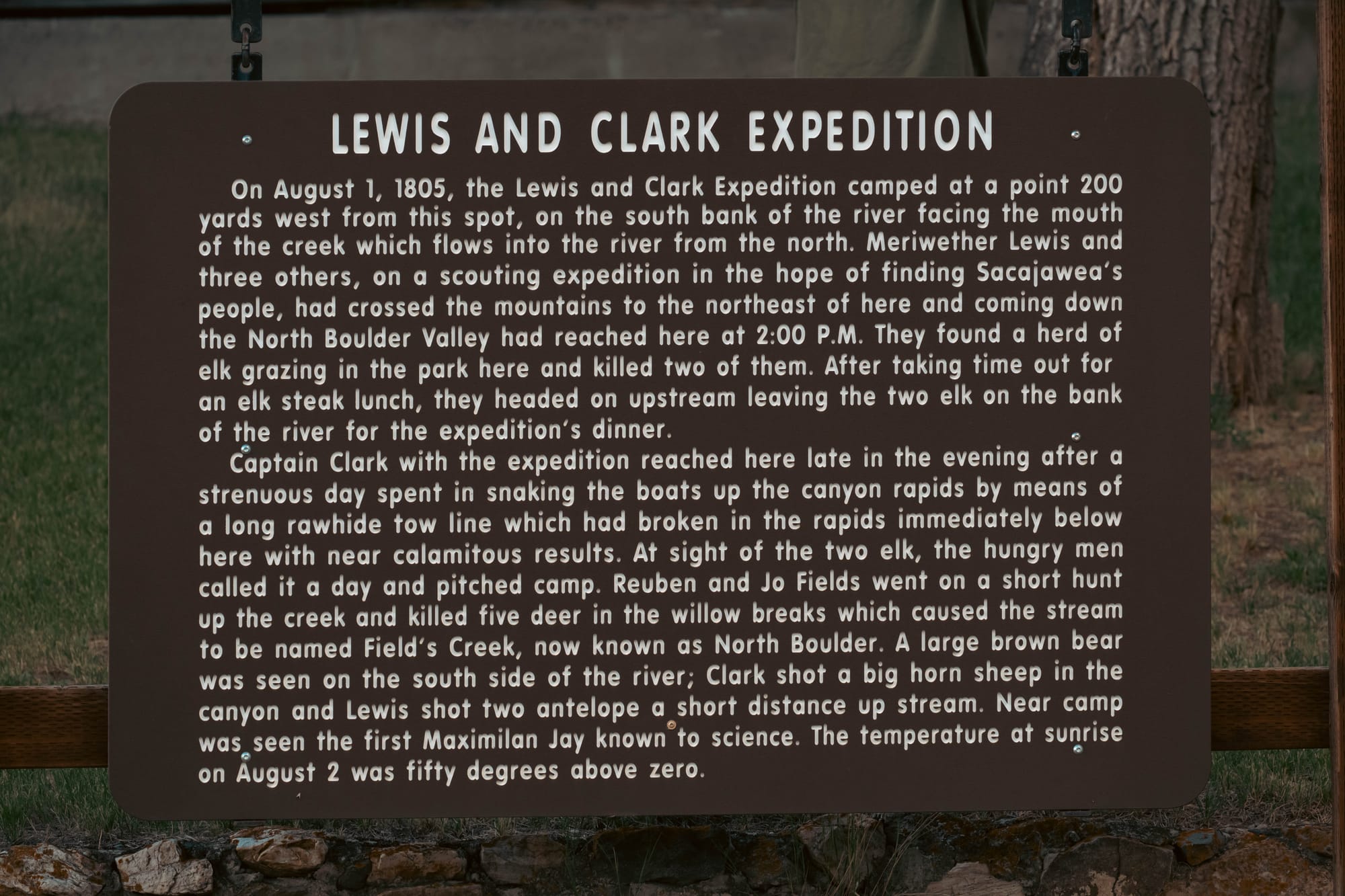
In 1908, President Theodore Roosevelt designated the site as Lewis and Clark Cavern National Monument. Lewis and Clark never entered the cave and may not have known it existed. Their name was attached because the cavern overlooks part of their route along the Jefferson River below.
That feels like a strange choice.
The expedition passed through the valley.
Morrison explored the cave.
Native people likely recognized something unusual inside the mountain long before either.
Yet Lewis and Clark received the name.
The federal government transferred the site to Montana in 1937. It opened the following year as Montana’s first state park, with Civilian Conservation Corps crews building much of the early road, trail, and cave infrastructure.
The history is not as clean as the park’s name suggests.
That makes it more interesting.
🚴 On the Ground
- Activities available: ● 🥾 Hiking | ● 🚴 Biking | ● 🐕 Dogs | ○ 🚣 Paddling | ● 🎣 Fishing | ● 🐦 Birding | ● 🏊 Swimming | ● 📸 Photography | ● 🏕️ Camp-centric | ○ 🧗 Climbing
- Trail mileage available: 🥾 ~10 mi. | 🚴 ~10 mi. | 🚣 ⟂
- Crowd level: Quiet around the campground · steady to busy near cave-tour times
Legend: ● = available · ○ = not available
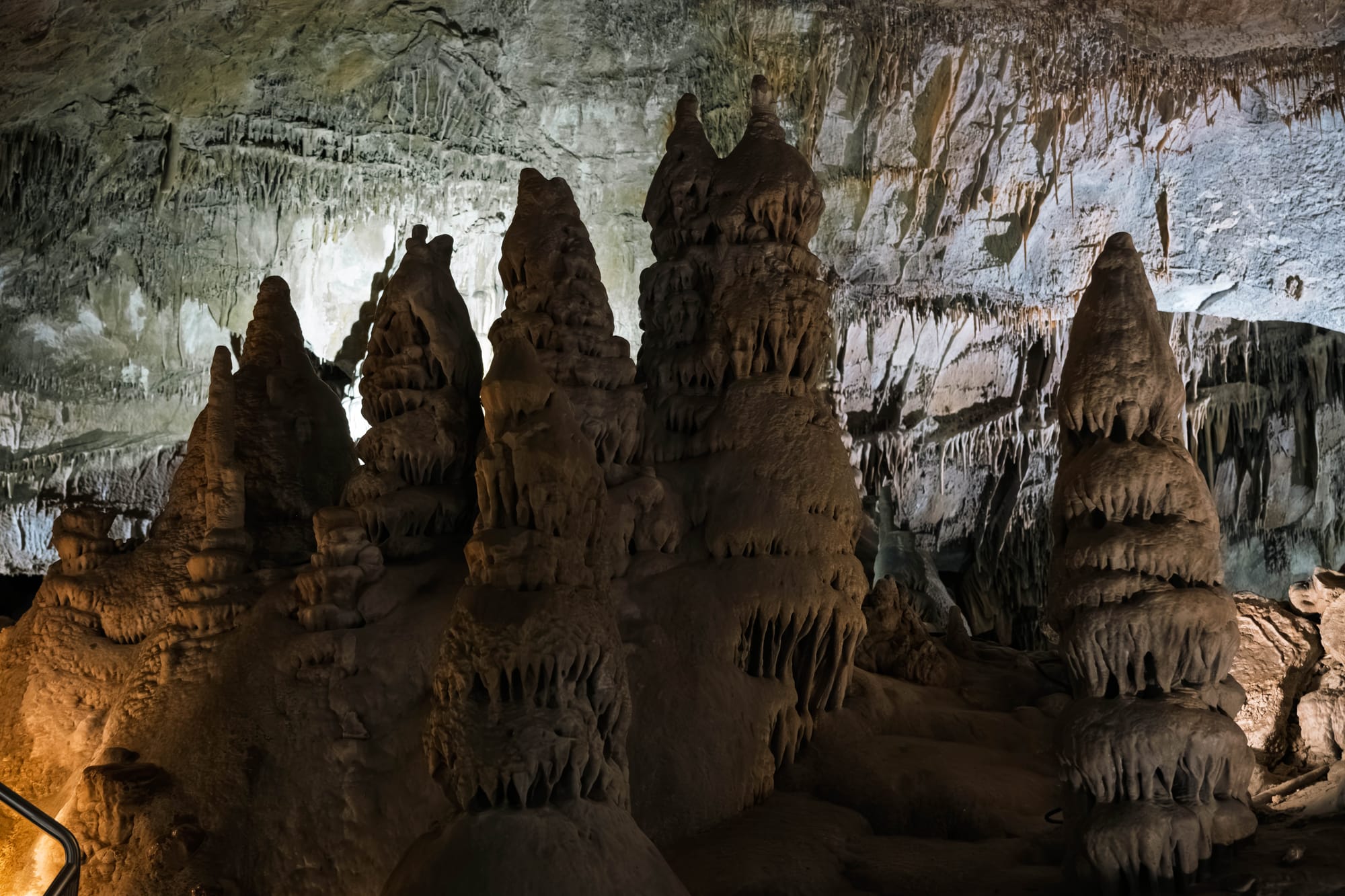
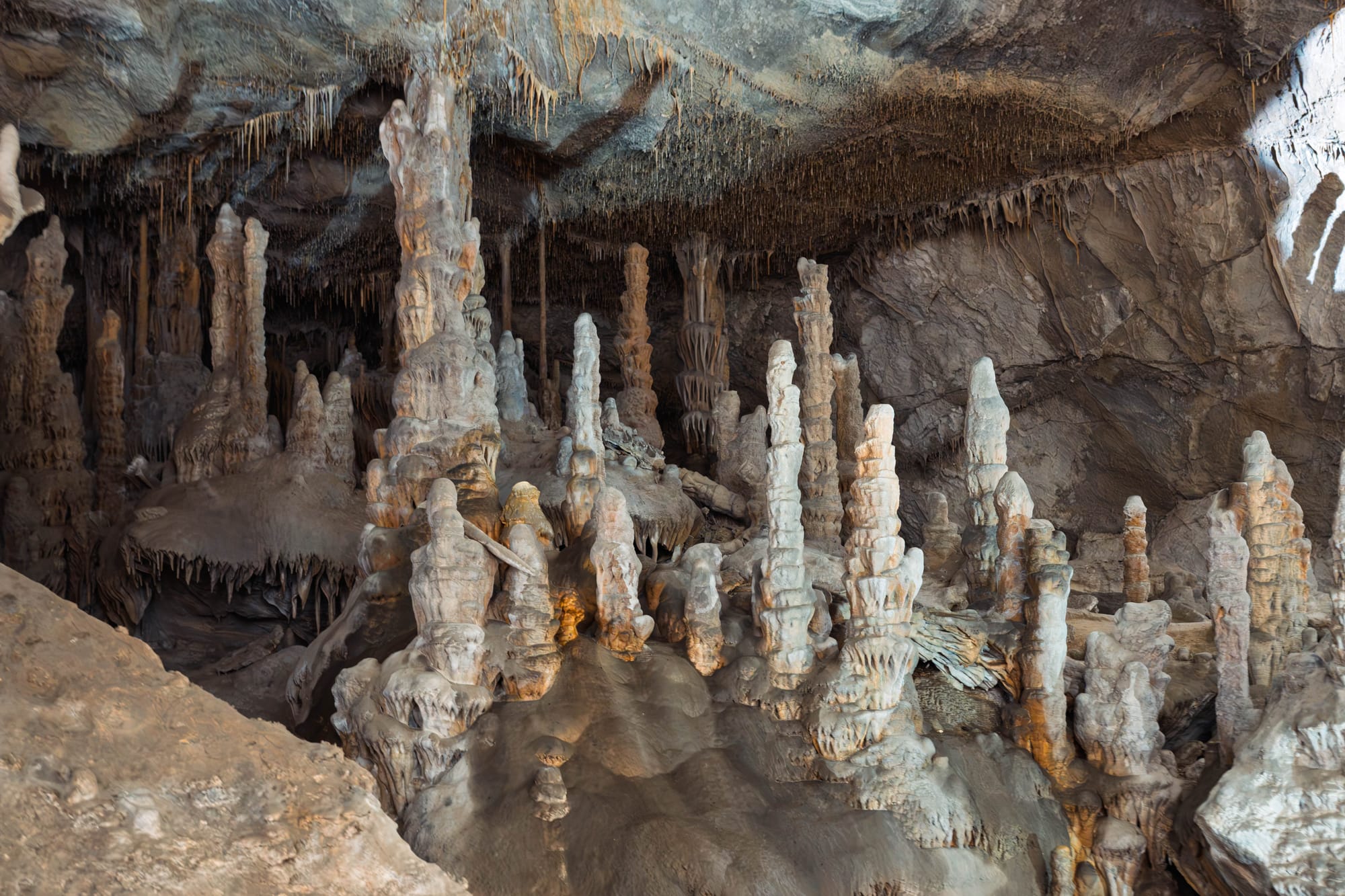
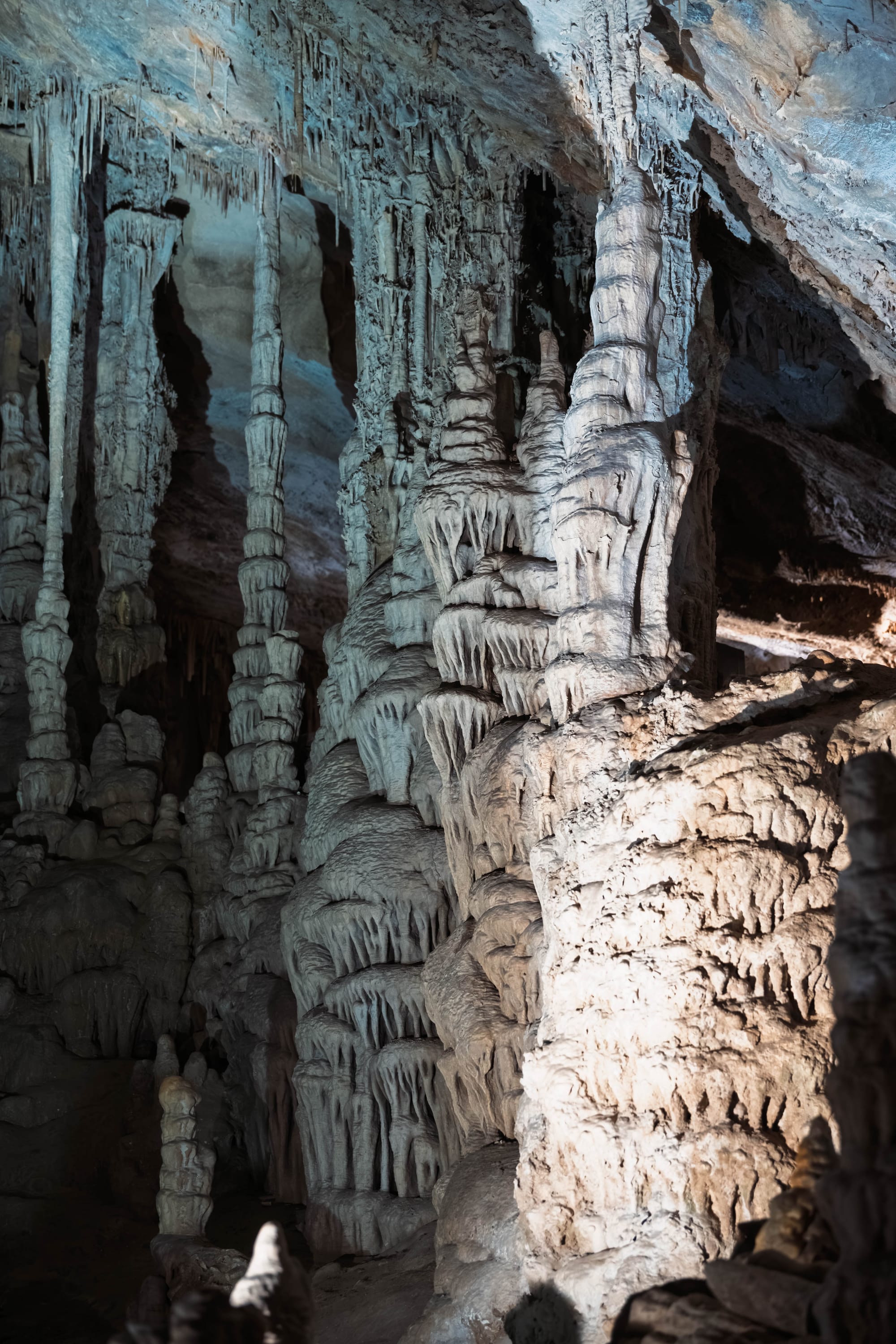
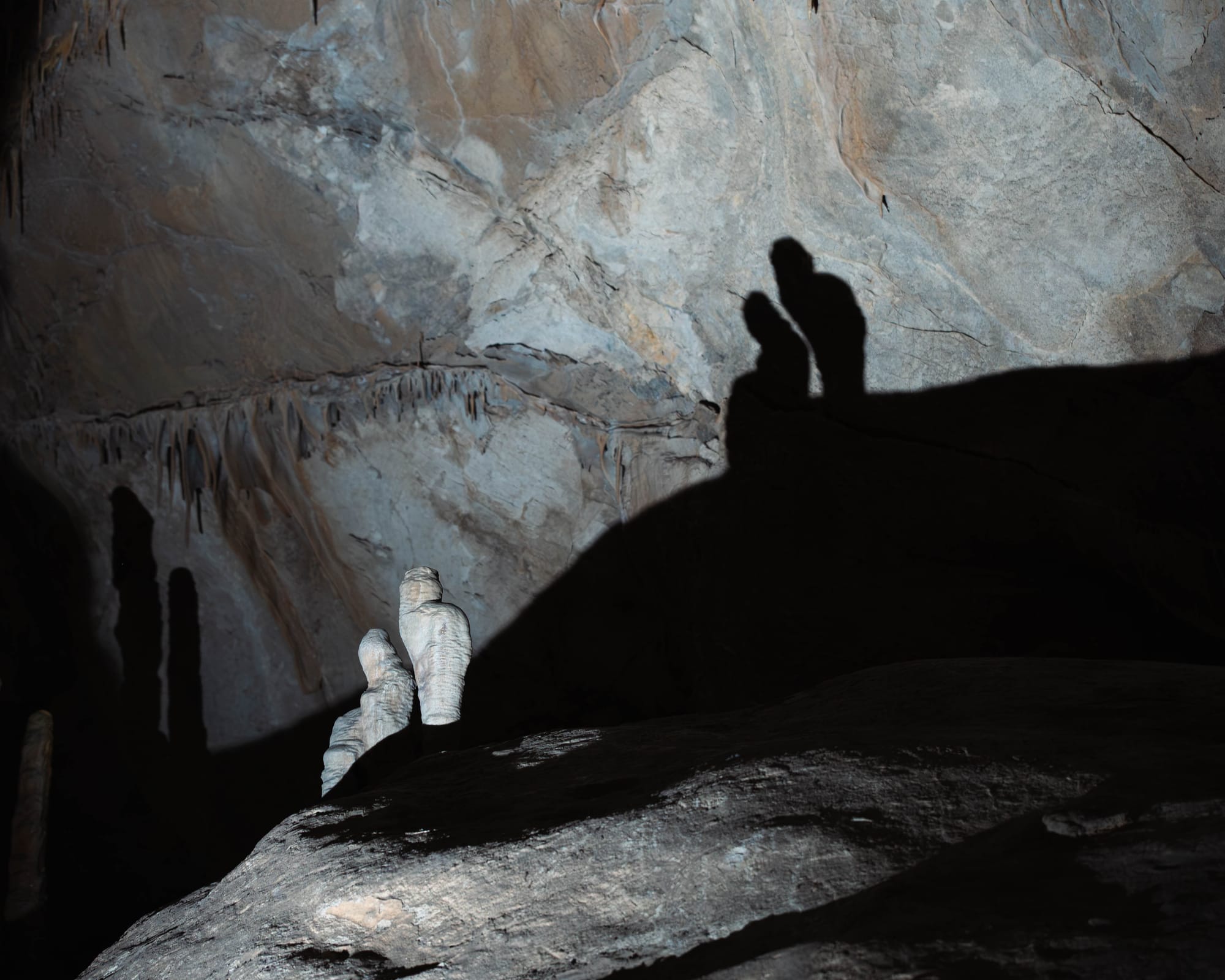
Inside the Caverns
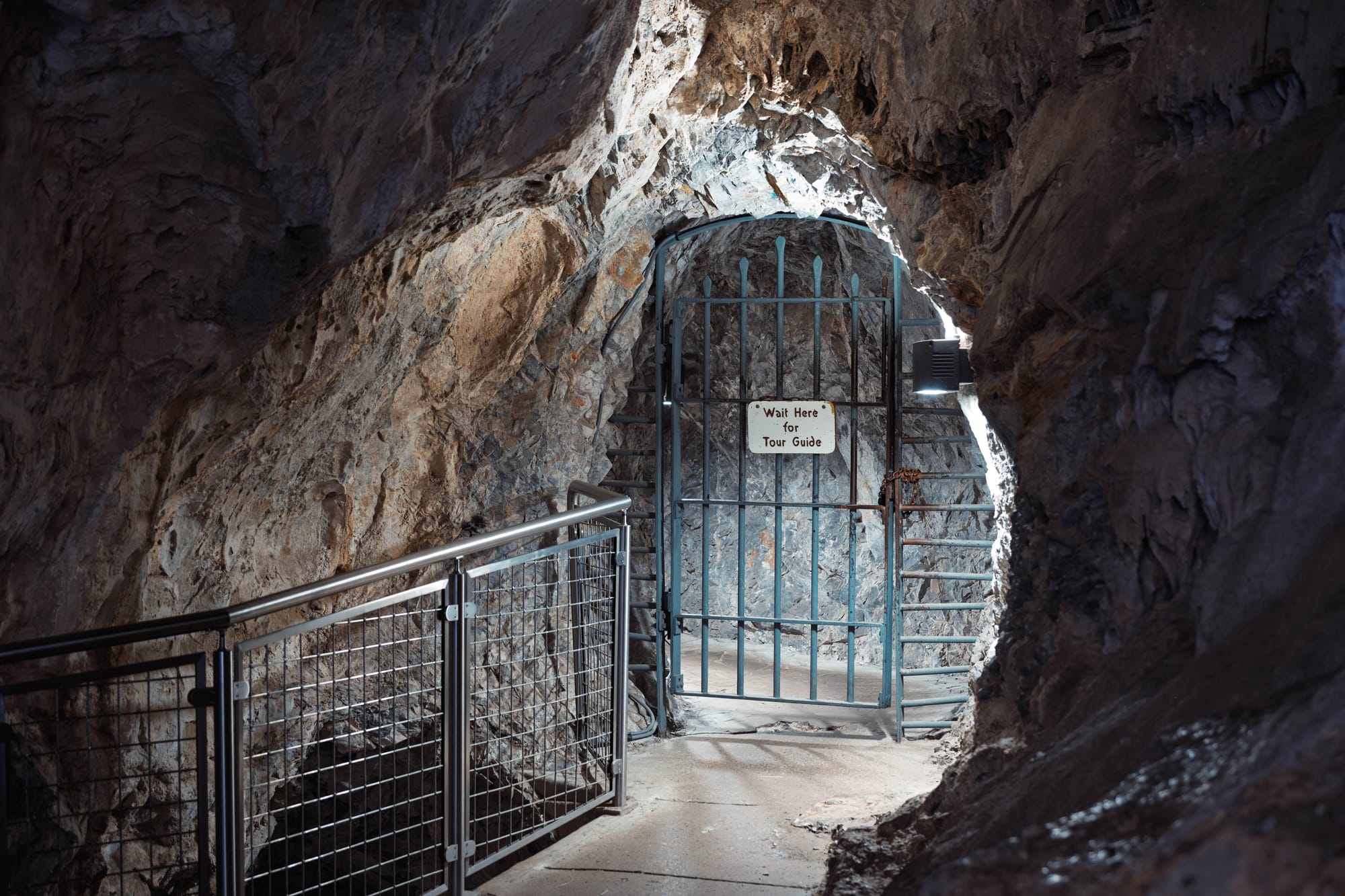
We took the two-hour Classic Cave Tour with Chris, one of the better guides we have had underground.
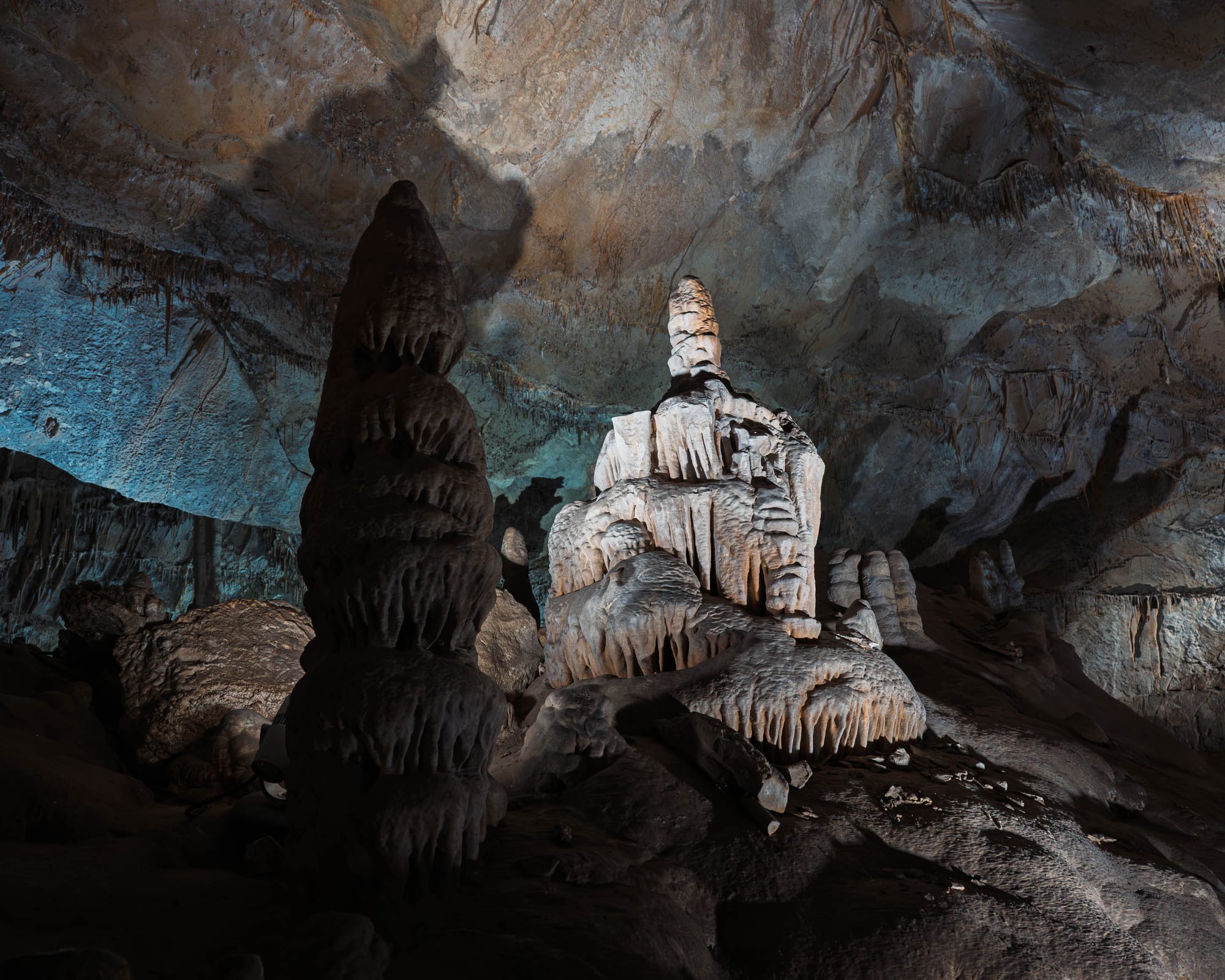
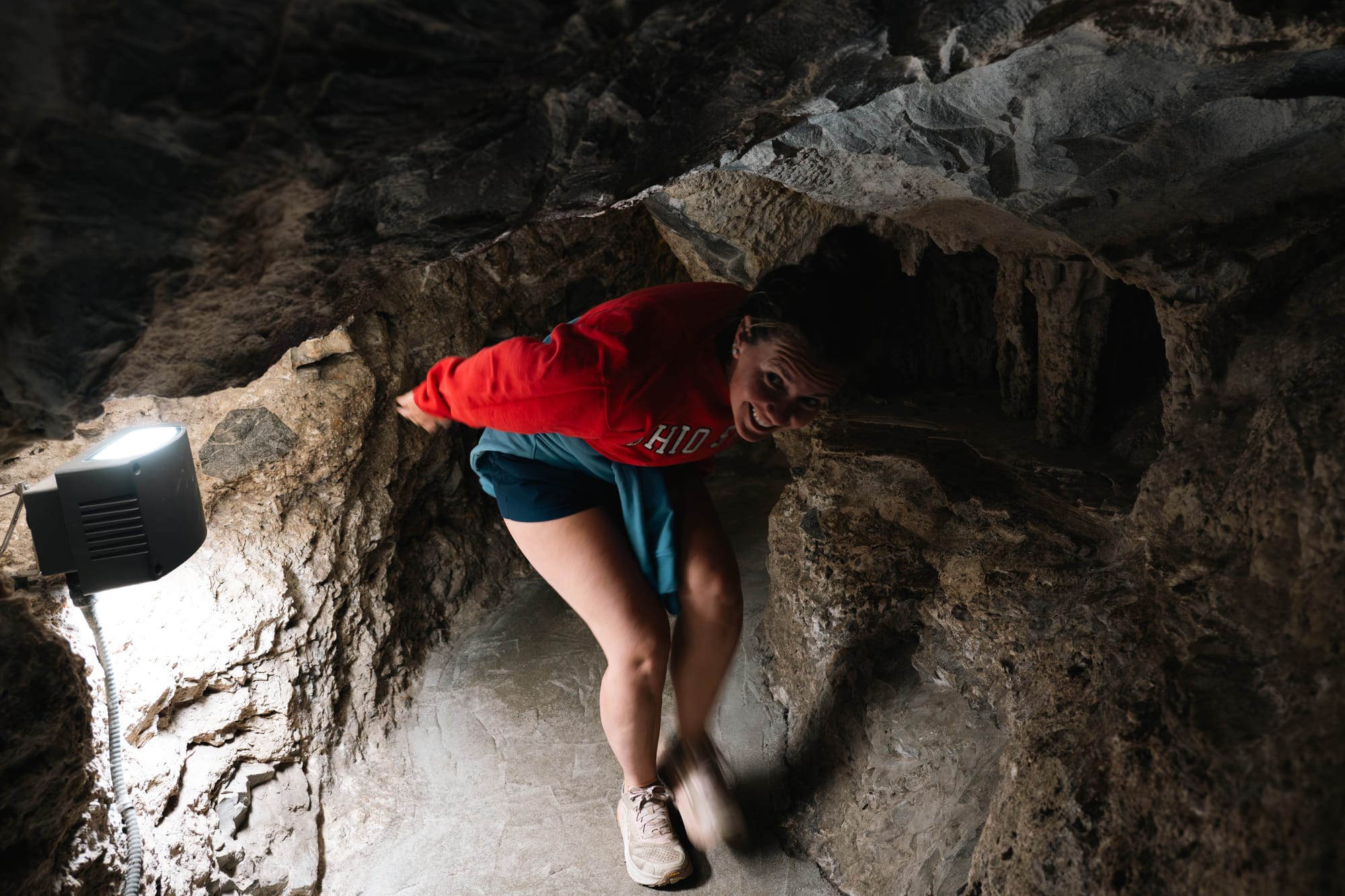
The route moved through large rooms, narrow passages, stairs, and low sections where crouching, scooting, and sliding became part of the experience.
That physical movement set Lewis & Clark Caverns apart.
Carlsbad was larger and more dramatic, but its paved route kept us farther from many of the formations. Florida Caverns was much smaller and more intimate, with tight passages and rock only inches away.
Lewis & Clark Caverns landed between them.
It had the scale of a major cave system without losing the experience of moving directly through it. We still had to crouch, turn sideways, and work through tighter passages rather than simply following a path beside the cave.
Of the three systems we have visited, this was the easiest one to recommend.
Carlsbad was more epic.
Florida was more intimate.
Lewis & Clark Caverns offered the best balance of both.
⚡ TL;DR
- Park highlight: The best balance of scale, formations, and hands-on cave exploration among the cavern systems we have visited
- Best for: Cave tours, geology, hiking, biking, river access, and travelers who want enough aboveground activity for a multi-night stay
- Skip if: Tight spaces, steep stairs, exposed trails, or intense summer heat are dealbreakers
- Worth planning around?: Yes
Final Takeaways
Lewis & Clark Caverns was the rare park where the main attraction fully lived up to the name, but the rest of the stay still mattered.
The river, exposed hills, trails, and valley drives made it worth more than a single tour stop.
Then the cave delivered exactly what we wanted: enough size to feel substantial, enough history to add context, and enough narrow passages to keep the experience physical.
We would return.
Of the three cavern systems we have visited, this is the one we would tell most people to see first.